Watch a feeder for ten minutes in fall and the pecking order sorts itself out fast. Grackles drop in as a group and the tray stays occupied. A mourning dove settles onto one spot and stays put. The chickadees and titmice wait it out in the shrubs, darting in between rounds, often leaving with nothing.
Most of the fix sits in the gear and the menu, not in shooing anything away. The usual bird feeding essentials still hold, but the station itself gets built so a bird past a certain size can’t reach the food. Nothing about it is aggressive. It just narrows the door.
Here’s how to solve this common bird feeding problem and protect small birds at your feeding station from bigger bullies who may be flying by.
1. Cage the Feeder
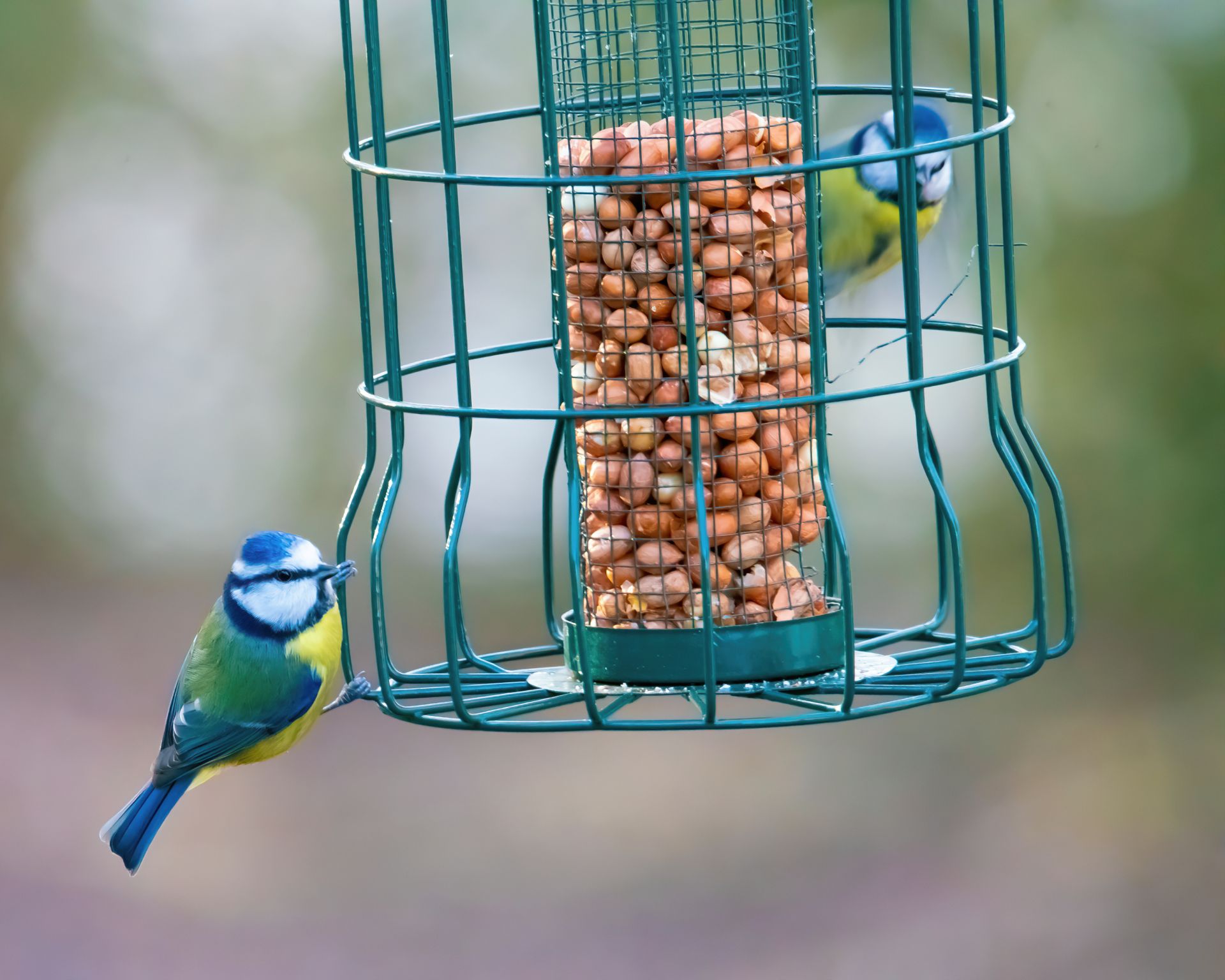
A wire cage around a bird feeder is the bluntest version of this and probably the most dependable. Openings around 1.5 inches (4 cm) are wide enough for chickadees, titmice, nuthatches and goldfinches to slip through, but too tight for grackles and starlings. Jays can’t get into them either.
Cage diameter is as important as the mesh, though. Anything under 11 inches (28 cm) across and a grackle can perch on the outside, stretch its neck through the bars, and reach the ports anyway. Skimping on width undoes the whole point of the cage. Makers describe mesh spacing in slightly different ways, so measure the gaps if the listing doesn’t say.
Cages come two ways: as an add-on that drops over a feeder that’s already hanging or built into the feeder from the start. This covered cage feeder from Amazon keeps the seed dry and gives the small birds some shelter while they eat. Hang it clear of fence rails and low branches.
Anything a heavier bird can brace a foot against turns into a foothold and makes the cage useless. Whichever version you buy, pick one where the container lifts out. Cages make cleaning bird feeders awkward at the best of times and forgotten feeders can turn grimy fast.
2. Change Up the Menu
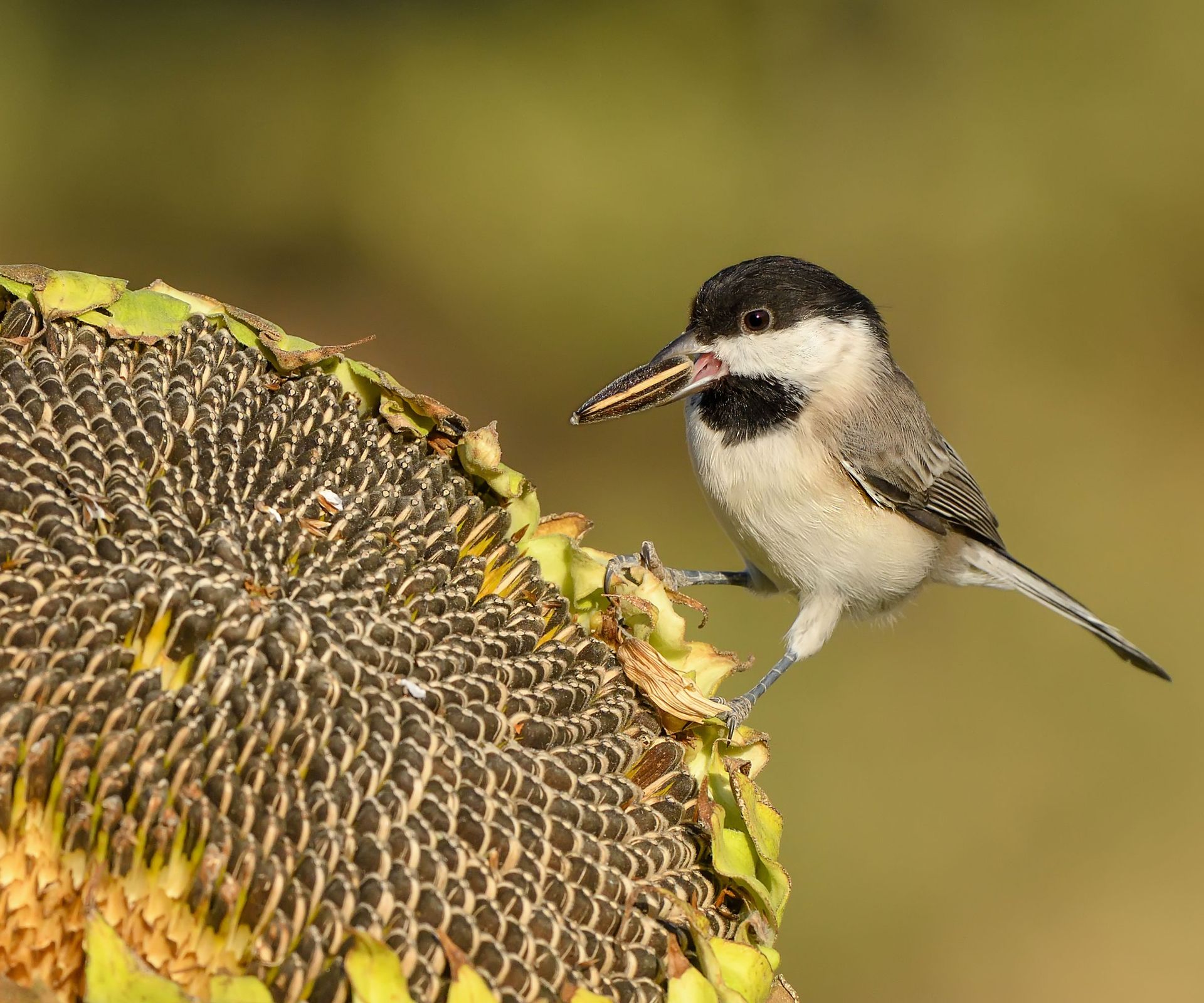
Choosing the right bird seed for the birds you want to attract is vital. Safflower has a hard shell and an awkward shape for a heavy bill and blackbirds tend to leave it alone, but cardinals and house finches take to it without much fuss. Striped sunflower seeds work on a similar principle: the thicker shell means more effort than a starling’s softer bill can expend.
Some local flocks do acquire the taste over time, so bird seed type alone isn’t a permanent answer everywhere. Shortening the perches on a tube feeder you already own works along the same lines. A chickadee lands on a stub perch without trouble, while a grackle can cling to one for a few seconds before giving up.
Pulling cracked corn and millet out of the mix helps too, since those are the ingredients drawing in blackbirds and house sparrows. For the smallest birds, nyjer in a fine-port feeder is about as exclusive as backyard bird feeding gets.
A Perky-Pet finch tube feeder from Walmart holds a pound and a half of nyjer seed and has flexible covers that keep the seed from pouring out in the wind. Goldfinches and siskins take to it quickly. Most of the bigger birds don’t bother trying.
3. Rethink the Suet & Location
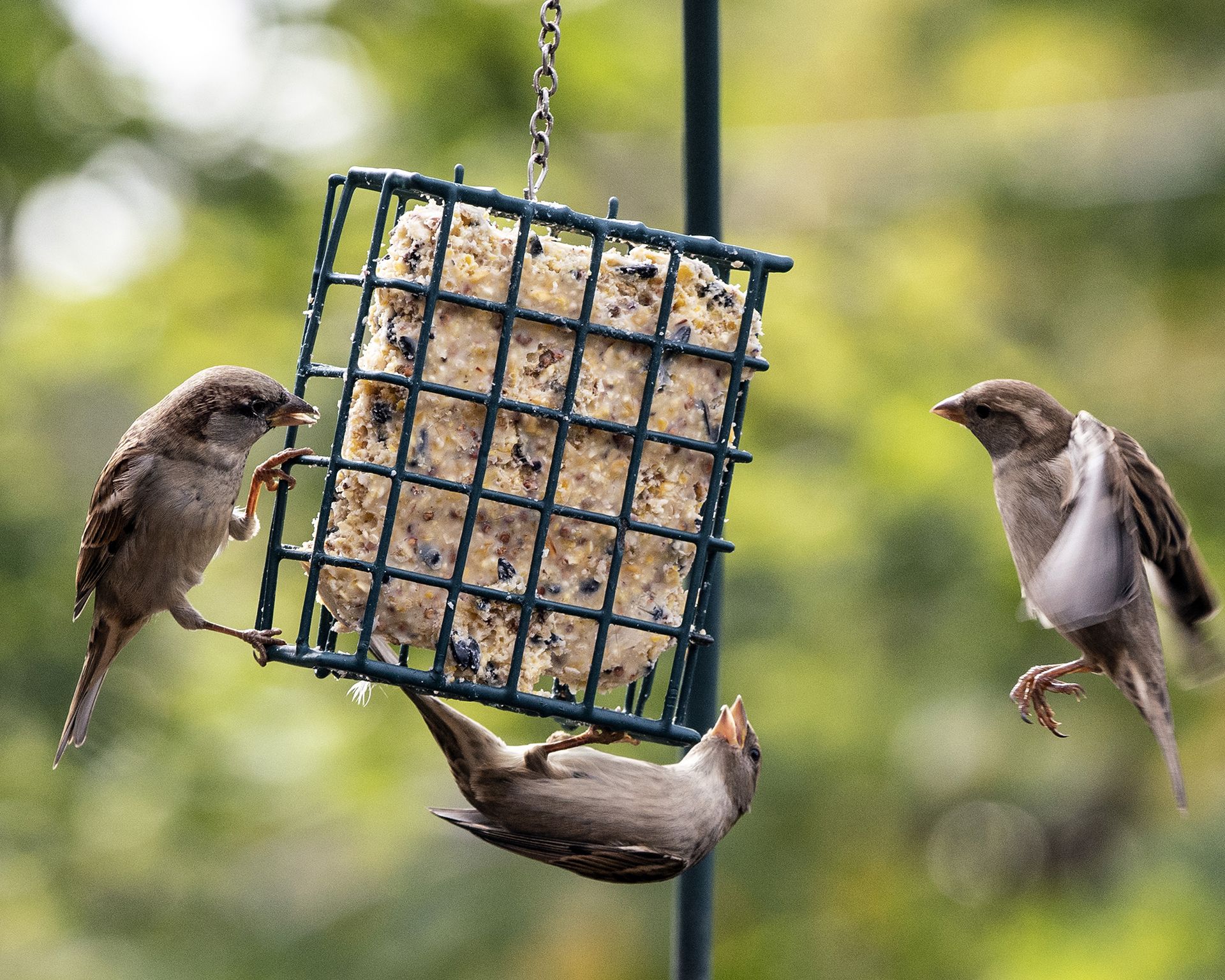
Suet can cause trouble between different bird species sometimes. A starling can settle on top of a standard wire cage and work through a cake without shifting position and it can keep that up for a long stretch.
Woodpeckers and nuthatches, on the other hand, feed upside down without complaint and so do chickadees. Move the access to the underside of the feeder to prevent problems. Starlings can still reach it if they commit, but they dislike hanging inverted and rarely stay long. Home Depot stocks a recycled composite upside-down suet feeder built around that idea, with the cake loaded so birds reach it from below.
Where you locate your bird feeder matters, too. Small birds feed more confidently near cover, roughly 10 feet (3 m) out from a hedge or shrub, close enough to bolt for and far enough that a cat has nowhere useful to wait. Pole-mounting the feeder with a baffle underneath beats hanging it from a branch, where squirrels and heavier birds have a route in from above.
What goes in the feeder counts as well. Plain rendered suet draws less starling attention than the peanut and seed blends do, since it is the added bits they come for.
Give these switches a couple of weeks before judging any of them. Bigger bully birds that are used to easy pickings will test the new arrangement, decide it isn’t worth the effort, and go bother someone else’s yard instead.