We all want low maintenance plants, and those that bloom in the fall are twice as nice. Summer blooming plants are fading fast and our gardens need an autumn revival. Making sure a few perennials are just coming into their own will guarantee a fresh look for fall that lasts till the first hard freeze.
Low maintenance plants generally do not need a lot of water, fertilizer, or trimming. By this time of year, many people’s thoughts are turning to cooler days and fall events. If you don’t want to spend a lot of time tending to your fall garden plants, install some of these beauties in autumn or spring. If planting in fall, be sure they are planted four-to-six weeks before the first hard frost so the roots have time to establish before winter.
These plants boast other attributes, too. They provide nectar for pollinators seeking end of the season sustenance. Migrating monarch butterflies and hummingbirds need energy to power their flights, and bees are collecting what’s left of the nectar and pollen before winter.
1. Bluebeard
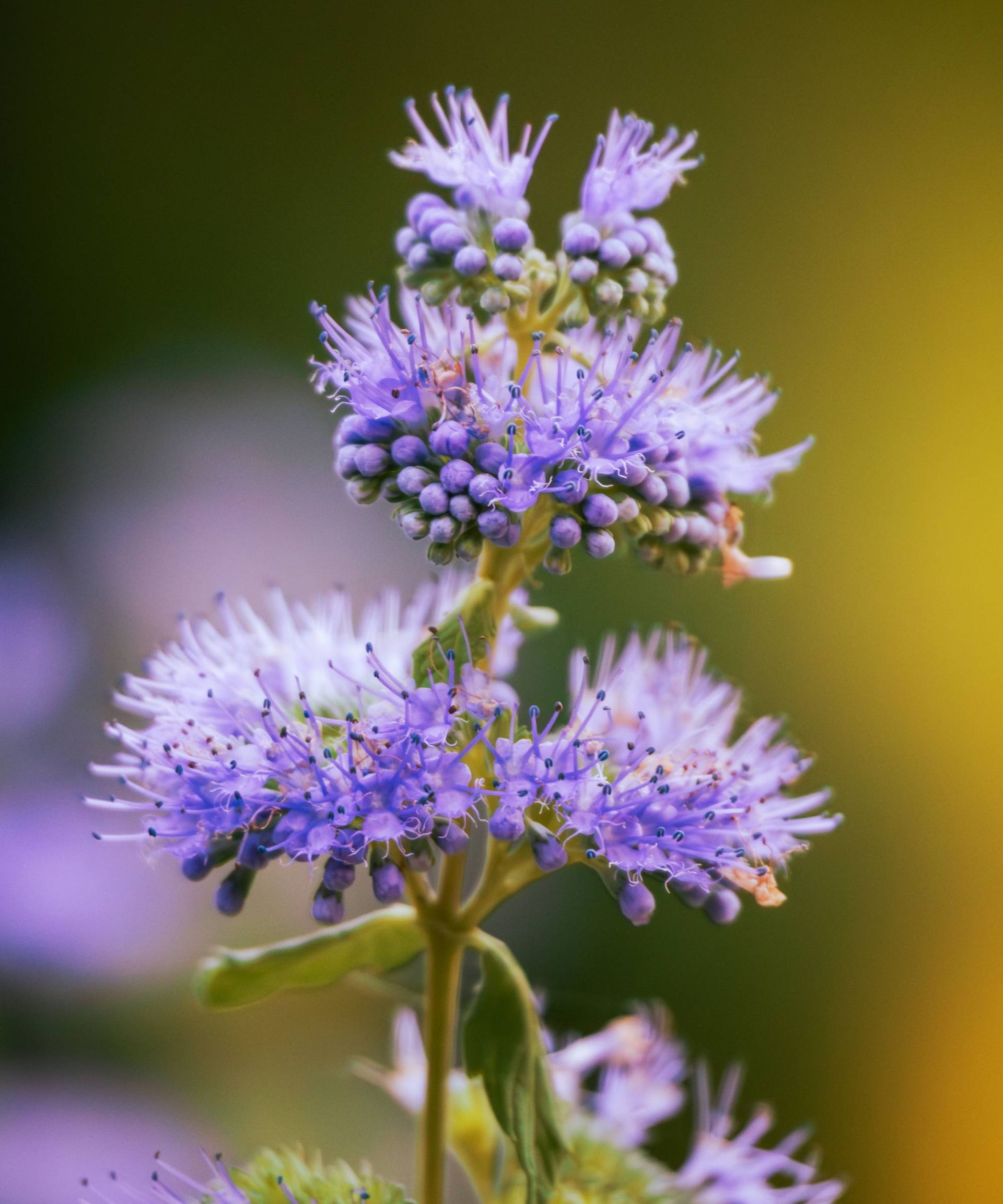
Bluebeard (Caryopteris) is a late-summer-to-fall-blooming perennial with vibrant color that attracts butterflies, bees, and hummingbirds. Also called blue mist, it can grow 3 to 13 feet (0.9 to 4 m) tall but usually dies to the ground in colder winter areas of its USDA hardiness zones 5-9. Most hybrid selections stay much shorter. Its fragrant blue, purple, pink, or white flowers grow in clusters around the stems and are a beacon for pollinators but not deer and rabbits.
Foliage is silvery green, yellow, dark, or variegated. Provide good drainage and sandy loam soil in full sun for this drought-tolerant small shrub. ’Blue Empire’ has large violet-blue flowers and tolerates heat and humidity. Another striking and fragrant variety called ‘Dark Knight’ bluebeard can be found at your local Home Depot. Works well in a border, hedge, xeriscape garden, mass planting or in containers.
2. Tall Sedum
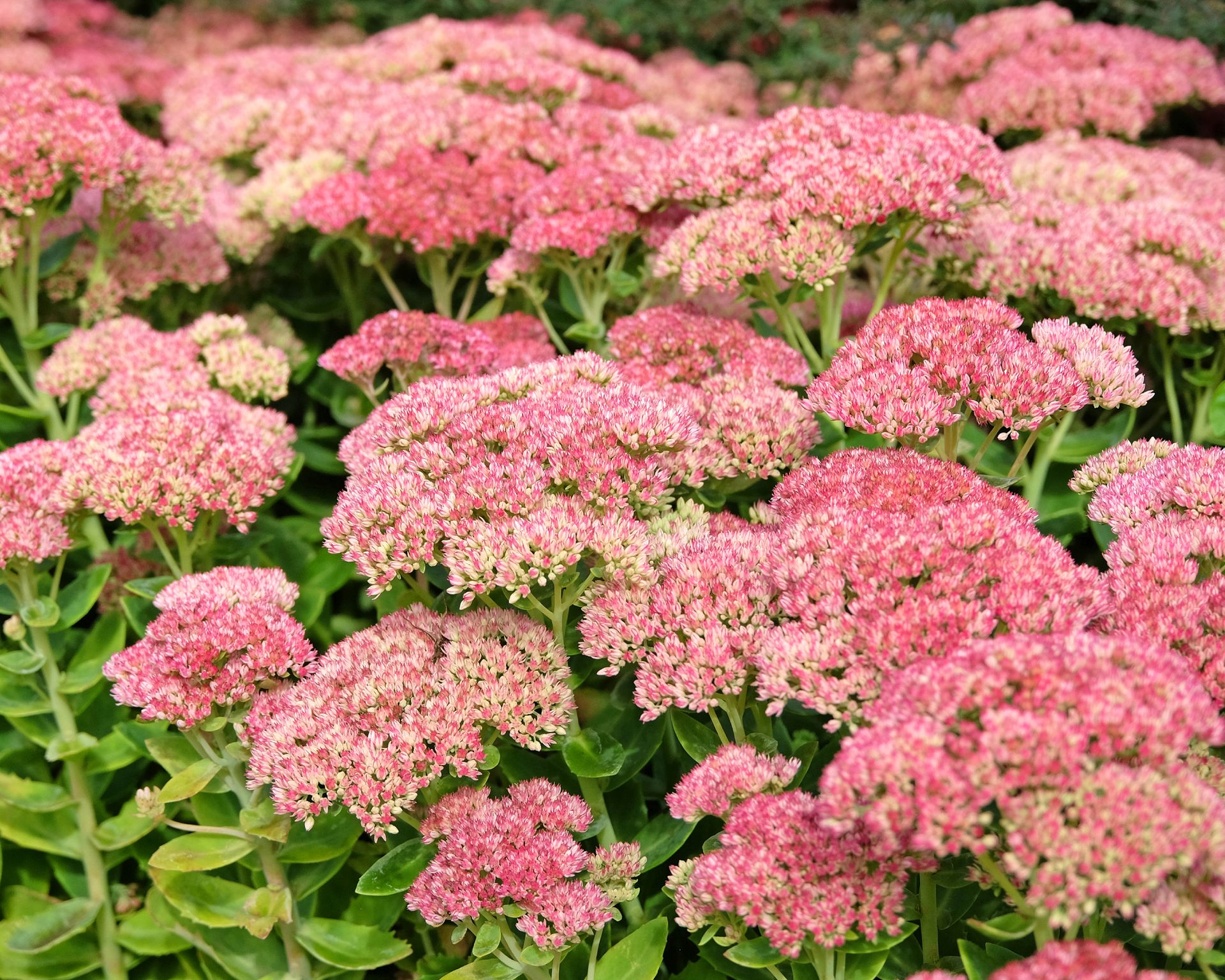
Succulent sedums (Hylotelephium) such as ‘Autumn Joy’ and ‘Autumn Fire’ thrive on neglect. They are pretty much foolproof as long as the soil is well drained. They like hot, dry sites in full sun in USDA hardiness zones 3-9. This perennial pollinator favorite should be a mainstay in every garden for its easy care and long lasting clusters of pink, white, yellow, or red star-shaped flowers that start blooming in late summer and continue through fall.
Leaving the flowers to dry on the stems provides winter interest. Foliage colors vary in gray-green, maroon, bluish, or variegated on 12 to 24 inch (30 to 61 cm) stems. Works well in perennial borders, rock gardens, pollinator gardens, and containers. ‘Autumn Joy’ sedum is currently on sale from American Meadows and will pair well with ornamental grasses or other perennial plants.
3. Helen’s Flower
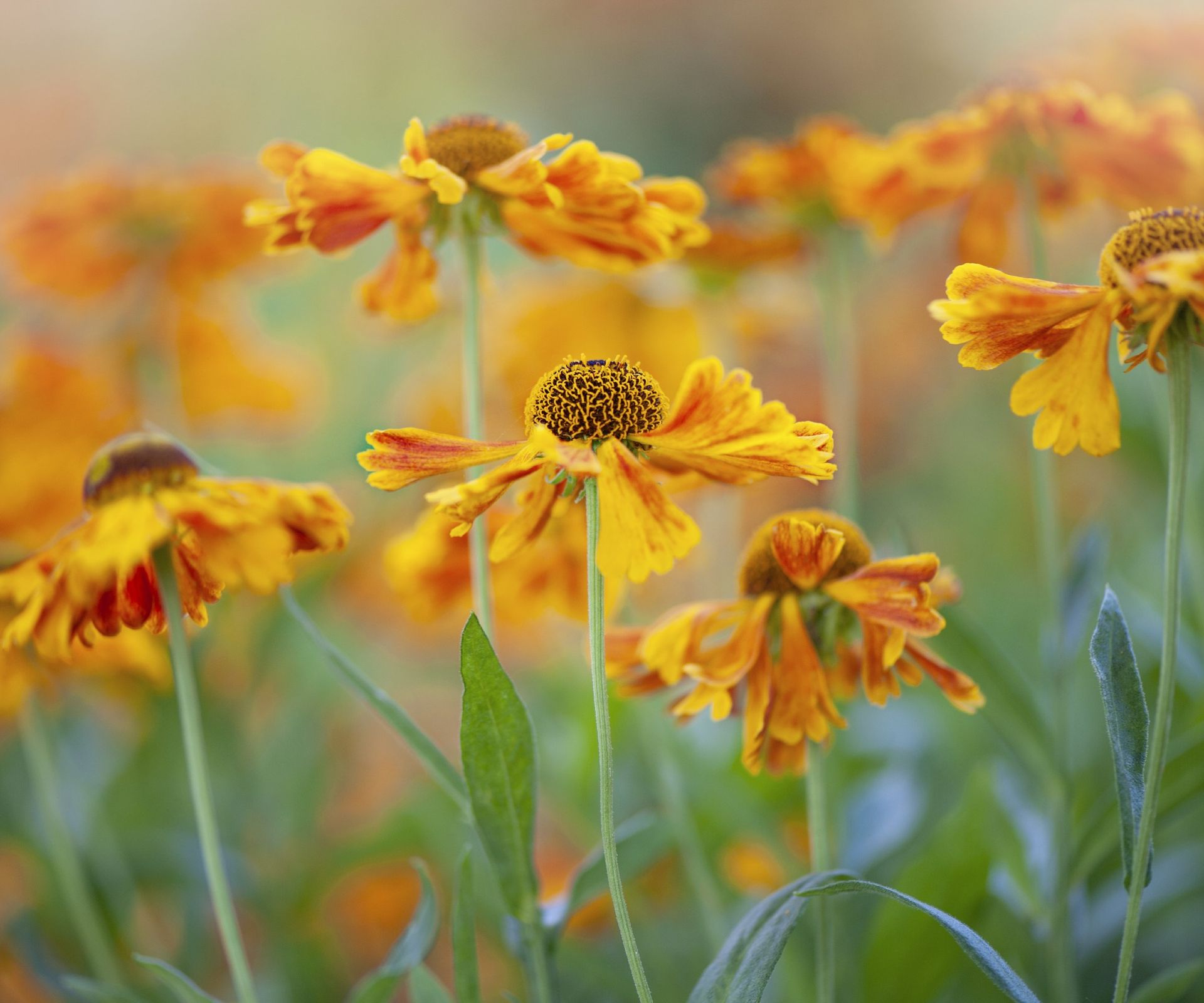
Helen’s flower (Helenium autumnale) is a North American native perennial that blooms in fall with yellow, daisy-like, velvety flowers with domed centers. Also called “sneezeweed,” its hybrids give more color choices such as gold, orange, red, copper, and bicolor. Pollinators are frequent visitors, so it is an important late season wildlife plant. It prefers full sun and moist to average soil in USDA hardiness zones 3-9. Clumps reach 2 to 5 feet tall (0.6 to 1.5 m).
Deadhead to increase flowering. Helenium works well in mixed beds and borders, rain gardens, cottage gardens, and meadows. Deer and rabbits avoid its bitter foliage, which can be toxic if eaten in large quantities. Foliage also may irritate the skin of some people. ‘El Dorado’ sports yellow flowers with red streaks. ‘Mardi Gras’ features orange flowers enhanced with yellow and red. ‘Hot Lava’ has orange-red flowers. Cheerful sneezeweed plants can be purchased from Walmart or you local nursery.
4. Russian Sage
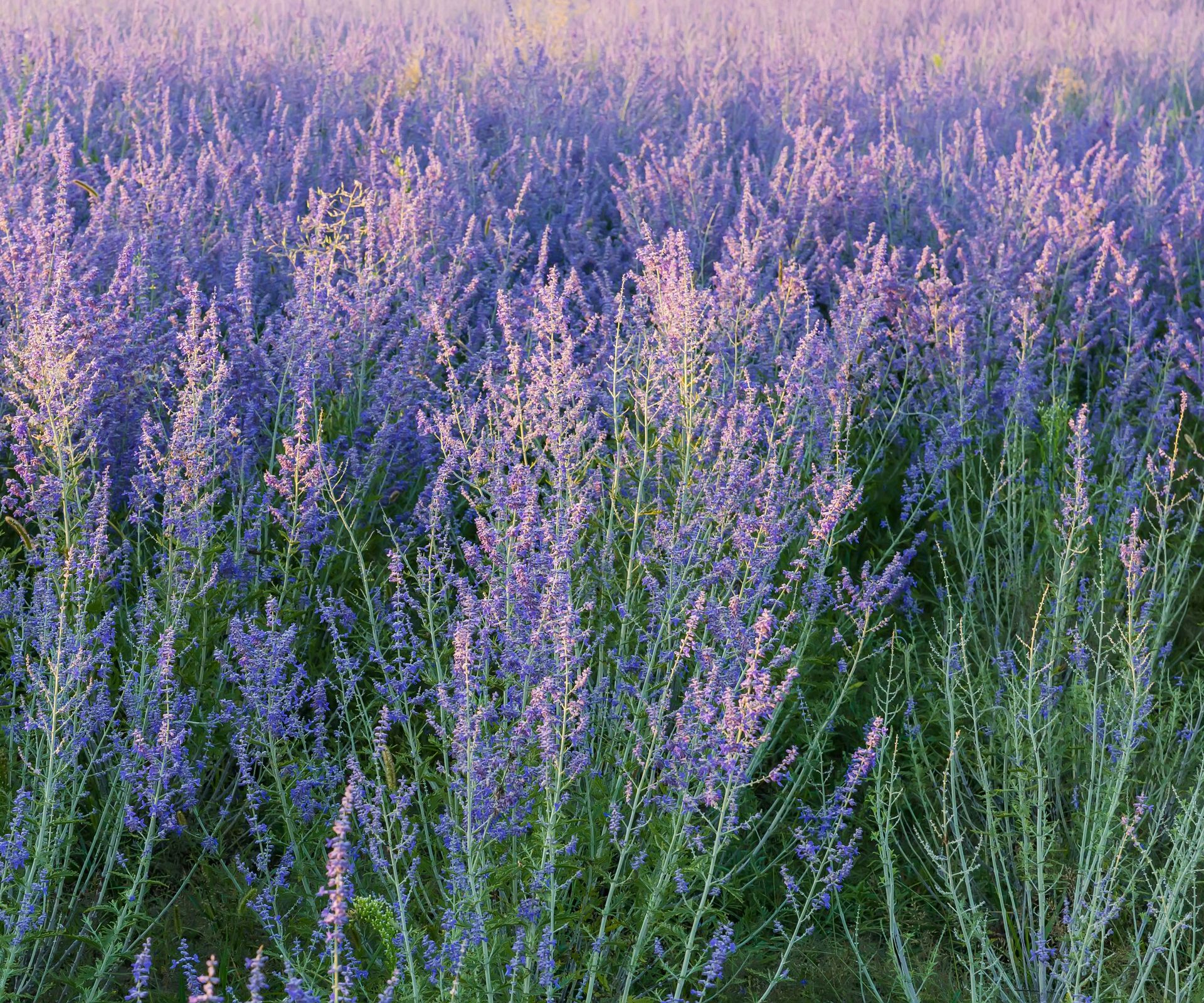
Russian sage (Salvia yangii) is an upright, fragrant perennial with tubular, lavender-blue flowers on tall spikes (2 to 4 feet, 0.6 to 1.2 m) that starts blooming in summer and continues through fall. It makes a bold statement in borders, cottage gardens, drought tolerant gardens, or along walkways. Deer and rabbits avoid its silvery foliage due to its pungent scent and bitter taste.
However, it attracts butterflies, bees, and hummingbirds. Native to Asia, grow Russian sage in well-draining soil in full sun in USDA hardiness zones 5-9. Leave the foliage intact over winter, but cut it down to about 12 inches (30 cm) in spring. Recommended cultivars include ‘Blue Spire,’ ‘Denim ‘n Lace,’ and ‘Little Spire,’ a shorter, compact plant. Proven Winners’ Denim ‘n Lace Russian sage is available from Walmart.
5. New England Aster
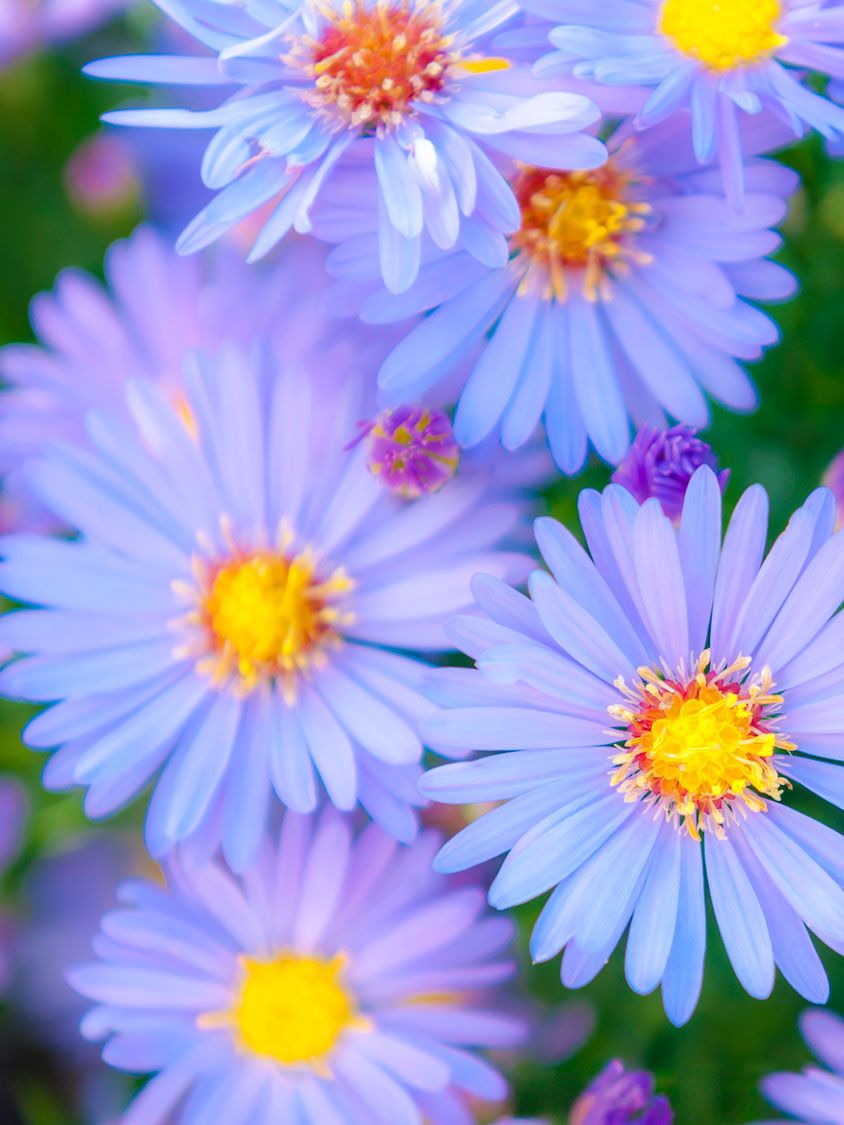
Fall-blooming New England asters (Aster novae-angliae) provide color for us and nectar for many insects, as well as seeds for songbirds. Asters also are a host plant for the pearly crescent butterfly. There are so many native plants as well as cultivars to choose from. Asters are perfect for containers, borders, rain gardens, and pollinator gardens.
A popular New England aster variety, ‘Purple Dome,’ has purple flowers and stays about 2 to 3 feet (0.6 to 0.9 m) tall. ‘Grape Crush’ has dark purple flowers and a compact habit, up to 30 inches (76 cm) and blooms a little earlier than ‘Purple Dome.’ Asters are easy to care for in sun to part sun and well-draining, moist soil, and acclimate better if planted in spring in their USDA zones 4-8.
The asters that show up in stores with the potted mums are typically treated as annuals like mums. They put on a colorful show in fall but seldom return the next spring. Brilliant and compact ‘Purple Dome’ asters can be purchased from Garden Goods Direct and shipped straight to your door (plus they have a sitewide fall sale!)
6. Aromatic Aster
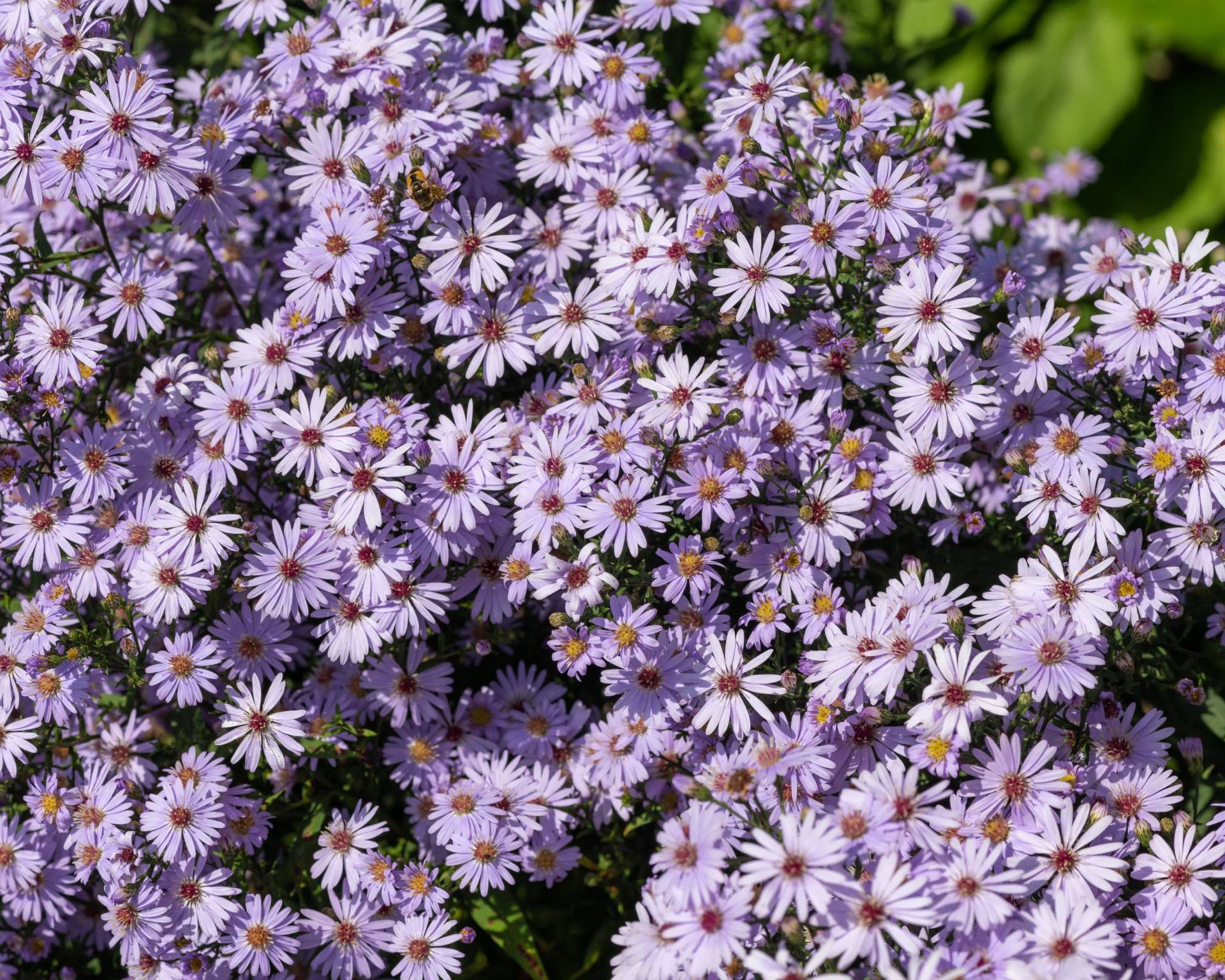
Aromatic aster (Symphyotrichum oblongifolium) is a type of U.S. native aster that is drought tolerant and very popular with the pollinators. One of the varieties, ‘Raydon’s Favorite,’ doesn’t bloom till late fall but provides oodles of violet-blue daisy-type flowers. Another variety, ‘October Skies,’ blooms a little earlier with light blue daisy-like flowers, providing a succession of blooms for all of autumn if you grow both. ‘October Skies’ stays about 2 feet (0.6 m) tall and ‘Raydon’s Favorite’ about 3 feet (0.9 m) tall.
Plant aromatic aster in full sun and well-drained soil in USDA zones 4-8. If you can’t find them in garden centers and nurseries, they are available from online native plant or wildflower nurseries. You can find ‘Rayon’s Favorite’ and ‘October Skies’ from Garden Goods Direct.
7. Mexican Sage
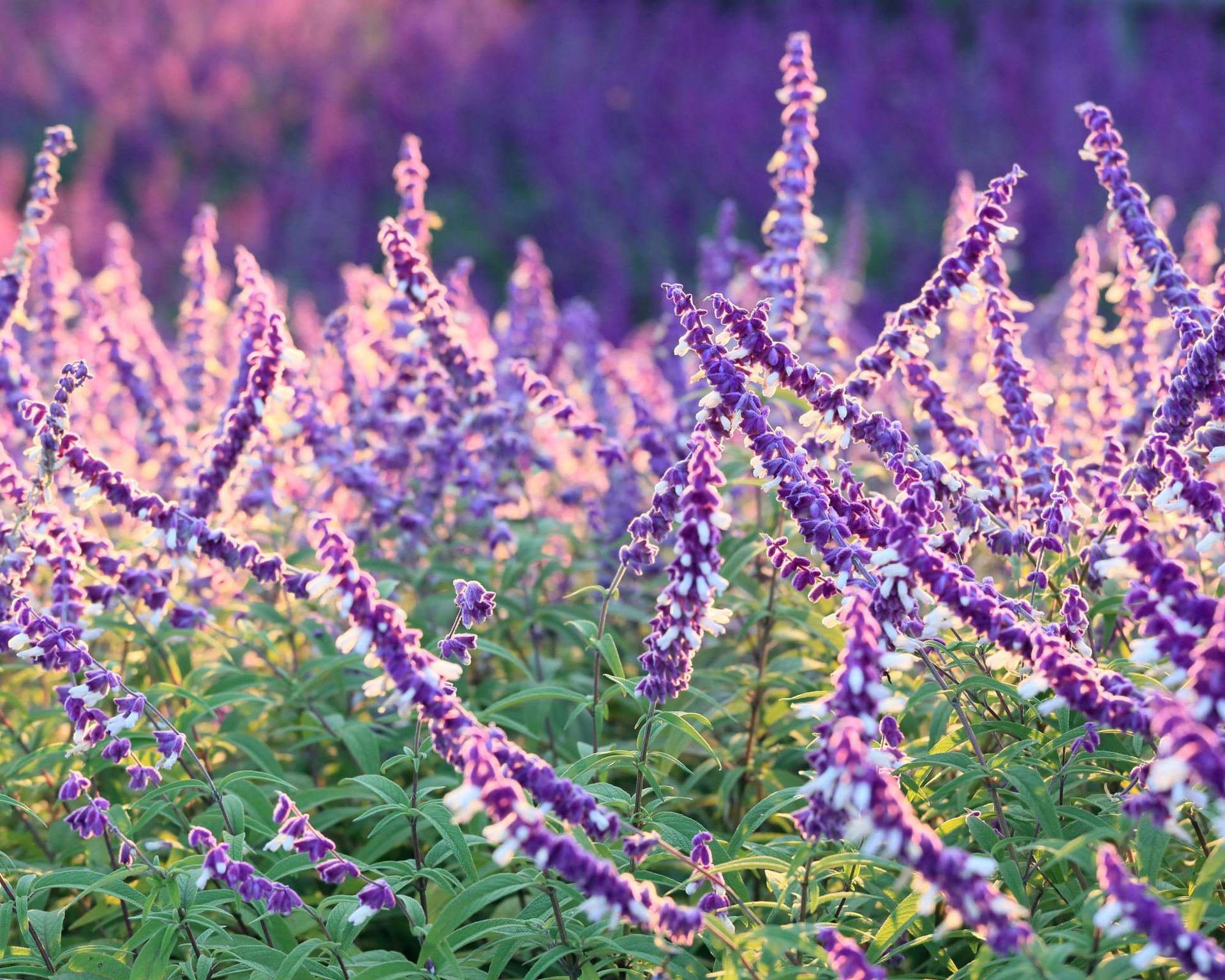
If you like salvias, Mexican sage (Salvia leucantha) is a perfect addition for fall color and feeding late season pollinators, especially butterflies and hummingbirds. Hardy in USDA zones 7-11, it produces long spires of velvety purple flowers with white tongues, set off by soft, greenish-silver foliage. Those in colder zones can grow Mexican sage as an annual in containers.
It also works well in pollinator or butterfly gardens, cottage gardens, and in borders. It prefers rich, moist, well-drained soil in full sun, but tolerates some drought once established. Mexican sage grows 2 to 3 feet (0.6 to 0.9 m) tall and wide. Cultivars include ‘All Purple,’ an all purple selection (no white), and ‘Danielle’s Dream,’ with pink and white flowers, and ‘White Mischief,’ an all-white flowered selection. Dwarf selections are also available. A 3-pack of Mexican sage plants can be purchased from Walmart.