
by Bethany Hayes (revised and updated)
The 30-second version: Don’t pay to fill a deep bed entirely with bagged soil — it adds up fast. The trick is to fill the bottom half or two-thirds with cheap or free bulky organic material (logs, branches, leaves, straw, cardboard, grass clippings) and save the good soil-and-compost mix for the top 6–12 inches where roots actually live. Methods like hugelkultur, lasagna, core, and Ruth Stout gardening all do exactly this. Round it out with homemade compost and composted manure, buy soil by the bulk yard instead of the bag, and add a little perlite or coarse material for drainage. A good target blend up top is roughly half compost, a third or so topsoil, and the rest a fluffy amendment — never all compost, never all topsoil.
Why filling a raised bed gets expensive (and how to beat it)
The first time I filled raised beds with bags of soil, I spent over $50 per bed — and with several beds, that math gets painful fast. The good news is you almost never need to fill an entire bed with purchased soil. Roots do most of their work in the top several inches, so the bottom of a deep bed can be packed with bulky organic material you can get cheap or free. That single idea is what nearly every method below is built on: fill the bottom with free stuff, spend your money only on the top.
A quick word on “garden soil” vs. raised bed mix
When you build a raised bed, it’s tempting to just shovel in dirt from the yard or grab bags labeled “garden soil.” Neither works well on its own. Bagged garden soil is formulated to be dug into existing in-ground beds; used alone in a raised bed it tends to pack down dense and hold too much water, leaving roots soggy with poor drainage. Native dirt from your yard has the same problem and can bring in weed seeds.
What you want in a raised bed is a mix — something light and well-draining that still holds nutrients. Plain topsoil or native soil can be part of that mix as bulk, but it should be the minority ingredient, blended with plenty of compost and a bit of drainage material. (For what to line the very bottom with, we’ve got a separate guide on what to put at the bottom of a raised bed.)
Fill the bottom for free: four layering methods
These four approaches all work the same way — bulky organic matter on the bottom, good soil on top — they just differ in the details.
1. Hugelkultur
Hugelkultur means burying rotting wood and debris under your soil. Lay down logs, branches, wood chips, shredded leaves, grass clippings, and food scraps in the bottom, then fill the gaps and top with soil. As the wood breaks down over years it acts like a sponge, holding moisture and slowly feeding the bed. Fill the bottom 10–12 inches this way and top with your good mix.
2. Lasagna gardening
Lasagna gardening builds the bed in layers, like a compost pile in place. Start with cardboard on the bottom to smother grass and weeds, then alternate layers of “brown” materials (more cardboard, dried leaves, straw) and “green” materials (grass clippings, kitchen scraps, compost), finishing with soil on top. Everything breaks down gradually into rich growing medium.
3. Core gardening
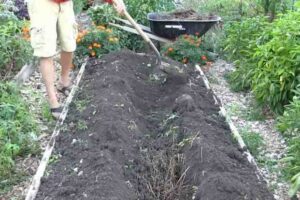
Core gardening builds a water-holding “sponge” down the center of the bed. Dig a trench about ten inches deep down the middle, lay in a little cardboard, and fill it with straw, leaves, grass clippings, or old twigs. Top the whole bed with a mix of topsoil, compost, and potting soil, then water it in well. That buried core wicks moisture outward, so you water far less and tend to get fewer weeds.
4. Ruth Stout method
The Ruth Stout method is the “just keep mulching” approach. You bury the bottom and surround your plants with a thick layer — four to six inches — of organic mulch like hay, straw, or wood chips, which steadily breaks down into the soil while suppressing weeds and holding moisture. It’s an easy way to bulk up a bed and keep adding to it over time.
Cheap and free amendments
5. Homemade compost
Nothing beats homemade compost — it’s the best thing you can add to a bed, and it’s free if you make it yourself. The catch is time: a pile takes six to twelve months to finish, so start it the year before you build your beds. Feed it grass clippings, kitchen scraps, shredded leaves, and newspaper, and you’ll have black gold waiting when you need it. (Here’s our guide to composting at home.)
6. Composted manure
If you or a neighbor keep chickens, cows, horses, rabbits, sheep, or goats, their manure is a fantastic free soil builder — once it’s composted. Never dig in fresh manure; it’s too high in nitrogen and will burn your plants. Compost it for at least several months (ideally close to a year) before it goes in the bed. And never use waste from dogs, cats, or humans, which can carry harmful pathogens.
7. Peat moss or coco coir
A big bag of sphagnum peat moss bulks up a bed and lightens heavy soil, but go in with clear eyes: peat adds almost no nutrients, it’s acidic (so don’t overdo it unless you’re growing acid-lovers like blueberries), and it’s harvested from slow-to-regrow bogs. Coco coir does the same job, is pH-neutral, and is the more renewable choice, so it’s worth considering instead. Treat either as a texture amendment, not a nutrient source — and not really a “free” one, so use it to supplement, not as your main fill.
Buy smarter

8. Buy soil in bulk
When you do buy soil, skip the bags. At $3–$5 a bag they add up fast, and most nurseries and landscape suppliers sell soil and compost by the cubic yard for a fraction of the per-volume cost, often with delivery. For anything more than one small bed, buying in bulk is the single biggest money-saver.
9. Add a little material for drainage
Whichever method you use, work in a bit of material to keep the soil from compacting and to let water move through: perlite, pumice, coarse sand, or fine bark all do the job. Don’t overdo it, though — too much and the bed won’t hold enough moisture. A modest amount mixed into the top layer is all you need.
How much soil do you actually need?
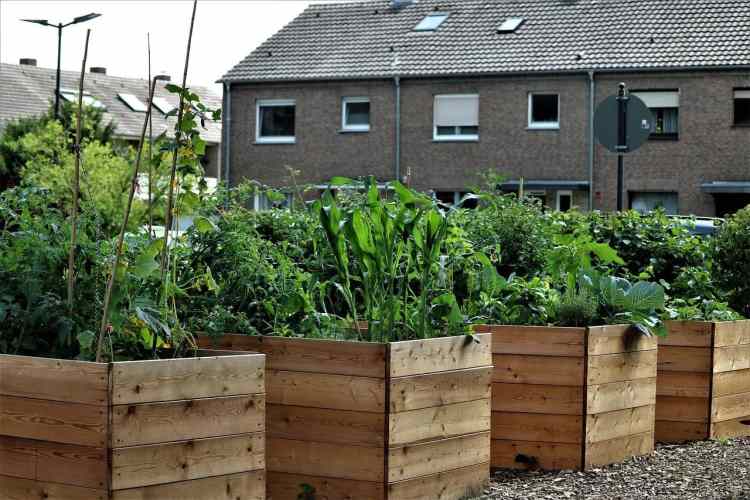
Measure your bed and multiply length × width × depth to get cubic feet. An 8′ × 4′ × 1′ bed, for example, needs about 32 cubic feet to fill completely — but remember, with the layering methods above, only the top portion needs to be purchased mix. Buy a little extra regardless, since soil settles and you’ll get gaps the first season.
Common Questions
Do I need to remove the weeds or grass at the bottom of the bed?
You don’t have to pull them, but you should smother them. Lay cardboard across the bottom before you fill — it blocks light long enough to kill the grass and weeds underneath, then breaks down on its own.
Is topsoil okay for raised beds?
As part of the mix, yes — but not on its own. Topsoil is bulk filler with little organic matter, so keep it to roughly 10–20% of your blend and make up the rest with compost and amendments.
Can I fill a raised bed with just compost?
No. Pure compost drains too fast and slumps as it breaks down, washing nutrients away. Aim for compost as about 30–50% of the blend, with topsoil and a drainage amendment making up the rest.
What’s the cheapest way overall?
Fill the bottom with free organic material (hugelkultur or lasagna style) and top it with homemade compost plus bulk-bought soil. That combination gets a deep bed filled for a fraction of the all-bagged price.
Final Thoughts
A deep raised bed doesn’t have to drain your wallet. Fill the bottom with the free bulky material you already have around — logs, leaves, straw, cardboard — and spend only on the rich soil-and-compost mix up top where roots live. Start a compost pile early, buy any soil you do need in bulk, and you’ll fill as many beds as you want for a fraction of what those bags would have cost.

The post 9 Ways to Fill Raised Bed Gardens Cheaply appeared first on Gardening Channel.