On a hot day, bees still need to stay busy in the garden. But they get thirsty doing it. A honeybee colony needs a steady supply of water right through summer, and not only for drinking – they use it to cool the hive and to thin out food for the brood. The catch is that the shallow puddles and damp ground bees usually sip from tend to dry up the moment a heatwave settles in.
You can help them with a quick DIY project. A pollinator water station is barely a project at all – at its simplest, it’s a shallow dish with a few stones in it, filled with fresh water and topped up as it drops. You can throw one together in minutes from odds and ends already around the house, and it makes a real difference to the bees out working your flowers.
Why Give Bees Water in Summer?
Bees need water for more than a quick drink. On a hot day, a honeybee colony collects water and spreads it through the hive, then fans it with their wings so the evaporation pulls the temperature down. It’s basically air conditioning, run on water. They also use the water to soften stored honey and mix food for the developing brood. When the mercury climbs, demand shoots up, and foraging bees spend real effort tracking water down.
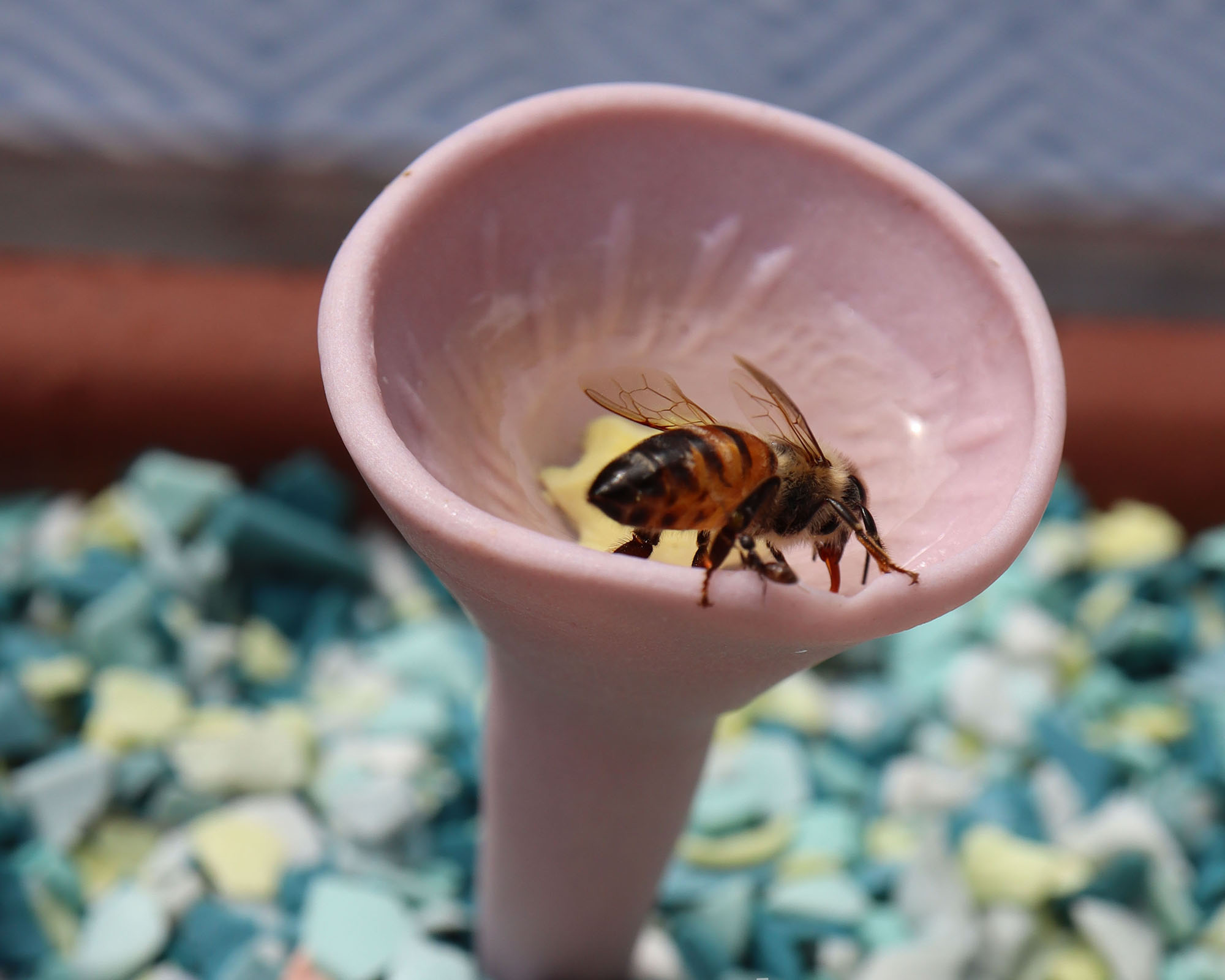
Here’s the problem, though: bees can’t swim. They’re light enough that the surface tension of an open bowl or birdbath can trap them. One badly judged landing on deep, smooth water and they don’t get back out. A watering station gets around that by keeping the water shallow and giving them solid footing to stand, allowing them to drink safely.
What You’ll Need
You don’t need much to make your bee watering station:
- A shallow, wide container. Terracotta plant saucers are ideal, or even an old pie dish.
- Pebbles or glass marbles to break the surface
- A few wine corks, which float and double as landing rafts.
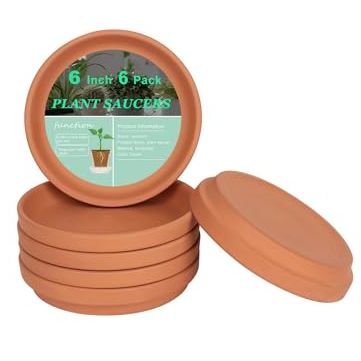 The Saucer
As well as classic terracotta, this six-pack of saucers comes in eight colors so you can choose one to suit your garden.
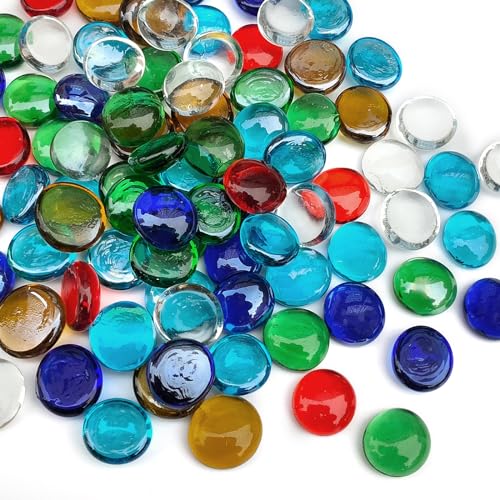 The Pebbles
These flat glass pebbles allow bees to access the water without drowning. Their bright colors also make an attractive design element.
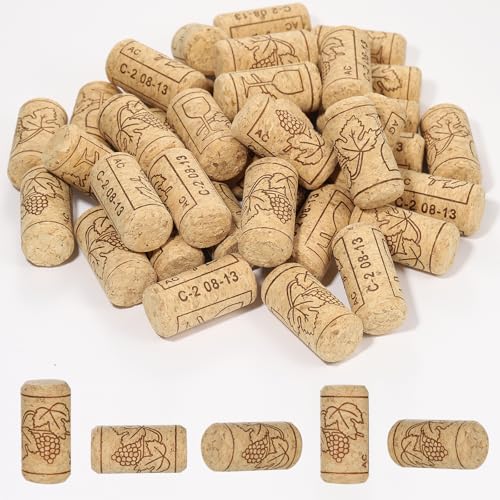 The Corks
Toss a few corks into your water station. Even if your saucer is overflowing, they’ll keep the bees afloat.
How to Make Your Bee Watering Station
None of this is complicated. Five minutes, maybe less, and you’ve got a working bee bath.
1. Start with a Low Dish
Set your container somewhere level. Depth is the thing that matters – an inch or two (2–5 cm) of water is plenty, since bees only need to reach the edge of it, not wade in. A saucer or low bowl beats anything deep with steep sides.
2. Add the Landing Spots
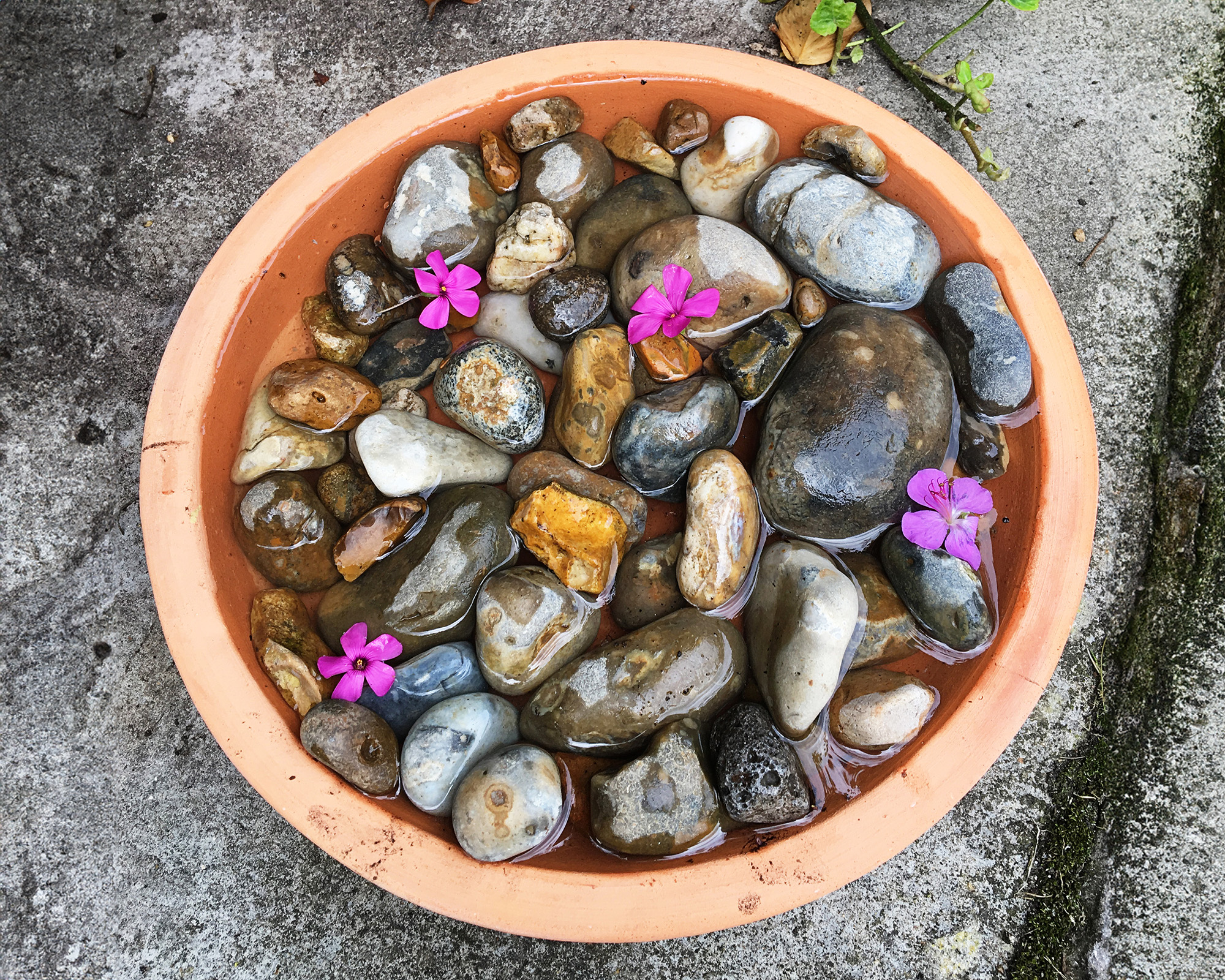
Fill the dish with pebbles, stones, or marbles until they mound up above where the waterline will sit. The idea is to leave plenty of dry, grippy surface for bees to stand on. Even a handful of clean gravel from the garden will work.
3. Fill it Up
Pour in fresh water until it pools around the stones but leaves their tops poking out, so bees land on the dry stone and sip from the shallow edge. Check it daily in hot weather; a dish this size can evaporate down to nothing by late afternoon, and the landing spots only work while they’re above water.
Shop Bee Water Stations
If DIY isn’t your thing, these bee drinking stations look great and come ready to fill.
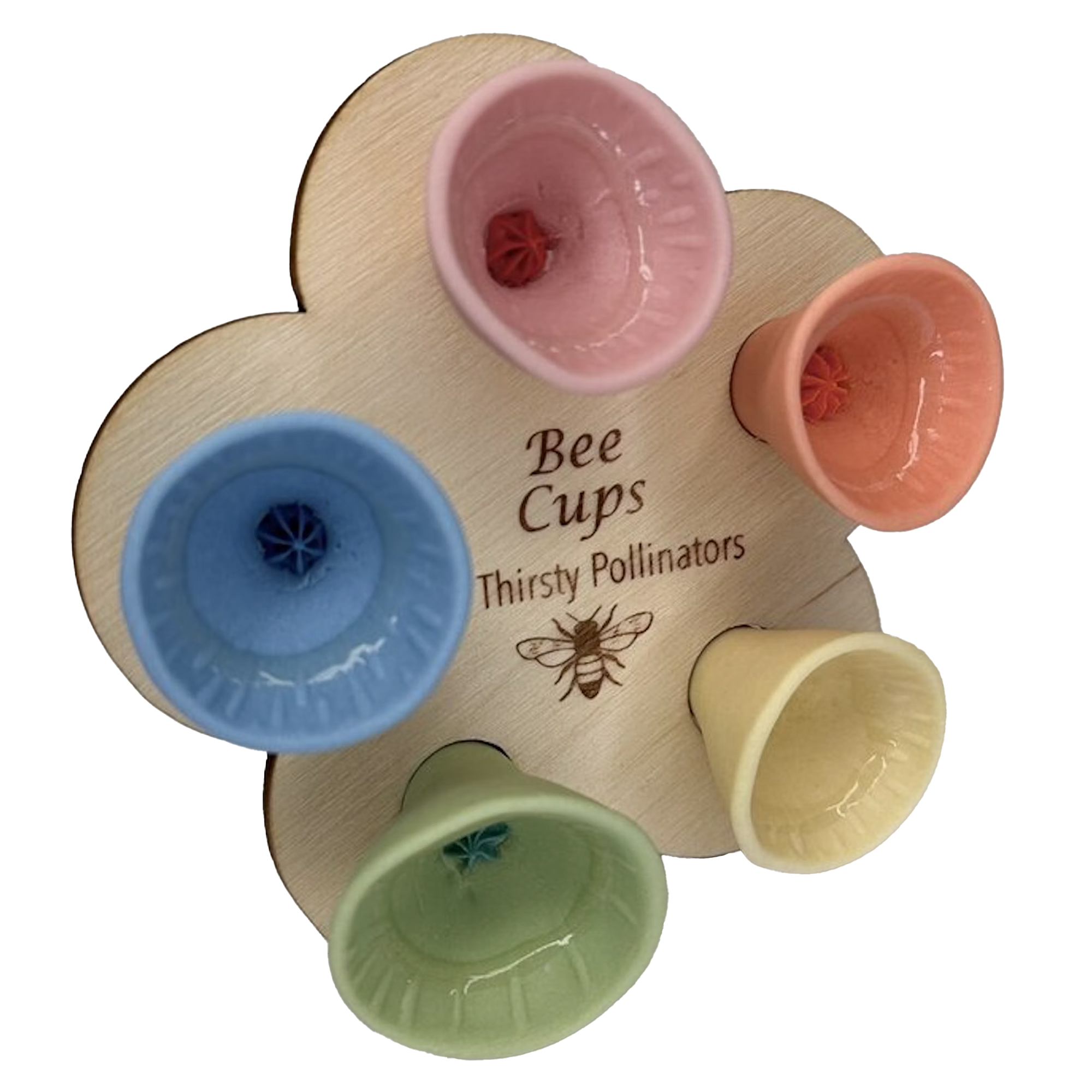
These original Bee Cups have inspired many imitations. Available in a range of pretty colors, they were designed by a scientist-turned-ceramicist to attract bees and keep them safe.
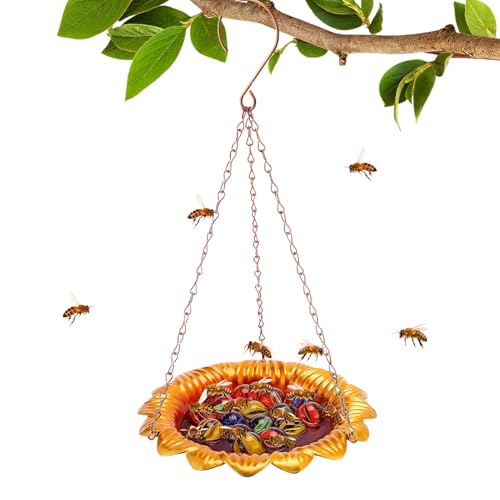
This pretty hanging bee bath comes with 15 pebbles so it’s ready to just hang and fill. It’s anti-rust and weather resistant, so will last for years to come.
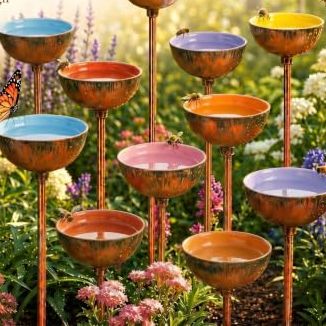
With removable stakes, these metal bee cups will develop a charming patina as they weather.
Keeping the Water Clean and safe
Standing water and summer heat mean mosquitoes, so refresh the dish every couple of days rather than just topping it off – that breaks the breeding cycle before larvae get going. Give the stones a rinse when algae starts to film them over, and skip the soap, since any residue does more harm than the grime did. Rainwater is fine, and so is tap water; the source doesn’t matter much.
One thing to leave out: sugar or honey in the water. It sounds helpful, but sugar water pulls in wasps and can spread disease between hives. Honey from an unknown source may carry pathogens that hurt the very bees you’re trying to help. Plain water is what they’re after. If wasps or other insects start crowding in anyway, shifting the dish a few feet (1 m) usually settles things down.
Where to Position Your Bee Bath
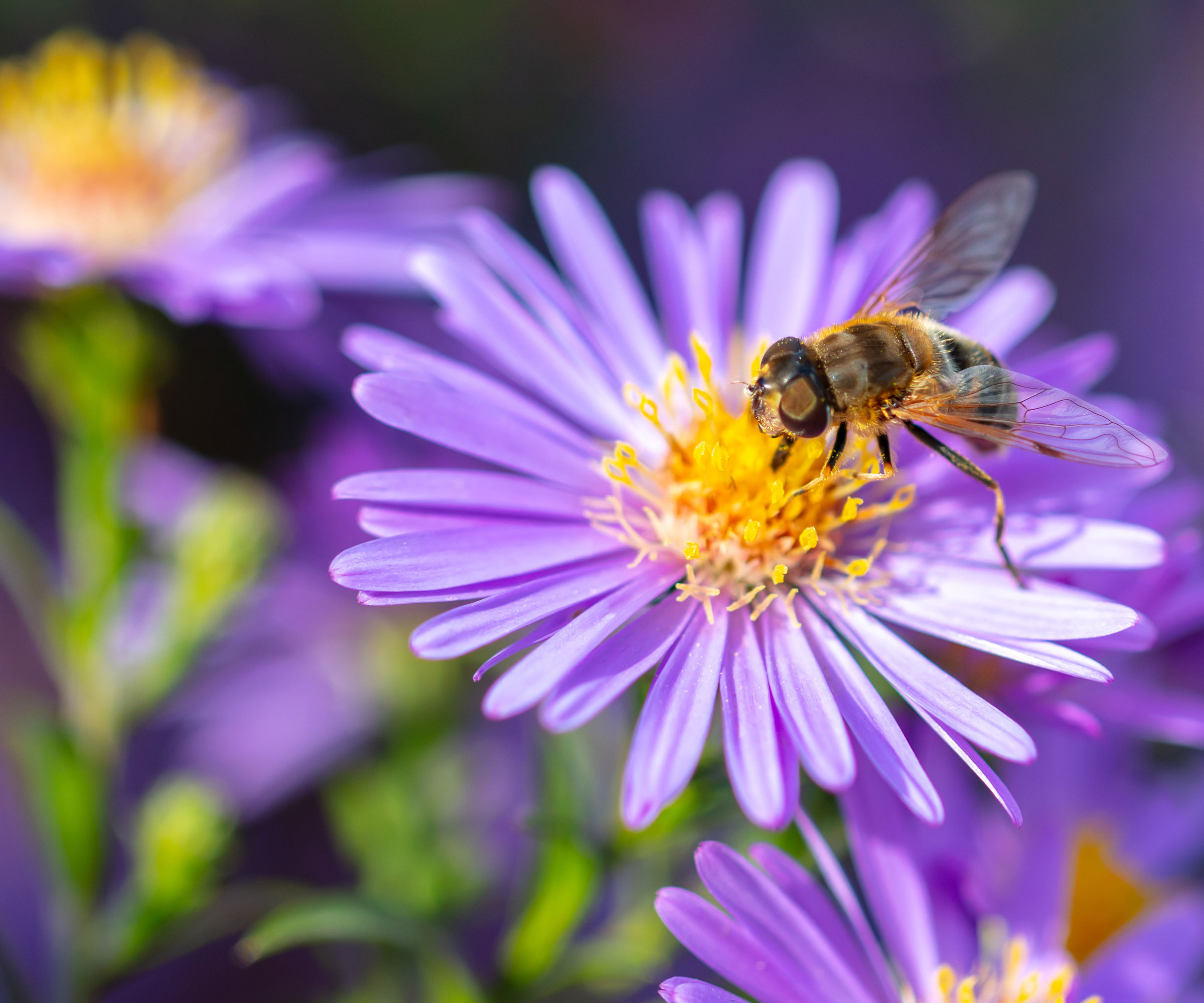
Position matters more than you’d think. Set the station near flowers the bees already visit, so it’s close to where they’re working, and somewhere with a bit of afternoon shade so the water doesn’t turn to bath temperature or evaporate by noon. A little morning sun helps them find it. Out of the wind is better too – a spot tucked beside a wall or a clump of planting gives some shelter.
Once bees find a reliable source, they come back to it and bring others, so keep the station in the same place and don’t let it run dry mid-summer. Raised up on a low table or wall, it stays cleaner and out of reach of pets.
Change the water regularly, and you’ll have happy bees who will help your garden stay healthy and blooming.