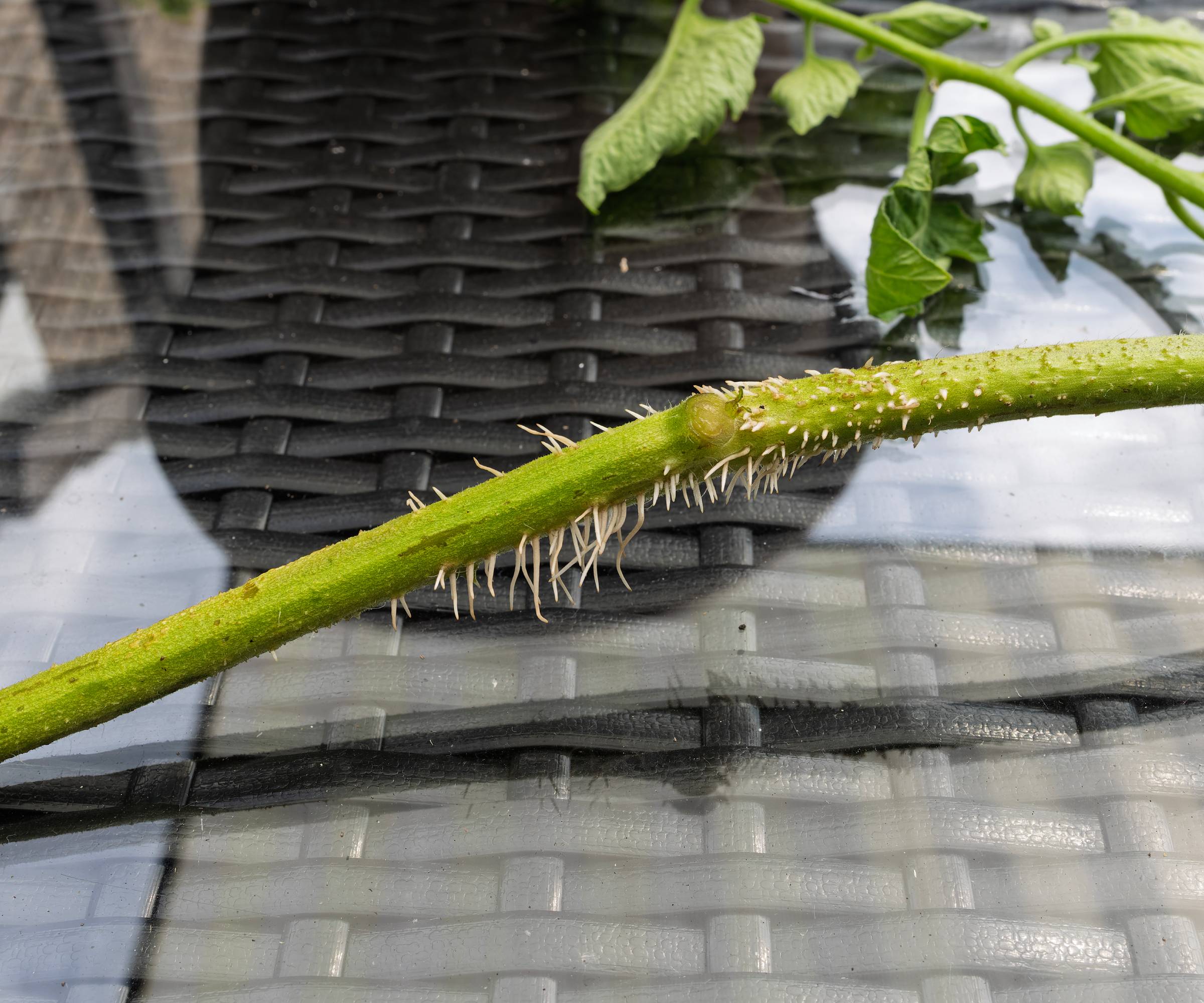
Tomato plants spend August pushing out side shoots faster than anyone can keep up with. Most of those suckers end up on the ground, forgotten by evening. Something else happens when one goes into a jar of water instead. Tomato stems carry the cells that become roots along their whole length, so a cutting never starts from scratch the way a seed does.
Anyone who has learned to grow tomatoes from seed knows the wait involved, since a spring transplant needs six to eight weeks before it is anywhere near ready for the garden. A rooted sucker skips nearly all of that. The tissue is already mature. It flowers on its own schedule rather than growing up first.
Which Shoots Are Worth Taking?
A tomato sucker sits in the crotch where a leaf branch meets the main stem, angled up at roughly forty-five degrees. Left alone it becomes another branch, and that branch will carry flowers of its own by autumn. Two things get cut by mistake here – the thick vertical stalk running up the middle, and the horizontal leaf branch itself. Neither one should come off. At 4 to 6 inches (10-15cm) a sucker holds enough stored energy to support itself without carrying so much leaf that it wilts before roots arrive. Smaller than that tends to be weak. Much bigger and the cutting spends its first week in shock.
Parent choice matters more than size, though. A clone carries whatever the parent has. A vine already spotted with early blight or curling from virus hands those troubles straight down to the new plant. That is a rough way to spend eight weeks. Pick from the healthiest plant in the row, ideally one still putting on fresh growth, snip just below a node with something clean and sharp, then strip every leaf off the lower half of the stem.
Water or Soil?
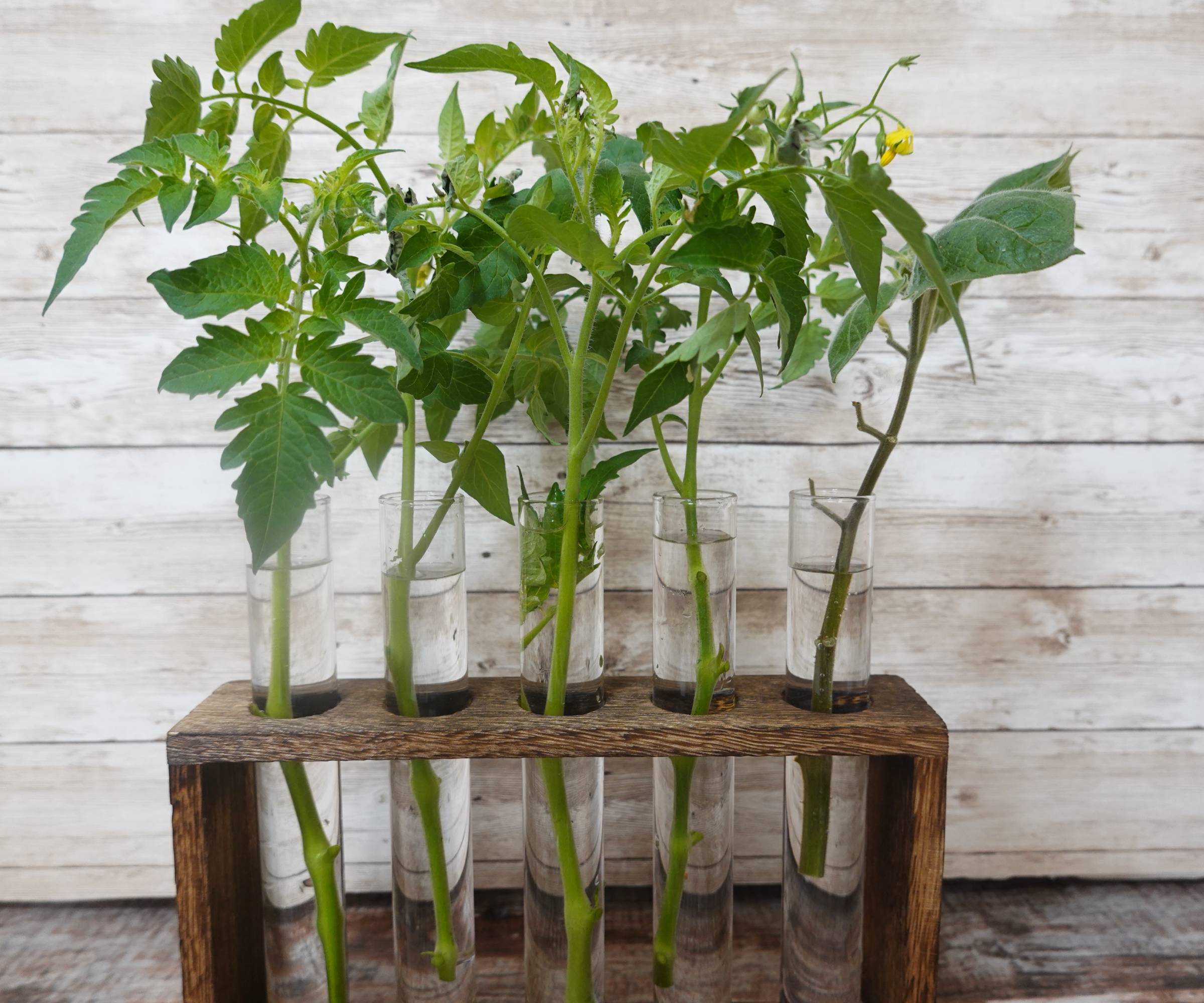
Rooting tomato cuttings in water is the method most people reach for, mostly because the roots are visible. A jar on a bright windowsill works well, kept out of direct sun, with only the bare stem submerged and the leaves held clear of the surface. Any leaf touching water will rot and foul the jar. Fresh water every couple of days prevents that. A clear jar makes progress easy to check. Roots usually show in seven to fourteen days, and once they reach an inch (2.5cm) the cutting is ready to pot up. I’m a big fan of this propagation station from Amazon, which turns the whole process into a work of art.
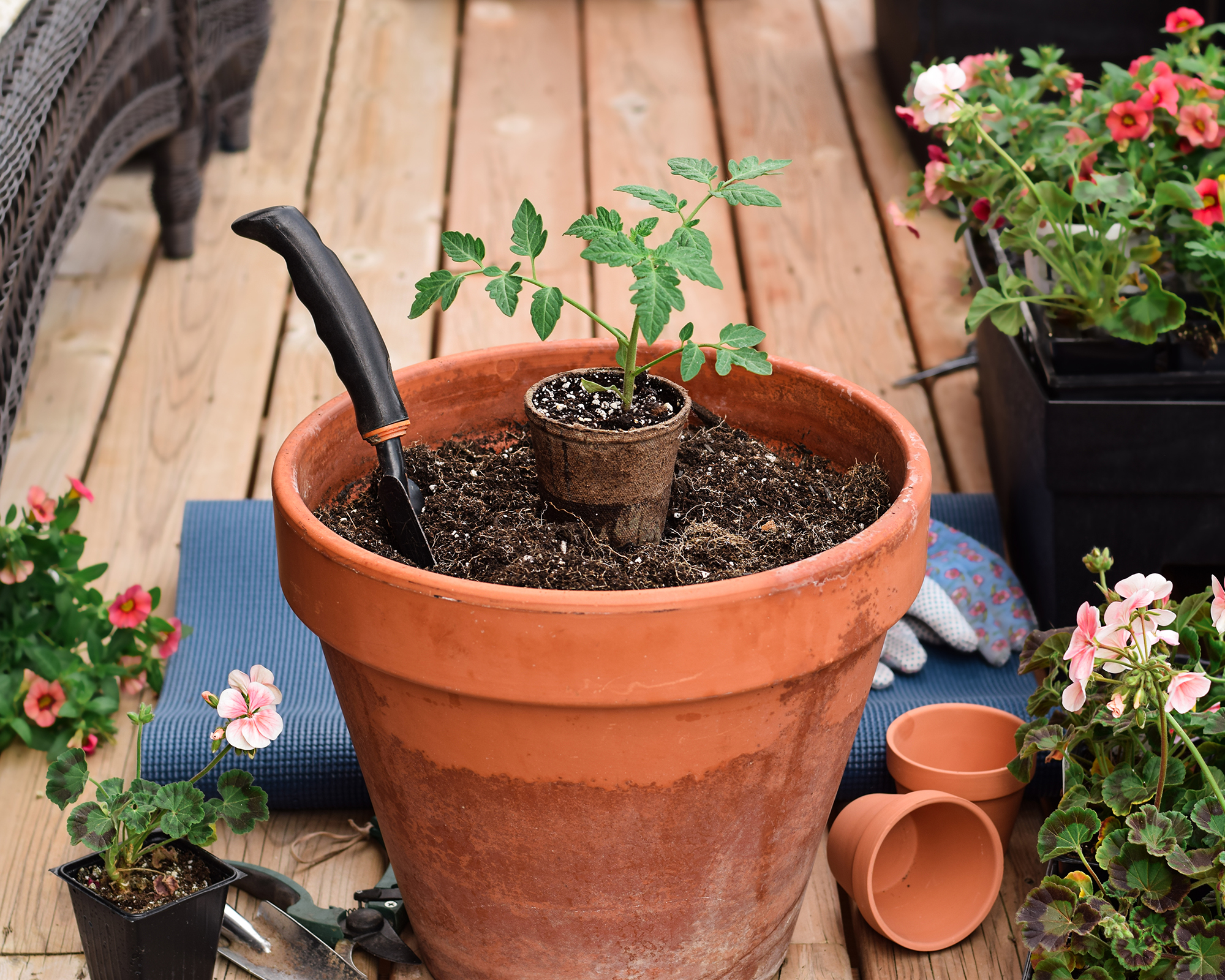
Rooting straight into moist potting mix skips a step. Water roots and soil roots are not quite the same structure, so cuttings moved from jar to garden often sulk for a few days while they adjust. Push the stripped stem two inches (5cm) into damp mix. Keep it shaded and evenly watered. A gentle tug after ten days will say whether it has taken. A tray of 4-inch nursery pots from Amazon can handle a dozen at once, about the right number to lose a couple and still come out ahead. Rooting hormone is optional at best on tomatoes. If you do want to use it, go with this one from Amazon.
Getting Them Through the Heat
A rootless cutting in August has no way to replace what it loses. Afternoon sun is the main threat for the first two weeks. Morning light with shade from noon onward is about right, whether that comes from the east side of a building or from a panel of shade cloth from Home Depot stretched over hoops. The same goes for a cutting set in the ground rather than a pot.
Humidity helps as well. A clear plastic bag propped over the pot for a few days keeps the leaves from drying faster than the stem can supply them, though it has to come off once new growth appears. Keep the mix damp rather than wet – cuttings rot about as easily as they root. Once the plant is pushing fresh leaves, a week of gradually longer sun gets it ready for a permanent spot.
Racing the First Frost
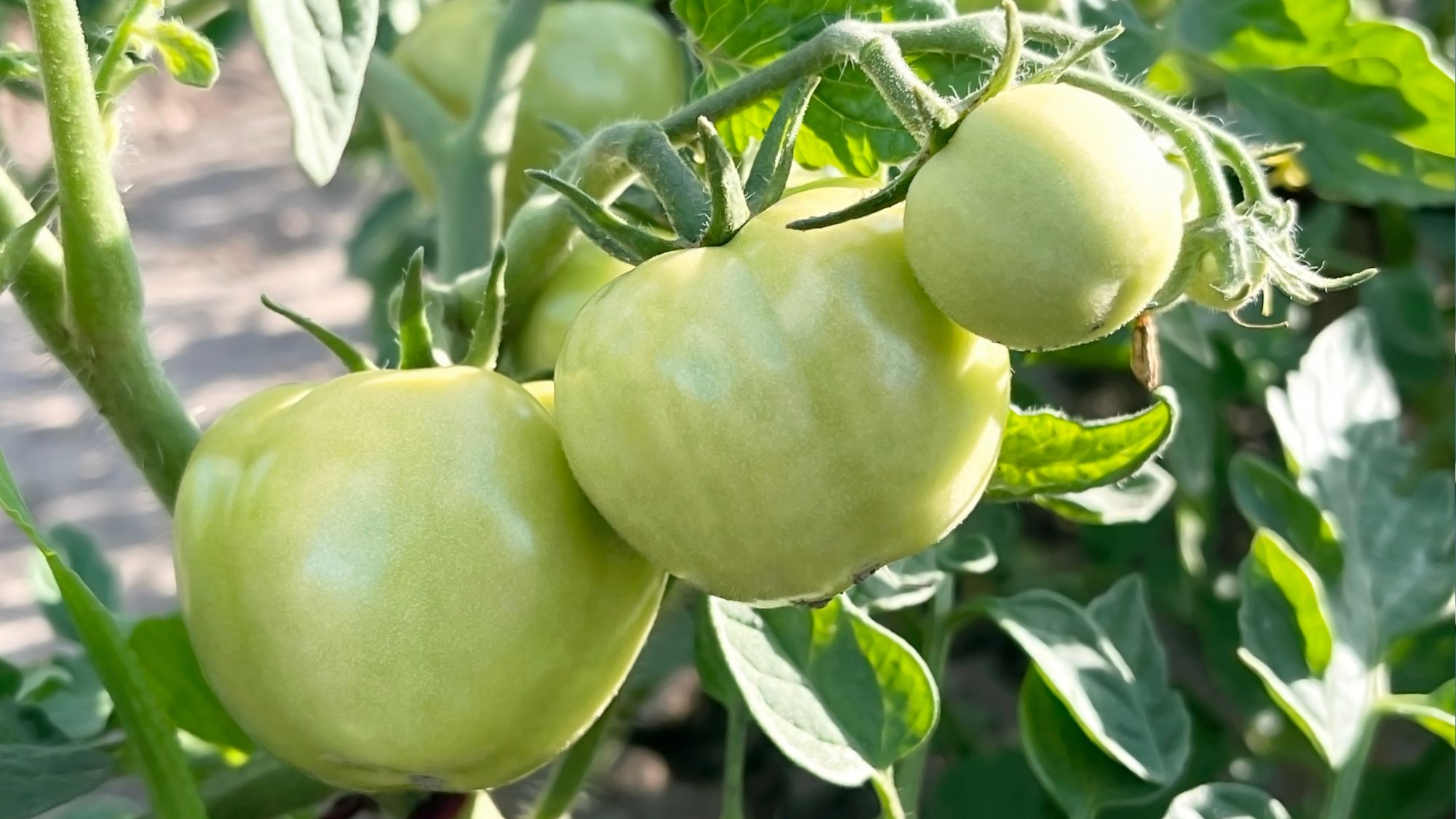
Timing is the honest catch here. Rooted cutting to ripe fruit runs somewhere around eight to ten weeks in decent conditions, which puts an early August start into fruit by mid October across much of the country. Cherry tomatoes and the smaller plum tomatoes ripen fastest. Their fruit sizes up in a fraction of the time a big slicer needs, and a plant loaded with twenty small tomatoes beats one holding two green softballs.
Cold is manageable up to a point. A frost cover from Walmart thrown over the row buys several degrees on the nights that would otherwise end things. Anything growing in a pot can move to a porch instead. Tomatoes picked at the first blush of color finish ripening indoors, so a late flush never goes to waste.
The whole thing costs a jar and some patience. There is something quietly satisfying about eating fruit in November off a shoot that was headed for the compost pile in August.