Poinsettia (Euphorbia pulcherrima) is an attractive house plant with dark green leaves and leafy red ‘bracts’ that surround the green-yellow flowers in December and January. They’re commonly used to decorate the home at Christmas. Native to Mexico, poinsettias can be tricky to keep alive after Christmas and most are thrown away after the red bracts have faded and the festivities have ended. However, with a little care and attention it’s possible to keep your poinsettia alive throughout the year and even encourage red bracts and flowers to form in time for the following Christmas.
How to grow poinsettia
Grow poinsettia in a draught-free spot with bright, indirect light and a temperature of around 13-15°C. Water sparingly, typically when the surface of the compost has started to dry out. Mist the leaves and bracts regularly to increase humidity and keep the colourful bracts looking their best for longer. After Christmas, feed your poinsettia monthly with a high potash liquid feed, such as a tomato feed.
Buying poinsettias

If buying your poinsettia from a garden centre or supermarket, make sure it’s in good condition and that no leaves are wilting, as wilting leaves can be a sign that they’ve been stored in too-cold conditions. Avoid buying poinsettias that have been displayed near a door or even on a petrol station forecourt – they simply won’t last.
Take care to ensure it’s well protected on the journey home, making sure its delicate leaves aren’t exposed to freezing temperatures – ask the shop assistant to wrap it up or cover it in a plastic bag if you need to. Don’t leave your poinsettia in the car for longer than is absolutely necessary as temperatures can quickly tumble and your poinsettia will suffer.
How to care for a poinsettia

Watering
Water only if the surface of the compost is dry, and continue to water sparingly. Increase humidity by spraying gently with water every few days. This will help keep the leaves and bracts in tip-top condition. Dust the leaves as and when you need to, to keep your poinsettia looking its best but also ensuring its leaves can photosynthesise properly, so it remains as healthy as possible.
Light
The best place for a poinsettia is in a bright, draught-free spot out of direct sunlight.
Soil
Keep your poinsettia in the same pot you bought it in, as the compost will be just right for it. If you want to repot it after Christmas in order to encourage it to flower the following year, use a free-draining, peat-free loam-based compost, and feed fortnightly with a high potash fertiliser such as a tomato feed.
Temperature/humidity
The ideal average temperature for poinsettias is 13-15ºC. Keep away from windows, where temperatures can drop significantly at night, and from doorways and open fireplaces, which can be draughty.
Pruning
There’s no need to prune poinsettias before Christmas, but if you would like to encourage it to flower again the following year, prune back to 10cm in April.
Staking
There’s no need to stake poinsettia
How to encourage poinsettias to flower again

It’s not easy to get your poinsettia to flower again, but if you’re up for a challenge, follow these instructions carefully:
After Christmas, start feeding your poinsettia with a liquid plant food that’s high in potassium, such as tomato food.
In April, prune your poinsettia back to about 10cm, and keep at a temperature of 13°C. In early May, repot your poinsettia into a slightly larger pot with fresh, peat-free, loam-based compost, and then keep it in a draught-free spot out of direct sunlight, ensuring the temperature doesn’t exceed 18ºC.
Poinsettias develop flowers and colourful bracts when day length decreases. This occurs naturally in December, but to encourage flowering by Christmas, you’ll need to mimic short day length by moving your poinsettia into a dark cupboard for 12 hours each day, from November. Keep an even temperature of around 18ºC and make sure it’s not exposed to artificial light during this time.
Once your poinsettia has started flowering, mist leaves daily to keep them looking their best for as long as possible.
How to propagate poinsettias
Propagate your poinsettia from softwood cuttings in May. Make sure you wear gloves when doing this – like all members of the euphorbiacea family, poinsettias have milky sap that can irritate the skin.
For help finding the right gloves see our our round up of 10 of the best gardening gloves and our individual glove reviews for inspiration.
Common issues
Leaves
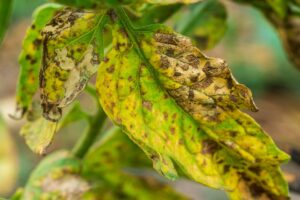
The most common problem when growing poinsettias is that the leaves wilt and drop off. This is a sign of cold conditions. Remember poinsettias are from Mexico and need to be kept at a minimum temperature of 13ºC, away from draughts (including near doors, fireplaces or single-glazed windows). Unfortunately, some poinsettias are kept in poor conditions in the shop or garden centre, and the leaves start to wilt when you get them home. Sadly there’s not much you can do for your poinsettia at this stage. Always buy your poinsettia from a reputable supplier and remember to protect it from cold conditions on the journey home.
Grey mould on the leaves can result from over-watering. Make sure you water your poinsettia only when the surface of the compost is dry, and mist the leaves regularly to maintain humidity around the plant.
Advice on buying poinsettias
- Make sure your poinsettia is in good condition and that no leaves are wilting, as wilting leaves can be a sign that they’ve been stored in too-cold conditions
- Avoid buying poinsettias that have been displayed near a door – they simply won’t last
- Ask the shop assistant to wrap your poinsettia up or cover it in a plastic bag to protect it on the way home
Where to buy poinsettias
Poinsettia varieties to grow
- Euphorbia pulcherrima ‘Silver Star’ – dusky pink bracts and variegated leaves
- Euphorbia pulcherrima ‘Lemon Snow’ – pale yellow bracts
- Euphorbia pulcherrima ‘Cortez Burgundy’ – deep plum bracts
Choose from a range of poinsettias from Gardening Express
Frequently asked questions
What is the lifespan of a poinsettia?
Given the right conditions, a poinsettia can live for up to 20 years, but most sadly die within a few weeks. This is because they are not cared for properly, and may have been exposed to draughts and cold temperatures, either in the shop or your home. Follow our detailed care guide above on how to look after a poinsettia, and you could have yours for many years to come.