The finger test says everything is fine. Push into the top inch of soil and it comes back cool, damp, maybe clinging a bit. Yet the plant above it is drooping by the afternoon, leaf edges going crisp at the margins, and the obvious conclusion – that it needs a drink – leads to more water, which somehow makes it worse.
Wet soil and a thirsty plant are not a contradiction. Watering the garden well means getting moisture into the roots, and there are several ways that hand-off can break down even when the soil around them is holding plenty. Damaged roots can’t pull it in. Compacted or water-repellent compost lets it slide right past. On a brutal afternoon, leaves can lose water faster than any root system could resupply.
3 Signs a Plant Is Thirsty in Damp Soil
Three signals tend to show up when a plant is dehydrated in damp soil. Any one on its own might mean something else, though together they make a fairly clear case.
1. Wilting That Doesn’t Recover Overnight
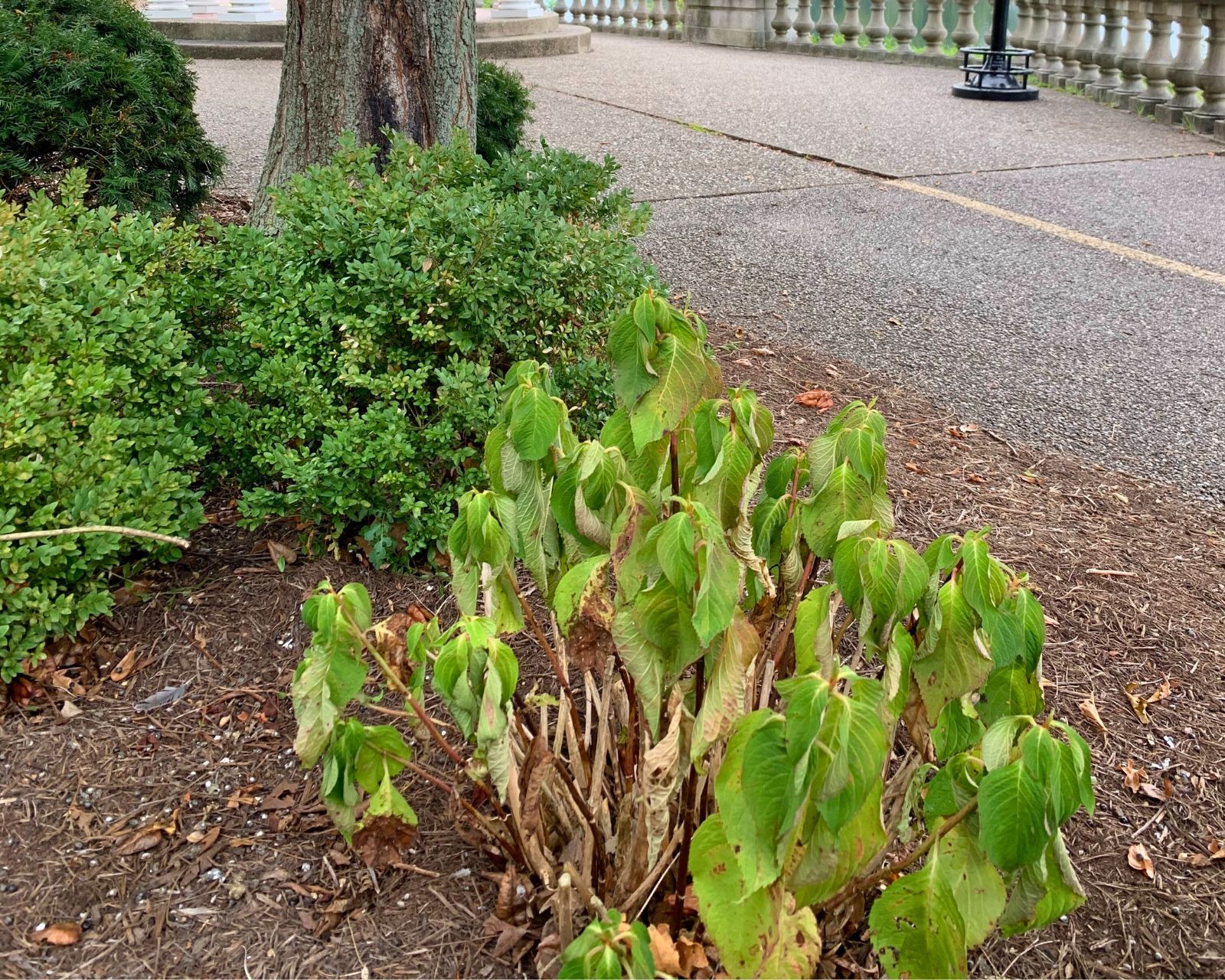
Wilting through the hot part of the day is normal enough, and a plant that firms back up by evening is just riding out the heat. The trouble is the one still drooping the next morning, before the sun has done anything to it. Overnight is when a healthy plant catches up, refilling its tissue while transpiration slows to almost nothing. When it doesn’t, the roots aren’t delivering, and the soil moisture around them has nothing to do with it.
2. Crisp Leaf Margins on New Growth
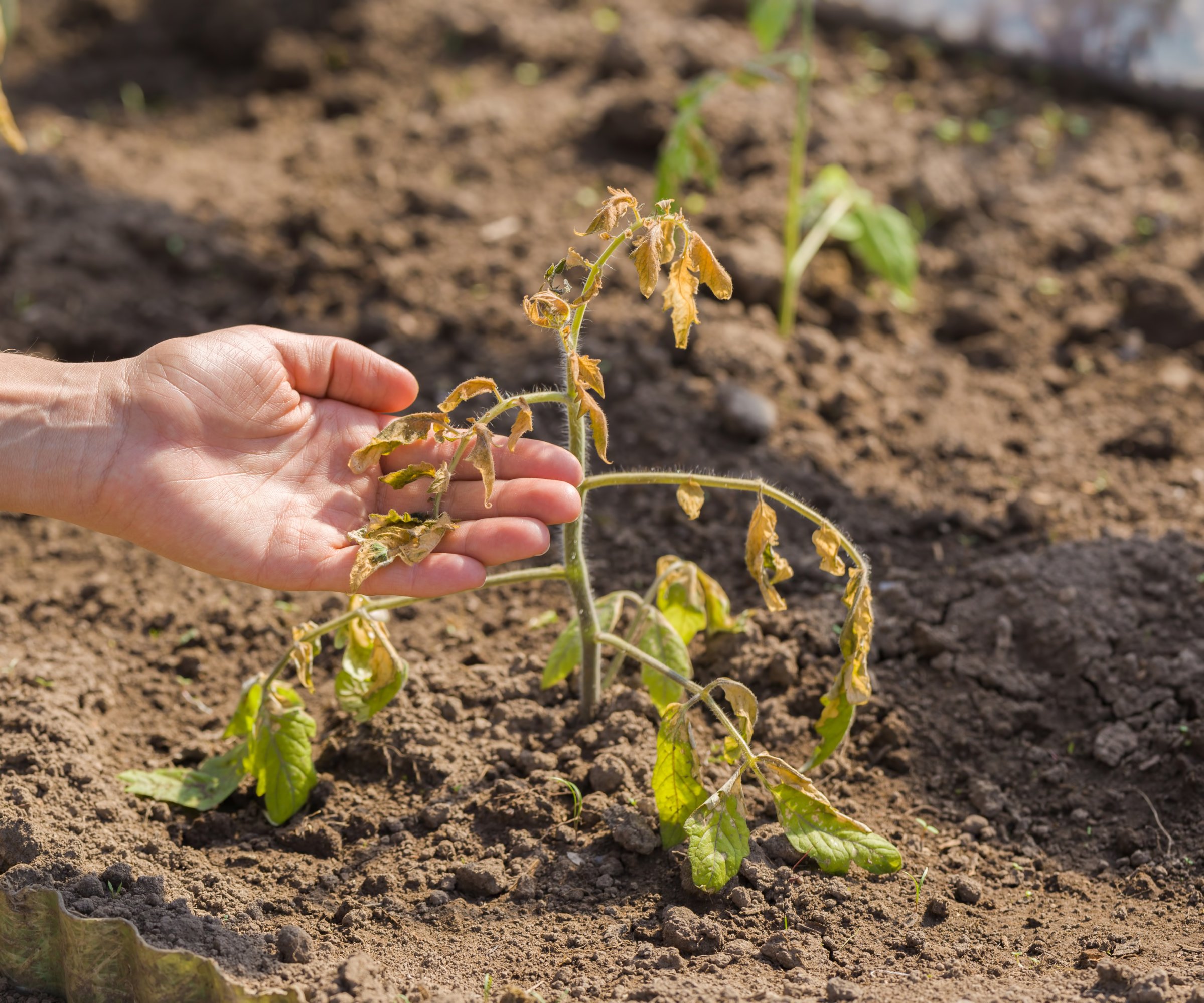
Brown, papery edges creeping in around the margins of leaves, particularly the newest growth, while the soil sits damp. Those margins are the last stop on the plant’s plumbing, so when water gets scarce inside the plant they’re the first tissue to be sacrificed. Whole-leaf yellowing usually points somewhere else – overwatering, or a nutrient problem. It’s the dry rim on an otherwise green leaf that suggests the water simply isn’t arriving.
3. Water That Runs Straight Through or Beads on Top
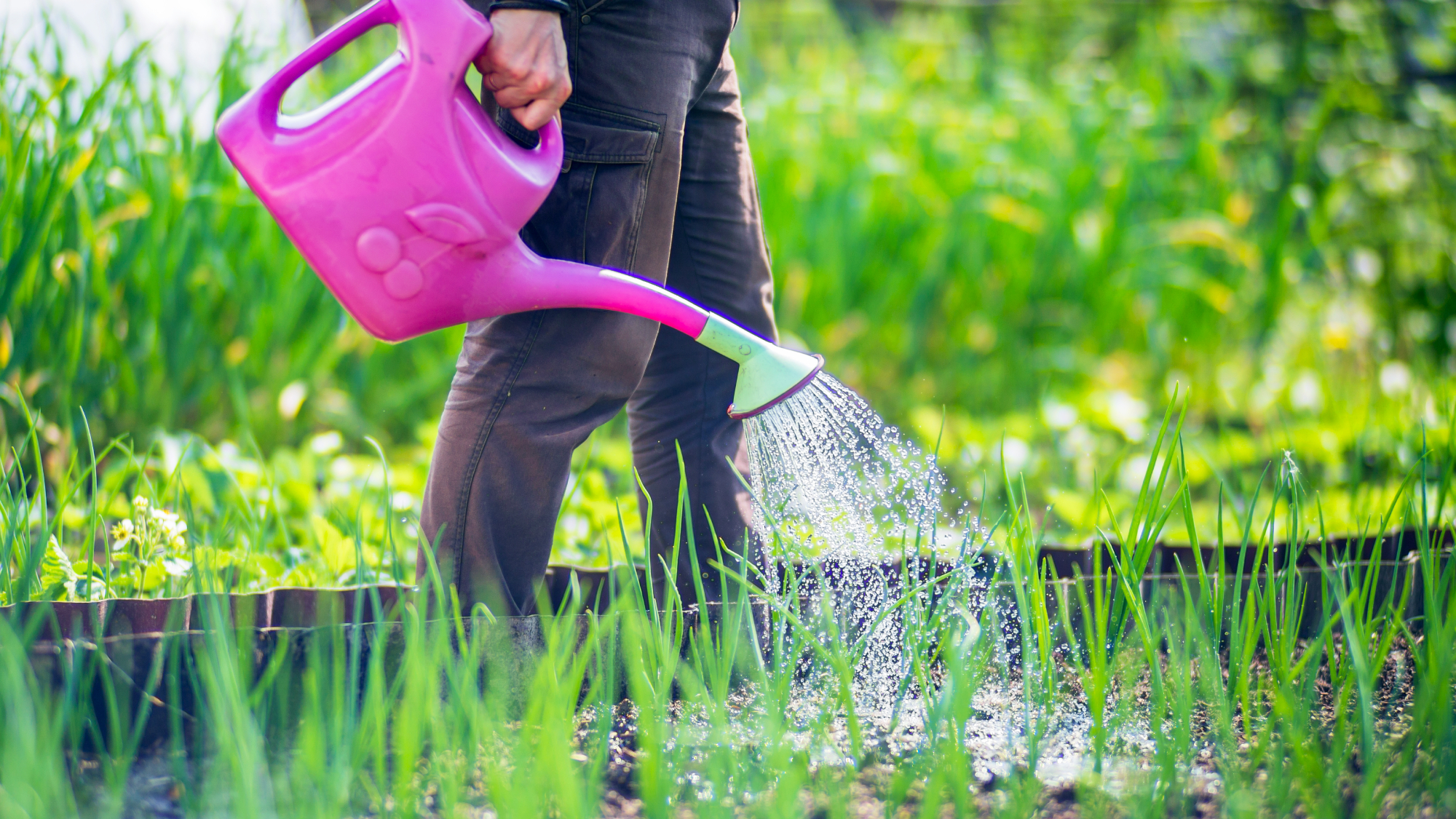
Pour water on and watch what happens. Either it disappears in a couple of seconds, or it sits there beading on the surface and rolls off the side. Opposite behavior, same underlying problem. Compost that has gone completely dry can turn hydrophobic on you, the surface going waxy enough that moisture just sheds off it. Put that in a container and the water does something less obvious – it slips down the gap between the shrunken root ball and the pot wall, out the drainage hole, and you never see it touch a root. The soil seems wet, but the root ball inside it is bone dry.
Why It Happens
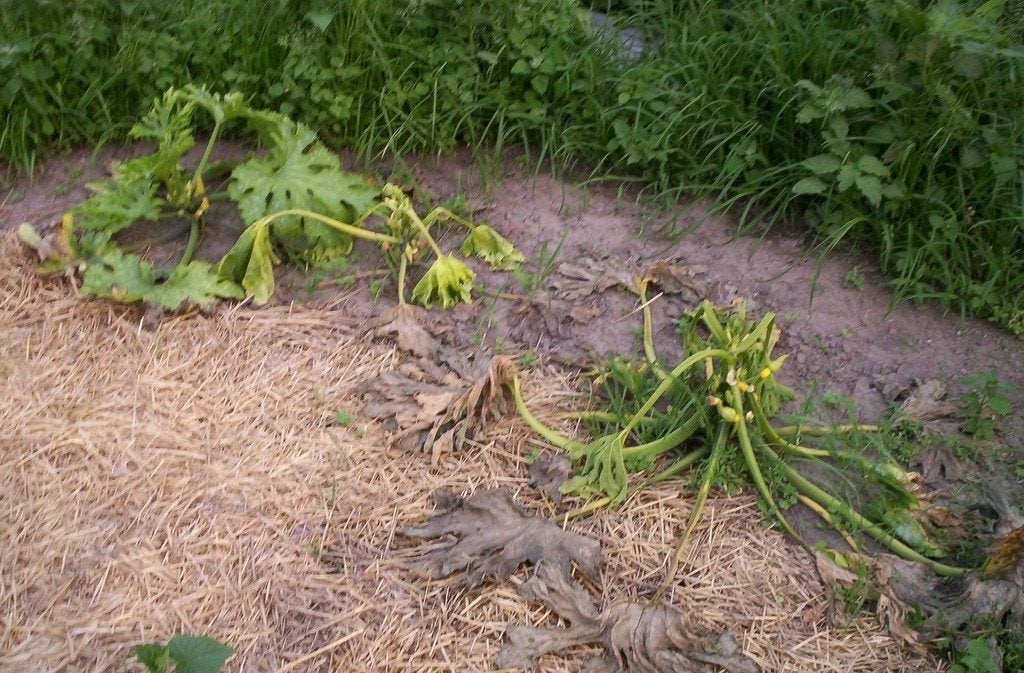
Roots are the common thread. Anything that damages them – rot from a pot that stays saturated, a bad transplant, insects working underground – leaves the plant with less capacity to pull water in, even while it’s sitting in it. Root rot is the ironic one, since it comes from too much water and produces symptoms that look exactly like too little.
Heat does something different. Past the mid-90s Fahrenheit (35C), transpiration through the leaves can outrun what the roots can supply no matter how healthy they are, and the plant wilts as a stopgap while the soil stays moist. Soil compaction plays its own part, squeezing out the air pockets roots need to function. If the top of the soil keeps reading damp while the plant argues otherwise, a long-probe moisture meter from Amazon settles it by reading down where the roots actually live.
How to Fix It
Water-repellent soil needs rewetting, not more water. For a container, set the whole pot in a basin of water and leave it for half an hour or so, until the surface goes dark and the bubbling stops – that’s the root ball taking it back on. In beds, the same principle applies more slowly: several light passes spaced fifteen minutes apart, letting each one soften the surface for the next. Something like Scotts EveryDrop wetting agent from Home Depot breaks the surface tension and helps water move in instead of running off.
Root problems are less forgiving. Slide a struggling potted plant out and look – healthy roots are pale and firm, while rotted roots ones go brown, soft, and smell sour. Trim off what’s dead, repot into fresh mix, and cut back a portion of the top growth so there’s less foliage for the reduced root system to support. For heat-stressed plants with roots that are fine, the answer isn’t at the roots at all. Shade through the afternoon does more than any amount of watering.
Watering Better Through the Summer
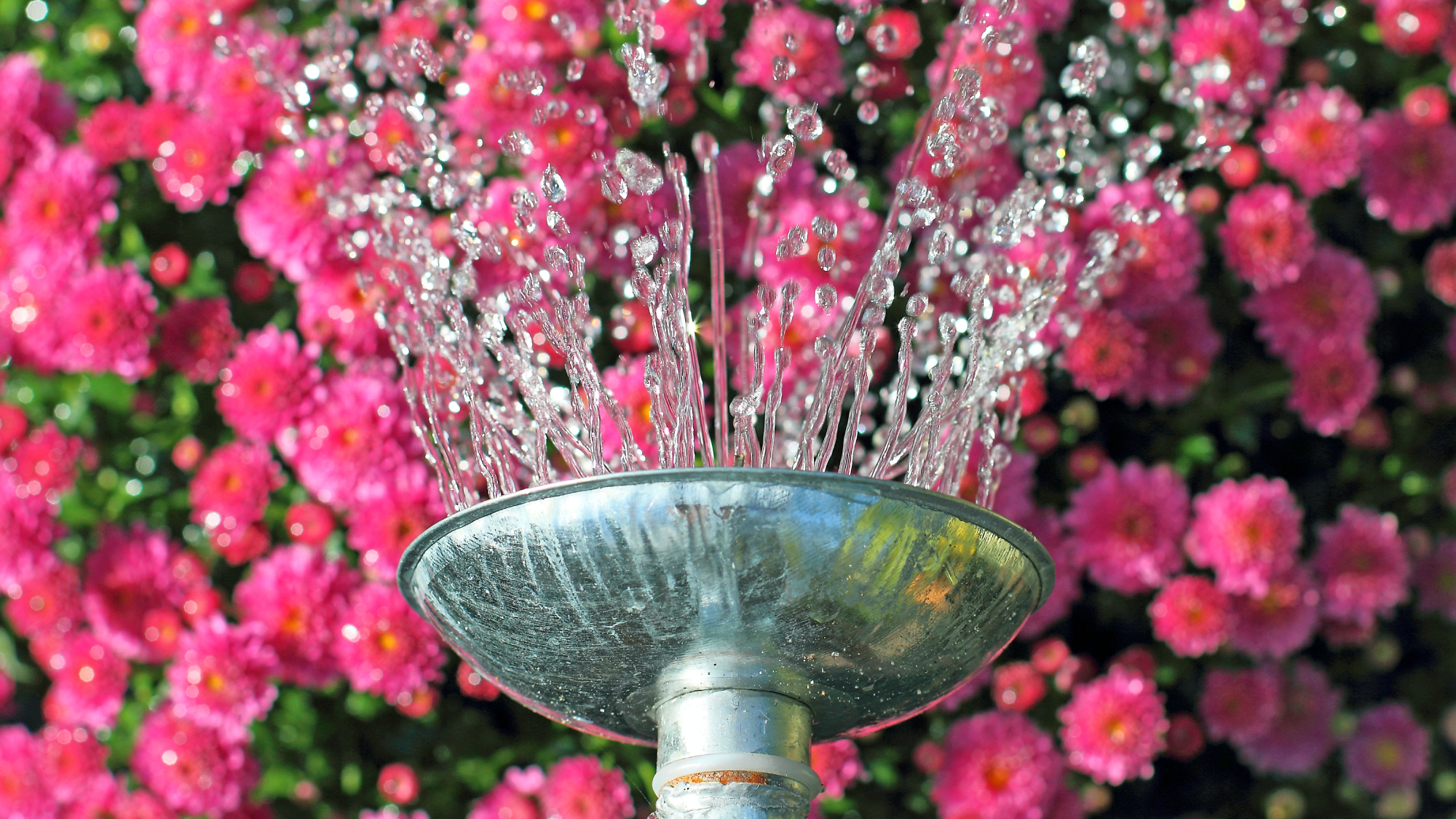
A few habits make the whole problem less likely. The best time to water is early, while the soil is cool and what goes down has time to move into the root zone before the day pulls it back out. Go deep rather than often, since a long slow soak reaches roots that a daily sprinkle never will, and this soaker hose from Walmart delivers it at ground level without wetting the foliage. Mulch on top slows evaporation and keeps the surface from baking into a crust.
Check before watering rather than on a schedule, and check deeper than a fingertip reaches. Two inches (5cm) down tells you more than the surface ever does. Container plants in July might need water twice a day while the bed beside them wants a soak once a week – same weather, entirely different situations. When in doubt during a heat wave, look at the plant in the morning rather than the afternoon, since that is when it tells the truth.