September is the ideal time to add a bug hotel to your garden, offering beneficial insects a safe place to escape the winter weather. But don’t just head to the store and buy an insect hotel because it’s so easy to make one yourself, and you can tailor it to suit the exact style and needs of your yard. From sleek towers made from gabion cages to simple log stacks, oh-so-pretty garden sculptures of dried hydrangea blooms to robust back-of-the-border shelters, all the inspiration you need to DIY a dream bug house is right here.
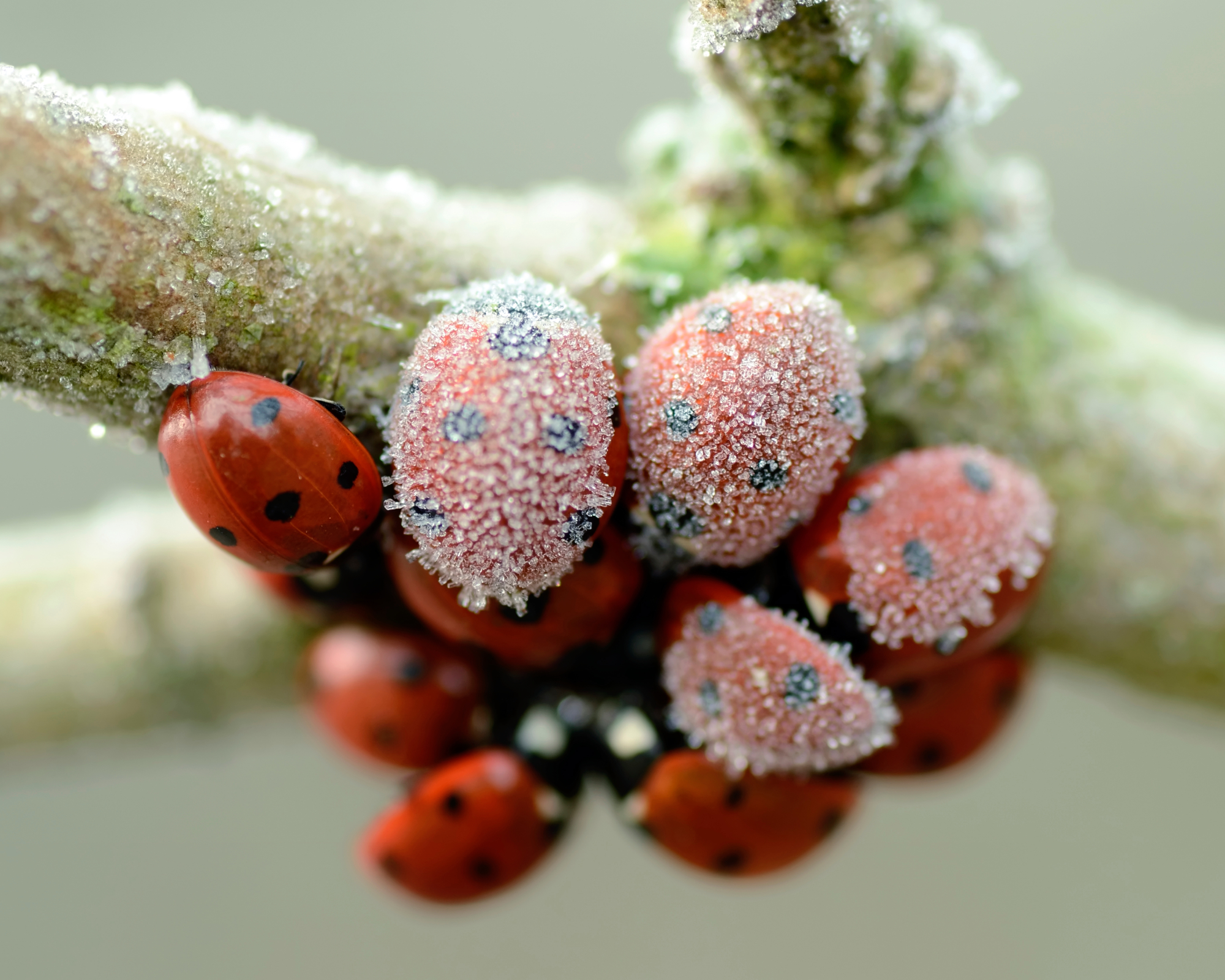
Offering beneficial insects a home helps control pests in your garden, so you’ll be well rewarded for your efforts. Insects are a vital part of a garden ecosystem with bugs such as ladybugs hoovering up pests like aphids, and becoming food themselves for other welcome creatures like birds. What’s more, you’ve probably already got most of what you need to DIY a bug hotel stashed in your shed already.
And if you’re making one, why not make a few? While insects don’t hibernate, most enter a dormant state called diapause, when their metabolism slows right down. Insects can enter diapause at a variety of life stages from eggs to larvae, pupae or adults, which is why they need such a diverse range of habitats such as dry nooks or leaf litter. It’s estimated that an average garden accommodates over 2,000 different insect species, too, so you can understand why providing these valuable creatures with all sorts of different accommodation options is vital, whether yours is a wildlife garden or not.
Which of these creative DIY bug hotels will suit your garden best?
1. Hydrangea-Flower Hotel
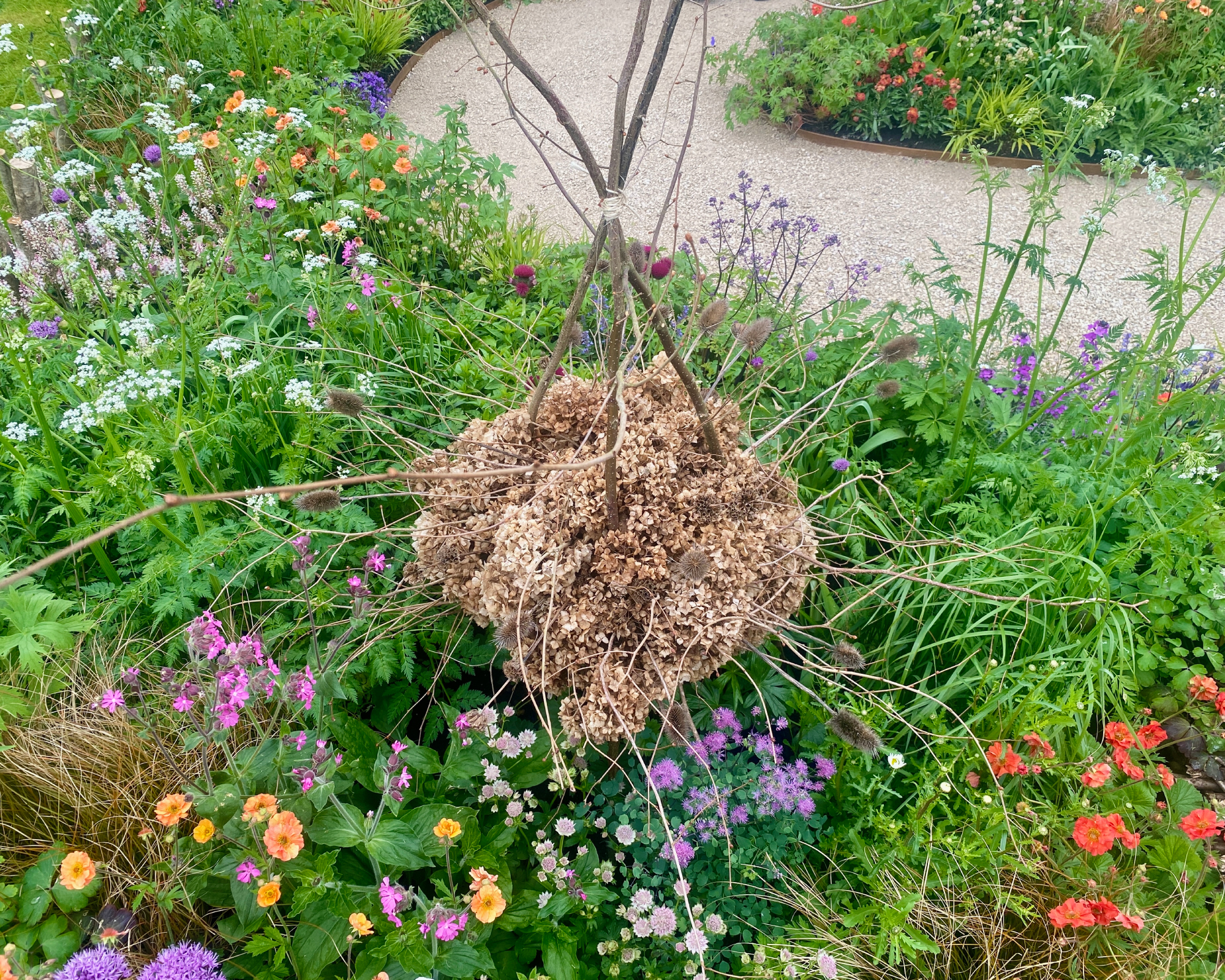
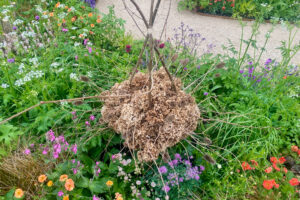
Dried hydrangea flowers last well over winter and have lots of little nooks and crannies for beneficial insects to hibernate. This bug hotel was created by pushing three sticks into the soil and tying near the top to create a stable tripod, which was stuffed with twigs, teasel stems and hydrangea flowers, all left to dry in place. If you want a wildlife-friendly garden that doesn’t compromise a jot on style, this statement bug hotel is the one for you.
2. Highrise Gabion Critter Condos
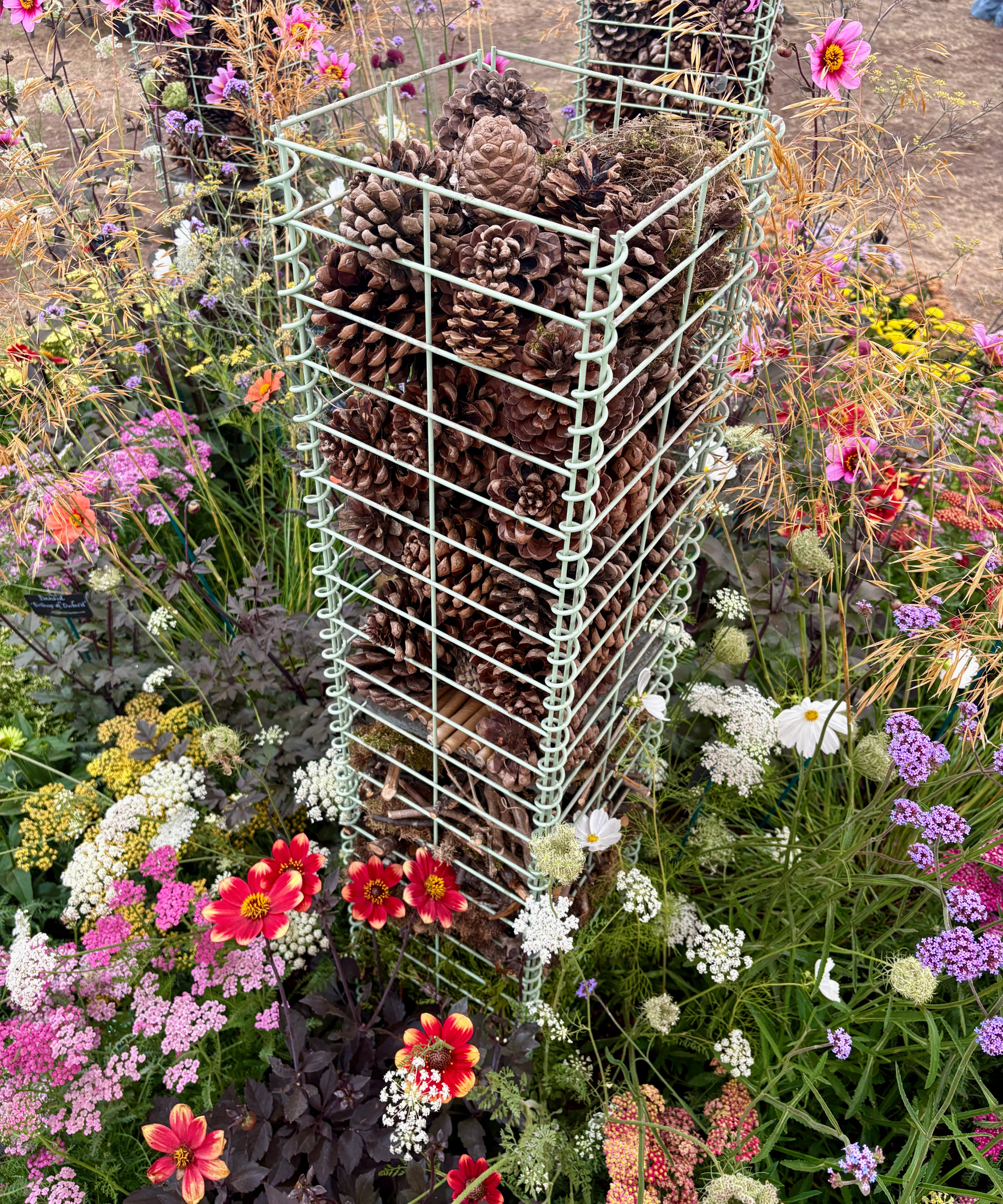
These striking border bug hotels are similarly stylish, made with vertical gabion baskets such as this set of three Gabion Cages from Amazon, usually used to build retaining walls. Look carefully and you’ll see that as well as pinecones and sticks, slate squares have been fitted into the gabions to make the structures more weatherproof.
3. Cute Under-Bench Crib
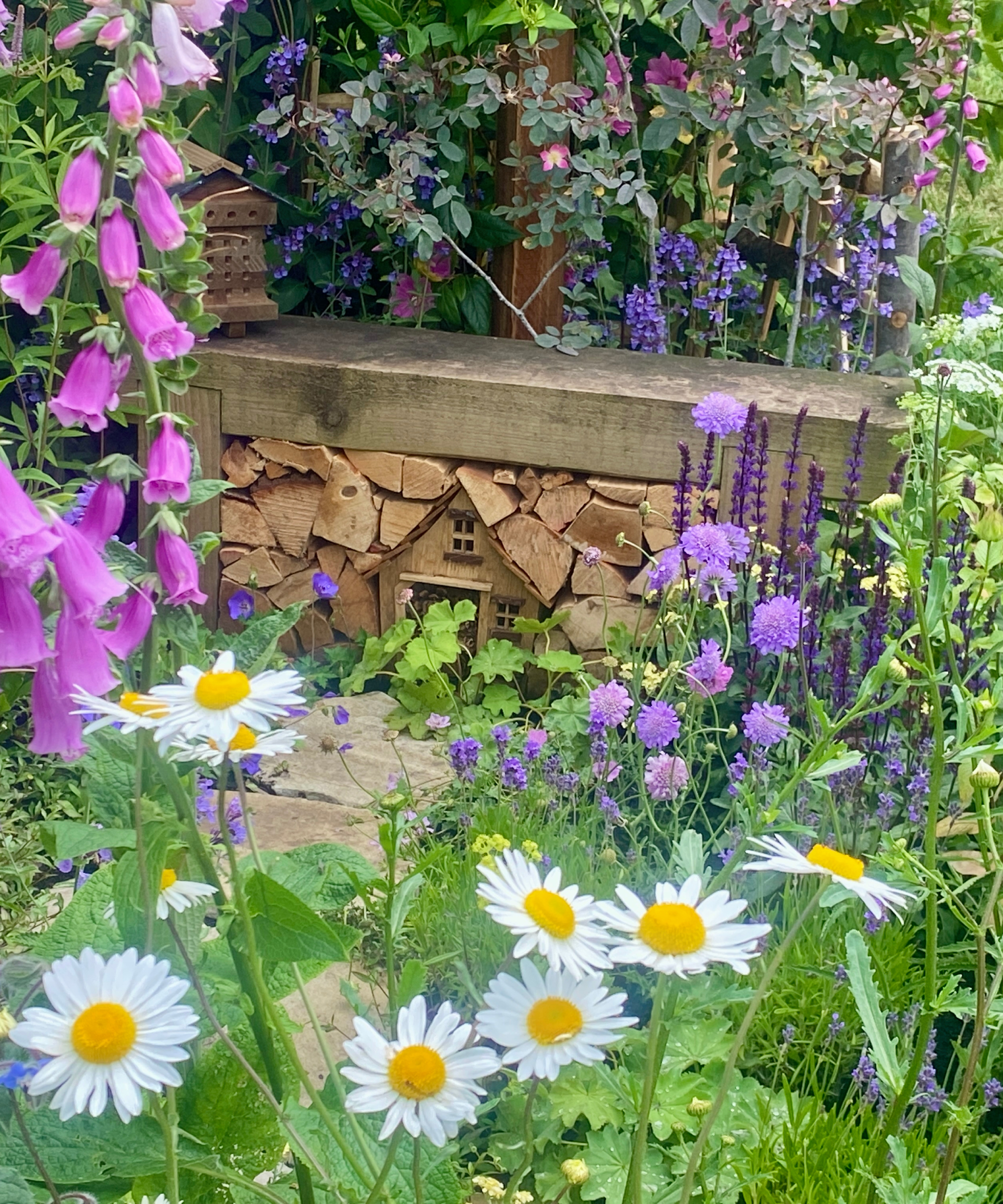
How adorable is this little bug house, created by packing split logs and a little imagination under an existing garden bench? This idea would be so beautiful in a cottage garden and you could easily recreate it in an existing log pile, too, by adding in a wooden frame around the bug house to keep the fuel store functional.
4. Border B&B
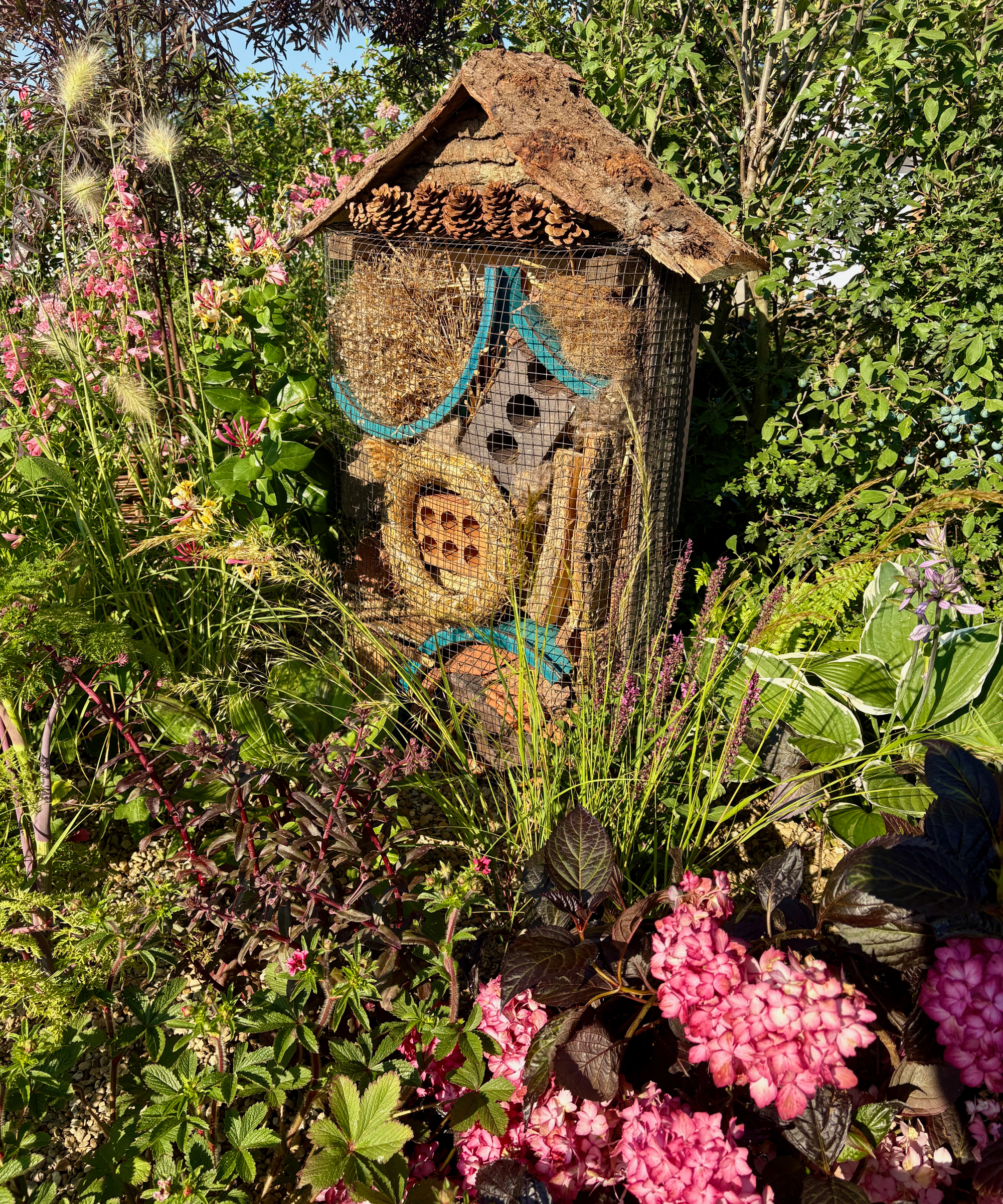
Here’s a neat wildlife-friendly idea that looks great at the back of a border as well as giving critters a safe spot to hibernate. It’s made from an old wooden crate filled with broken pots, seedheads, straw and airbricks, all held in place with a square of ½ inch fencer mesh such as this Steel Hardware Cloth from The Home Depot stapled to the crate walls. Bark and pinecones form a textured roof, and a stake fixed to the back and pushed into the soil keeps the lot stable. Those bright curves of the broken ceramic pot look so stylish!
5. Gabion Bug-Hotel Benches
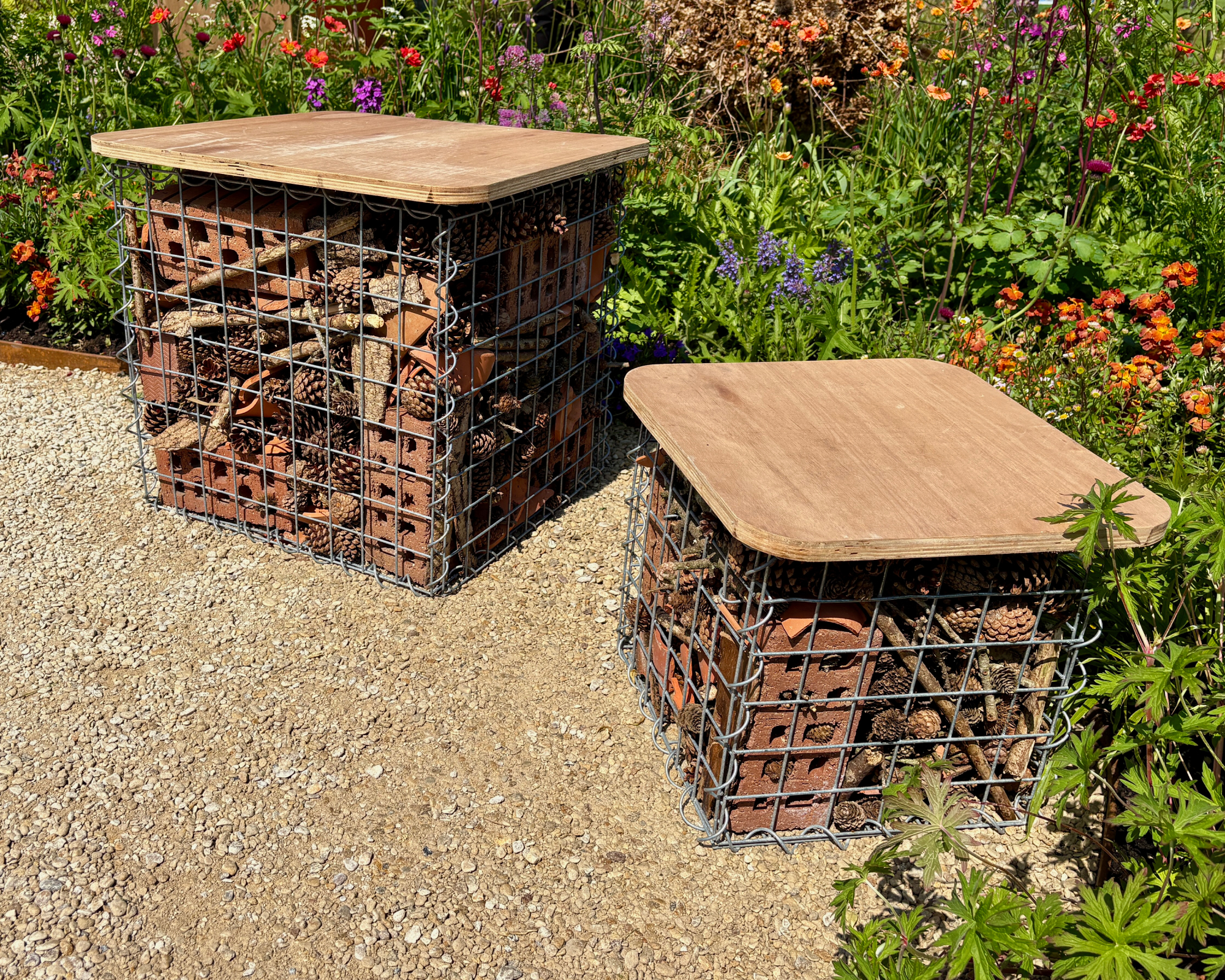
Providing both a home for hibernating insects and a perch for tired gardeners in need of a cup of tea, gabion bug hotel benches are easy to DIY. Fill a gabion basket such as this Galvanized Steel Wire Cage from Amazon with reclaimed airbricks, pinecones, sticks and bits of bark. Then fix pressure-treated plywood, available from The Home Depot, treated with an exterior waterproofing wood sealant such as Seal-Once, also available from The Home Depot, to the top.
6. Pretty Critter Crate
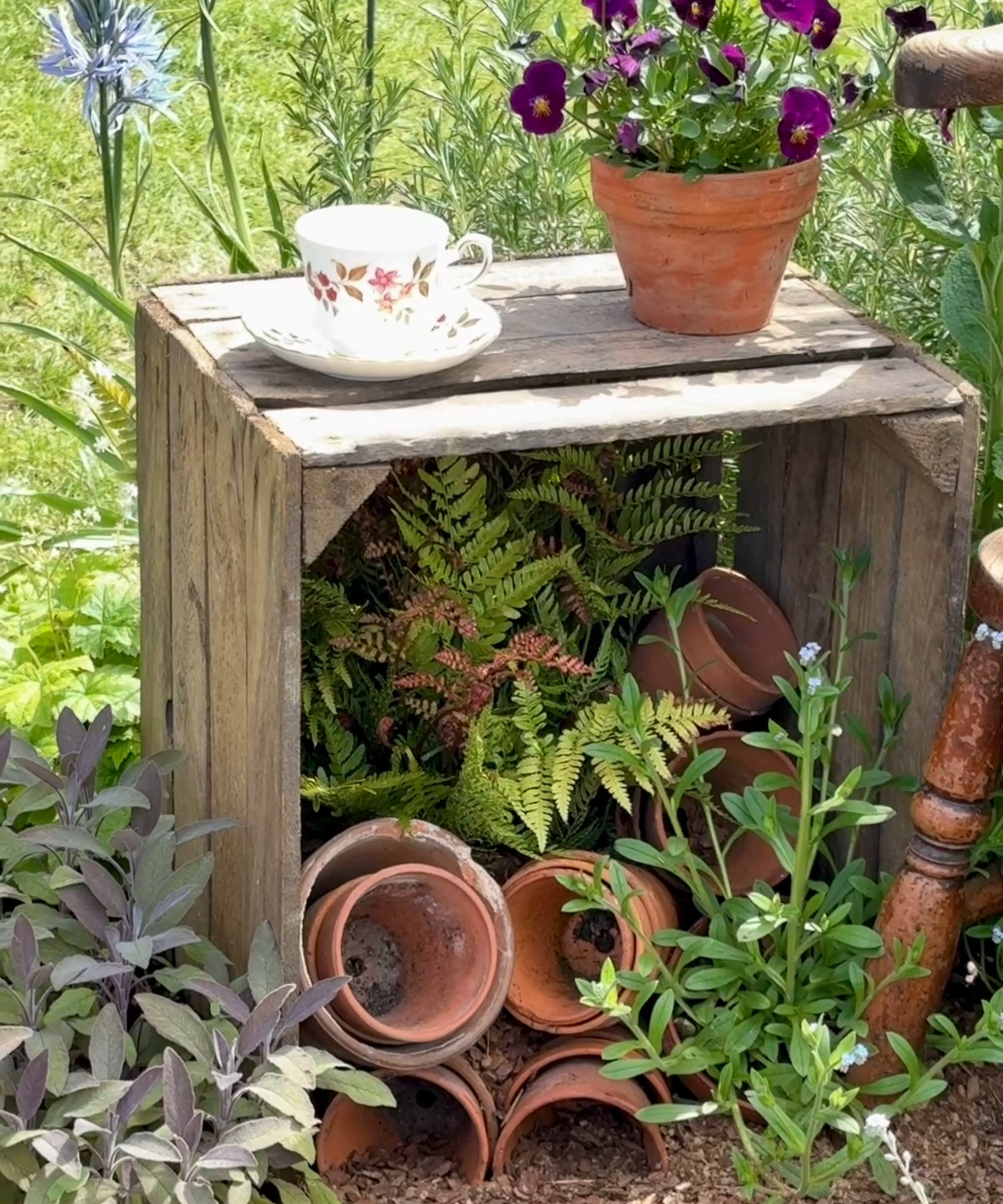
Doubling up as a side table next to a favorite garden seat, this bug hotel is simply put together but all the more appealing for it. It’s made from a sturdy old wooden crate positioned on its side with stacks of old terracotta pots creating sheltered nooks for beneficial bugs. An evergreen fern flourishes in the shady conditions and adds natural beauty. A great fern to use in this spot would be the marginal wood fern Dryopteris marginalis, available from Nature Hills, as it has tough green fronds that stay vibrant in shade, only grows to a manageable 2 feet high, and is hardy in zones 3-8.
7. Stick-Stack Shack
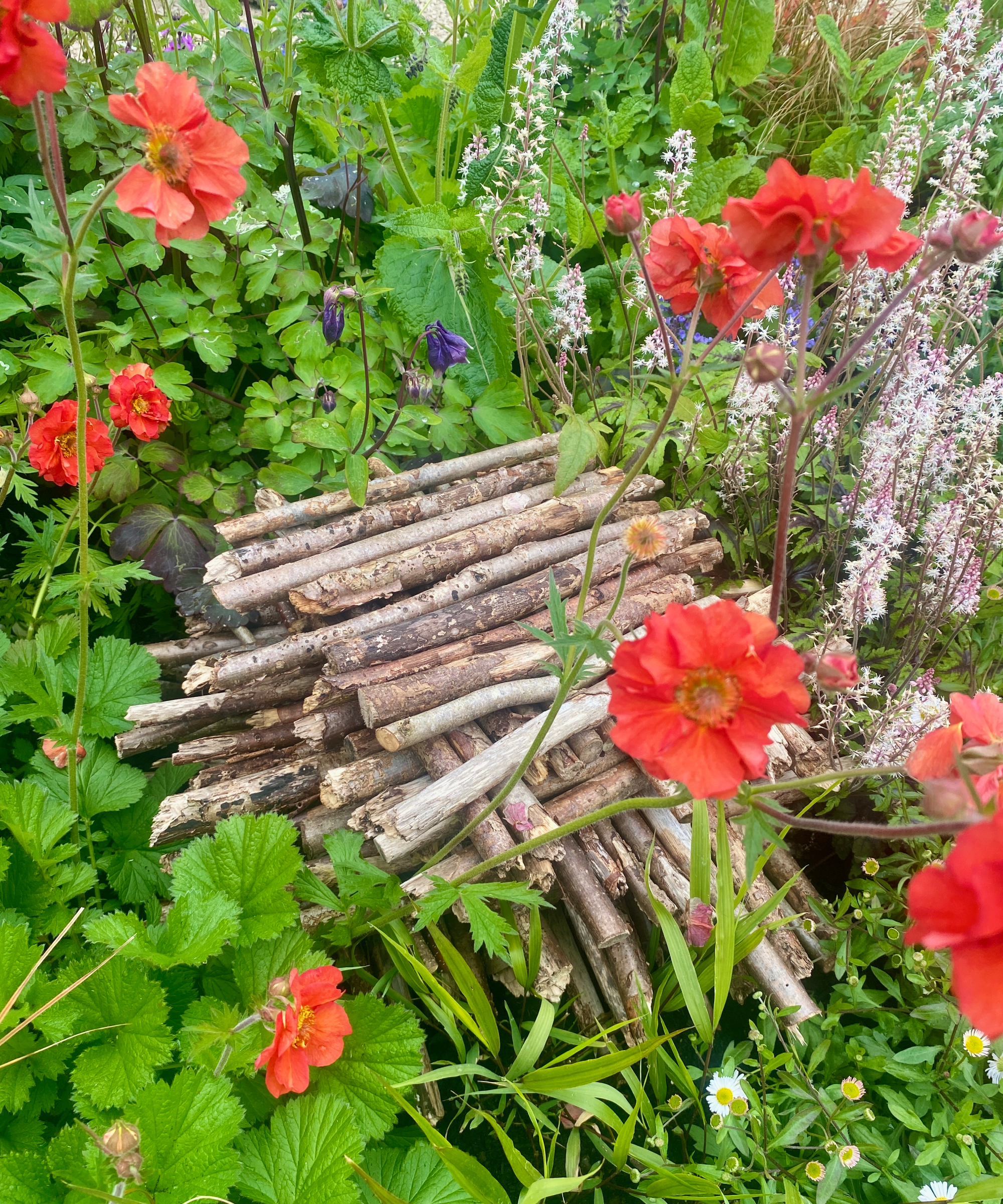
Surely the simplest of bug hotels to construct, this criss-cross stack of sticks takes moments to make and is a welcome mid-border shelter. This is a super project if you have kids as it’s so straightforward to create, and you could add a stick-foraging walk to the fun. Lay a slate or flat stone to the top of the stack and this simple shelter would be even better.
8. Flowery Flats
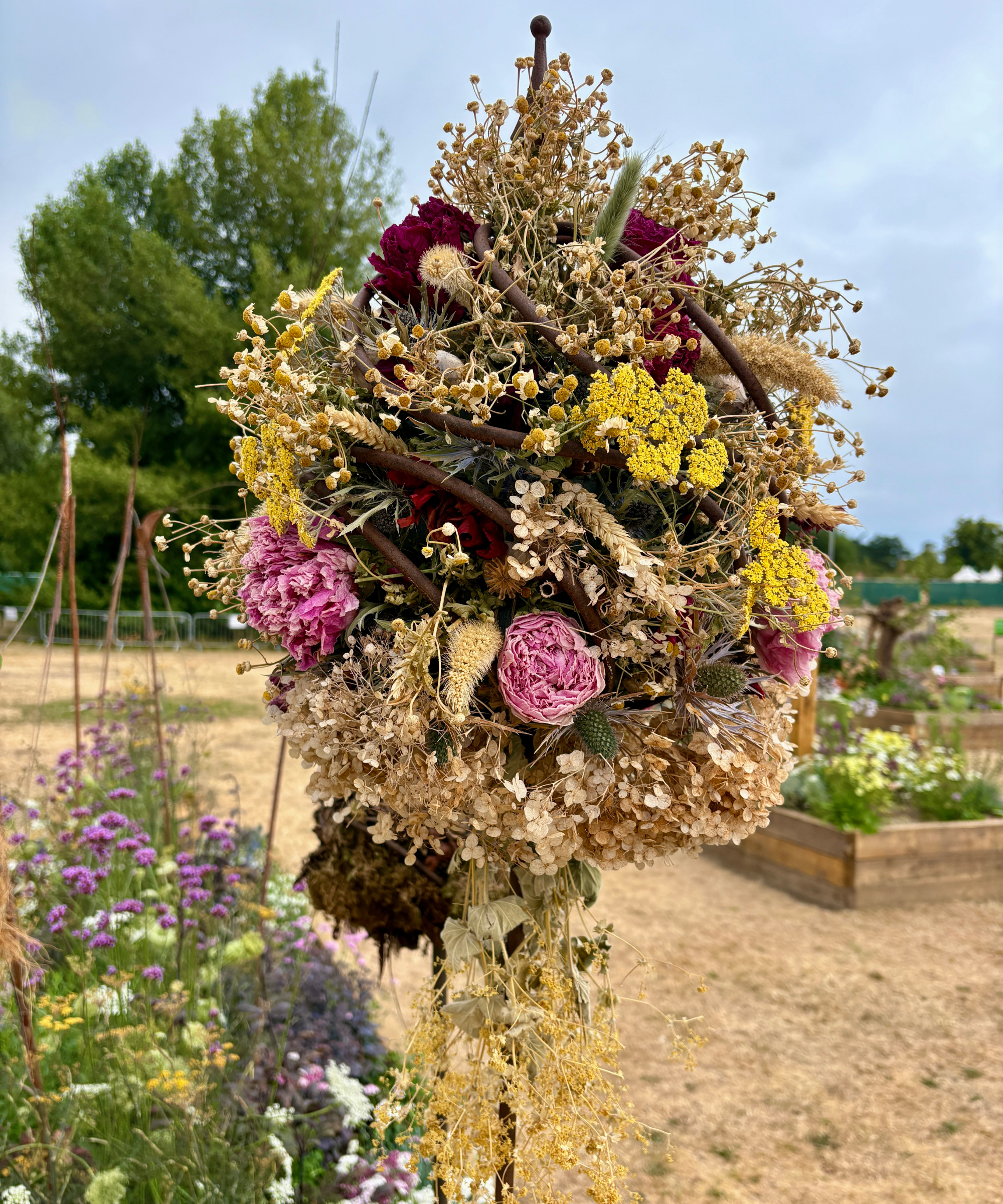
Using dried flowers, stems and seedheads within a metal frame, you can create a decorative garden feature that doubles as accommodation for overwintering critters. As long as all the stems are pushed in so they criss-cross in the center to form a strong, durable structure, the dried flowers and seedheads around the outside can be as pretty as you like, and some blooms such as yarrow will even dry in place for an initial burst of bright color.
This bug hotel has an old garden ornament as its frame, but you can recreate the same idea using cheap metal garden spheres such as these on Amazon fixed to a bamboo cane or stake pushed into the ground. A narrow metal obelisk such as this design from Wayfair would also make a robust frame if you wrapped wire tightly around it before pushing in all your garden-grown stems.
9. Reclaimed Brick Bug Resort
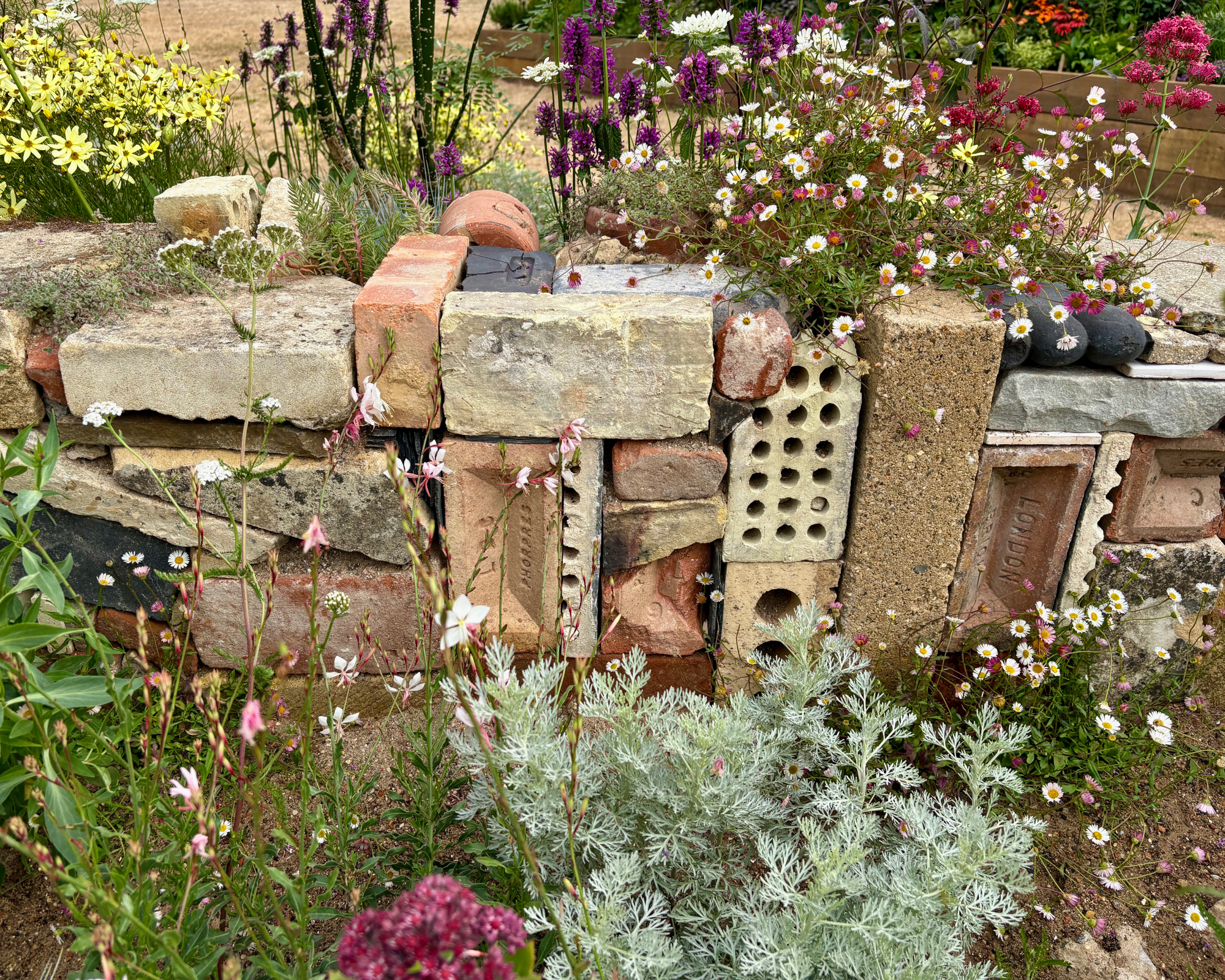
This low wall makes a textural backdrop for a drought-tolerant border and offers all sorts of safe spaces for insects to shelter. As well as the holes in airbricks, gaps of all shapes and sizes created by broken brick edges accommodate a variety of creatures. Slate chips, available in 5-pound bags from Lowe’s, have been used to plug gaps. Squeezing small balls of moistened soil spiked with creeping thyme seeds, available from Eden Brothers, into the bigger gaps would add nectar-rich flowers for pollinators too.
10. Cozy Critter Cube
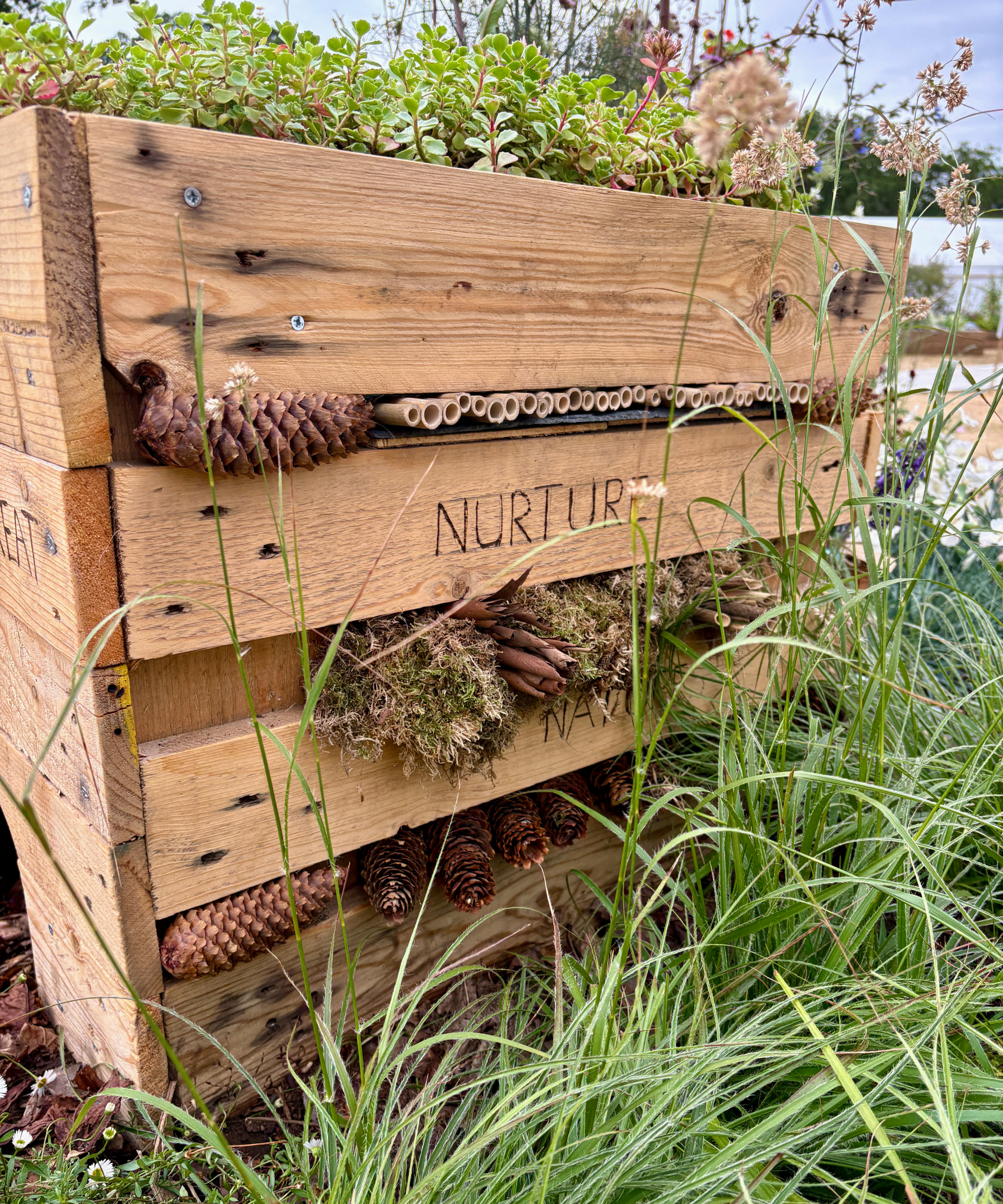
This insect hotel has been made using offcuts of wood screwed together to create a box with partially open sides and filled with layers of dried leaves, pinecones and dry grass. Additional bamboo canes means it also serves as a bee hotel. A layer of reclaimed roof slates tops the layers, angled so rain runs out from the sides, keeps the critter cube dry.
For a final touch, a shallow wooden tray lined with landscape fabric and planted with low-maintenance sedum forms a living roof to feed pollinators. Using a mat of mixed hardy sedums such as this Landscaping Succulents Tray from Plants for Pets via Amazon gives a pretty mix at a good-value price point.
11. Terracotta Towers
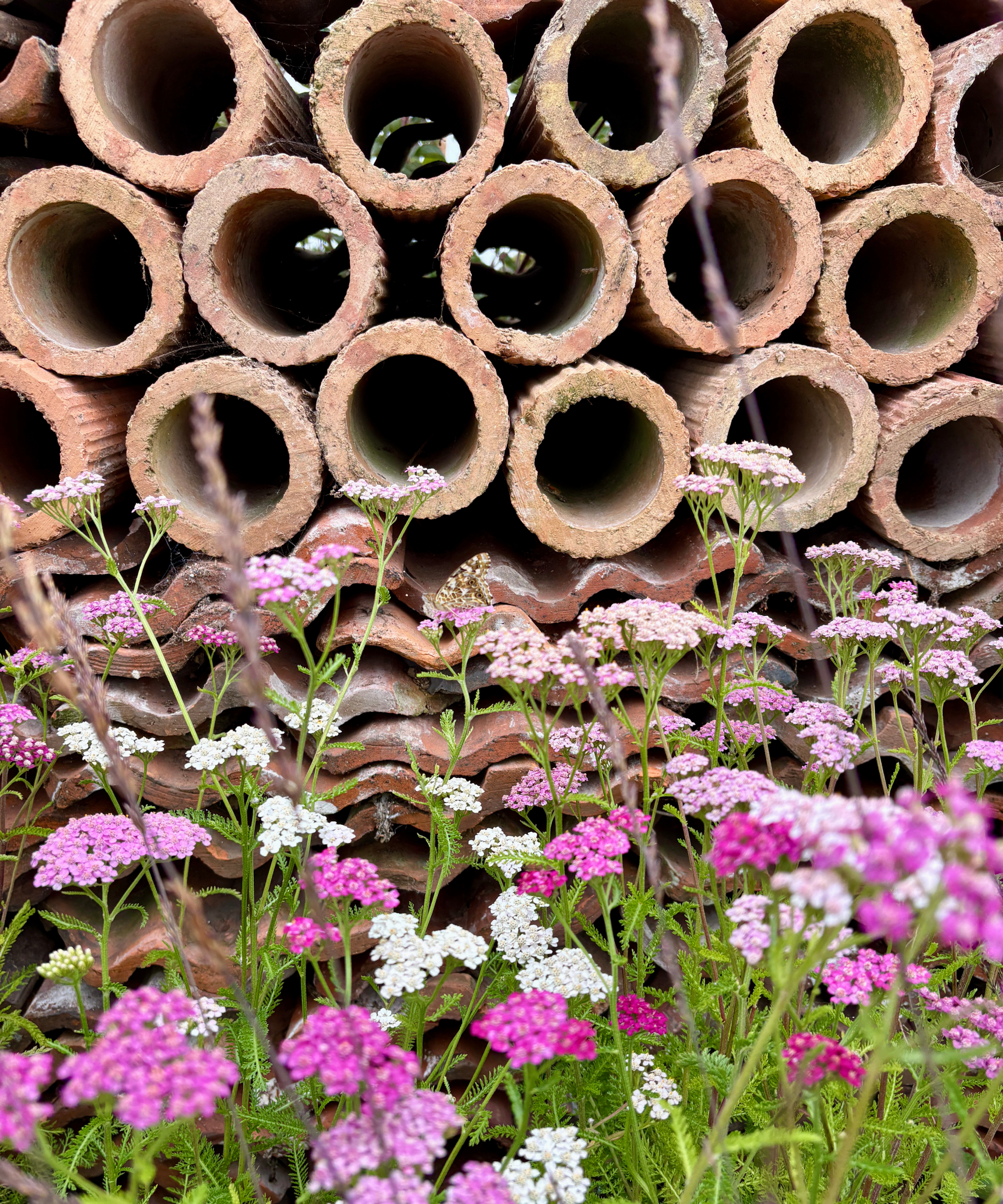
A stack of old clay roof tiles and drainage pipes creates an attractive garden feature full of gaps for beneficial garden critters. Because clay is porous, this material will hold moisture, creating damp conditions that toads – who are voracious eaters of slugs and snails – will love, as well as drier nooks for bugs higher up. Find your nearest reclamation yard at the Salvo architectural salvage directory.
12. Modern Critter Castle
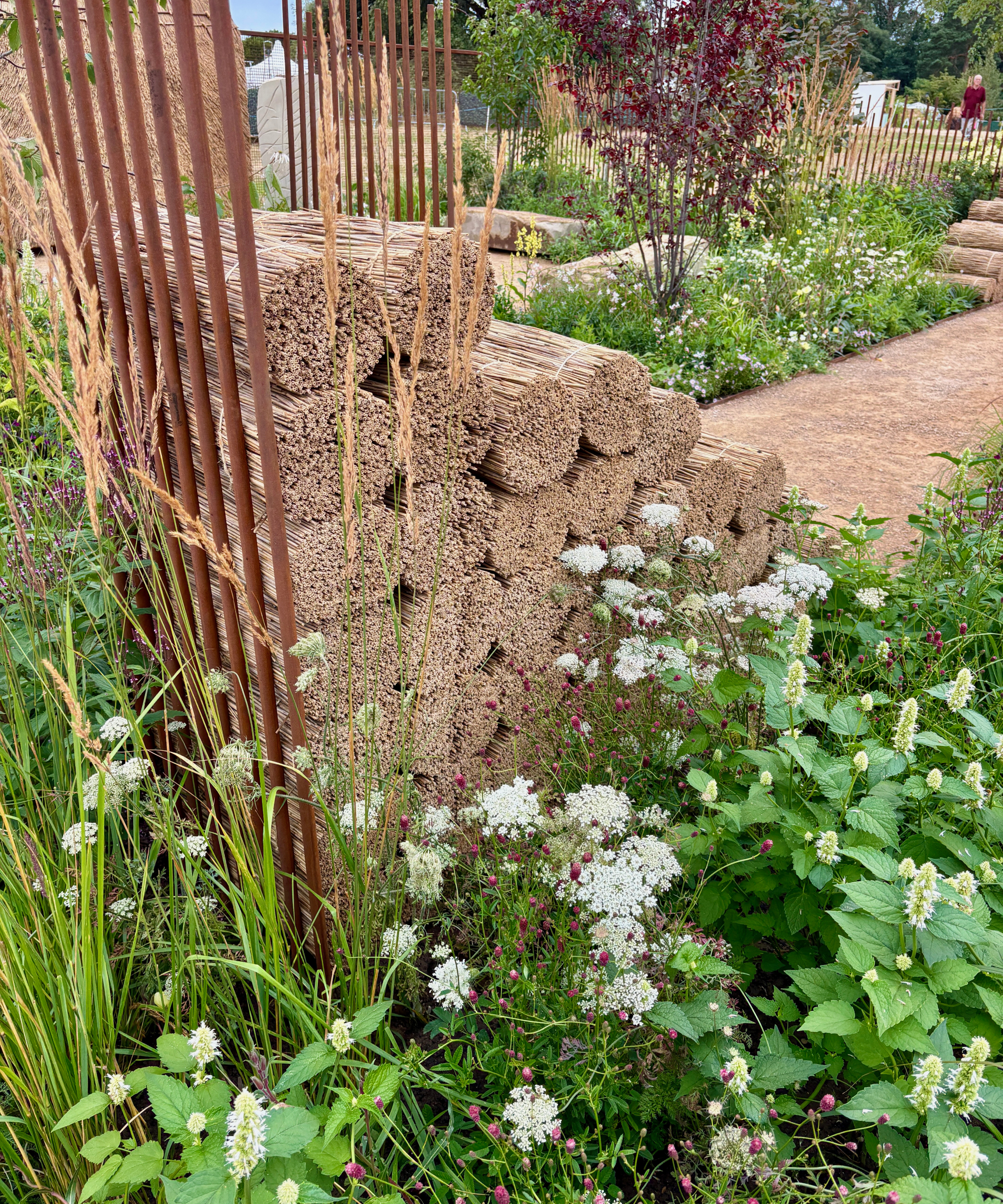
This statement bug hotel has been made using rolls of thatching reed stacked against a row of Corten steel rods, but you could easily make a smaller version using tied-up bundles of garden stems and cheap metal rebar rods, available from The Home Depot. A plethora of hibernation spots will be created between the stalks, and many stems that you may be clearing from the garden in fall are hollow, such as coneflowers, sunflowers, hydrangea, fennel and raspberry.
13. Dead Hedge Bug Hotel
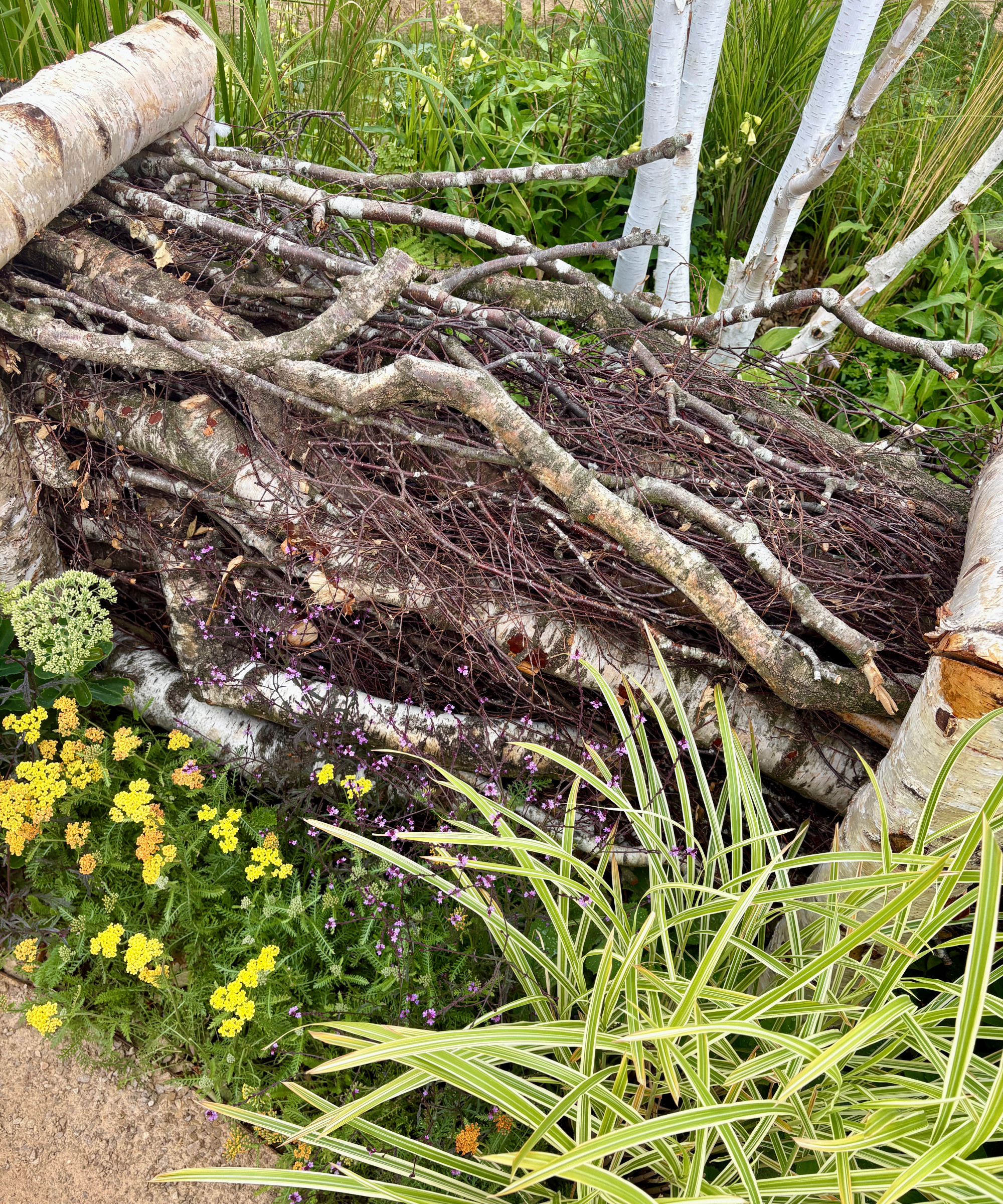
A dead hedge is simply a stack of pruned branches and twigs stacked to form a dense habitat to shelter wildlife. By stacking them between pairs of fenceposts or bigger vertical branches, you create a strong structure that can be extended to form a wildlife-friendly garden boundary.
14. Artful Apartments
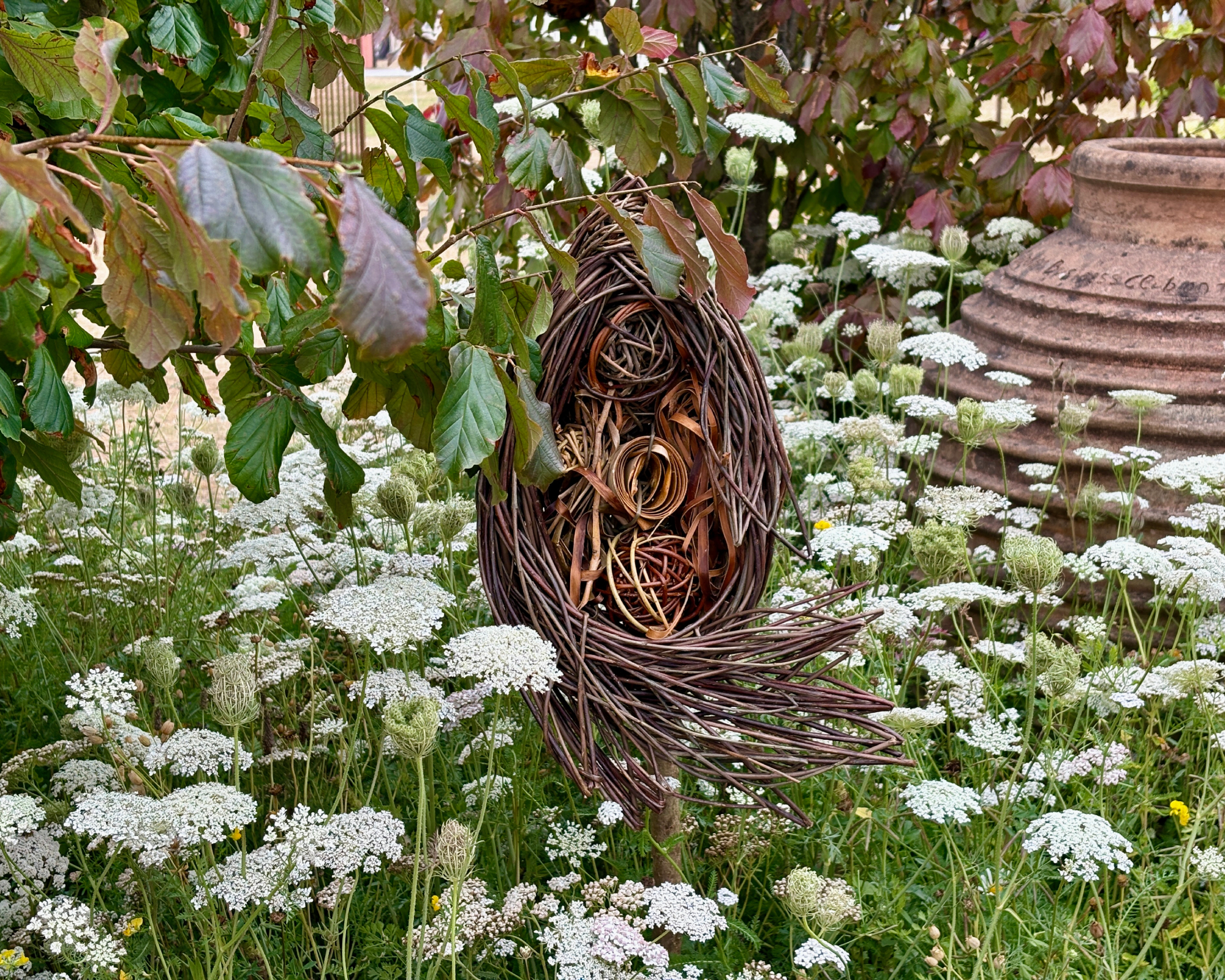
Create a showstopping garden-feature bug hotel by wrapping flexible stems of willow or hazel into a bowl shape, fixed to a fencepost secured in the ground and filled with smaller wrapped bundles of whatever plant matter you’ve got to hand.
15. Log-Pile Lodgings
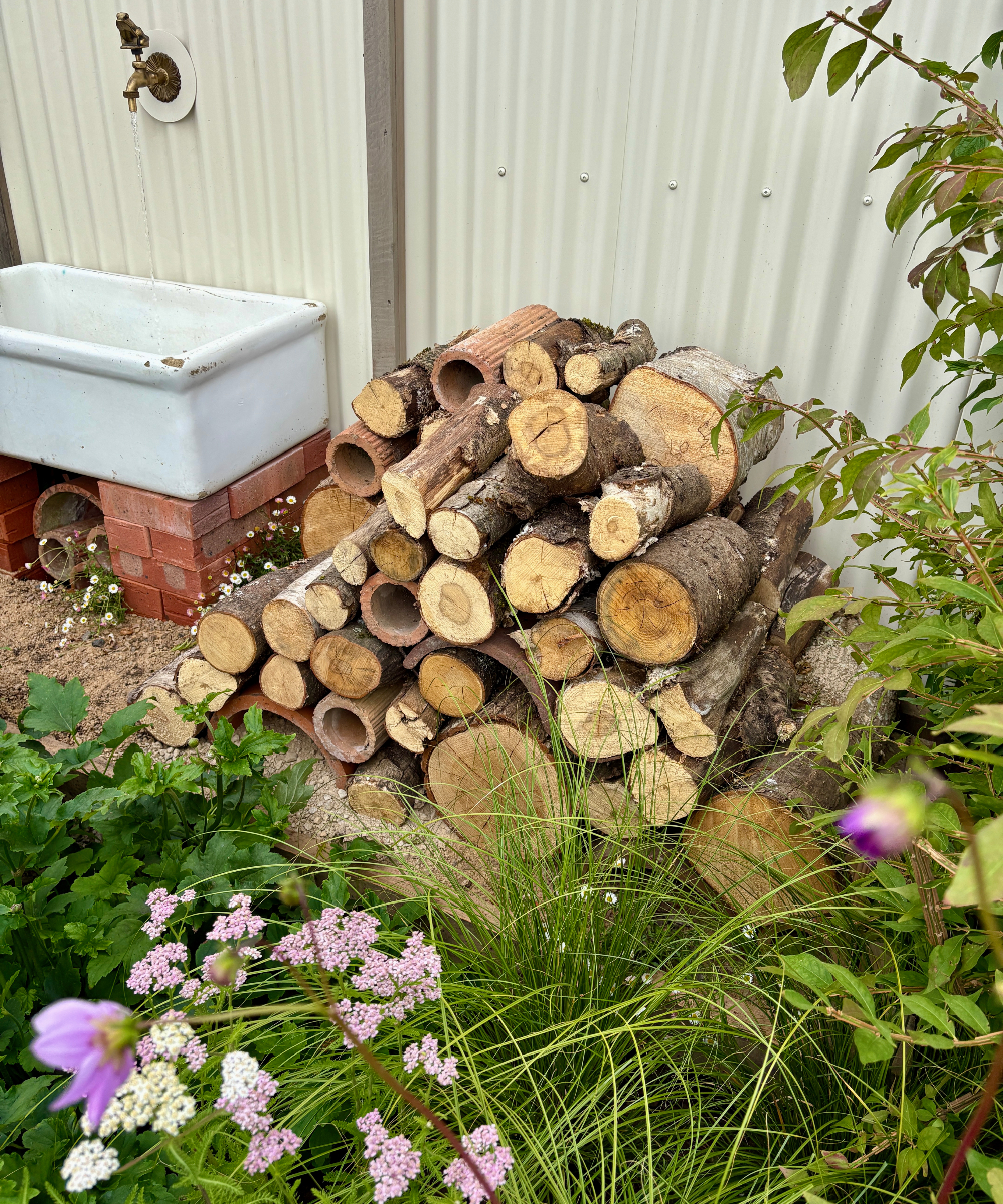
There really isn’t an easier way to make a bug hotel than by stacking a bunch of logs in a quiet, sheltered corner of your garden. This log pile sits against a metal shed wall for stability and shelter, and has a few old terracotta pipes mixed in for aesthetics as well as extra accommodation options.
Whatever bug hotel you choose to construct, it will be a welcome addition to your garden and one of the best beautiful but budget-friendly ideas to carry your backyard into fall.