Before we get into the wonderful world of floral dupes, I want it on record that I have nothing against zinnias. In fact, I love them. Honestly, give me a garden absolutely packed with those colorful blooms and I’m going to stop and admire it.
Zinnias have that wonderful ability to make a garden look instantly abundant, and I love how many colors and flower shapes there are to play with. And, when these beauties are at their peak, it’s hard to imagine a more cheerful summer flower.
There is just one small problem: they’re annuals, which means that, every year, I have to start all over again. Understandably, then, I’ve been looking for a perennial that gives me some of that same flower power. Something big, colorful and gloriously over-the-top… but something I can plant once and enjoy again the following year.
The Ultimate Zinnia Dupe?
The best dupe, in my humble opinion, for a zinnia is a double coneflower (available at Amazon).
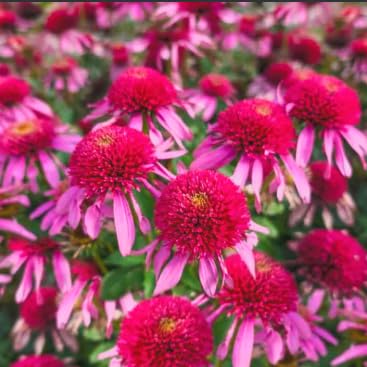
Now, if your mental picture of a coneflower is a simple pink daisy with a big brown cone in the middle, you may be in for a surprise; some of the newer double-flowered varieties are positively extravagant, with layers of petals creating rounded, almost pom-pom-like centers.
They’re not shy flowers; they are dramatic, and flouncing, and they have serious presence, which means that, if you plant a good-sized clump, you can get that same feeling of abundance that makes a bed of zinnias so irresistible.
Shop Double Coneflowers:
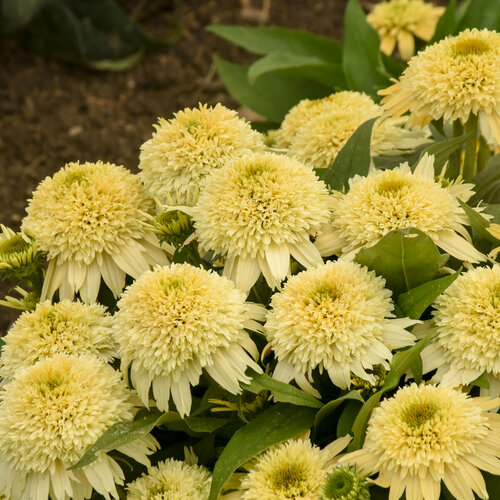
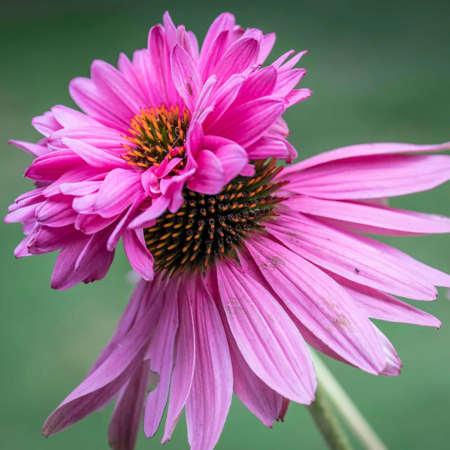
Now, don’t get me wrong; zinnias are brilliant for filling a garden with color, but their annual nature means there’s always a little bit of work involved in getting that display back each year. Coneflowers, on the other hand, are perennials. Once established in a suitable spot, they can return year after year, getting more impressive as the clump matures.
That makes them especially appealing if, like me, you love the look of a packed flower bed but don’t necessarily want to rebuild it from scratch every spring. Even better, they aren’t particularly precious plants. Once established, they can tolerate periods of dry weather, and it generally prefers a sunny position with well-drained soil, making it a useful choice for gardeners who want plenty of flowers without having to constantly fuss over them.
As if all that weren’t enough, this zinnia dupe features stunning seedheads that can be left standing into fall and winter rather than immediately cutting everything back. They add structure to the garden when much of it has died back, and birds may make use of the seeds.
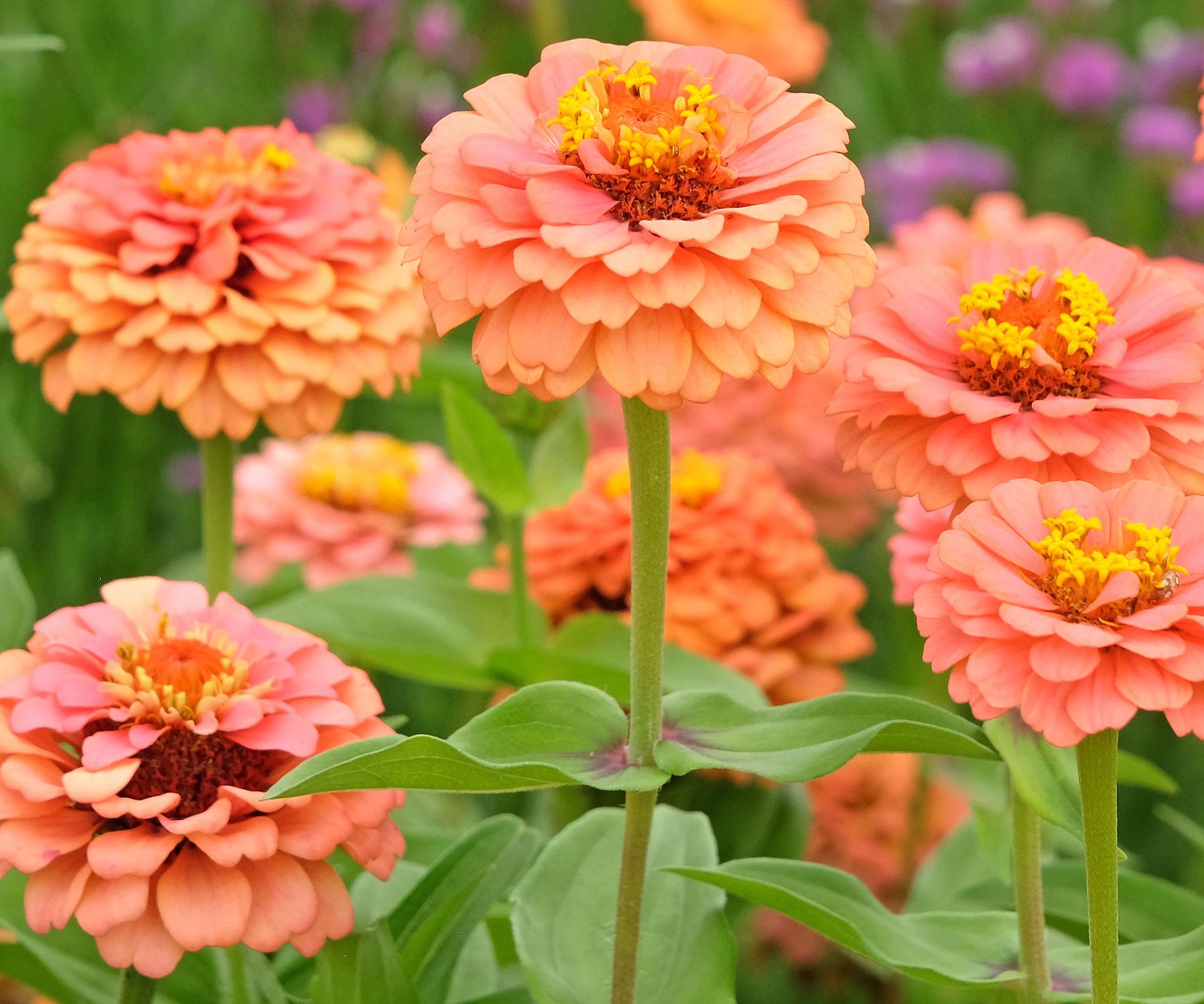
Zinnias are still fantastic, of course, and there are some things they do that perennial coneflowers simply can’t replicate; they give you enormous flexibility with color, they’re brilliant for cutting, and they can produce an almost ridiculous number of flowers in a single season.
If you want a perennial dupe, though, you can’t go wrong with double coneflowers! They give me the same thing I love about zinnias (bold color, abundance and that slightly extravagant “look at me” quality) while promising to pop back each year to put on the same magnificent show.
You can’t say fairer than that, really!