Fill a feeder in the morning, and by afternoon a squirrel may be hanging upside down from it, cheeks stuffed. Here’s the good news, though. There are some types of bird seed that squirrels don’t enjoy – but they still bring in plenty of songbirds.
Good bird feeding isn’t only about what goes in the feeder, though. Pair the right seed with smart bird feeder ideas, and you’ll make life much harder for determined squirrels. Where the feeder hangs, how it’s built, and what spills beneath it all affect how often squirrels show up. Fall makes this especially timely, as squirrels spend the season gathering and stashing food, and a full feeder is an easy stop on their rounds.
The three seeds I’ve covered here all get left alone more often than sunflower does, but that’s no promise – a hungry enough squirrel will taste just about anything once. Pair the new seed with a better spot for the feeder, and the birds get more of each fill.
Why Squirrels Keep Raiding Bird Feeders
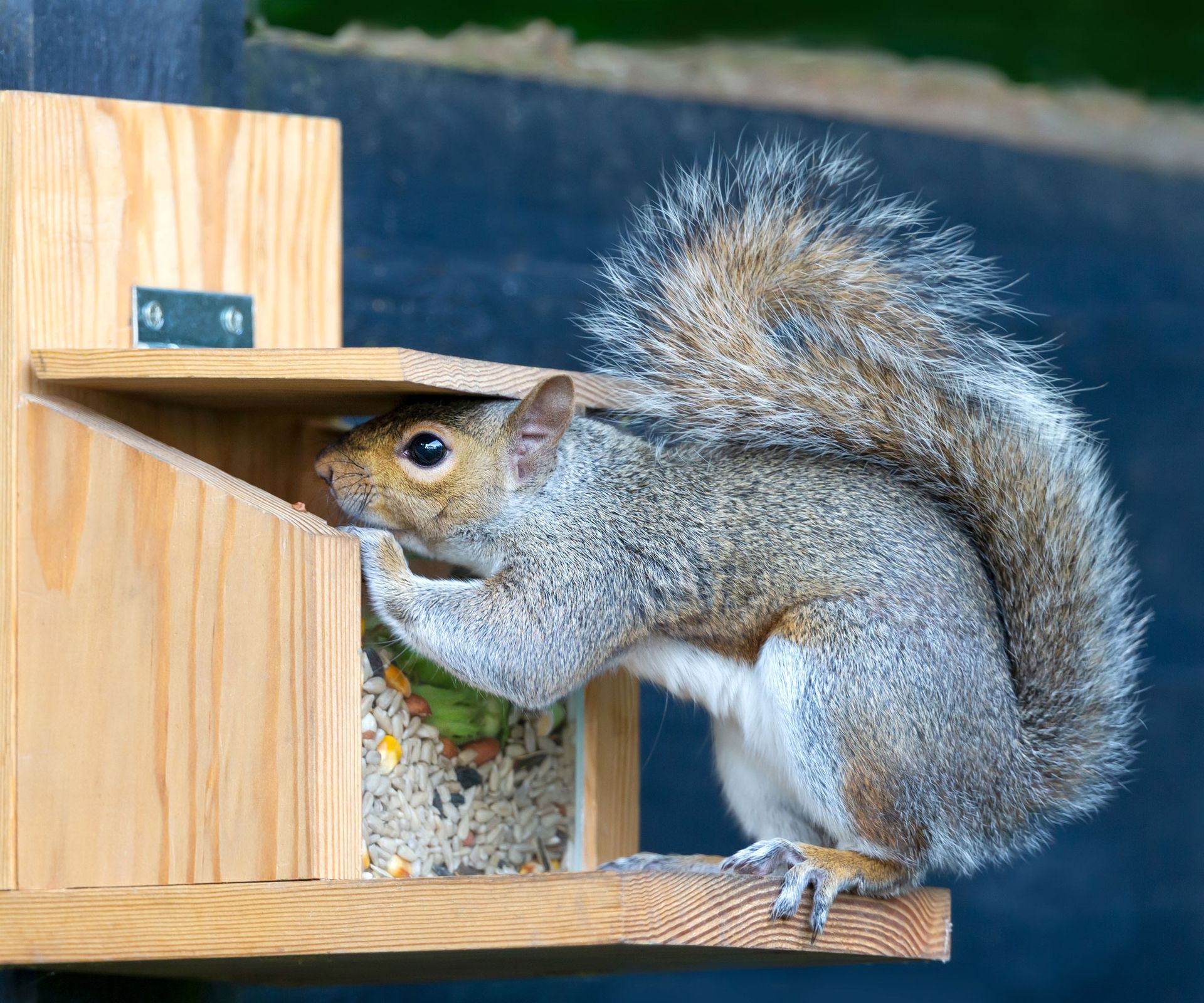
So why do squirrels keep coming back? Eastern gray squirrels (Sciurus carolinensis) like a lot of what birds like. Sunflower seeds are a favorite, and corn and peanuts may tempt them even more. That’s bad news for anyone buying bargain bags, since cheap mixes often lean on sunflower and corn.
Squirrels are also gifted athletes. From a roof, branch, or fence, a squirrel can cover about 10 feet (3 m) in one leap, and from the ground it can spring roughly 5 feet (1.5 m) straight up. That’s why squirrel-proof feeders and baffles can make such a difference. Any feeder within reach of those launch points is fair game, no matter what seed it holds.
Shop Squirrel-Proof Feeders
The 3 Seeds Squirrels Are Less Likely to Steal
1. Safflower
Safflower looks like a small white sunflower seed with a thick shell. Squirrels usually pass it by, and so do house sparrows and starlings, for the most part. In some areas, squirrels have picked up a taste for it anyway. Pick up a bag of Wagner’s Safflower Seed Wild Bird Food on Amazon.
2. Nyjer
Despite the old “thistle” label, nyjer has nothing to do with North American thistles. It comes from an African plant. Those tiny black seeds rank among the seeds squirrels don’t like much. Use a feeder with very small ports and serve it by itself, not in a mix, or a lot of it ends up wasted. Kaytee sells quality nyjer seed at a reasonable price.
3. White Proso Millet
White proso millet is the pale little seed that fills out most budget blends. Squirrels will eat it, but with corn or peanuts on offer, they usually go for those first. That’s why a mix that leans hard on millet tends to lose their attention sooner. If you buy it on its own, pick white, like this Morning Bird White Proso Millet. Birds will choose it over red.
Which Birds Each Seed Attracts
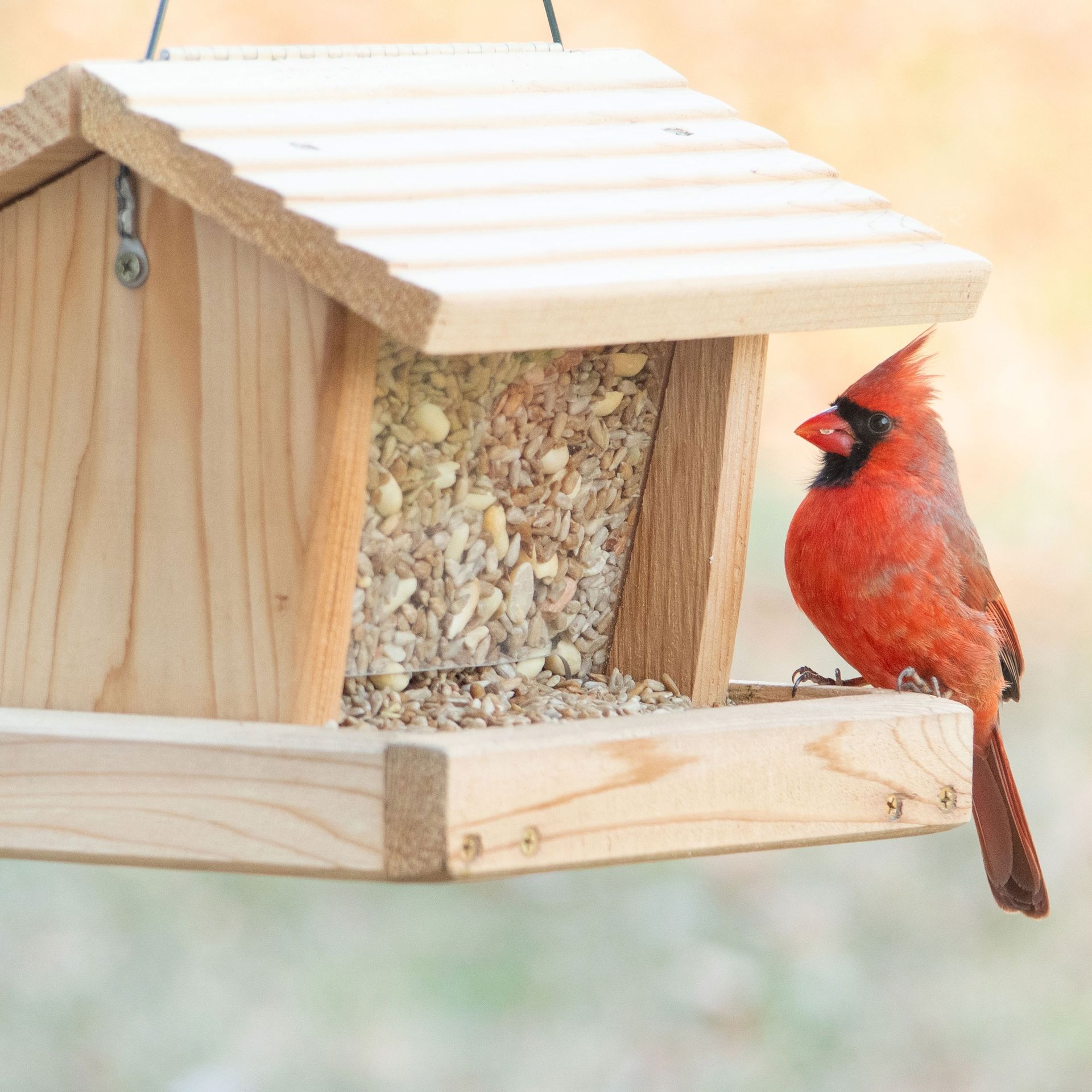
Cardinals go for safflower more than most. Grosbeaks, chickadees, titmice, nuthatches, and mourning doves eat it, too. There is a catch, though: plenty of birds still prefer sunflower, and a feeder switched straight to safflower may get quieter. Mix a little safflower into the current seed and raise the share over time for an easier switch.
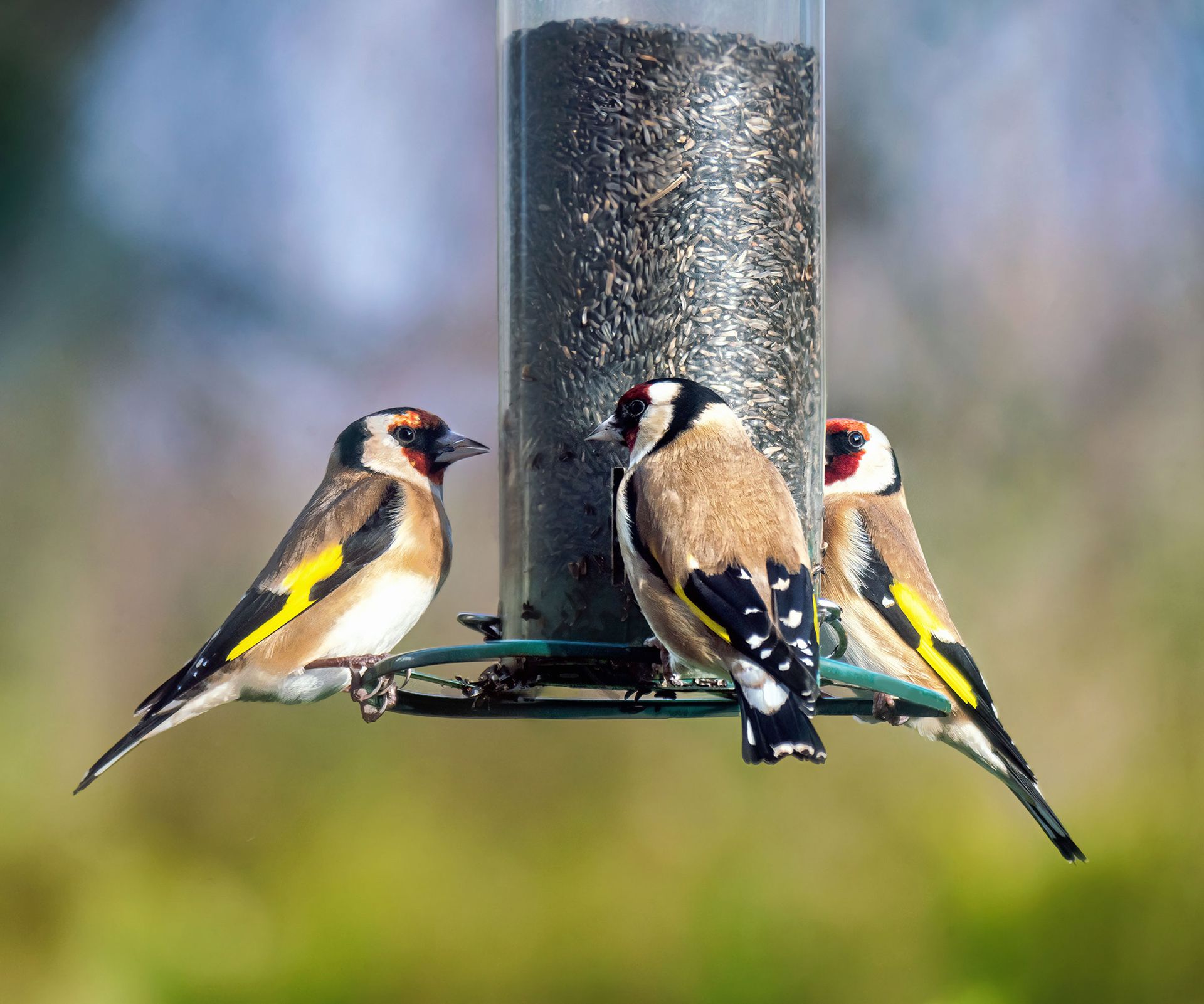
Nyjer is finch food. Goldfinches crowd it, both American and lesser, and house finches, pine siskins, and redpolls show up as well.
Millet works from the ground up. Juncos and native sparrows are the regulars, with towhees and mourning doves close behind, and cardinals will pick at it, too.
How to Offer These Seeds
Each seed does best in its own feeder. Safflower goes in a hopper, tube, or platform feeder without any trouble. For nyjer, you’ll want tiny ports or fine mesh, like this Kingsyard feeder from Amazon.
Millet belongs low, on the ground or a low tray that drains well, where juncos and native sparrows forage. A 10-pound (4.5 kg) bag of plain white millet makes a fine start. Go easy on the amount. Seed still lying around at dusk means you overdid it, and squirrels will happily clean it up.
Where to Place a Bird Feeder to Discourage Squirrels
Distance comes first. Give a pole-mounted feeder at least 10 feet (3 m) of open air between it and the nearest tree, fence, roof, or deck. Height matters as well – about 5 feet (1.5m) up keeps it out of a ground jump. If you’re buying a pole, a heavy-duty 76-inch adjustable shepherd’s hook from Home Depot sits on a seven-prong base that stays put in soft soil.
Then add a baffle. On a pole, it goes below the feeder so squirrels can’t climb past it – for a feeder hanging near trees, a dome-style baffle goes above instead. This Koralakiri 19-Inch Squirrel Baffle from Walmart will do the job nicely.
Other Ways to Make a Bird Feeder Less Appealing to Squirrels
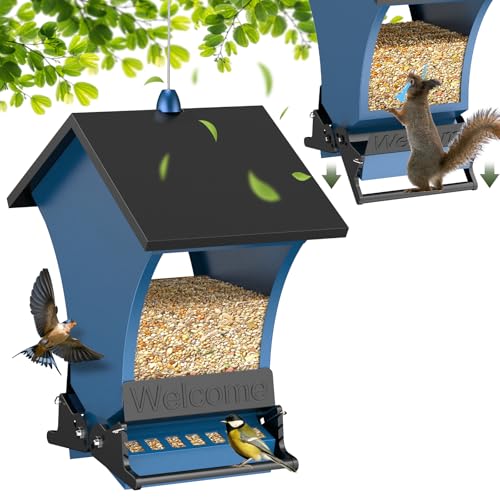
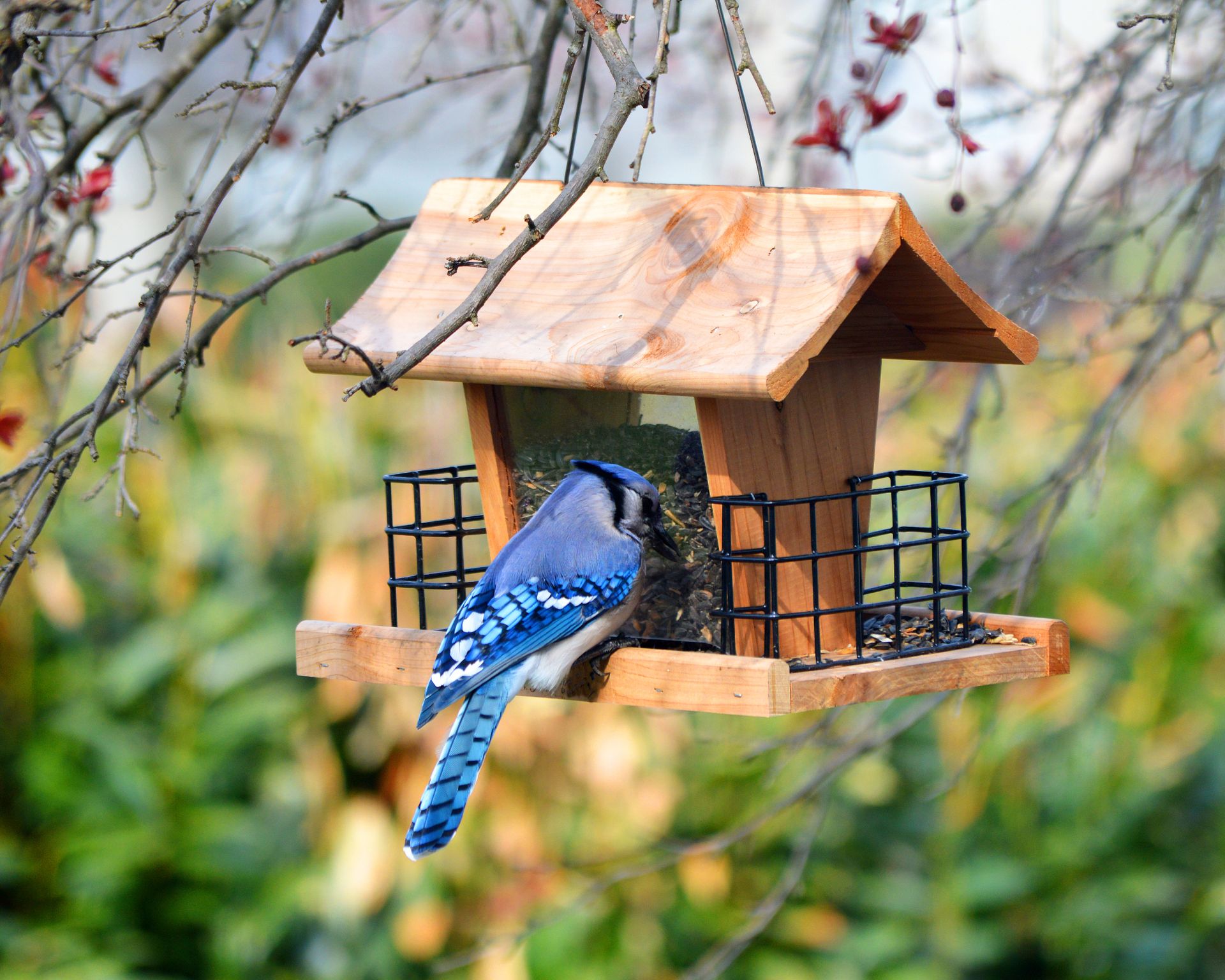
The feeder itself can do some of the work. Weight-activated models close their seed ports when anything heavier than a songbird climbs on. With the Brome Squirrel Buster Classic from Amazon, a squirrel’s own weight pulls the shroud down. Hang it with roughly 18 inches (46 cm) of open space all around.
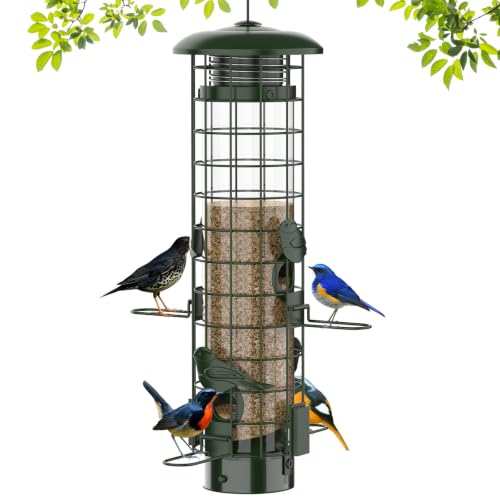
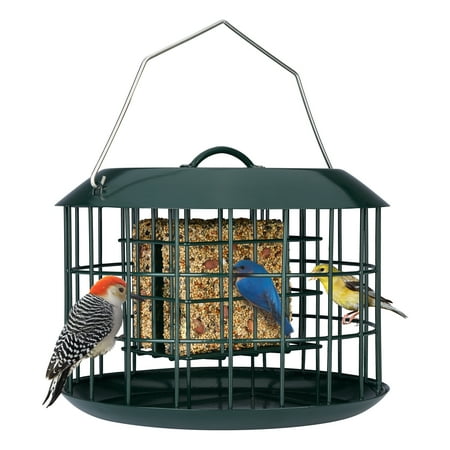
Caged designs take a different approach. The iron cage around this Veehoo caged tube feeder keeps squirrels at arm’s length from its four feeding ports. A seed tray under a tube feeder catches spills before they reach the ground. Keep spare seed sealed, too – a lidded metal or plastic container works well to keep pests out.
What Not to Add to Bird Seed
Leave sticky and greasy tricks alone. Sticky coatings meant for squirrels can just as easily trap a chickadee. Grease is no better. Smear petroleum jelly or cooking oil on a pole, and it mats fur and feathers alike – a bird with matted feathers loses the insulation it needs on cold nights.
Hot-pepper seed is the other common shortcut. Birds don’t feel the heat of capsaicin, but squirrels do. It burns their mouths and causes real discomfort, which is a fair reason to leave it on the shelf. Skip salty or sugary kitchen scraps, too. Both can hurt small birds.
Squirrels won’t vanish from the yard, and that’s fine – they’re fun to watch when they aren’t eating the cardinals’ dinner. Give them a seed they don’t love and a feeder they can’t reach, and more of each bag ends up where it belongs.