Prairie natives need better PR, I’ve decided. Especially as it is a truth universally acknowledged that any garden designer worth their salt will tell you to look to the Mediterranean when the brief is a garden that can cope with heat and drought.
It’s easy to see why, of course; lavender, salvia, rosemary, sage and their sun-loving companions have evolved to thrive in hot, dry landscapes, and they’ve been giving gardeners a blueprint for drought-tolerant planting for generations. The silver foliage helps reflect the heat and limits water loss, while the tough stems and deep roots allow many Mediterranean plants to keep going when other perennials are wilting.
They look beautiful, smell wonderful and, once established in the right conditions, can be remarkably undemanding. But there’s another answer to the problem of hotter, drier gardens – and it’s one that comes from a landscape that a) looks very different indeed, and b) is a lot closer to home.
The Prairie Native You Shouldn’t Sleep On
Yes, there is one particularly striking prairie native making waves right about now, but, weirdly enough, I first spotted somewhere I really wasn’t expecting to find it: in the middle of Sussex.
I’d gone to Wakehurst, Kew’s wild botanic garden, and found myself standing in front of the magnificent American prairie they’d somehow been recreated in the English countryside, with towering grasses and wildflowers stretching out across the landscape.
It was beautiful, but it didn’t really look like a traditional British garden. There was something wilder and more elemental about it, as though a little piece of the American Midwest had been dropped into Sussex. And among all those plants, there was one prairie native that stopped me in my tracks: rattlesnake master.
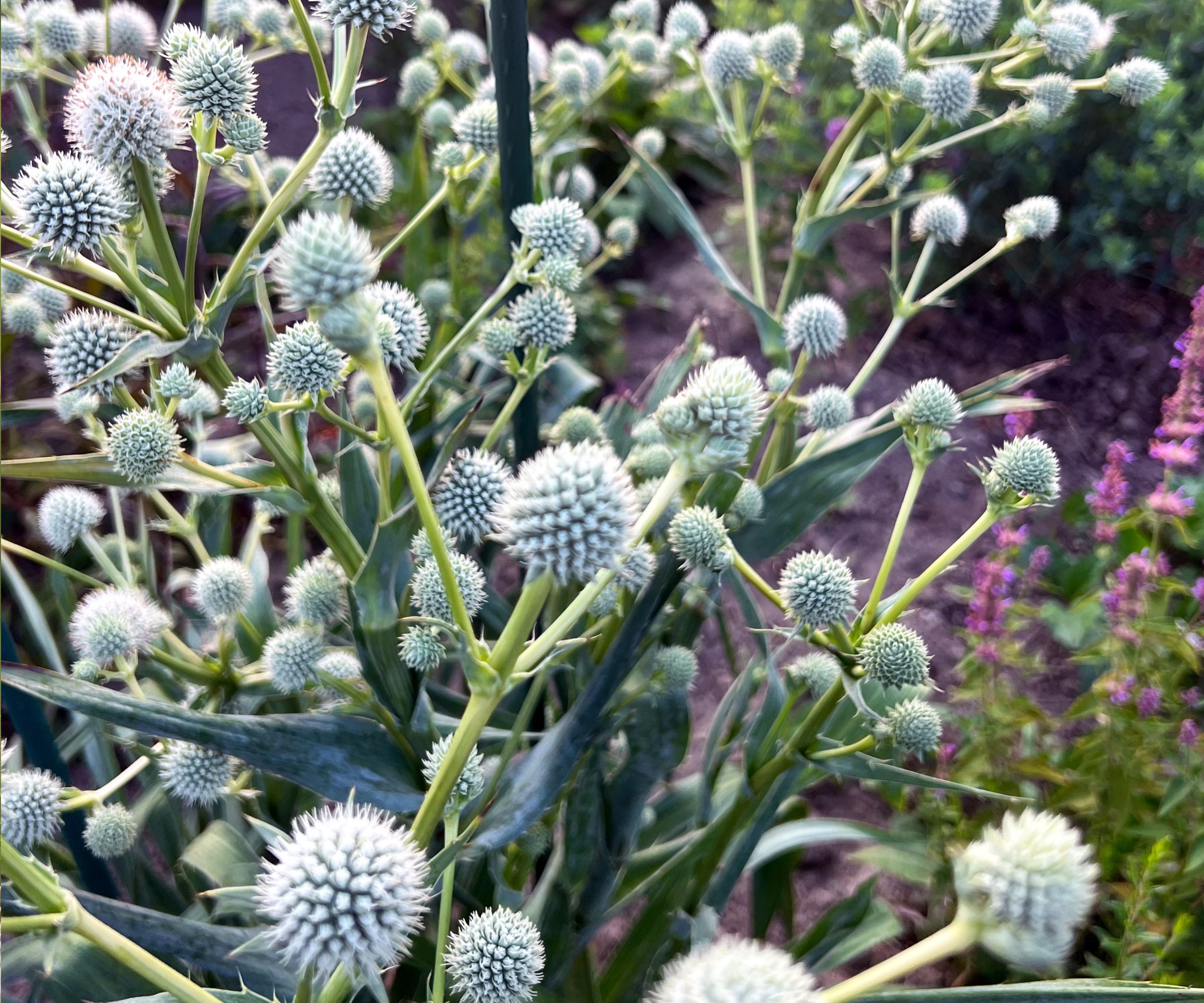
With its blue-green leaves radiating from the base and globes of greenish-white flowers held high on branching stems, it looked almost like a cross between a yucca and an alien allium. It was architectural, slightly otherworldly, and completely unlike anything I’d normally expect to see in a sunny perennial border.
There’s more to the appeal than just that, though; those strange little flower heads are packed with tiny blooms, providing pollen and nectar for an impressive range of pollinators, from bees to butterflies to birth month bugs.
It’s also worth noting that Wakehurst’s American Prairie was designed as a living experiment in climate-resilient gardening, using plants from North American prairie communities to explore how they might perform as our own climate changes. And, if you’re in the market for flowering perennials that thrive in 95°F heat, this little beauty is definitely one of them.
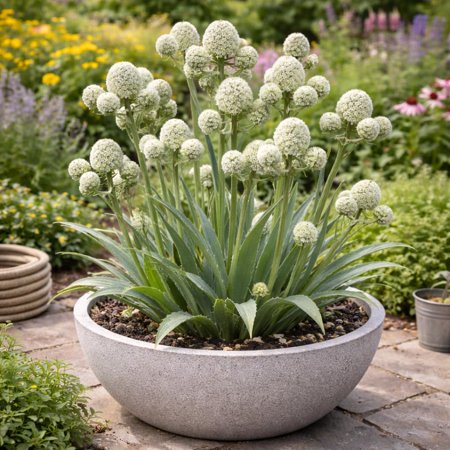
Working well in containers or beds, this prairie favorite has been making waves in the UK as gardeners look for more drought-tolerant plants.
If you’ve fallen for this prairie native’s strange good looks as well, the good news is that rattlesnake master isn’t particularly difficult to grow. All it wants (all it really really wants) is full sun and plenty of room for the basal foliage and its tall flowering stems.
In terms of planting, it needs things well-drained and can tolerate the likes of sandy, rocky and clay soils. And, while you should water regularly while establishing it, it becomes wholly drought tolerant once mature and doesn’t need the constant moisture that many garden plants do.
That’s… well, that’s it; you can just leave it to do its thing (and should; the flowerheads can be left standing after flowering for added winter structure).
Shop Prairie Plants:
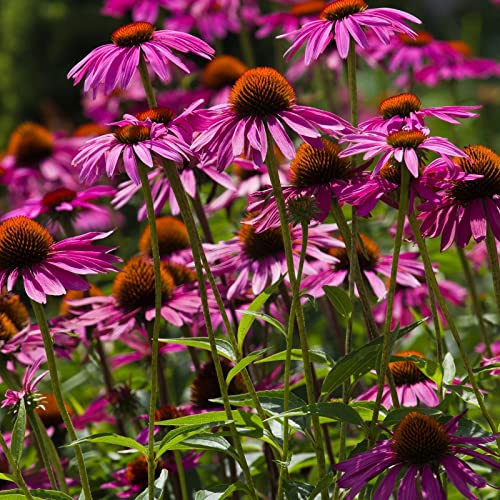
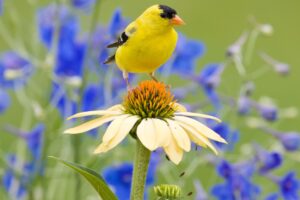
Purple coneflowers are an obvious choice for hot weather planting, but they are a beautifully reliable (or a reliably beautiful) one, too!
This tall prairie favourite can grow up to eight feet tall, with rich purple seed heads that catch the light beautifully.
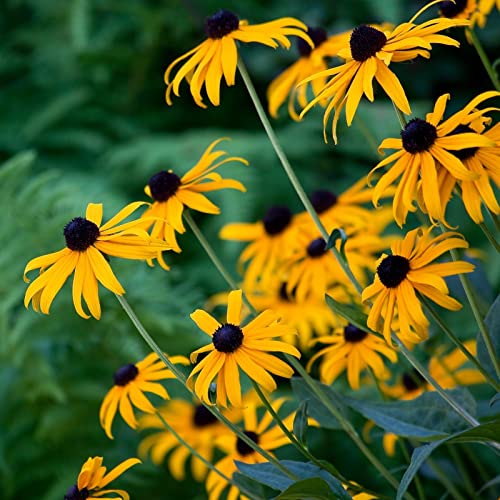
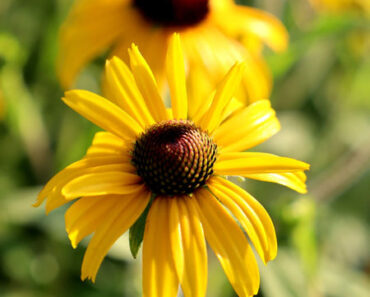
You can add an instant pop of color to any prairie planting scheme with a slew of Black-Eyed Susans.
Lavender will always have its place. So will salvia. Rattlesnake master, though, represents something that our gardens are going to need more of: plants that can cope with difficult conditions without sacrificing beauty or wildlife value.
And, after seeing rattlesnake master thriving in that surreal little slice of American prairie in the middle of Sussex, I’m beginning to wonder whether the future of the dry garden might look a lot less Mediterranean than we think…