Mix it up. That’s what most garden designers tell you when you ask for advice, especially about a container garden. Try different shapes, a variety of sizes and heights, different colors; basically, give your eyes something to feast on. As seen in the Architectural Digest Open Door video below, Dakota Johnson’s garden that frames her pool in Los Angeles turns this advice on its head, because it’s actually the exact opposite.
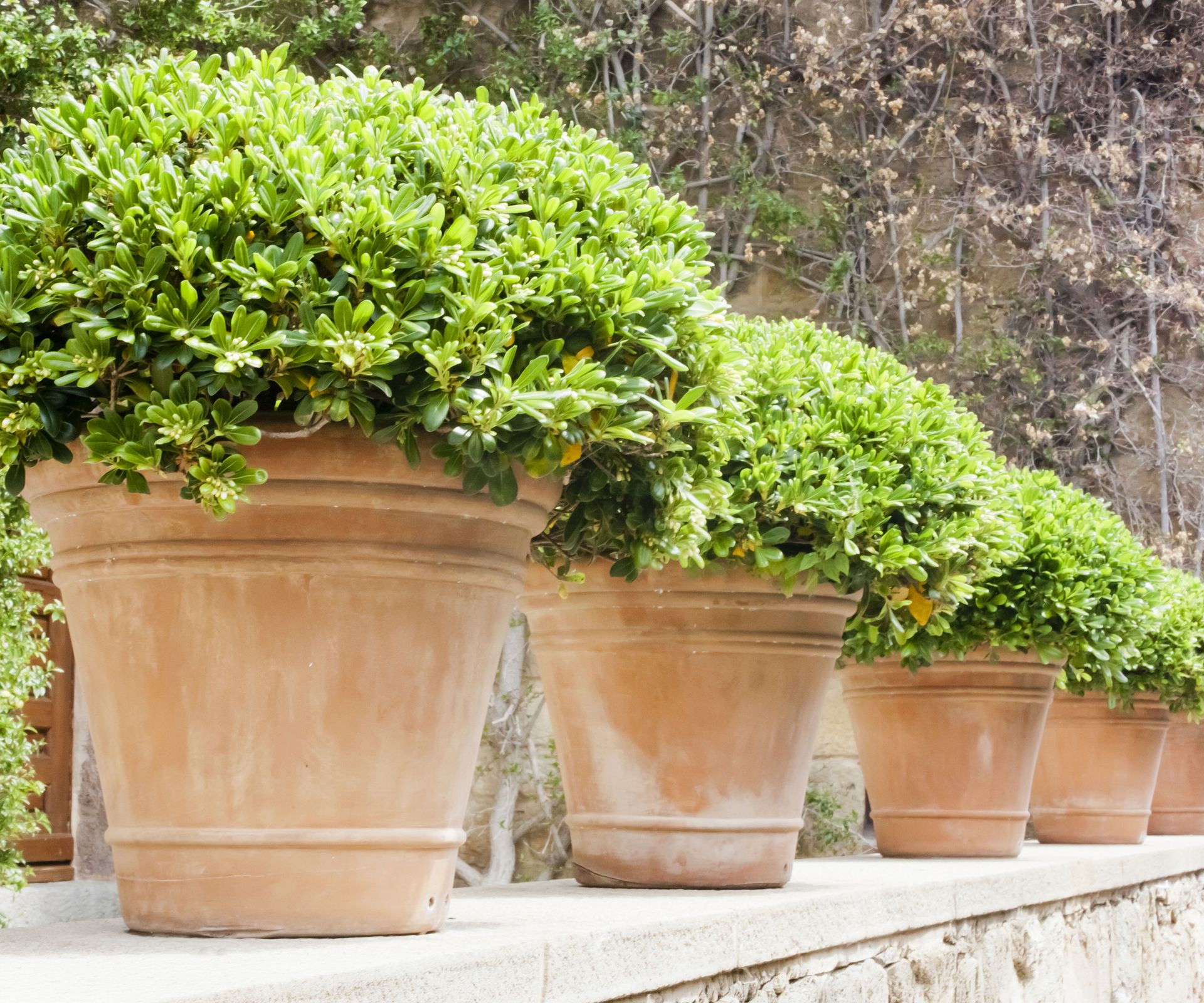
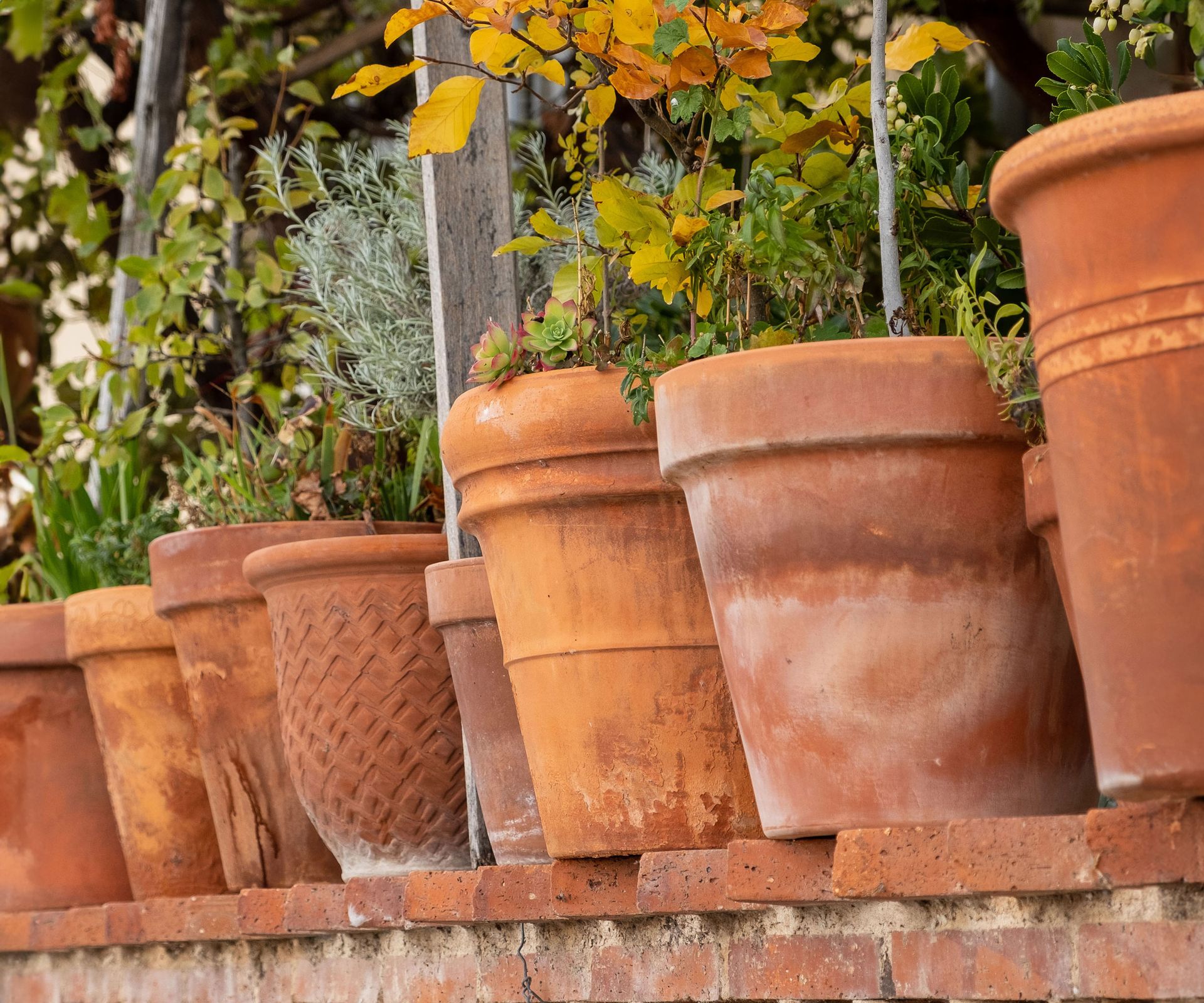
Along the curved retaining wall of the property, originally designed in 1947 by Carl Mason, at least 20 or 30 terracotta planters are lined up in a row. It’s arresting in its simplicity, as they are all made from the same material, the same shapes, and repeated throughout the wall. While many designers would say, “Oh, that doesn’t work; you need some visual interest in your garden display,” I love it.
Who needs eclectic when you can have calm, meditative, and soothing? The main principle of this is one that designers often apply to container gardening ideas: repetition is your friend.
Why Container Repetition Works
When planting borders, the idea of creating a rhythm and cohesion is very well established, and the same logic often holds when applied to containers. However, not many people trust it. Often, your first instinct is to treat each pot as its own world, and then combine that world with others. For example, glazed mixed with terracotta, tall and short, or a bright color with a more neutral beige. However, the result you get looks more like a display at your local garden center than a well-thought-out space.
Dakota Johnson’s approach strips all of that away. She committed to one material (unglazed terracotta) and pots of almost all the same size. This gives the whole thing a unified look rather than a collection of individual plants and objects. The eye has a chance to rest as it moves along the row, rather than jumping between competing pieces and getting stressed out. It’s a calming effect that far outweighs the busy.
Cohesion; that’s the key word here. Terracotta is a great material for this because of its natural texture and tone. Each one ages slightly faster or slower than others, develops its own patina, and gives rise to a row that looks like it was grown rather than placed there.
Show Dakota-Inspired Pots
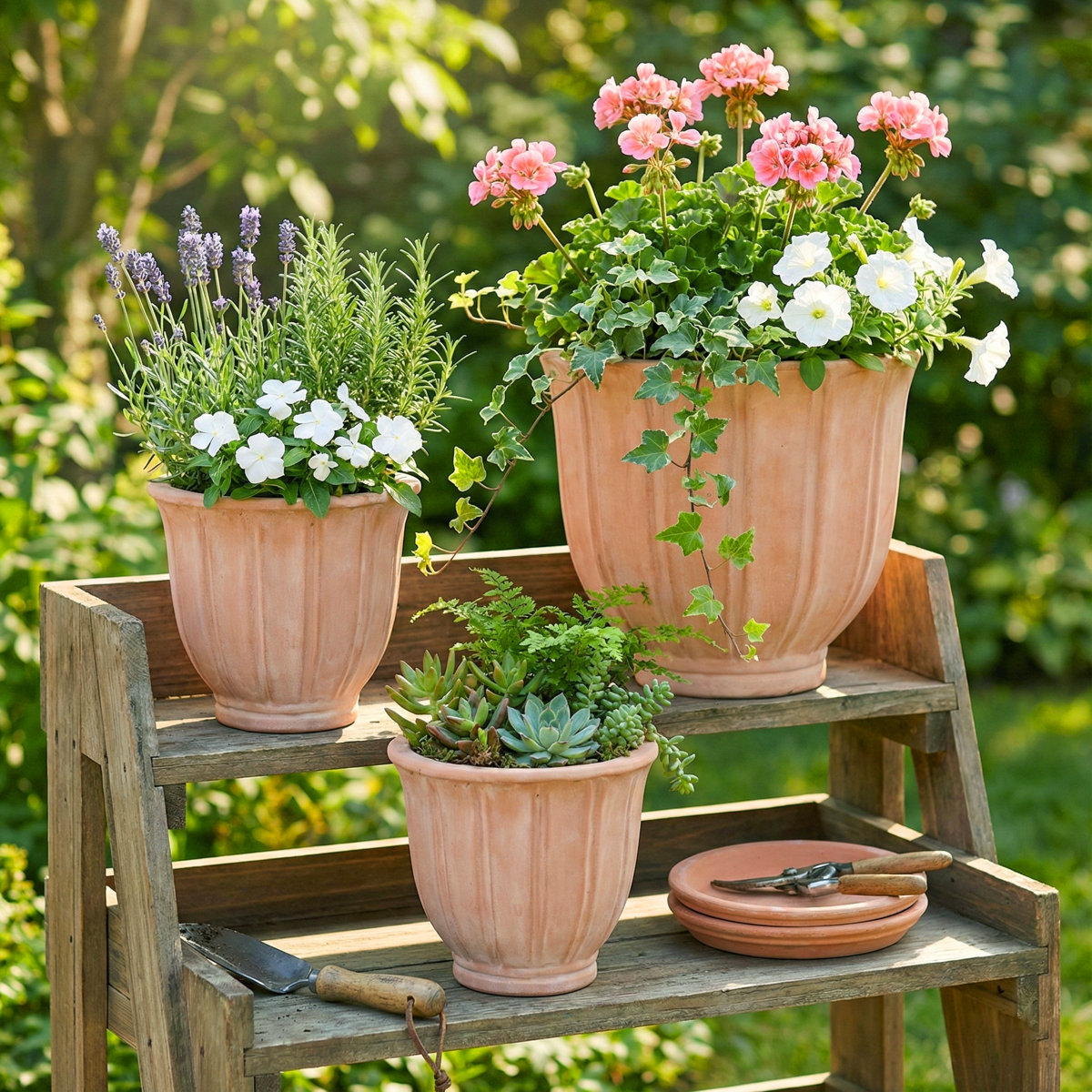
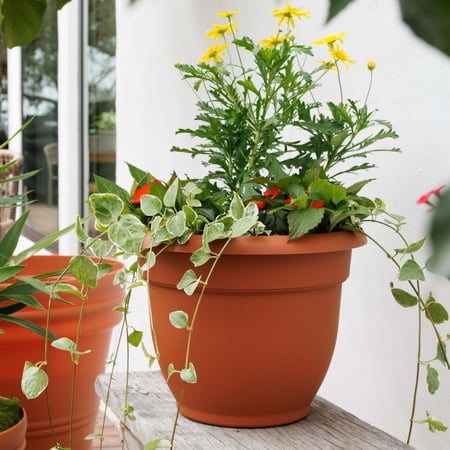
Getting the Scale Right
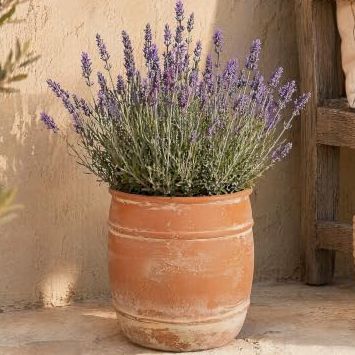
A very common mistake when container planting for a patio or next to a pool is using pots that are way too small for the area. A medium-sized terracotta pot that looks great on your windowsill can look completely out of place outside, or even worse, completely swallowed up. If you’re working with a very large hard surface, your container also needs to follow suit.
In Dakota’s garden, her pots are quite large, but not enormous. They’re still big enough to sit confidently along the wall, and they certainly don’t look like an afterthought. A good rule to keep in mind: A container should be no smaller than 12 inches in diameter for any poolside or patio arrangement, and you can go larger when the space allows for it.
If you’re having a hard time letting go of the “eclectic” look, you can always add a few oversized pots along with a row of medium ones to keep it from feeling too rigid without breaking the cohesive element.
What to Plant in Them
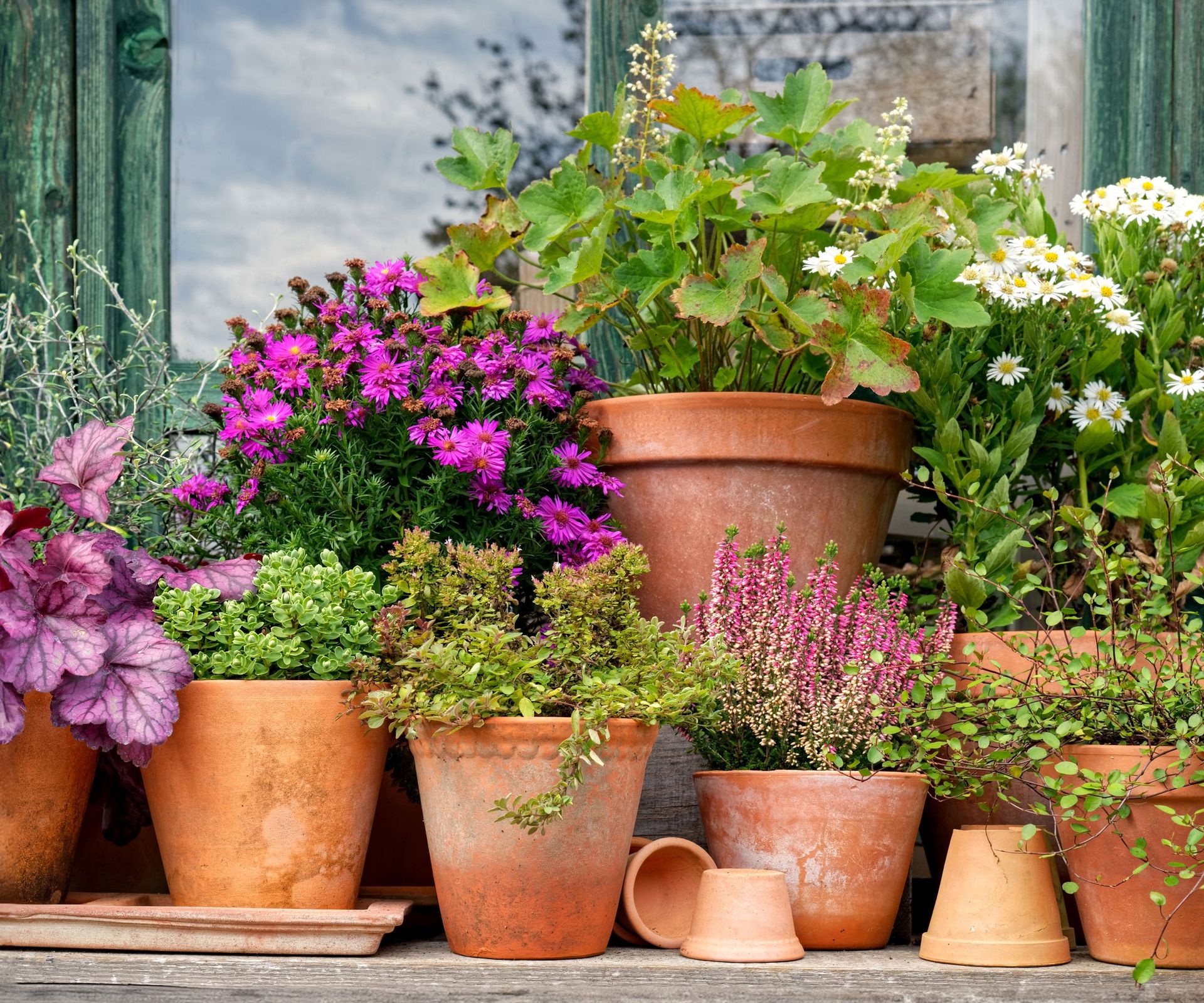
So, what should you plant in your terracotta pots? That’s the big question. This is another thing Dakota’s arrangement gets just right: She planted similar shrubs, including roses and azaleas, repeatedly throughout all 20 or 30 terracotta pots rather than lots of different plants.
A natural fit for a poolside that gets a lot of sun would be succulents and drought-tolerant shrubs. They tolerate heat, reflected light, and the occasional splash from a pool without getting all sulky about it. Some examples are agave, aeonium, jade, and trailing rosemary, and the great thing about these plants is they require very little attention.
If your patio has more shade, look for something like ferns, hostas, or a row of clipped box balls; the type matters much less than your commitment to said type.
Practical Considerations
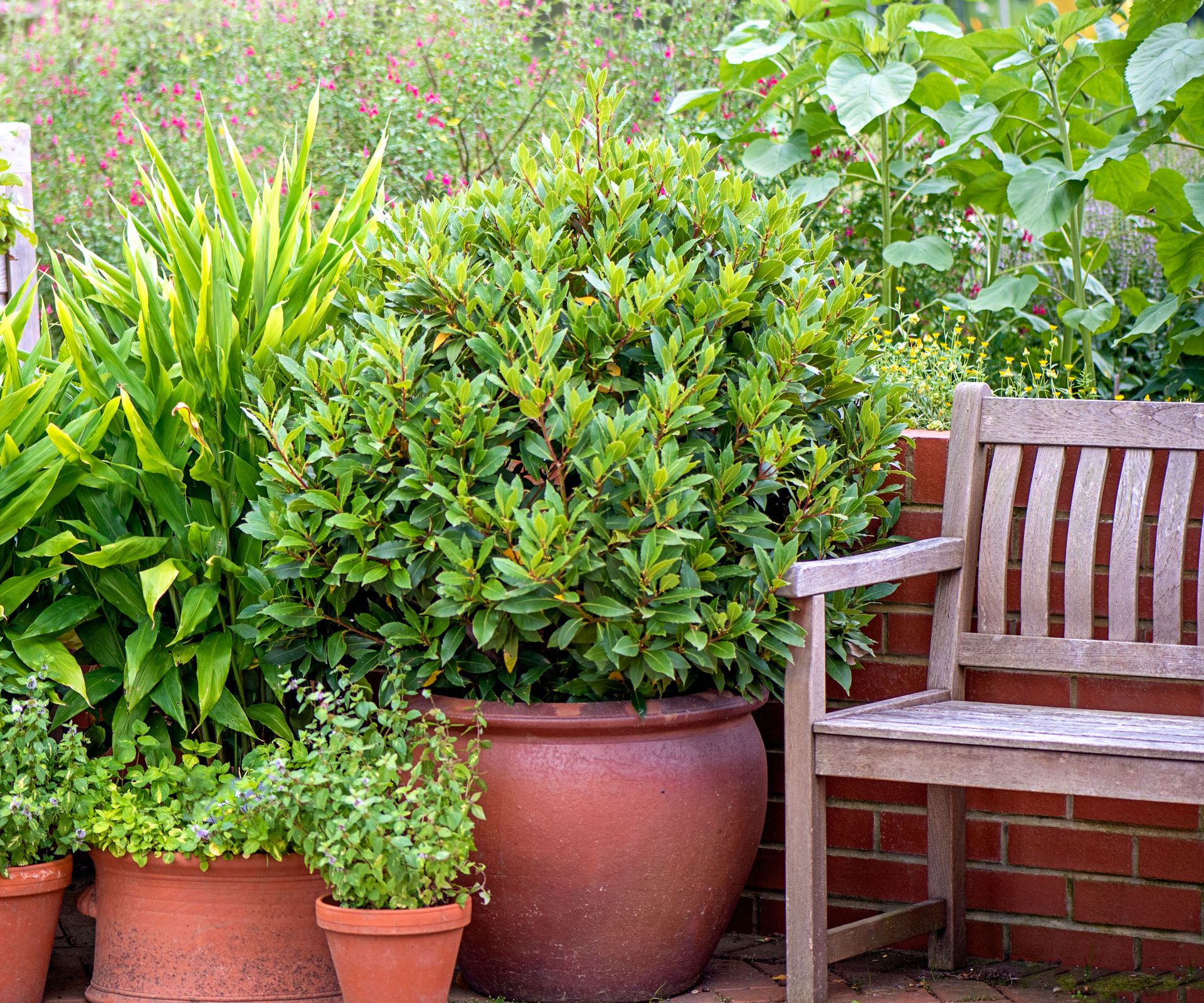
Drainage is a big issue, and it’s something nobody probably told you about. Terracotta is porous and naturally weathers over time, but it’s one of the things that makes it so beautiful. It is, however, highly vulnerable to frost damage in colder climates. As water is absorbed into the clay, it can expand and crack the pot from the inside.
So, if you’re using traditional terracotta outside all year and you live in a climate that gets hard frosts, bring the pots inside. If this isn’t feasible, you can also get frost-proof terracotta, which is fired at a much higher temperature and is much more resistant. Another alternative is double-walled resin pots with a terracotta finish; same look, less worrying about exposure.
The lesson from Dakota is pretty simple: choose a material, commit to it, and buy way more pots than you think you’ll need.