Elegant white blooms make the peace lily a beautiful houseplant but a brown flower could be a desperate cry for help. While they’re among the easiest houseplants to look after, peace lilies are incredibly dramatic, and you’ve no doubt witnessed your plant’s diva-esque leaf flop when you’ve forgotten to water it. The same goes for browning peace lily flowers. The discolored blooms are likely telling you critical care information, and as part of our Garden ER series, we’re here with straightforward solutions to help you diagnose and treat the problem, and save your plant.
There are several possible causes behind a peace lily’s brown flowers, from being a perfectly normal part of the plant’s lifecycle to a clear sign that your Spathiphyllum wallisii is in severe trouble. But don’t worry – each cause leaves a trail of telltale signs, making it easy to work out what the problem with your peace lily is and take the right action to nurse your plant back to health, pronto. And the good news is that all these common problems with peace lilies are straightforward to sort.
Ready? Come on into Garden ER and let’s diagnose and treat this houseplant patient suffering from brown flowers.
1. Is the Flower More Than a Month Old?
Probable Cause: Natural Lifespan
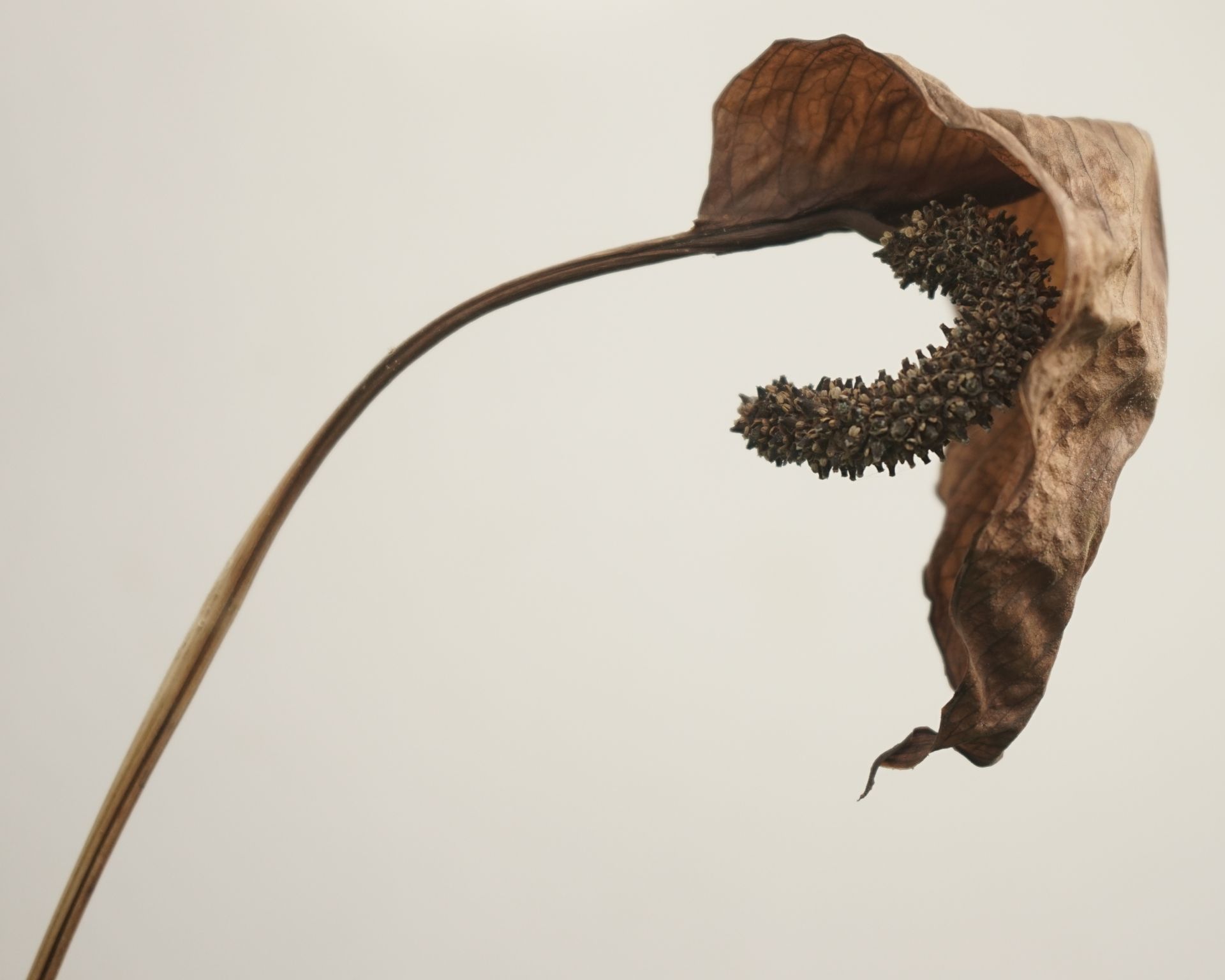
Each peace lily bloom, called a spathe, only lasts for 4-6 weeks. So, if this discolored flower has been out for more than a month, it’s likely nearing the end of its life.
Confirm the Diagnosis
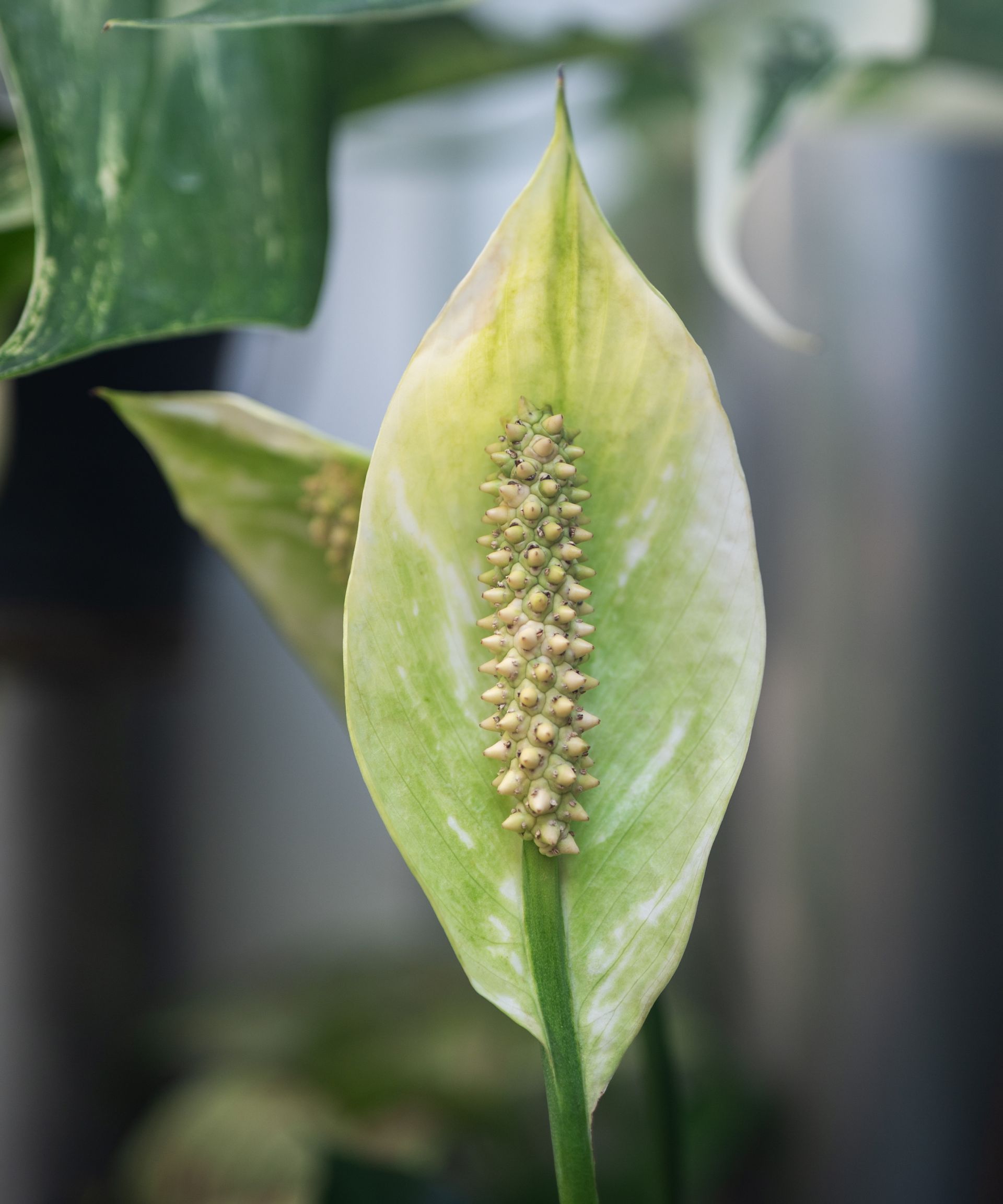
Another clue that points towards natural causes is if the sail turned green before it browned. New spathes emerge a bright white but produce chlorophyll as they age, which gradually turns them green, and they then slowly shift to brown. The more light the plant gets, the greener peace lily flowers will become, but all should show a gradual color shift rather than turning directly from white to brown.
Treatment Plan
If this sounds like what’s happened to your peace lily flower, there’s nothing to worry about. Trace the stem of the brown flower down to the base of the plant and use a sharp pair of bypass pruners to cut it off as low as possible. This will stop your plant wasting nutrients on a dying flower.
2. Are the Brown Patches on the Flower Irregular?
Probable Cause: Sun Scorch
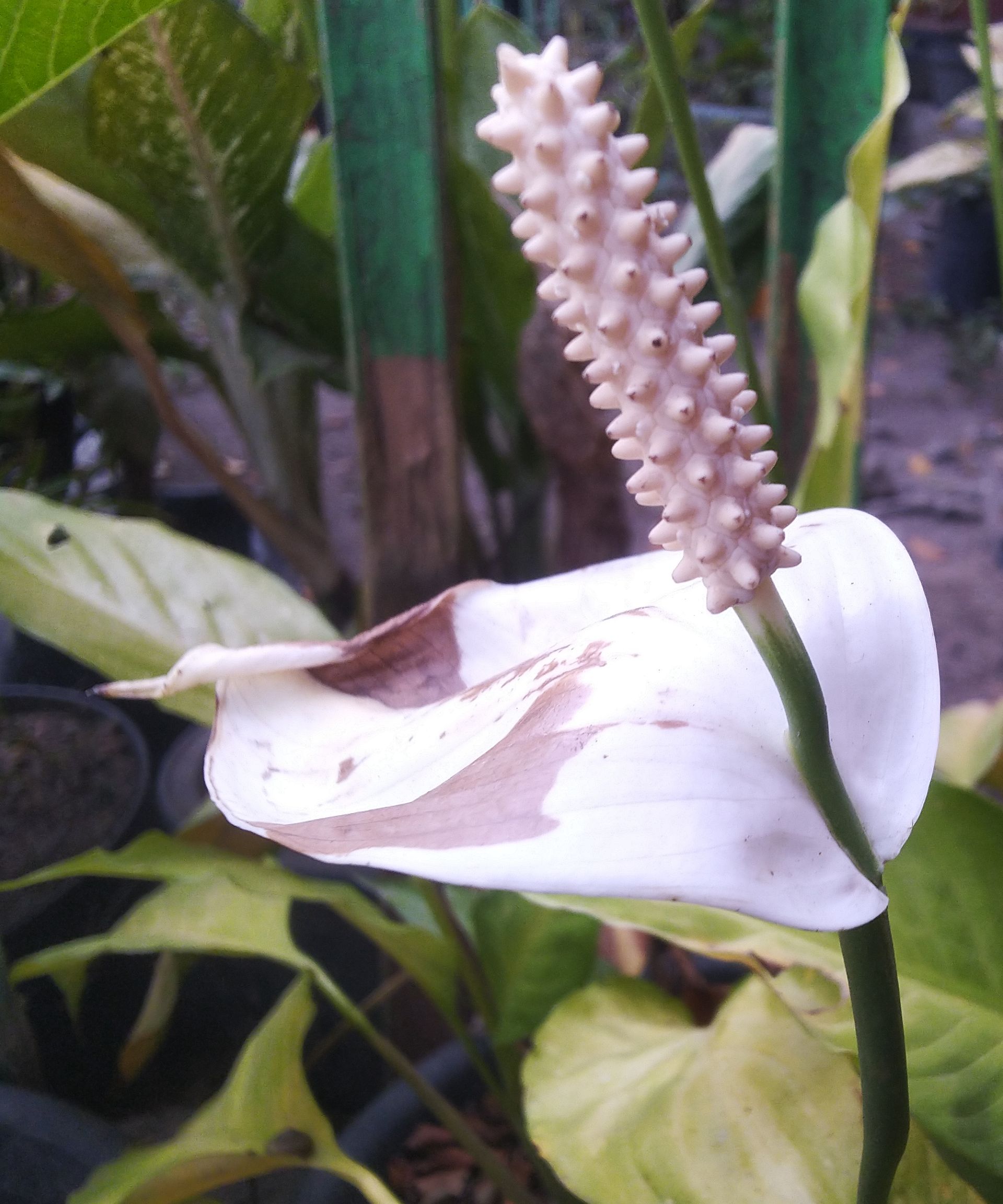
Peace lilies do best in indirect sunlight, in a bright room but where the sun doesn’t shine directly on its leaves. If your plant is sitting in direct light such as on a sunny windowsill, sunbeams have likely scorched the plant and turned areas of the spathes brown.
Confirm the Diagnosis
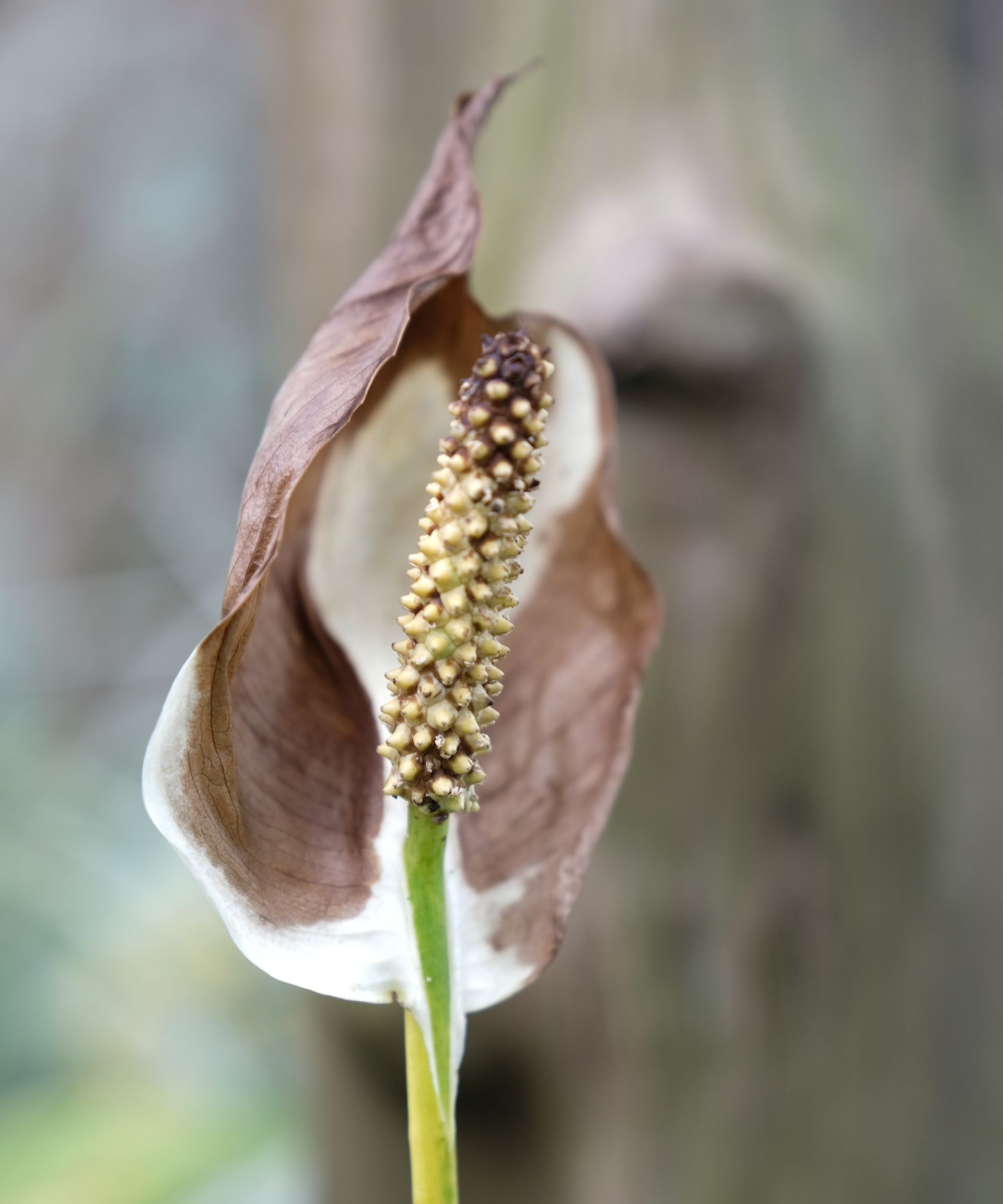
Sun scorch creates random irregular patches on spathes, in any and many patterns, that are a dark chocolate brown. The affected areas can sink, dry out to a paper-thin lesion, or turn into a hole. The rest of the spathe may also look thin or faded, and the spike may turn brown or black. You may see bleached yellow or white patches on leaves that have been scorched by intense sunlight, too.
Treatment Plan
This issue is easily fixed: cut the damaged stem off (follow the steps explained above) and move your plant to enjoy bright indirect sunlight – a spot in a sunny room but where the sun won’t shine directly on its flowers and foliage. If you don’t have much choice, then a sheer curtain will help screen your peace lily from direct sunlight.
3. Does the Flower Just Have a Dark Outer Edge or Tip?
Probable Cause: Low Humidity
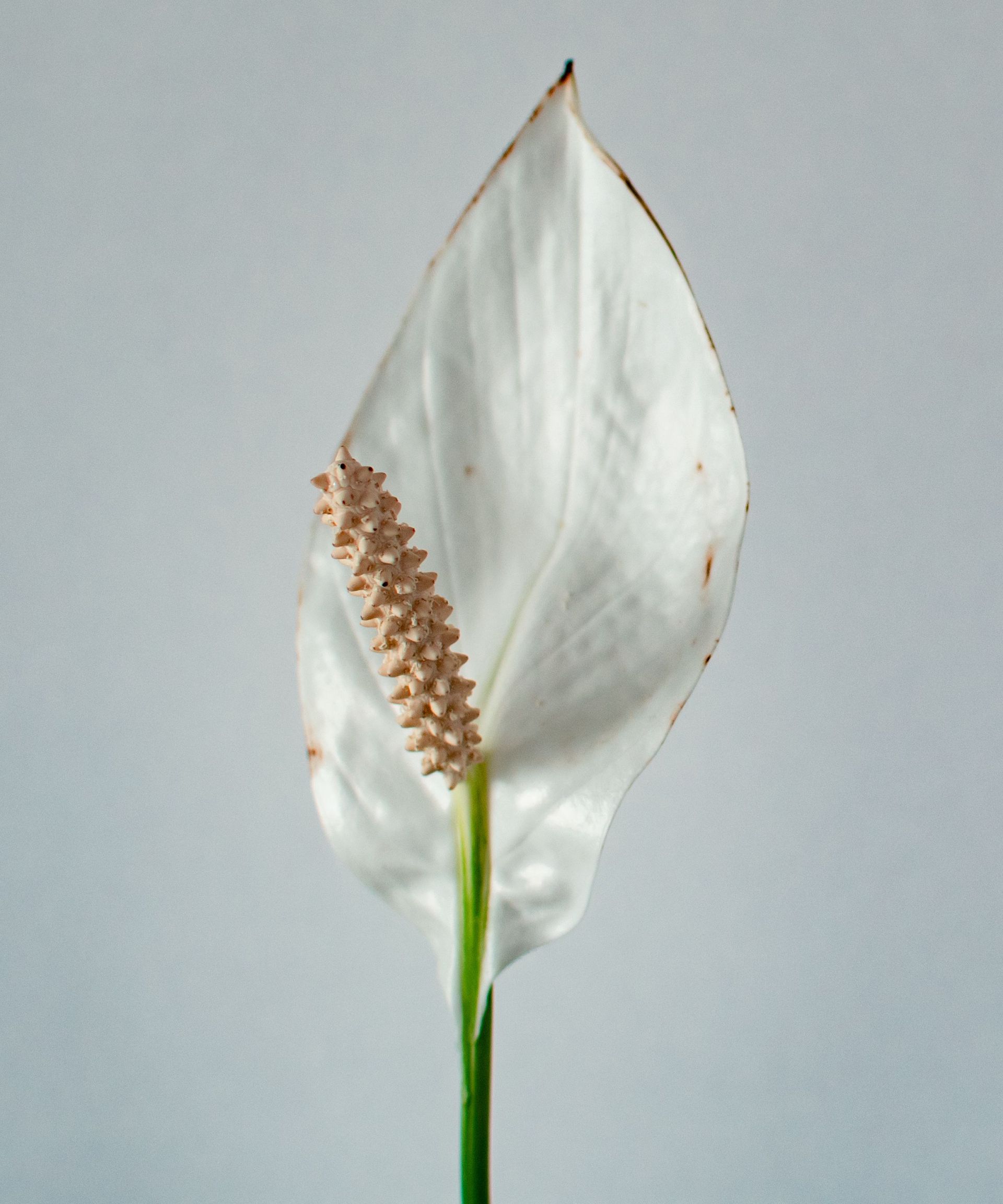
These fabulous houseplants trace their ancestry back to plants that were ground-dwellers in the warm and steamy tropical rainforests of Central and South America, so peace lilies are houseplants that naturally love humid conditions. In the dry air of our centrally heated homes and offices, peace lilies can struggle, especially in fall when the heating is first turned on, and they’ll let you know they’re not happy with spathes edged in brown.
Confirm the Diagnosis
There’s a very distinct pattern when low humidity is the cause, because the most exposed parts of the flower dry out first. So, the outer edge or very tip of the spathe will brown first, while the center stays green or white at first, and the discoloration gradually moves inwards. If lack of humidity is the problem, you’ll almost always see darker, crispy tips on the leaves too.
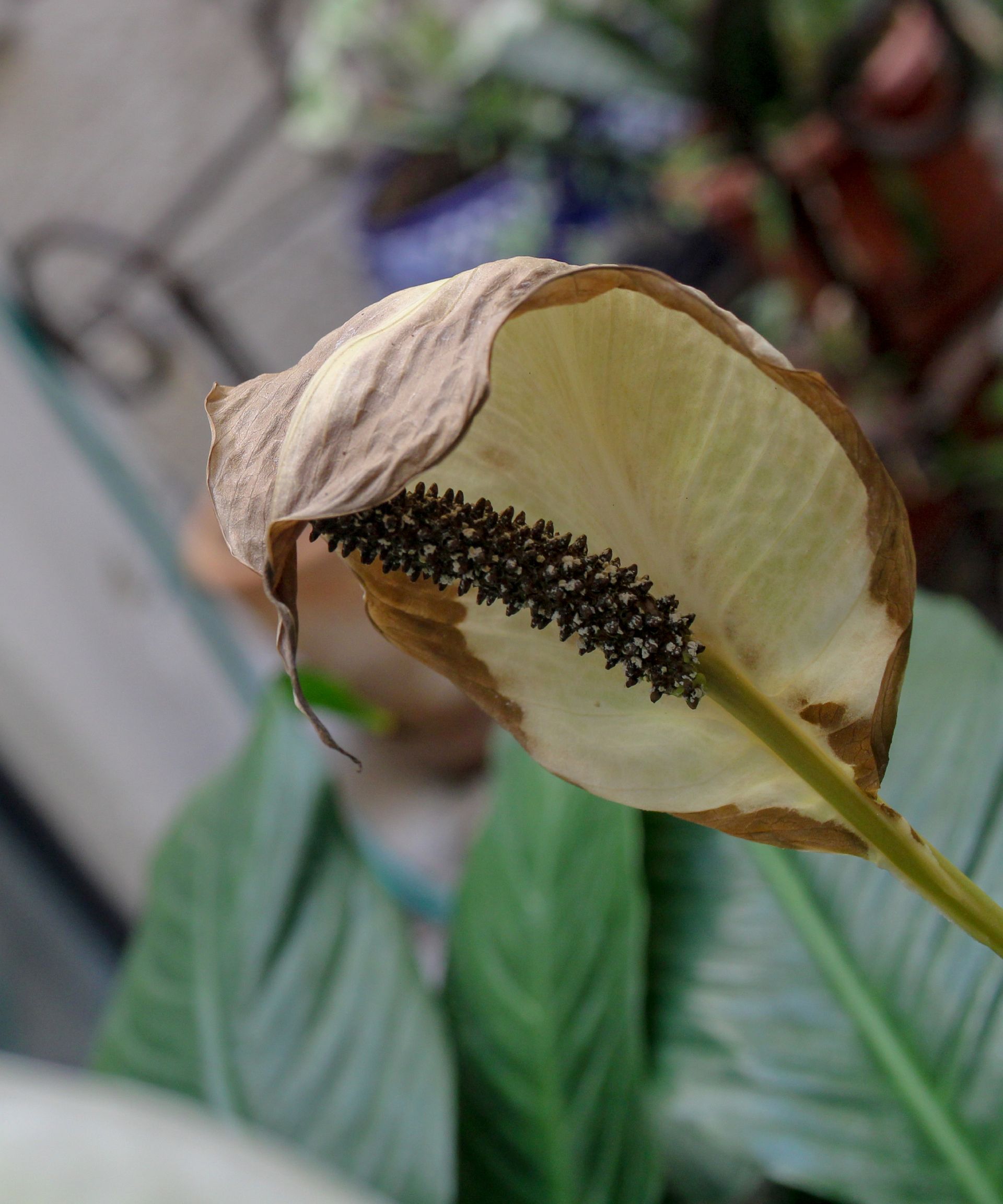
Treatment Plan
If you suspect low humidity is the issue, check your peace lily isn’t sitting near a radiator, air-con vent or hearth. Then set the plant pot on a shallow tray filled with pebbles and water: a Bonsai humidity tray such as this from Lowe’s is ideal. It’s important that the pot isn’t sitting in the water, as this can rot the roots; you’re simply using the water to humidify the air as it evaporates. Another option to increase humidity for a peace lily is to move it into a bathroom, or try placing it among other houseplants so it benefits from the moisture released by their leaves.
4. Does the Spathe Feel Soft and Limp?
Probable Cause: Overwatering
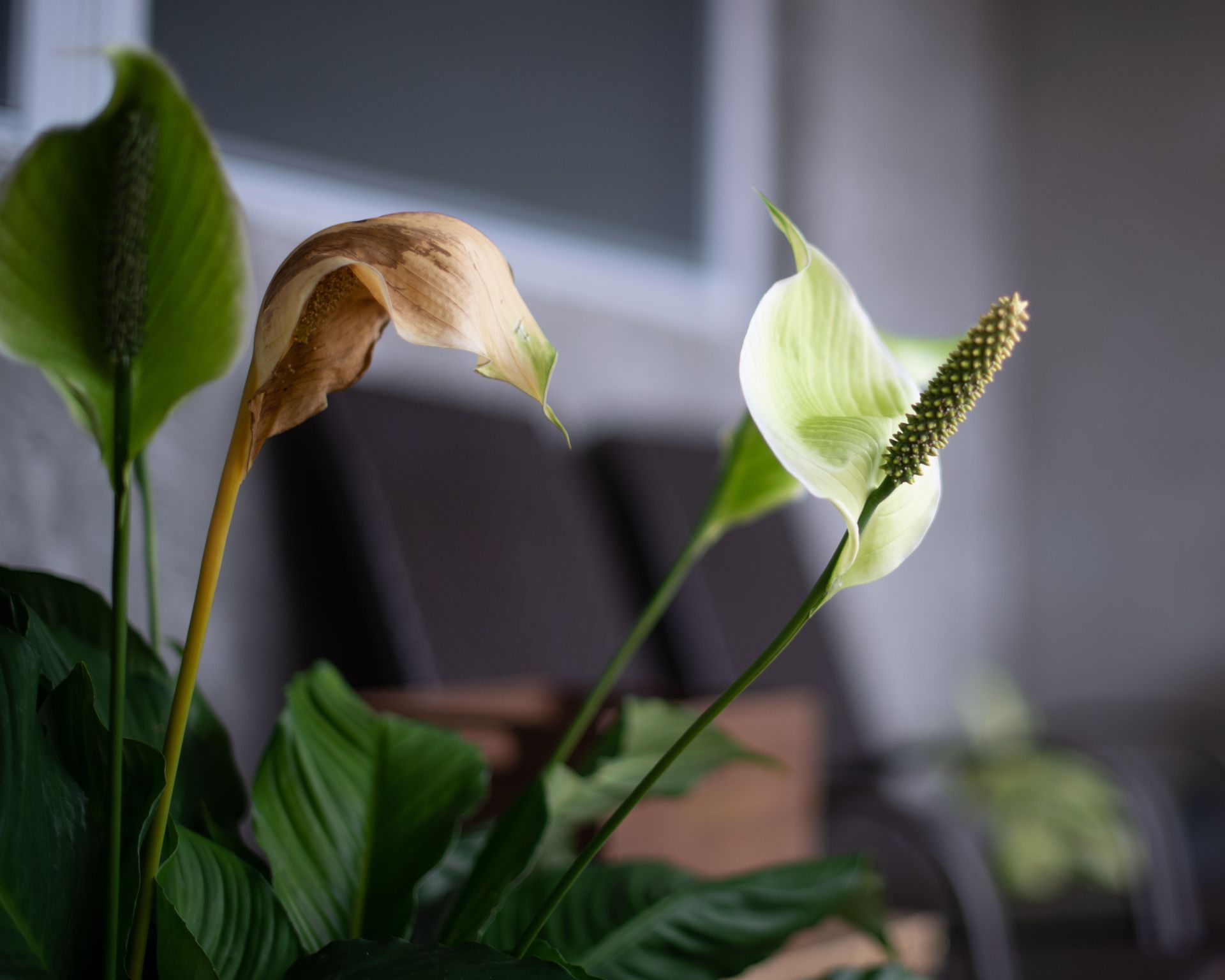
If the flowers are drooping and feel a little mushy, and they’re a dull light green or yellowish-brown color, it’s likely you’ve been giving your peace lily too much water. As most houseplants start to slow growth as the days shorten post-summer, a vital element of September peace lily care is to start reducing watering, so overwatering is a common cause of brown flowers at this time of the year.
Confirm the Diagnosis
Overwatering a peace lily can cause its roots to suffocate and rot, and if you slide your plant out of its pot you’ll probably see they’re a little slimy and smelly. Roots may be dark brown or black, too (healthy roots are white or light brown).
Treatment Plan
Remove as much potting soil as you can and trim off any mushy or dark-colored roots. Prune browning flower stems and any fully yellow leaves at the base, too. Wash the pot and check it has a drainage hole before repotting with fresh houseplant potting soil, choosing one with added perlite to improve drainage such as Back to the Roots Organic Indoor Potting Mix, available from Amazon.
Don’t water for a few days, and then only water when the top 2 inches of soil are dry – a simple moisture meter such as this from Amazon takes away any guesswork – or when the leaves show the very first signs of drooping.
5. Is the Spathe Paper-Thin and Pale Brown All Over?
Probable Cause: Underwatering
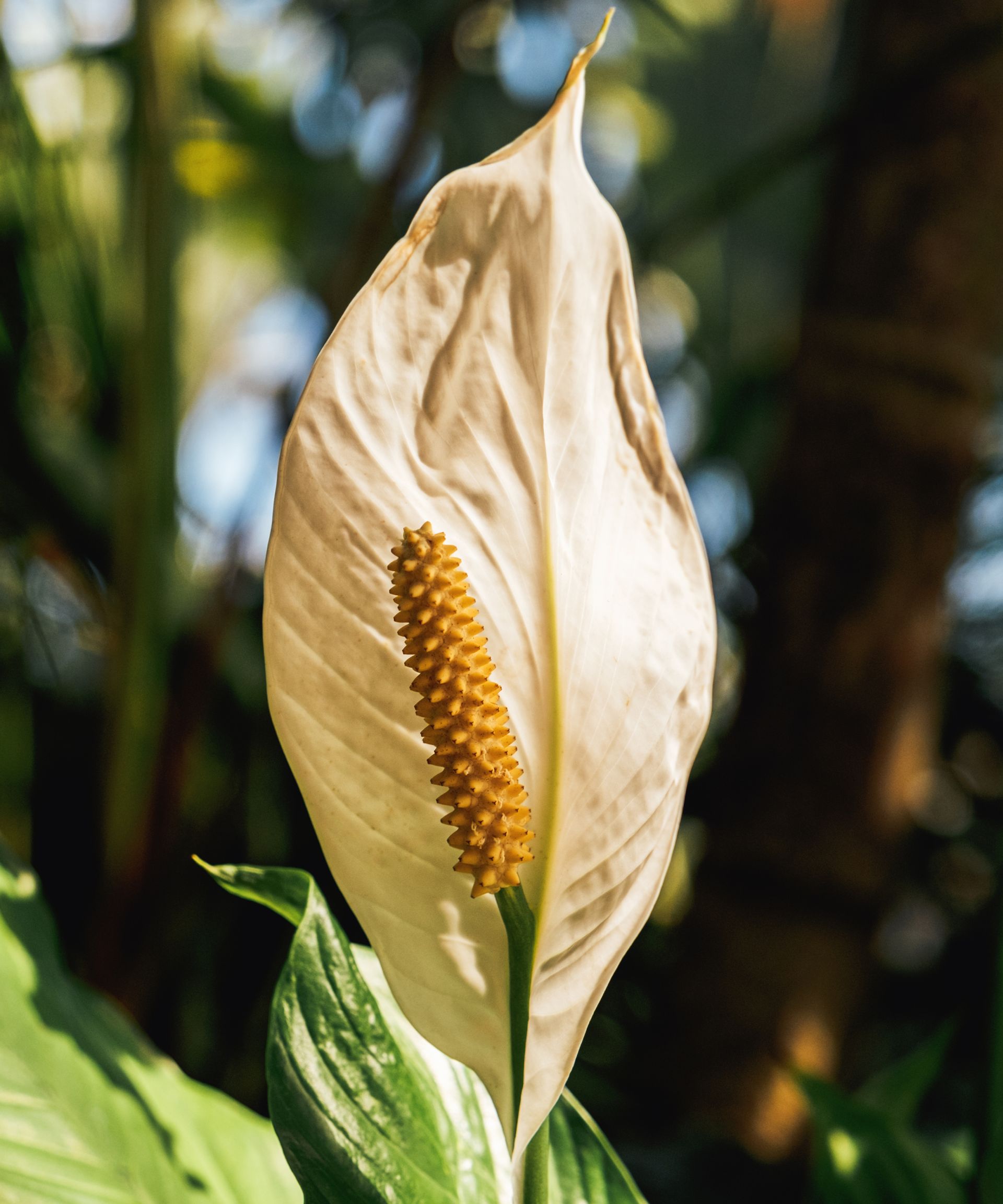
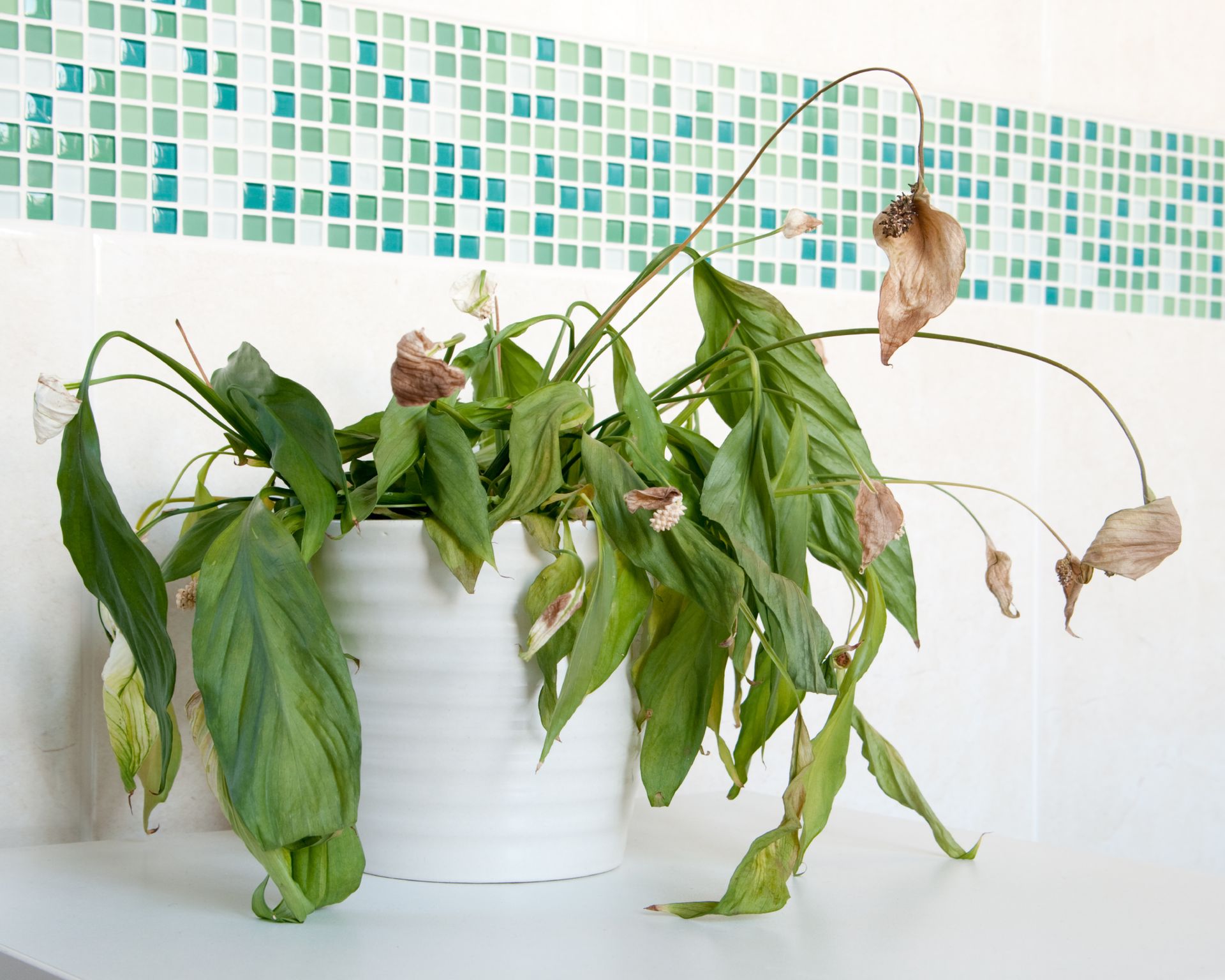
If the flowers feel dry and brittle to the touch, and look uniformly pale brown, your peace lily is likely severely dehydrated.
Confirm the Diagnosis
If underwatering is the cause of your peace lily’s brown spathes, its leaves will be drooping dramatically, for sure. Slide the plant out of its pot and you’ll probably see that the soil is bone dry.
Treatment Plan
Because the soil has lost so much moisture, it’s likely hydrophobic, so the best way to help your underwatered peace lily is to soak the pot. Fill a tub with 2-3 inches of lukewarm water and stand the pot in this hydration bath, checking it has drainage holes first. The potting mix will suck up as much moisture as it can hold and, after about 30 minutes or when the soil surface feels damp to the touch, remove the plant from the water and let it stand for at least 10 minutes to drain.
If you caught your peace lily early enough, it’ll likely miraculously recover with a day’s rest. Trim any discolored spathes or fully yellow or brown leaves that haven’t bounced back after 24 hours, but leave foliage that’s still partially green. Going forwards, improve your peace lily watering routine. Make a moisture meter such as this from Amazon your new best friend, and water your peace lily as soon as the leaves start to droop.
6. Can You See Brown Freckles on the Spathe?
Probable Cause: Tap Water Chemicals
While peace lilies are generally very resilient plants, they are sensitive to chemicals and if you use tap water to irrigate, levels of chlorine, fluoride or other heavy minerals can build up in the soil. These will slowly poison your houseplant.
Confirm the Diagnosis
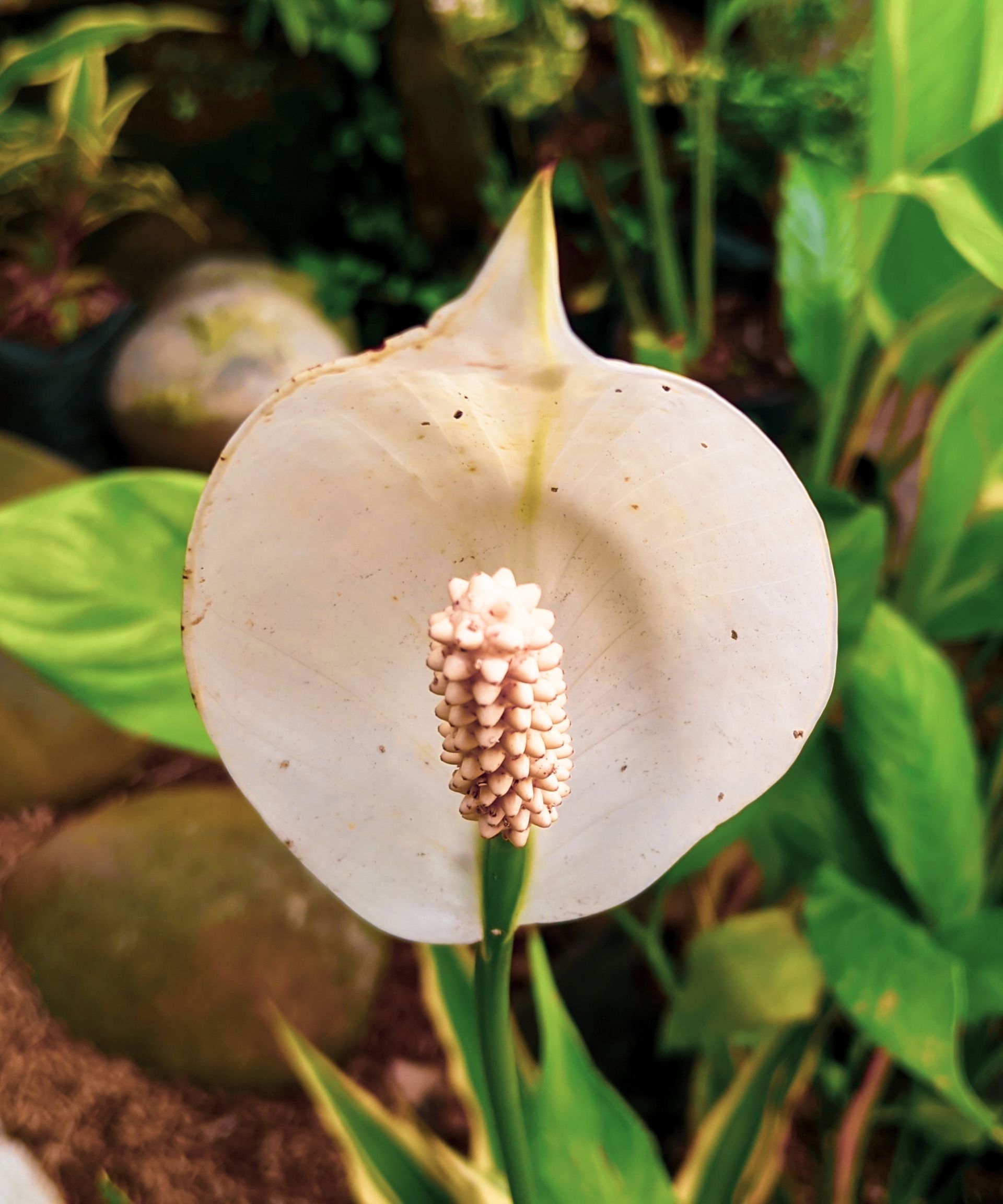
Tiny brown spots across the spathe, even when flowers first open, is a classic sign of a poisoned peace lily. Flowers may show a yellow outer rim, too, and they won’t last the usual 4-6 weeks. Because leaves push unwanted chemicals to their outer edges, foliage is likely to have crisp dark brown edges and tips, often with a distinct border between the healthy and unhealthy tissue. Look at the soil, too: a white crust may have formed on the surface or around the inside rim of the pot.
Treatment Plan
If your plant isn’t too badly affected, you can simply flush these minerals from the soil with rainwater or distilled water such as this from Walmart. If you filter your tap water, whether that’s with a filter jug like this from Walmart or a faucet filtration system like this, also from Walmart, that will work too. Stand your peace lily in a sink or bath and repeatedly pour water onto the soil and allow to drain well. From now on, only water with harvested rainwater or distilled or filtered water.
If this is a long-standing issue, chemicals will have accumulated in the top half-inch of soil so, if you see a white crust, scoop that off before flushing, then replace with fresh potting mix such as Back to the Roots Organic Indoor Potting Mix, available from Amazon.
Now you know exactly what caused the brown flowers on your peace lily and can take targeted action to resolve the situation, to enjoy fresh new pure-white blooms. Treat brown or faded peace lily flowers as useful signs that alert you that your plant is in trouble, and use them to help you look after your plant.
Whatever caused your peace lily’s brown flowers, don’t be tempted to fertilize it now. Peace lilies naturally slow their growth as winter approaches, so feeding your plant now will stress it – and if those brown spathes are due to over- or underwatering, low humidity, sun-scorch or chemical build-up, your plant is already feeling pretty stressed. The best therapy for your plant now is to give it ideal conditions to recover, and plenty of TLC.
Little Extras for a Happy, Healthy Peace Lily
 Regular Water
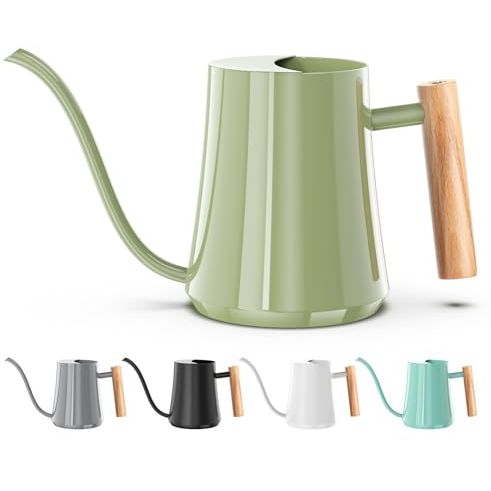
A small 35oz watering can that’s handsome enough to display alongside your houseplants will remind you to irrigate regularly.
 happy roots
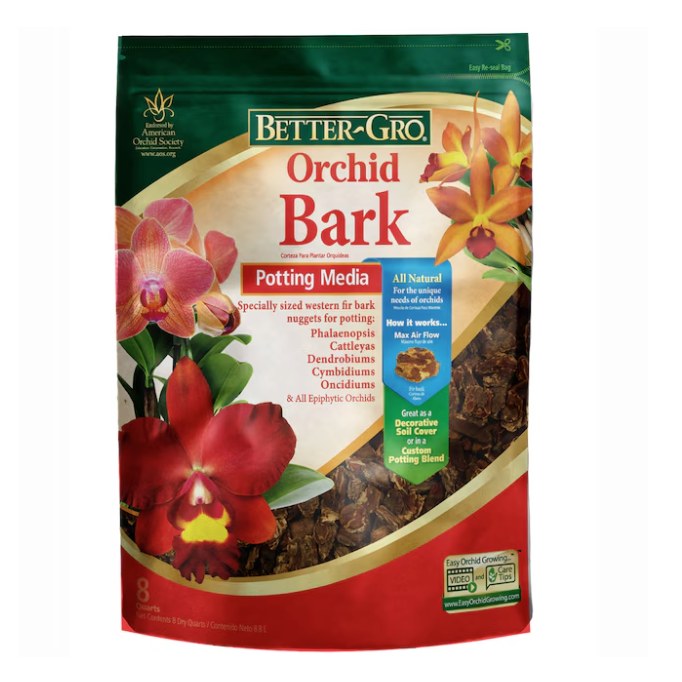
When you next repot your peace lily, add some orchid bark to the potting mix to mimic the forest-floor conditions of its natural habitat.
 Healthy Leaves
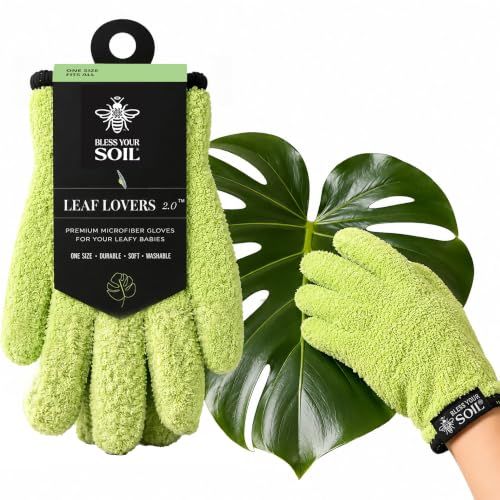
Keeping the leaves of your peace lily dust free allows it to photosynthesize efficiently, and these gloves make it easy and fun to do.
More Garden ER Help
Every week, The Garden ER series brings you solutions to this season’s most pressing problems for happy and healthy plants.
Powdery Mildew
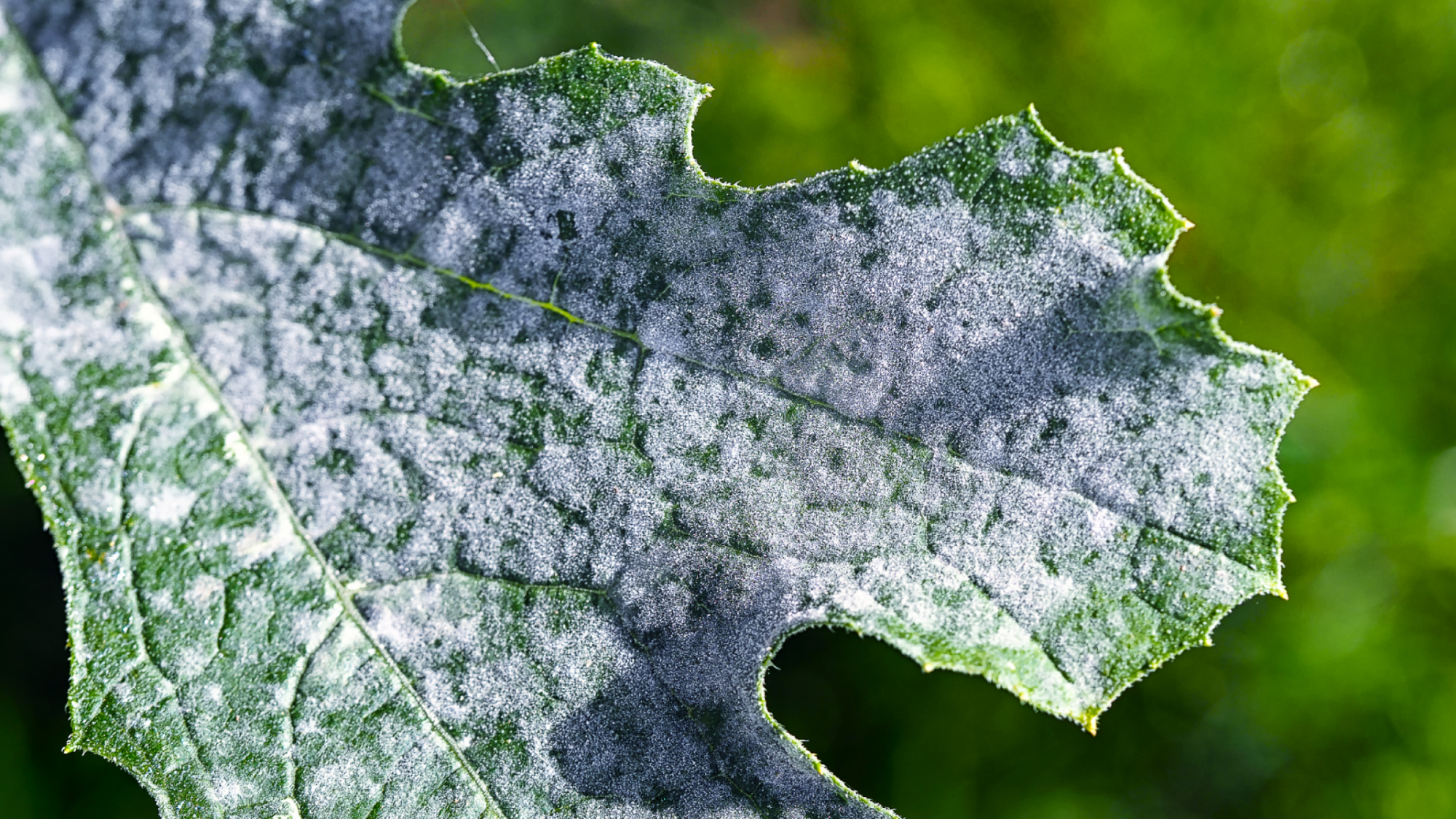
Leaves turning white? Here’s everything you need to know to stop this common fungal disease starving plants of nutrients.