
QUESTION: What’s the best fertilizer for carrots? I’d like to grow some bigger carrots this year. – Patricia F
GARDENING CHANNEL REPLIES: The best fertilizer for carrots is one that’s lower in nitrogen and higher in potassium and phosphate.
And you’re in luck, because growing and caring for carrots is a simple process. Carrots are a root crop and don’t like to be disturbed once planted.
Therefore, you should find a growing location with full to partial sunlight and loose, well-draining soil.
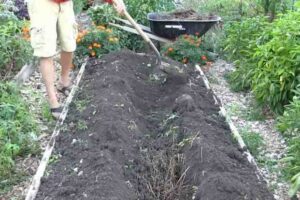
Be sure to till the dirt twelve-inches deep to give the carrots plenty of room to grow downward. Amend the soil with compost or slow-release fertilizer granules.
These granules come in both synthetic and organic varieties. The pro to fertilizing with synthetic fertilizers is they’re generally more cost-effective.
However, the con to this type of fertilizer is it strips the nutrients from the soil over time. Should you go with an organic fertilizer, you may pay a little more (unless you make your own), and it should improve the quality of your soil over time.
Some people like to use coffee grounds and bone meal to amend their soil. Be mindful of how much of these fertilizers you use as these ingredients are generally higher in nitrogen.
Whichever slow-release fertilizer you use will serve as a source of nutrients to your carrots over the course of their growing season.
Though this isn’t an instant boost to your plants, it will be a steady feed for them, so choose your fertilizer based upon your preference and budget.
Once the area is amended, sow the seeds directly into the soil. You should plant the seeds initially with one inch of space between each seed.
After the seeds have sprouted, thin them to where there’s two to three inches between each plant. You should water your seeds lightly and daily for the seven to twenty-one days it takes the seeds to germinate. The soil should never dry out fully during this time.
When the tops of the carrots begin to form, pay attention to the coloring of the leaves. If they’re pale, add more slow-release fertilizer such as compost or granules.
Check the soil prior to application. If it’s extremely dry, water the carrots two hours before applying fertilizer.
Then spread the compost or granules around the base of the carrot tops. Once done, water the plants again.
From there, once per month, fertilize the carrots with a water-soluble synthetic fertilizer or compost tea.
The fertilizer should be diluted by approximately 50%.
In approximately two to three months, your carrots should be ready for harvest. Ensure you provide adequate fertilizer, water, and weeding to encourage a larger crop.
Hopefully, these tips will guide you as you grow your own carrots around your home. Carrots are a wonderful crop to grow as they do well in traditional garden plots or containers.
Plus, they’re a low-maintenance crop that require less care in comparison to other common garden crops.
Not to mention, since carrots are a cold weather crop, they don’t require indoor storage space. Some people leave their carrot harvest in the garden over winter as the frost makes the harvest all the sweeter.
Consider which method of fertilizer works best for your preference and budget. Then begin enjoying your homegrown harvested carrots.
Learn More About Growing Carrots
https://extension.sdstate.edu/carrots-how-grow-it
http://www.gardening.cornell.edu/homegardening/scenea765.html
https://www.canr.msu.edu/resources/how_to_grow_carrots
The post What’s the best fertilizer for carrots? appeared first on Gardening Channel.