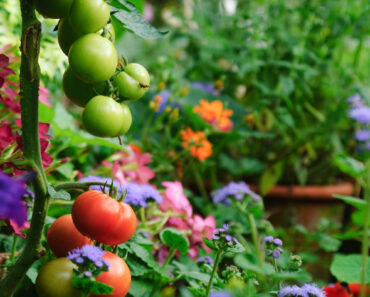
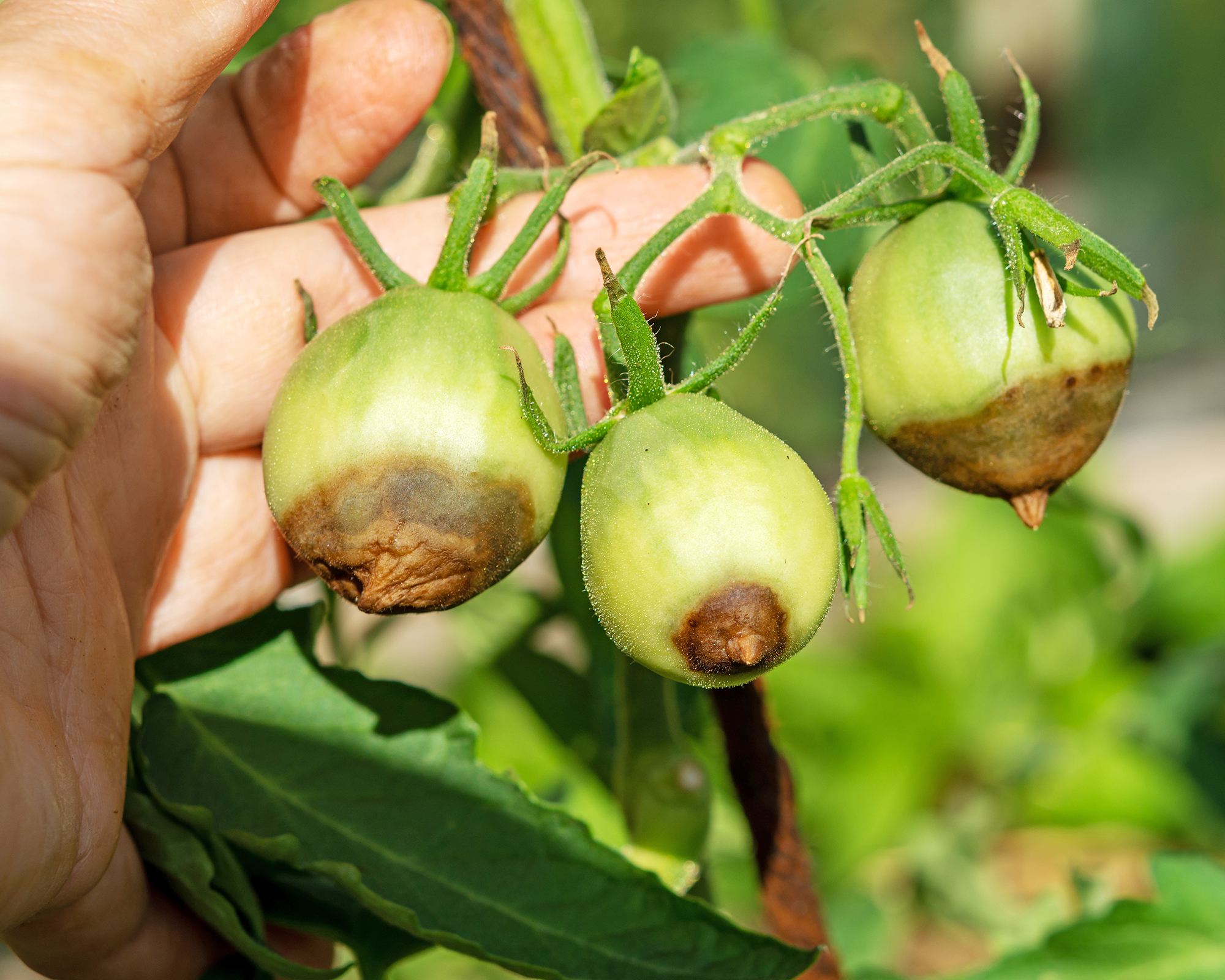
The bottom of a tomato goes tan, then dark, then flat and leathery. It looks like something contagious tearing through the plant. Blossom end rot is not a disease at all. No fungus or bacterium started it – the plant just could not move enough calcium into that tomato while its cell walls were going up.
Anyone who has spent a season or two growing tomatoes might know the pattern, since the first flush tends to take the worst of it. What matters now is the crop already hanging out there. Some of it is worth saving. Some of it is costing the plant energy for nothing.
What Is Blossom End Rot?
Blossom end rot isn’t a disease. It’s actually a lack of calcium. Calcium builds the glue holding cell walls together. It travels one direction only – up from the roots through the xylem, riding along with water. Soil moisture that swings from soaked to bone dry and back again stalls the delivery. Farthest from the stem, the blossom end is where it runs out. Cells there collapse, the tissue dries into a dark leathery patch, and the scar stays for the life of the tomato. Peppers and squash do the same thing under the same conditions, a decent clue that no pathogen is involved.
Most garden soil already holds plenty of calcium. The popular fixes miss for exactly that reason. Foliar sprays cannot deliver it. Calcium sitting in a leaf has no route into a tomato, and the skin will not take it in from outside. Then there is Epsom salt. It’s made of magnesium sulfate and has no calcium in it whatsoever. In fact, the extra magnesium competes for uptake at the root. Don’t try it!
Calcium nitrate applied around the drip line is a good bet. You can find it on Amazon. This is best for preventing blossom end rot in future fruit.
Toss It
Some tomatoes with blossom end rot are a lost cause.
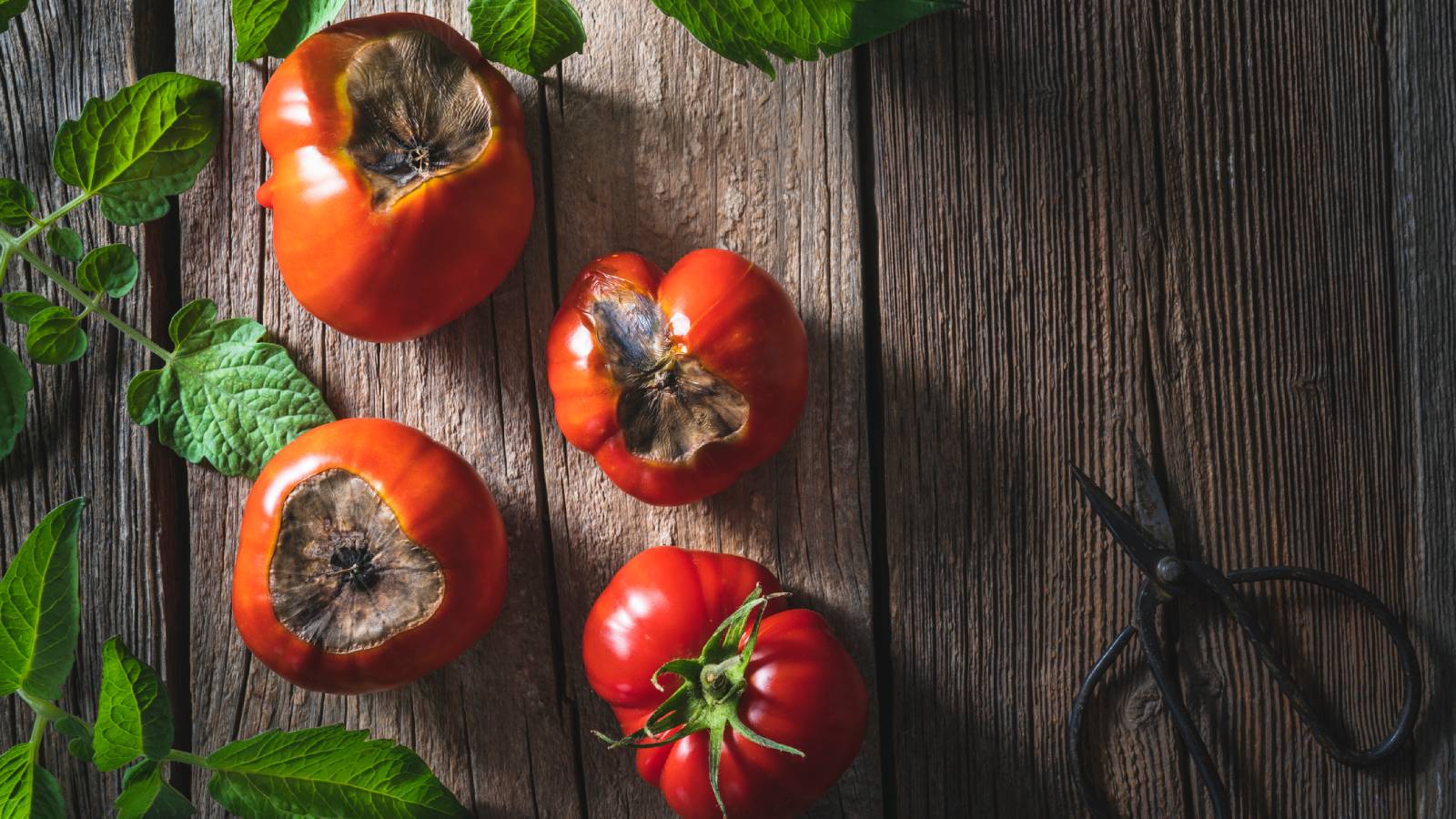
A green tomato with a sunken black patch across the bottom third is finished – dead tissue stays dead. It will never fill out or ripen evenly. The plant goes on pouring sugars and water into it regardless. Pulling those off frees all of that up for what is still coming. Think of it as triage rather than loss.
Take them at the stem with a snip or a clean twist. They can go on the compost pile without a second thought, since nothing infectious is involved. The only reason to bin the mushy ones is that secondary mold has usually moved into the open tissue by then. That mold is a squatter, not the cause. Either way, the plant is better off without them.
Pick It
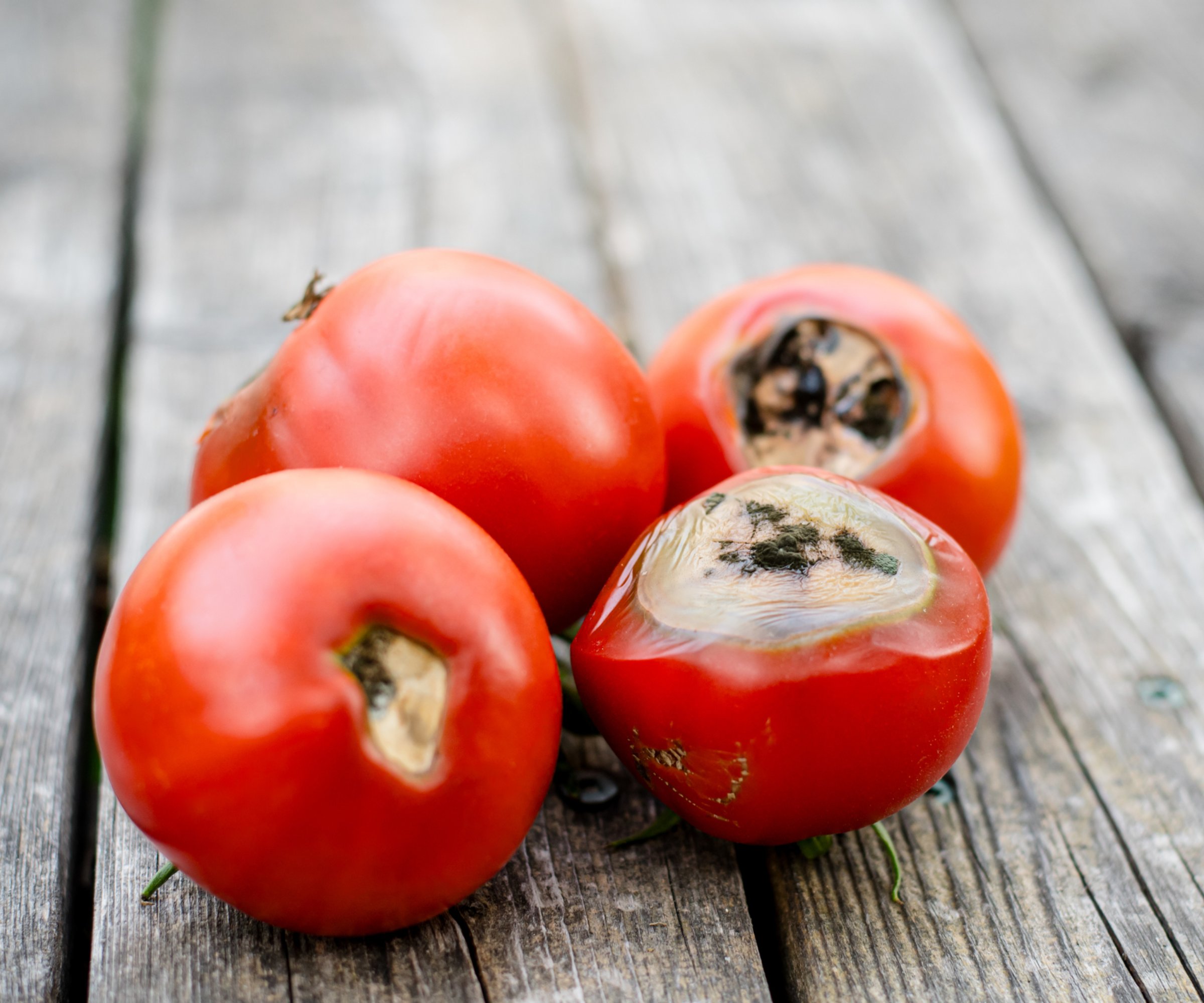
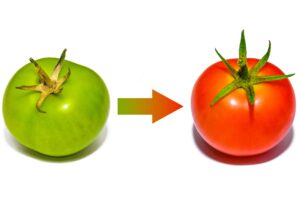
A tomato that has started coloring up with only a small dry patch underneath is a different case entirely. The lesion stays where it is. Damage at the blossom end does not creep up to the shoulders, whatever it looks like from below. Everything above the patch is normal in every way that counts. Half a tomato is still a tomato.
Bring those in a couple of days early and let them ripen on the counter, out of direct sun, because sitting on the vine only gives the soft spot more time to work outward.
Cut generously, an inch (2.5cm) past the dark edge. The rest slices, cooks, or freezes like any other tomato. There is no toxin here and nothing to catch. Canning is the one real exception – damage of this kind can push pH higher than clean fruit runs, and extension guidance keeps it out of the canner for that reason. Fruit ripened off the vine also runs slightly less acidic, one more reason the canner is the wrong destination for these. Fresh use and freezing carry no such worry.
Leave It on the Vine
Undamaged fruit stays put. The fix from here is water rather than anything sold in a bottle. Aim for a deep soaking that wets the whole root zone, on a schedule the plant can count on. An inch (2.5cm) a week covers most gardens, and a hot stretch takes more. Guessing is where this falls apart – a soil moisture meter from Amazon pushed 4 inches (10cm) down settles it faster than a finger test. On the weeks that get away from you, an inexpensive hose timer from Walmart keeps the schedule from slipping. Containers dry out fastest, so they need checking more often than a bed does.
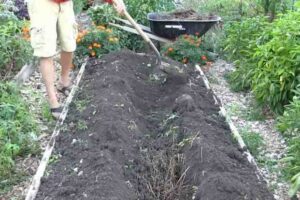
Mulch handles the other half. Two to three inches (5-8cm) of pine bark mulch from Home Depot over the root zone slows evaporation. It also steadies the soil between waterings. A hoe worked in close does the opposite, since chopped roots cannot take up water they never reach. High-nitrogen feed can wait until the plant has recovered. Anything already half grown is past the window where this happens, so it will stay clean.
New tomatoes sitting on a plant with steady water usually come in perfect. That is the reward for treating the cause instead of the symptom.