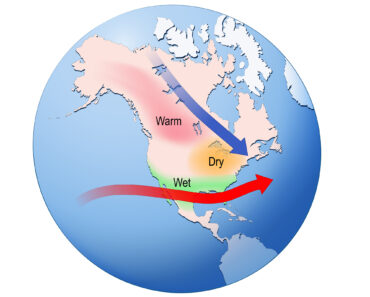
This heatwave summer is proving tough for lots of plants, even those widely touted as heat- and drought-tolerant perennials. These five beauties, however, are flourishing in the intense conditions, and I’ll be planting plenty more.
I’m a huge fan of growing low-maintenance plants in my garden, whether that’s border blooms that practically grow themselves or low-care perennials that love life in a patio pot. Still, the lack of rain and high temperatures this summer has made some plants far needier than usual – and no wonder. My garden hasn’t seen a drop of water for over 2 months now, and I’m three weeks into a complete hosepipe ban. Some usually reliable border bloomers stopped flowering weeks ago; some are even threatening to give up the ghost entirely.
Other plants, however are behaving just as they would in any summer, as if they never received the heatwave memo. A few are performing even better than normal. And honestly, it’s such a relief to know that these resilient plants will survive this heatwave summer and return, year and year, bringing plenty of flowers for minimal maintenance. In my quest to have a garden that almost takes care of itself, I’m seriously considering replacing those divas that are proving increasingly needy in this hot weather – I’m looking at you, hydrangeas – with more of these tough-cookie, heat-tolerant plants. So without further ado, here are my heatwave heroes.
1. Agapanthus
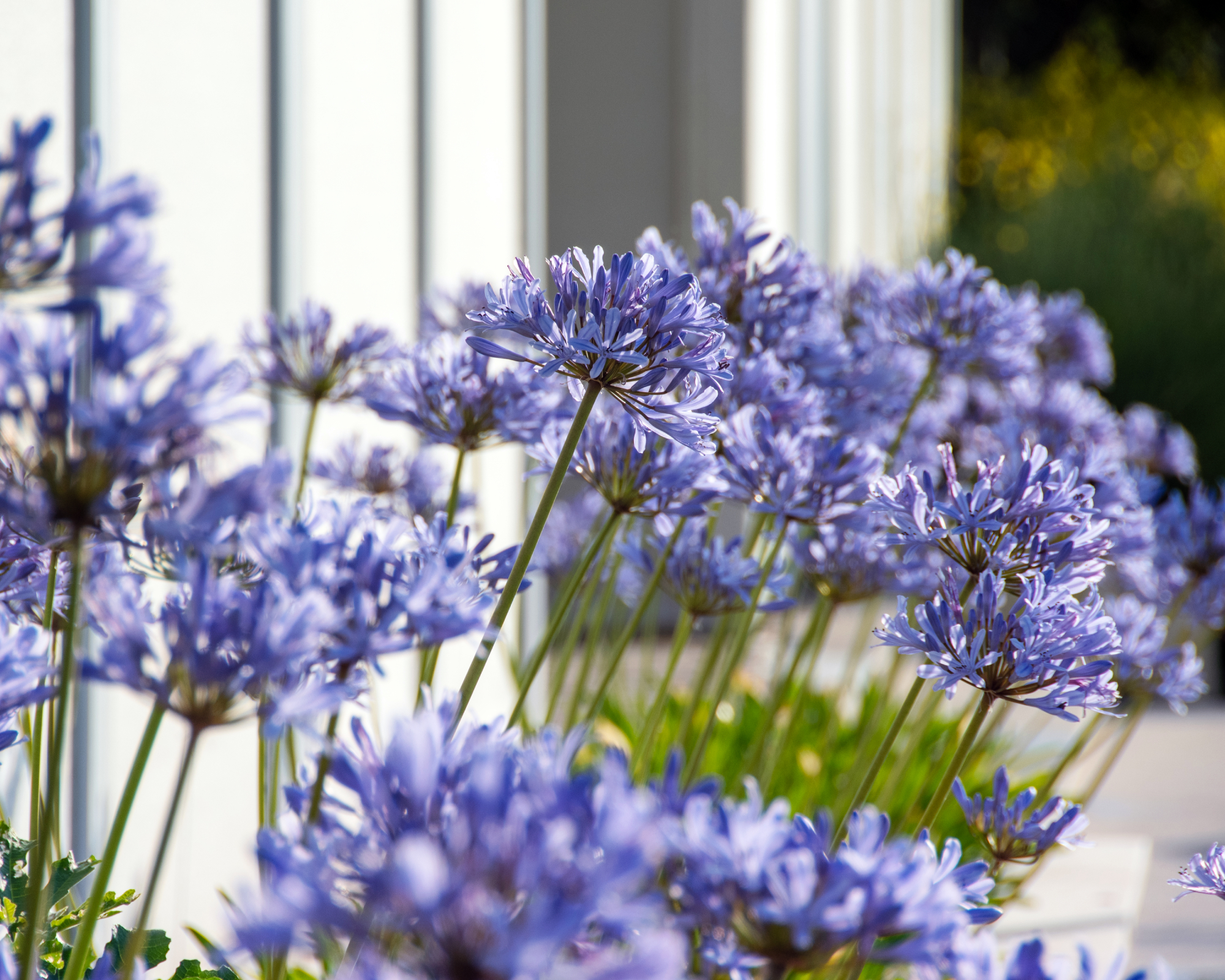
Earning top spot in my list of resilient plants coping with this intense summer heat is agapanthus, also commonly called lily of the Nile and African lily. I grow these in pots and along the edges of raised beds as they bloom far more profusely in a constricted space, prioritising flowers over foliage. And boy, are they blooming well this summer! The first glimpse of the pretty blue buds was way back in June and they’re still going strong in August.
Native to South Africa, it’s no wonder these perennials are thriving in this heatwave summer. Hardy down to zone 8, you can get away with growing agapanthus in zones 6 and 7, too, as long as you pop them in a pot that you move to a sheltered spot over winter. In the south, you can grow lily of the Nile as showstopper flowering groundcover, too, as the foliage is largely evergreen.
Whether in pots, raised beds or the ground, agapanthus needs excellent drainage, so I mix a few handfuls of coarse grit such as Jacks Gritty Mix, available from Walmart, into the potting soil. Any coarse sand or fine gravel does the same job, or pick up a bag of poultry sand such as this Premium Chicken Sand from Home Depot from a farm supply store.
Now’s a great time to buy lily of the Nile as you can get the plant well-established in its new home, ready for plenty of blooms next summer, and blue agapanthus plants are available from Nature Hills. As we’re approaching the end of its blooming season in August, you’ll often find some great deals on multi-packs of young plants to grow on and Walmart currently has value packs of Blue Agapanthus plants. And why not mix some white in among the blue with this value pack of Getty White Agapanthus, also from Walmart?
2. Gaura
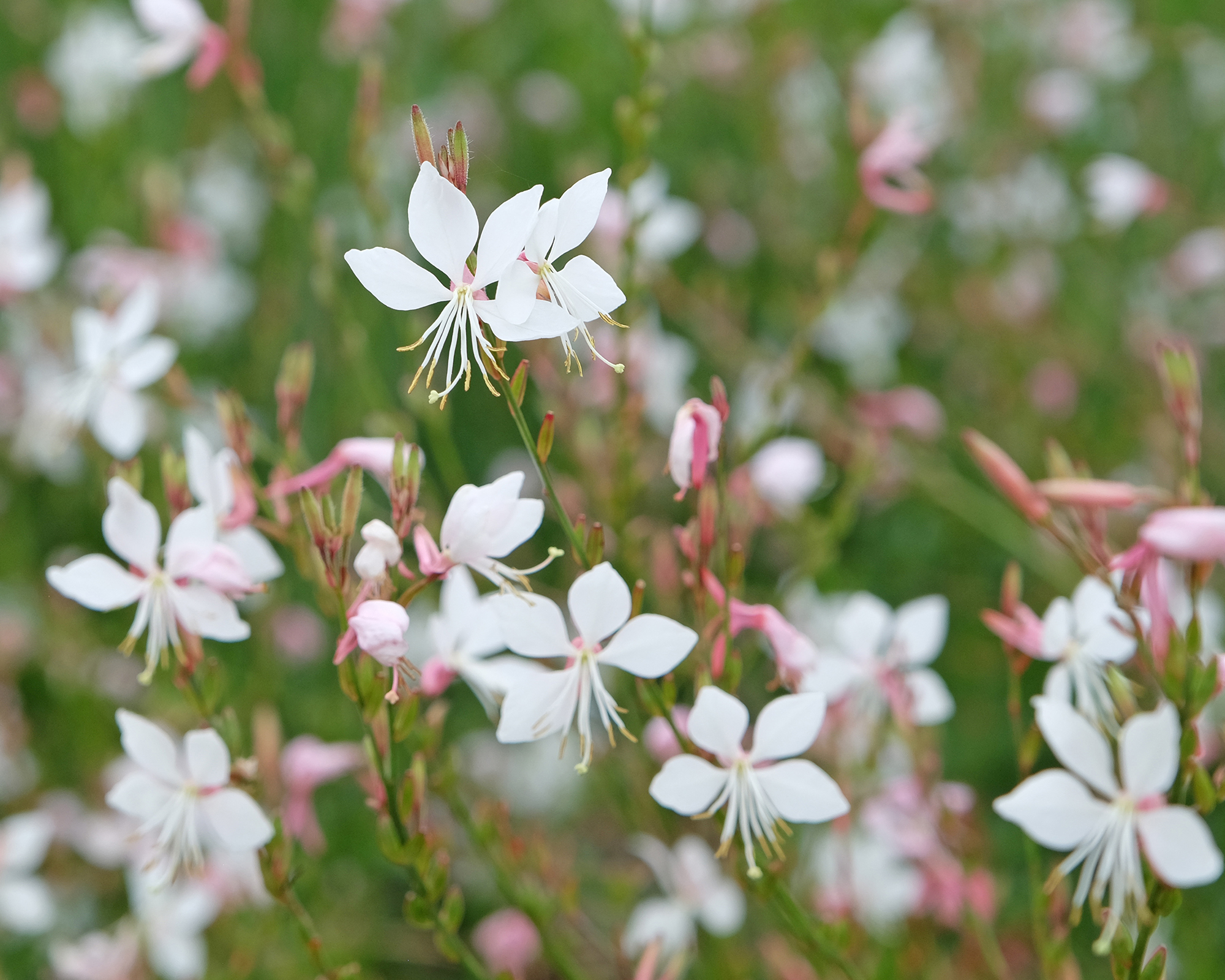
Next up in my top five of low maintenance perennials is gaura. Thanks to their long tap roots, my gaura plants are showing no signs of struggling in this heatwave summer. I mostly grow ‘Whirling Butterflies’, available from Garden Goods Direct, as it’s a sterile variety, which means it doesn’t produce viable seeds so doesn’t need deadheading – and flowers all the way from June into November. Its white flowers are fairly small but there are hundreds of them on 3-foot wiry stems that sway in the slightest breeze, and the pretty pink buds add to the show.
There are plenty of other varieties of this perennial to choose from, ranging from white to deep pink, and all have the same airy habit and are suitable for zones 5–9. ‘Siskiyou Pink’ is another favorite variety because it’s also sterile for summer-long blooming. Gaura ‘Siskiyou Pink’ plants are also available from Garden Goods Direct.
Gaura has recently been reclassified as Oenothera, in case you’re confused by all the different names out there!
3. English Shrub Rose
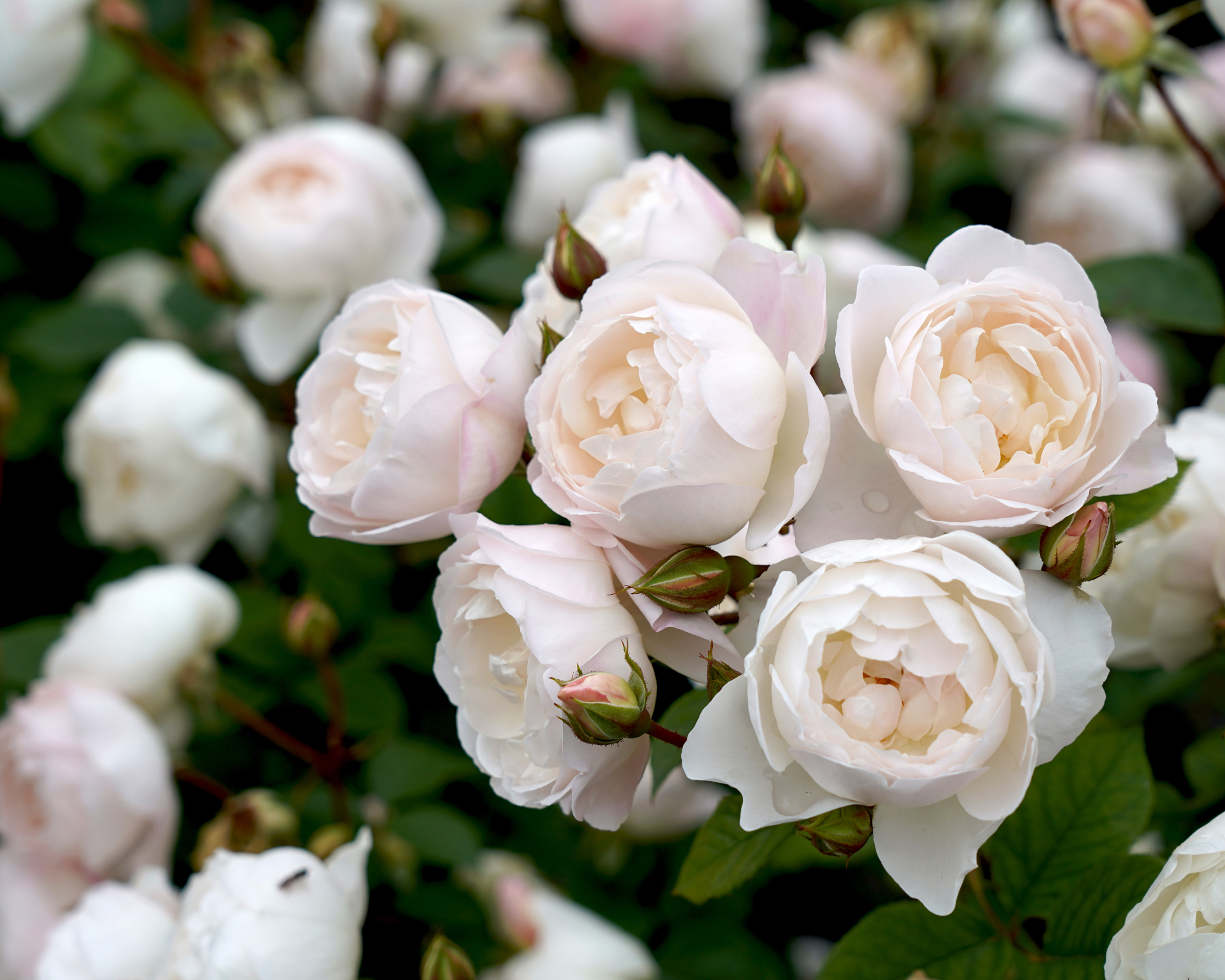
I’ve been happily surprised how well my reblooming English Shrub roses have coped with the heat and drought this year. While older varieties of roses are starting to struggle, the newer reblooming hybrids are still flowering strongly and I haven’t seen a scorched leaf yet. As far as easy to grow plants go, my shrub roses are proving to be winners.
In particular, Desdemona, an English shrub rose available from David Austin Roses, seems invincible this year – and I can see why David Austin sells this plant with a five year guarantee. It’s deemed suitable for zones 5 through 11, which gives you an idea of how well it copes with heat. It’s one of the strongest survivors in a border I haven’t watered for over two years now and still, every week, new peach-toned buds are opening into white chalice-shaped blooms with just a hint of blush pink, with a sweet yet fresh scent of almond blossom and lemon zest.
Many modern shrub roses are now purposefully bred to better handle sun and drought, with breeders introducing the resilience of wild roses native to dry regions to toughen up genetics. So, if your older roses are struggling this summer, perhaps it’s time to look to newer hybrids with a higher tolerance. It’s best to wait till September to plant a rose, but it would be wise to pre-order now, for shipment next month, as I’ll wager lots of folk will be planting more of these newer drought-tolerant roses having seen how well they’ve performed this summer.
4. Echinacea
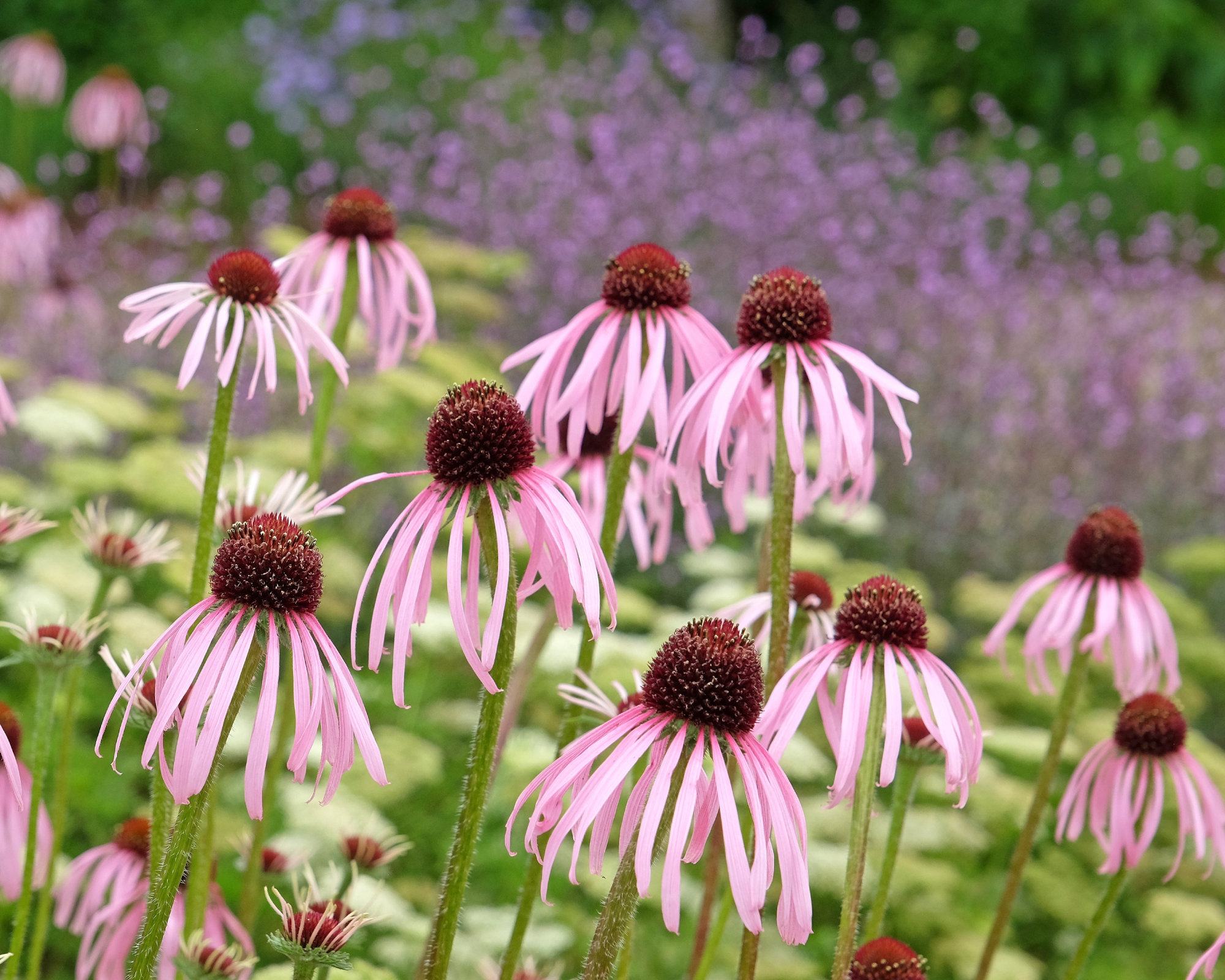
Echinacea are very good at finding their own moisture source so are a great choice for a low maintenance garden. Some species send a taproot up to five feet down into the ground, others spread a fibrous root system outwards instead. This explains why echinacea growing in pots are struggling in many gardens this heatwave summer, while those in the ground are thriving.
I grow a ton of perennial Echinacea pallida (pale purple cornflower) which is native to North America, found in tallgrass prairies, so is naturally highly drought tolerant. In fact, it’s pretty tolerant of anything and everything, so is suitable for zones 3-10. While its narrow petals do get a little crispy at the tips after a few weeks, my plants keep throwing up fresh blooms. Pollinators choose this variety over all the other coneflowers in my garden, so I’ll be planting even more – and Echinacea pallida plants are available from Plant Addicts.
Another coneflower renowned for its toughness is Echinacea ‘Cheyenne Spirit’. This gem grows abundant flowers in mixed colors, from white and cream through yellow, orange and red to pink and purple. It grows well in zones 4-9 and Echinacea ‘Cheyenne Spirit’ plants are available from Fast Growing Trees. It can be planted now, though you’ll need to keep it watered while the plant settles into its new home and grows that mega root system to secure its own moisture source.
5. Scabiosa
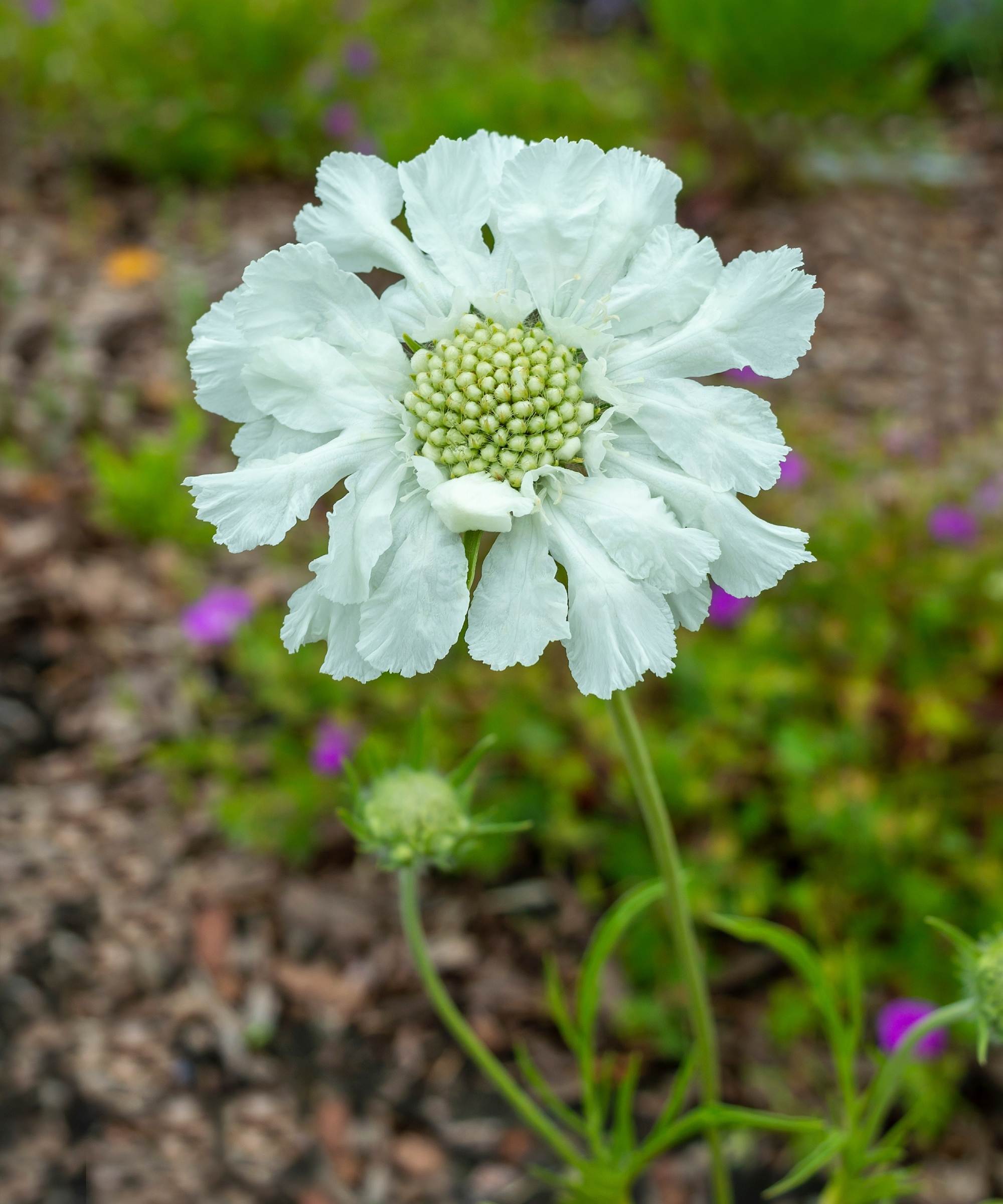
All my perennial Scabiosa plants are performing brilliantly this summer, and I grow at least 10 different varieties because their pinchusion flowers are such a favorite with bees and butterflies. Their only downside is that you do need to deadhead them – but bother to keep snipping off those fading blooms and scabious will keep flowering to the first frost. I use a little $10 thumb knife like this Silicone Thumb Harvesting Tool from Amazon to deadhead them one-handed as I enjoy my morning cup of coffee in the garden, so it really isn’t a chore.
If you were to ask all the bees and butterflies in my garden what their number one Scabiosa is, they’d undoubtedly choose Butterfly Blue. Suitable for zones 3-9, it’s smothered in 2-inch lavender-blue flowers all summer long, even in this heat, and Butterfly Blue Scabious plants are available from Burpee. I’ve found Fama White to be even more heat-tolerant this summer, though. These gloriously elegant flowers are bigger at 3 inches across, thrive in zones 4-10, and Fama White Scabiosa plants are also available from Burpee. Both these varieties are perennial so will be back year after year (there are annual scabious varieties, too, that complete their lifecycle in a year).
You can plant perennial Scabiosa now, but you’ll need to keep them watered while they settle in, though should be pretty drought-tolerant by next summer.
Here are all the most resilient plants in my garden, happily surviving where others are failing, and still flowering abundantly in August.
There’s no telling how long this heatwave weather will last for so, if you’re a slave to your hosepipe, perhaps it’s time to think about replacing some of your neediest plants with more drought resistant perennials, too.