Warm nights, humid afternoons, and a canopy that has closed in. Midsummer hands fungal and bacterial diseases everything they need to thrive. Here are six turning up in vegetable beds right now, and what actually works against each one.
July is when the vegetable garden stops looking like a magazine spread. The plants are big, the canopy has closed in, and somewhere down in that green tangle a leaf has gone spotty. Warm nights and humid afternoons are perfect conditions for fungal and bacterial trouble, and once it takes hold in a crowded bed it moves fast, usually faster than anybody notices.
Catching it early is the whole game. A lot of common vegetable garden diseases and pests announce themselves on a handful of lower leaves before the plant is really in danger, and pulling those leaves plus a well-timed spray is often enough to hold the line. Wait until half the plant is yellow and you’re no longer treating anything, just managing a loss.
6 Vegetable Diseases to Deal With This Month
The six below are the ones turning up in July plots across a lot of climates. Each has a tell, and each has a response that works if you get control of it soon enough.
1. Early Blight
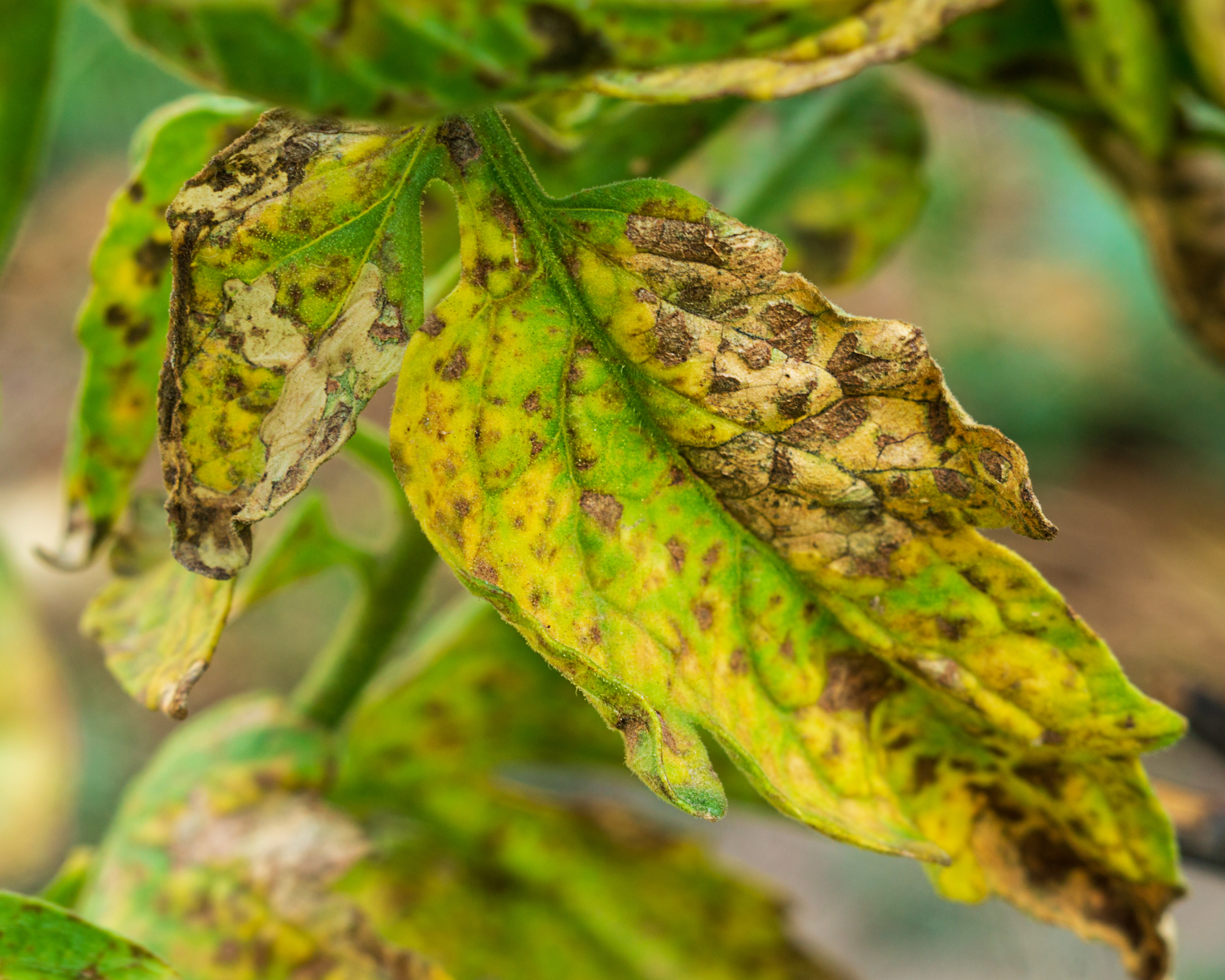
Dark spots with concentric rings inside them (like a tiny target) showing up on the oldest, lowest leaves of a tomato or potato. Those rings mean early blight (Alternaria solani). Around each spot the leaf goes yellow, and it keeps going until the leaf gives up and falls, and the fungus is already working on the one above it by then. It overwinters in soil and old plant debris, so rain and hose water splashing up onto the bottom leaves are how it gets started every year.
Snip off affected leaves the moment they turn up, and don’t compost them. Mulch under the plants blocks the splash. If it’s spreading, this copper fungicide from Home Depot is approved for organic gardens and can go on right up to harvest.
2. Septoria Leaf Spot
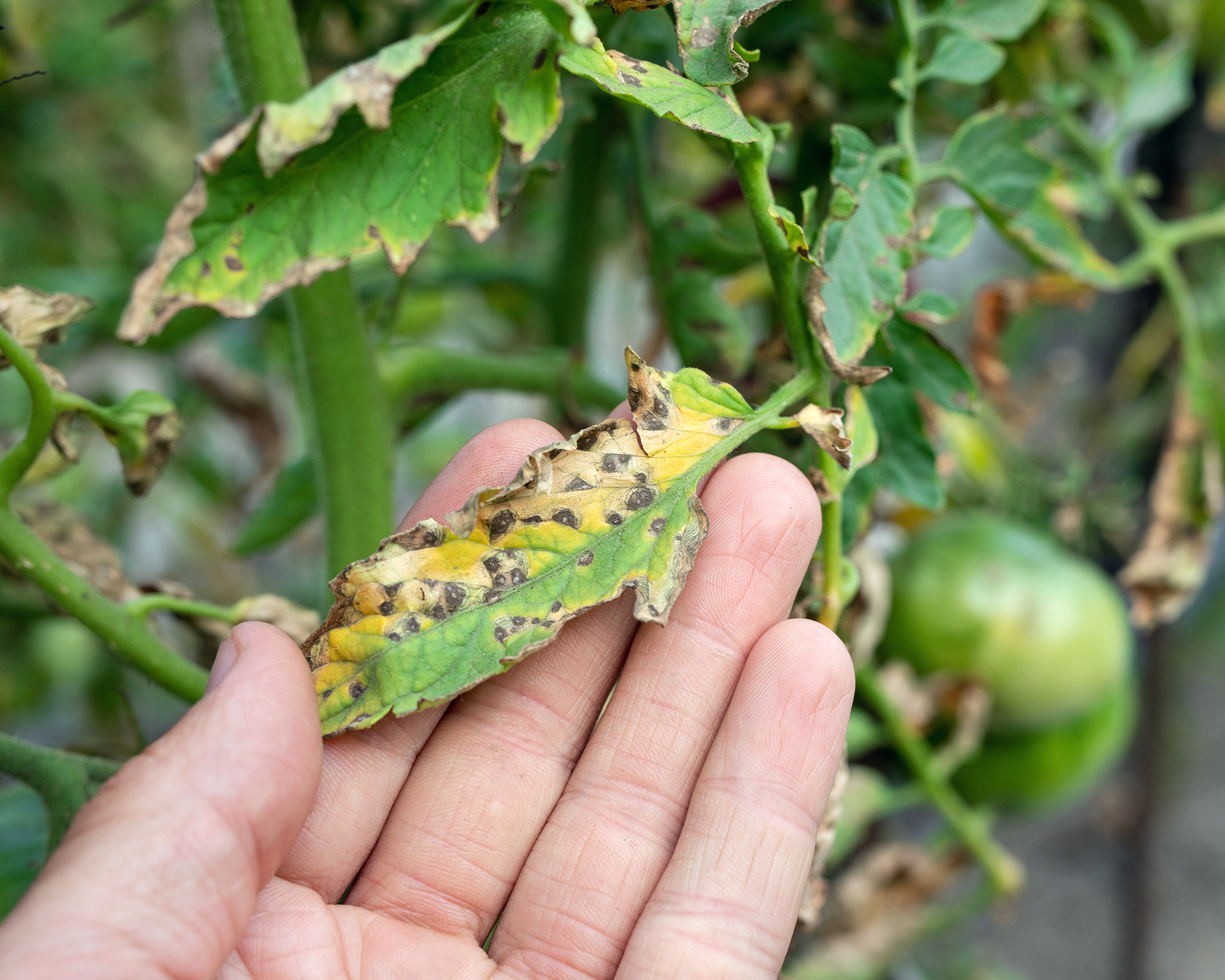
People mix this one up with early blight, understandably. Septoria leaf spot (Septoria lycopersici) puts out smaller spots, rounder, and a lot of them — you might count dozens on one leaf, pale gray in the middle with a dark rim around the edge. Tomatoes get it the worst.
Timing is the cruel part, since it tends to show up just as the fruit is sizing up, and a plant that has lost its leaves isn’t ripening much of anything. Handle it the way you’d handle early blight. Strip the infected foliage off, water down at soil level rather than over the top, thin out whatever stems are crowding each other so air can move. Copper fungicide will slow the spread. It won’t do anything for a leaf that’s already spotted.
3. Powdery Mildew
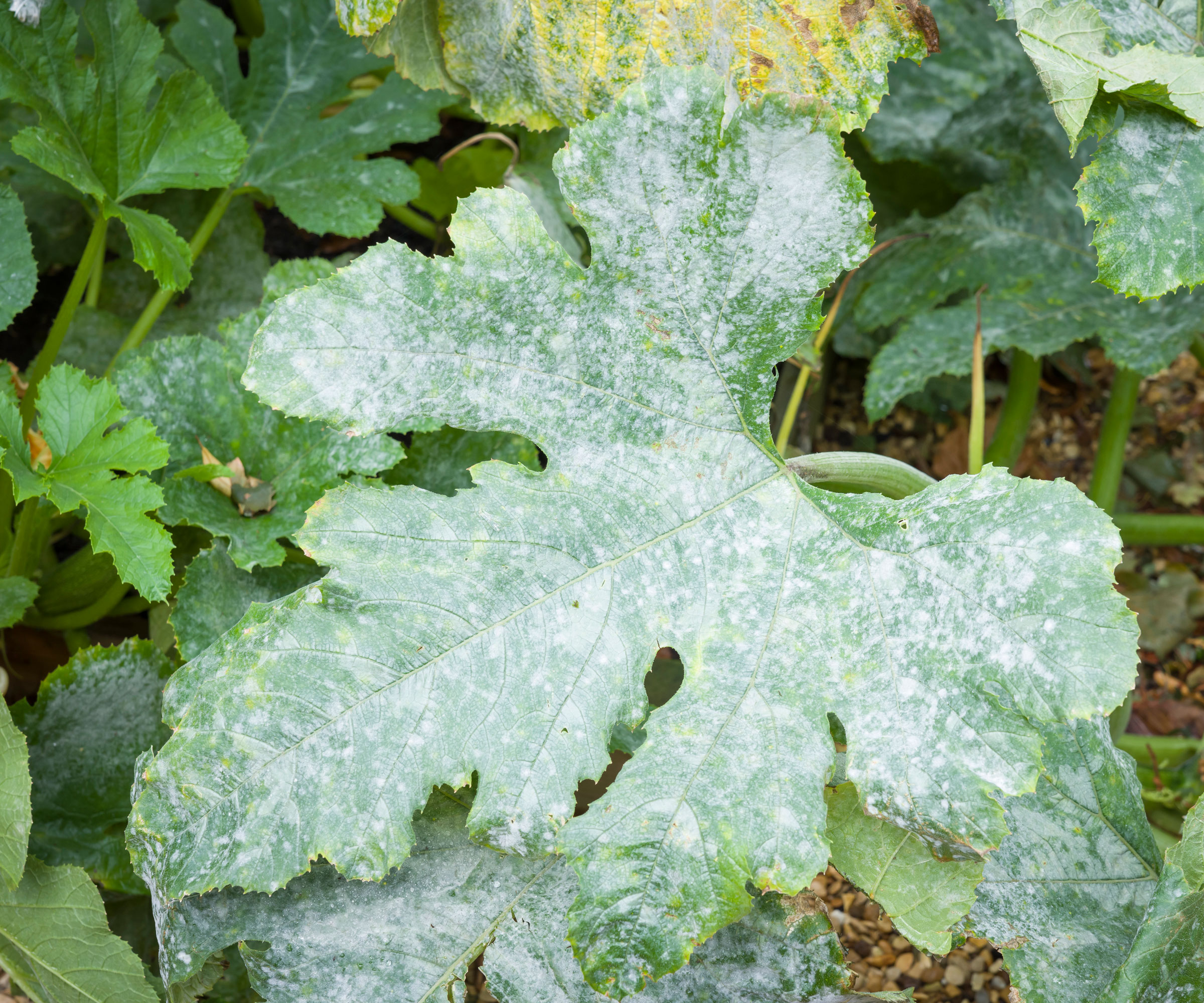
Squash, cucumbers, and melons pick this up almost every summer. What you’re looking at is powdery mildew (Podosphaera xanthii), and it really does look like somebody spilled flour on the leaves — a few dusty patches at first, then those patches grow into each other until the surface has gone chalky all over.
Unusual among these, it doesn’t need wet leaves to spread. Humid air and shade will do, which is why it settles into the middle of a dense plant. Leaves brown out eventually and the fruit underneath ripens poorly. Pull the worst leaves, open the plant up, and treat the rest. Bonide’s neem oil from Amazon works as a fungicide and a miticide at once, which is handy in a bed that has both problems going.
4. Downy Mildew
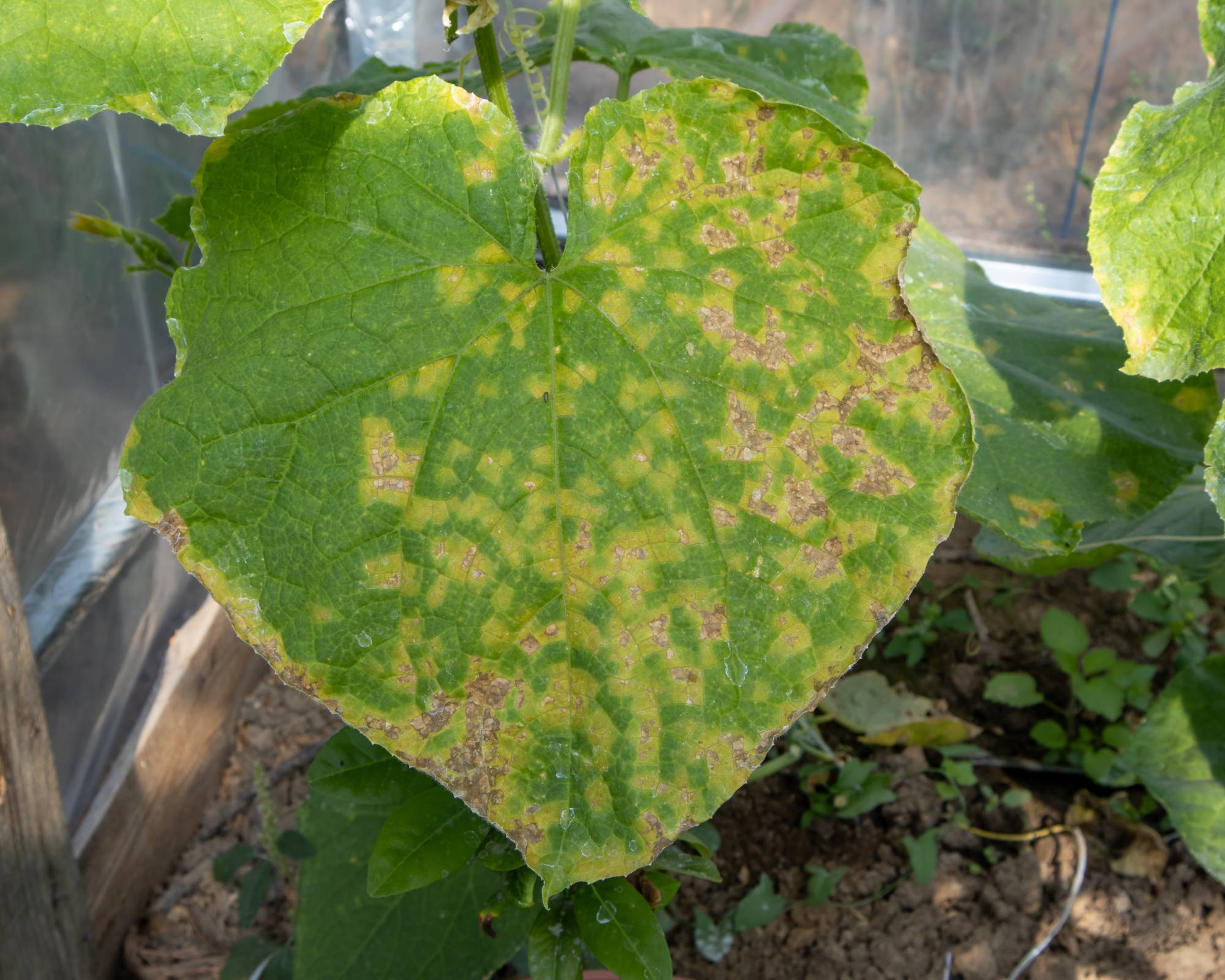
This is a different disease entirely, despite the name. Downy mildew (Pseudoperonospora cubensis) turns up as yellow patches on cucumber and melon leaves, oddly angular ones, boxed in by the veins on either side. Flip a leaf over on a damp morning and there’s fuzzy gray or purple growth underneath. Basil downy mildew will also tear through your herb garden if left untreated.
It moves quicker than powdery mildew does, and unlike its namesake it wants moisture. Once a plant has it, there’s no real cure, which leaves protection as the only move. Give plants room, keep water off the foliage, and get a preventive fungicide onto the healthy leaves nearby before spores ever land on them.
5. Bacterial Leaf Spot
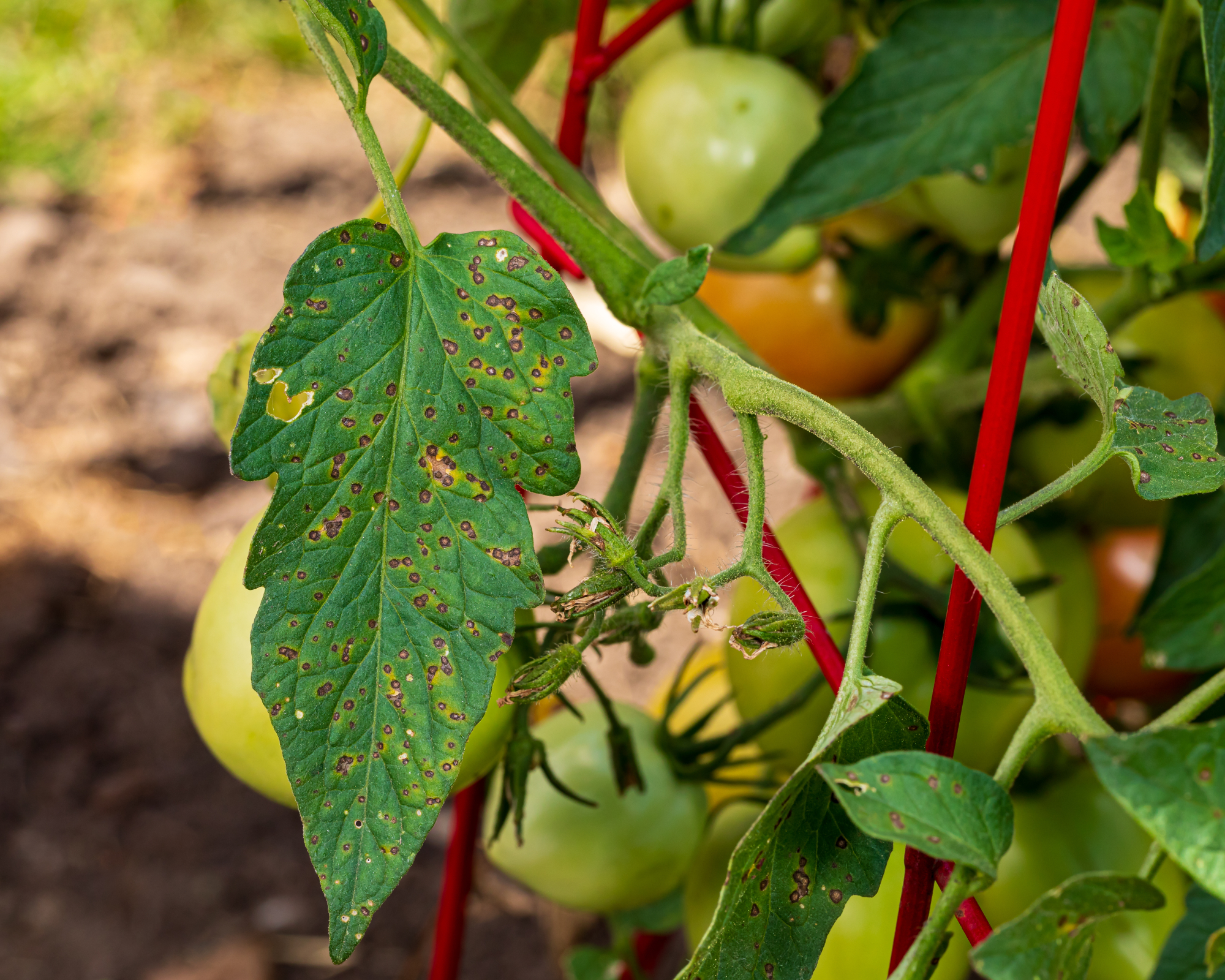
Peppers and tomatoes both get bacterial leaf spot (Xanthomonas spp.). It’s the nastier problem of the bunch, mainly because bacteria shrug off the fungicides that handle everything else here. Early on the spots look small and dark, sort of water-soaked, sometimes ringed by a yellow halo. On the fruit they harden into raised scabs.
Splashing water carries it, and so do hands and tools working through wet foliage, which is reason enough to stay out of the bed until things dry off. Copper fungicide is about the only chemical option, and even then it’s protecting healthy tissue rather than fixing what’s damaged. Anything badly infected is better pulled than nursed.
6. Fusarium Wilt
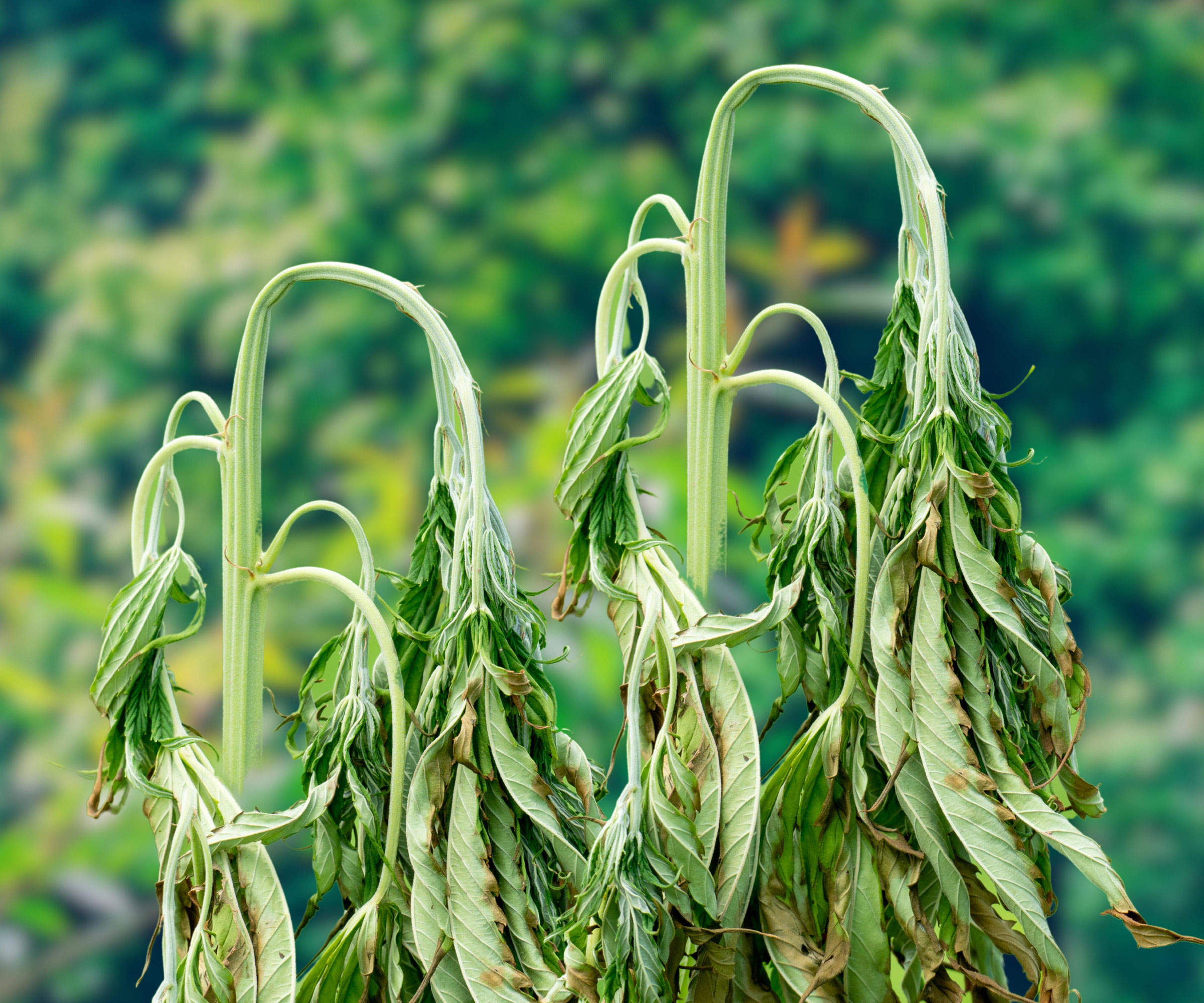
Watch for a plant that wilts on one side through the hot part of the afternoon, comes back overnight, then does it again the next day. Give it a week and that branch is dead and yellow while the rest of the plant carries on like nothing happened. Fusarium wilt (Fusarium oxysporum) is down in the soil, and it works from the inside — clogging the tissue that carries water up through the stem. Cut a wilted stem open lengthwise and there it is, a brown streak just beneath the skin.
Nothing cures it. Once that fungus is in a bed it stays for years, so what’s left is choosing resistant varieties and rotating crops, along with keeping plants out of the drought stress that seems to invite it in the first place.