You spend months caring for your plants, tending to your borders, and then you spot it. A weed! But how bad is it? We lift the lid on the worst weeds to find in your garden and how to deal with them. From the pretty and harmless to the downright pernicious.
1. Bindweed (Calystegia sepium/Convolvulus arvensis – main image)
Both hedge and field bindweed are perennial native wildflowers with twining stems and large, white trumpet flowers. They have long, thick, and brittle roots which spread deep and wide. Both types will climb over other plants, smothering them and reducing their growth. Bindweed can regrow from tiny pieces of root, so complete removal can become a very long project. Whilst a nuisance in the garden, both hedge and field bindweed do have some benefits for wildlife. Both are native wildflowers with attractive blooms, plus the leaves of hedge bindweed provide food for some caterpillars and beetles, and the flowers of both hedge and field are great for pollinators.
Type: Perennial
Persistence rating: 5/5
Beauty rating: 3/5
Can I get rid of it? It’s very challenging to remove completely, due to its brittle roots.
How? Dig out all roots with a fork and repeatedly remove any new shoots that appear.
Is it avoidable? Check soil and compost for any root fragments before planting.
Can I just leave it? Bindweed flowers do provide nectar for pollinators, so you might consider leaving in wilder areas, but it can quickly overwhelm other plants to care is required.

2. Dandelion (Taraxacum officinale)
With their bright yellow flowers and fluffy seedheads, dandelions are easily recognisable. They produce deep, brittle taproots that can regrow from any fragment left in the soil, which is why they can be so tricky to remove. Plus, their fluffy seedheads are easily carried on the wind. Dandelions are beneficial to pollinators, but in lawns and vegetable beds, they compete for nutrients and space. Removing them requires patience and careful technique to avoid breakage of the root, as any piece left behind will regrow.
Type: Perennial
Persistence rating: 3/5
Beauty rating: 3/5
Can I get rid of it? With some difficulty, the deep tap root can be tricky to remove
How? Use a long, pointed trowel to dig vertically and remove the entire root in one piece if possible.
Is it avoidable? Maintain a dense, healthy lawn and remove flower heads before they seed.
Can I just leave it? Yes, in wildlife areas, as they support pollinators

3. Creeping buttercup (Ranunculus repens)
With bright yellow flowers and three-lobed leaves, this perennial spreads aggressively via runners that root at the nodes, quickly forming dense mats in lawns, borders and damp soils. The plant tolerates mowing and can regenerate from root fragments, making it a persistent nuisance. Its thick, fleshy roots can be difficult to eradicate, especially in heavy or wet soils where it thrives. Early intervention is key to preventing them from spreading.
Type: Perennial
Persistence rating: 4/5
Beauty rating: 3/5
Can I get rid of it? It can be tricky, especially in wet soils.
How? Use a trowel to dig out the plant, ensuring all runners and roots are removed.
Is it avoidable? Improve drainage and avoid overwatering; remove small patches quickly.
Can I just leave it? In meadows, absolutely, but not in borders or lawns.

4. Couch grass (Elymus repens)
Couch grass is a perennial grass with slender, pointed leaves and tough, white rhizomes that spread rapidly underground. It spreads in borders, vegetable plots and lawns, competing with your plants for nutrients and water. The rhizomes are brittle and break easily, with even small fragments capable of regenerating. Couch grass can quickly smother other plants if not tackled early.
Type: Grass
Persistence rating: 5/5
Beauty rating: 2/5
Can I get rid of it? With difficulty, thanks to its extensive rhizome network.
How? Carefully dig out all rhizomes using a fork, removing every piece.
Is it avoidable? Keep an eye on your borders, removing plants as soon as you spot them, and mulch bare soil to suppress growth.
Can I just leave it? No, it will outcompete your other plants.

5. Ground elder (Aegopodium podagraria)
Ground elder is a perennial with broad, toothed leaves and clusters of small white flowers. It spreads rapidly via underground rhizomes, forming dense carpets that smother other plants. The roots are brittle and break easily, making complete removal tricky. Ground elder can persist for years if not tackled thoroughly. Despite its problems in the garden as a weed, it’s a popular plant with wildlife, providing food for a range of butterflies, moths and beetles.
Type: Perennial
Persistence rating: 5/5
Beauty rating: 4/5
Can I get rid of it? It can be tricky, as it has deep, spreading roots.
How? Repeatedly dig out all roots and shoots; cover with light-excluding mulch for a year.
Is it avoidable? Inspect new plants for root fragments; act quickly at first sight.
Can I just leave it? You can leave it in wild or unmanaged spaces in the garden. It’s beneficial to wildlife.

6. Bramble (Rubus fruticosus)
Bramble, or wild blackberry, is a scrambling shrub with thorny stems and edible black fruits. It’s native to the UK and can often be spotted in woodlands. It spreads by arching stems that root where they touch the ground and by seed. Brambles can quickly form impenetrable thickets, especially in neglected areas. Brambles are, however, great for wildlife. They provide food, pollen, nectar and shelter for a huge variety of insects and mammals, including moths, hedgehogs and garden birds.
Type: Shrub
Persistence rating: 5/5
Beauty rating: 2/5
Can I get rid of it? It’s very difficult to remove, especially when mature.
How? Make sure you’re wearing gloves when removing brambles, cut back top growth and then dig out the roots.
Is it avoidable? Remove seedlings promptly when you spot them.
Can I just leave it? It’s worth leaving in a wildlife garden or a wilder area of your space, but you will need to manage its spread carefully. Brambles provide food and shelter for a wide variety of birds, insects and mammals.

7. Common stinging nettle (Urtica dioica)
Stinging nettle is a perennial with serrated, heart-shaped leaves and stinging hairs. It spreads by creeping roots and seeds, forming dense stands in fertile soils. Nettles are valuable for wildlife and can help attract butterflies and moths into your garden. The leaves are a food source for caterpillars, and some garden birds eat the seeds.
Type: Perennial
Persistence rating: 3/5
Beauty rating: 1/5
Can I get rid of it? It’s relatively easy to remove, particularly if tackled early.
How? Pull out young shoots in the spring and make sure you remove as much of the root as possible.
Is it avoidable? Regularly mow or dig over ground that contains nettles.
Can I just leave it? Birds and butterflies will be grateful for some nettles in a wilder area of your garden.

8. Japanese knotweed (Reynoutria japonica)
Japanese knotweed is a tall, bamboo-like perennial with heart-shaped leaves. Its thick rhizomes can damage buildings and are very difficult to eradicate. It spreads rapidly and is a serious invasive threat, requiring persistent effort to control. It is an invasive non-native plant and is listed on Schedule 9 of the Wildlife and Countryside Act 1981. The plant can cause so many problems that it can affect property sales and mortgage applications.
Type: Herbaceous perennial
Persistence rating: 5/5
Beauty rating: 2/5
Can I get rid of it? Extremely difficult, professional help will be required.
How? It’s really hard to do on your own, so get the experts in.
Is it avoidable? When buying properties, get a survey to ensure there are no visible signs. It is a legal requirement for anyone selling a property to declare that knotweed is on the property.
Can I just leave it? No, it’s illegal to allow knotweed to spread onto other people’s property or into the wild.

9. Horsetail (Equisetum arvense)
Horsetail is a deep-rooted prehistoric perennial with upright, jointed stems resembling miniature conifers. It spreads by deep rhizomes, which can grow in a range of conditions, or via spores produced by early shoots in spring, which require damp conditions to grow. Horsetail thrives in poor, compacted soils and can persist for years.
Type: Perennial
Persistence rating: 5/5
Beauty rating: 3/5
Can I get rid of it? It can be difficult due to deep roots.
How? Repeatedly pull the stems over several years, and improve the soil drainage and fertility.
Is it avoidable? Act as quickly as possible!
Can I just leave it? You might like to leave it in wilder areas, but most gardeners prefer to remove it.

10. Creeping thistle (Cirsium arvense)
Creeping thistle is a perennial with spiny, silvery-green leaves and purple flowers. It spreads by creeping roots and wind-blown seed, forming dense patches which can outcompete border plants. The roots are deep and brittle, making complete removal a challenge. Although considered a weed by many, creeping thistle is a native wildflower with many benefits for wildlife, including as a food source for invertebrates and as a nectar source for pollinators. Birds eat the seed and use the thistledown for their nests.
Type: Perennial
Persistence rating: 4/5
Beauty rating: 4/5
Can I get rid of it? The roots are difficult to remove, but it is possible.
How? Deadhead flowers in summer before they set seed or dig out plants, making sure you remove all the roots.
Is it avoidable? Yes, just act as quickly as possible!
Can I just leave it? Yes, as it is beneficial to wildlife, but make sure you control the spread and don’t allow it to smother other plants.

11. Chickweed (Stellaria media)
Chickweed is a low-growing annual with small oval leaves and tiny white flowers. It forms dense mats in borders, lawns and vegetable beds, quickly setting seed. Chickweed thrives in moist, fertile soil and can complete its lifecycle in a few weeks. Whilst it can be a problem if allowed to spread, it’s beneficial to wildlife, producing flowers that provide nectar for bees and seeds that provide a food source for small birds.
Type: Annual wildflower
Persistence rating: 1/5
Beauty rating: 4/5
Can I get rid of it? It’s relatively easy to remove chickweed organically, particularly if caught early before it forms a large carpet on bare soil.
How? Deadhead flowers in summer before they set seed or weed out plants.
Is it avoidable? Yes, just act as quickly as possible.
Can I just leave it? Yes, as it’s beneficial to wildlife, but make sure you control the spread and don’t allow it to smother other plants.

12. Fat hen (Chenopodium album)
Fat hen is an annual with grey-green, toothed leaves and dense clusters of tiny greenish flowers. It grows vigorously on rich soils and can reach up to a metre tall, shading out crops and ornamentals. Each plant produces thousands of seeds, and the seed can remain dormant for many years, so it’s best to remove plants before they go to seed.
Type: Annual wildflower
Persistence rating: 3/5
Beauty rating: 2/5
Can I get rid of it? It’s easy to remove young plants; it becomes slightly harder with more mature plants.
How? Hoe seedlings early in the growing season or pull larger plants by hand.
Is it avoidable? Yes, mulch bare soil and regularly weed.
Can I just leave it? You won’t want to leave fat hen in productive beds, but it can be left for wildlife in other parts of the garden.

13. Plantain (Plantago major)
Plantain is a perennial with broad or ribbed leaves forming a low rosette. It produces tall flower spikes of up to 30cm in the summer. It’s incredibly tolerant of foot traffic, often thriving in areas of high footfall such as lawns and paths. It spreads by seed, so mowing before the plant sets seed will reduce the spread. The roots are not invasive, and birds will eat the seeds, so if you’re growing a wilder lawn, you might like to leave it.
Type: Perennial
Persistence rating: 2/5
Beauty rating: 2/5
Can I get rid of it? It has shallow roots, which make it easier than some weeds, but they’re quite tough.
How? Use a knife or a trowel to cut out the whole plant; remove before the plant goes to seed to prevent further spread.
Is it avoidable? Yes, keep your lawns aerated and avoid compaction.
Can I just leave it? Yes, leave in wild lawns as birds feed on the seeds.

14. Daisy (Bellis perennis)
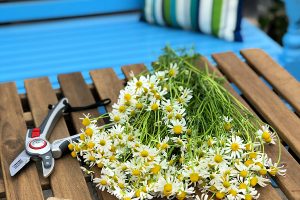
The common daisy is a perennial with spoon-shaped leaves and white, yellow-centred flowers. It forms dense mats in lawns and tolerates close mowing. Daisies spread by seed and creeping roots, so either deadhead before they set seed or remove by hand using a daisy grubber, a tool ideal for removing short-rooted weeds.
Type: Perennial wildflower
Persistence rating: 1/5
Beauty rating: 5/5
Can I get rid of it? Yes, it’s easy to remove, particularly in small numbers.
How? Use a daisy grubber to lever out the roots.
Is it avoidable? Yes, keep your lawn healthy and remove any daisy clumps early.
Can I just leave it? Yes, especially if you enjoy a natural look to your lawn.

15. Shepherd’s Purse (Capsella bursa-pastoris)
Shepherd’s purse is a small annual with heart-shaped seedpods and white flowers. It grows rapidly in disturbed soil, producing many generations in a season. Whilst you may want to control its spread, it won’t cause much competition to established plants, and small birds eat the seeds. You may, however, want to remove it completely in vegetable patches, as it is a host plant for the disease white blister, which can affect plants in the cabbage family. It could also crowd out young plants and seedlings.
Type: Annual or biennial wildflower
Persistence rating: 1/5
Beauty rating: 5/5
Can I get rid of it? Yes, plants just have one main taproot, so are very easy to remove.
How? Hoe seedlings and pull out mature plants
Is it avoidable? Yes, keep beds mulched and remove seedlings quickly.
Can I just leave it? Yes, particularly in wildlife gardens and wilder areas of your garden.

16. Groundsel (Senecio vulgaris)
Groundsel is a bushy annual with small, yellow flowers and fluffy seedheads that spread easily in the wind. It will grow pretty much anywhere, but will be most vigorous in moist, fertile soils. It can spread quickly over long distances, and it has a very short life cycle. It can host rust fungus, so it’s best to remove it in beds to ensure it doesn’t spread to your cultivated plants.
Type: Annual wildflower
Persistence rating: 2/5
Beauty rating: 1/5
Can I get rid of it? Yes, it’s easy to remove, particularly if young.
How? Pull out or hoe before flowering.
Is it avoidable? Keep the soil covered and weed regularly.
Can I just leave it? No, it spreads quickly and can host rust fungus, which could affect your other plants.

17. Hairy Bittercress (Cardamine hirsuta)
Hairy bittercress is a small annual with divided leaves and white flowers. It spreads by ripe seeds being dispersed from the plant, giving it another common name, ping weed. It thrives in cool, moist conditions and is hardy, meaning it can flower in winter months. It’s a UK wildflower, so it will attract a range of insects, including moths, butterflies and hoverflies. However, it can become a nuisance in borders with cultivated plants or in veg patches, as it will compete with other smaller plants.
Type: Annual wildflower
Persistence rating: 2/5
Beauty rating: 2/5
Can I get rid of it? Yes, it’s easy to clear hairy bittercress from your garden.
How? Pull out or hoe before flowering.
Is it avoidable? Yes, mulching the soil can suppress weeds.
Can I just leave it? Yes, it’s fine to leave in wildflower areas, but you may want to remove from beds and borders, particularly around young plants or seedlings.

18. Cleavers (Galium aparine)
Cleavers is an annual with sprawling and sticky stems. It climbs over plants and fences, setting seed prolifically. Seeds and stems cling to clothing and animals, spreading widely and proving popular with children. Cleavers is very easy to remove, and more likely to be a nuisance by sticking to gardening gloves and clothes than likely to cause any issues in the garden. It can easily spread and has the potential to smother smaller plants in beds if left. It does provide food for caterpillars of many butterflies and moths, including the hummingbird hawk-moth, so it’s worth leaving in wild areas of the garden.
Type: Annual wildflower
Persistence rating: 3/5
Beauty rating: 2/5, but a hit with kids
Can I get rid of it? Yes, it’s very easy to remove.
How? Pull out mature plants (generally, you can remove them with one pull) and hoe beds.
Is it avoidable? Yes, mulching the soil in spring can suppress younger weeds.
Can I just leave it? Yes, it’s good to leave in wildflower areas.

19. Herb robert (Geranium robertianum)
Herb robert is a low, spreading annual or biennial with divided, aromatic leaves and pink flowers. It self-seeds abundantly and tolerates shade, often appearing in cracks and shady borders. With its ability to grow in tricky conditions, you might like to leave it be in these areas. It has a long flowering season, and one plant can produce many seeds, which are catapulted away from the parent plant when ripe, allowing it to spread widely. It’s easy to hoe or pull out, thanks to its shallow roots. You might like to keep herb robert in as a wildflower: one that is particularly beneficial to pollinators.
Type: Annual or biennial wildflower
Persistence rating: 3/5
Beauty rating: 4/5
Can I get rid of it? Yes, it’s very easy to remove.
How? Hoe or pull out.
Is it avoidable? Yes, mulching the soil in spring can suppress younger weeds.
Can I just leave it? Yes, it’s great for pollinators and also a useful plant for tricky areas.

20. Yarrow (Achillea millefolium)
Yarrow is a perennial with feathery leaves and flat clusters of white or pink flowers. It spreads by rhizomes and seed, forming mats in lawns and dry soils. Yarrow is drought-tolerant and can dominate lawns that are not well cared for; a healthy lawn is one of the best ways to avoid yarrow. If you have a wildflower meadow or wilder lawn, yarrow is a wonderful addition, providing food to a huge range of pollinators. In addition, 42 species of moth use the plant as a source of food.
Type: Perennial wildflower
Persistence rating: 3/5
Beauty rating: 5/5
Can I get rid of it? The roots spread widely, so it might take a few attempts to remove them completely.
How? Dig out clumps from your lawn and improve lawn health.
Is it avoidable? Feed and aerate lawns and remove clumps of yarrow early.
Can I just leave it? Yes, leave it to grow in meadows and wildflower gardens, but you may wish to remove in formal lawns.

21. Oxalis
Oxalis is a low-growing perennial with clover-like leaves and yellow flowers. There are hundreds of species of oxalis, but a few are particularly troublesome and considered weeds by most gardeners because of their persistence, including Oxalis corniculata, Oxalis debilis and Oxalis latifolia. Oxalis spreads by seed and creeping stems, often infesting pots and borders. The roots are small but persistent, and complete removal can be a challenge.
Type: Perennial
Persistence rating: 4/5
Beauty rating: 2/5
Can I get rid of it? It is difficult, due to tiny bulbs and stems.
How? Carefully remove all parts of the plant and mulch to suppress young weeds.
Is it avoidable? Check new plants and compost.
Can I just leave it? Not in pots or borders, remove and do not put in your compost.

22. Speedwell (Veronica spp.)
Speedwell is a group of annual and perennial weeds with small blue or white flowers, and there are four species that are commonly found in UK gardens. They spread by seed and creeping stems in lawns and borders. Some species are particularly persistent in lawns, and you may wish to remove them if you are maintaining a fine turf. They are able to survive regular mowing, and could cause issues in borders if there are young or small plants growing there. Speedwell is a wildflower, so it may be beneficial to leave it to grow in some areas of the garden. UK native species of speedwell provide nectar for solitary bees, and it’s also a food plant for caterpillars of the heath fritillary butterfly.
Type: Annual and perennial wildflower
Persistence rating: 2/5
Beauty rating: 3/5
Can I get rid of it? The roots are shallow, but they are widespread, so it can be tricky to remove.
How? By hand-weeding or using a knife.
Is it avoidable? Yes, keep your lawn healthy and dense.
Can I just leave it? Yes, you can leave it if you enjoy seeing the beautiful blue flowers in your lawn.

23. Clover (Trifolium repens)
Clover is a perennial with trifoliate leaves (with three leaflets) and white or pink flowers. It spreads by creeping stems and seed, tolerating mowing and poor soils. Clover fixes nitrogen but can dominate lawns, so if you like a lawn with grass species only, you might wish to remove it. However, clover also attracts beneficial insects, and the flowers provide nectar for bees. Clover is drought-tolerant and also tolerant of some foot traffic, so it can make a great lawn alternative, especially if you have poor, dry soil.
Type: Perennial
Persistence rating: 3/5
Beauty rating: 3/5
Can I get rid of it? It has shallow roots, so is relatively easy to remove.
How? Rake up the stems and mow regularly.
Is it avoidable? If you want to keep just grass in your lawn, feed regularly and weed regularly.
Can I just leave it? Yes, especially in wildlife-friendly lawns.

24. Dock (Rumex spp.)
Dock is a perennial with large, broad leaves and deep taproots. The most widespread species in the UK are broad-leaved dock (Rumex obtusifolius) and curled dock (Rumex crispus). Both produce spikes of seeds and can regrow from root fragments. Docks thrive in disturbed soils and can be hard to eradicate. Docks can compete with other plants for moisture, nutrients, space and light, so it’s best to either remove or control their spread carefully. They can look effective in perennial meadows with seed heads providing autumn and winter interest.
Type: Perennial
Persistence rating: 5/5
Beauty rating: 3/5
Can I get rid of it? With difficulty, thanks to very deep roots.
How? Use a fork to remove the entire taproot.
Is it avoidable? Remove young plants early.
Can I just leave it? No, as dock can quickly dominate.

25. Mind-your-own-business (Soleirolia soleirolii)
This creeping perennial forms dense mats of tiny leaves and roots wherever stems touch soil. It thrives in damp, shady spots and can quickly smother lawns and borders. It regrows from any fragment left behind. But its spreading habit can also be used to the gardeners’ advantage, quickly creating green walls or used to create living sculptures. It’s also a very useful ground cover in shady gardens. But with its ability to spread quickly, it can become a nuisance quickly, so be sure to keep it in check.
Type: Perennial
Persistence rating: 4/5
Beauty rating: 4/5
Can I get rid of it? It can be difficult to remove completely, as it will regrow from tiny fragments.
How? Lift whole mats of the plant with a spade and be sure to remove all roots.
Is it avoidable? Keep borders mulched and weed early.
Can I just leave it? Yes, if you like the creeping tendencies and can keep it under control; not ideal in lawns or borders.

26. Coltsfoot (Tussilago farfara)
Coltsfoot is a perennial with large, rounded leaves and yellow flowers similar to dandelions. It spreads by creeping rhizomes and seed. The rhizomes are very brittle, which makes them tricky to remove, and it can become an issue in borders. It can be grown in a wildlife garden, where it provides nectar early in the season for honeybees, plus it’s a larval food source for moths.
Type: Perennial
Persistence rating: 4/5
Beauty rating: 3/5
Can I get rid of it? Brittle rhizomes make it difficult to remove completely.
How? Dig out all roots and cover the area to exclude light.
Is it avoidable? Improve drainage in problem areas and act quickly when you spot weed seedlings.
Can I just leave it? Yes, in wildlife gardens, but probably best to remove if it’s growing in borders.

27. Canadian fleabane (Erigeron canadensis)
This annual weed is recognisable by its narrow leaves and small white flowers. It produces thousands of wind-blown seeds and can quickly dominate bare or disturbed soil. It has upright stems that can reach around 1m, and its flowers attract pollinating insects. It’s best removed from borders.
Type: Annual
Persistence rating: 4/5
Beauty rating: 2/5
Can I get rid of it? Yes, it’s particularly easy when plants are young.
How? Pull out plants or hoe before they set seed.
Is it avoidable? Mulch the soil and regularly weed.
Can I just leave it? It will seed prolifically, so either manage it carefully or remove.

28. Red dead-nettle (Lamium purpureum)
Red dead-nettle is an annual with square stems, purple-tinged leaves, and pink flowers. It will grow to a height of around 40cm. It grows in disturbed soils and sets seed rapidly, often appearing in spring and autumn. It’s one of the most common wild dead-nettles found in the UK, so called because its leaves do not sting.
Type: Annual wildflower
Persistence rating: 3/5
Beauty rating: 4/5
Can I get rid of it? Yes, especially if caught early.
How? Pull out plants or hoe before flowering.
Is it avoidable? Yes, with regular weeding and mulching.
Can I just leave it? Yes, leave it in wild areas for pollinators.

29. Scarlet pimpernel (Anagallis arvensis)
Scarlet pimpernel is a low-growing annual with small, bright orange-red flowers. It spreads by seed and forms mats in borders and vegetable plots, especially on light soils. While an attractive UK native wildflower, you may prefer to remove it in formal borders.
Type: Annual wildflower
Persistence rating: 2/5
Beauty rating: 5/5
Can I get rid of it? Yes, especially if caught early.
How? Pull out plants or hoe before flowering.
Is it avoidable? Yes, with regular weeding and mulching.
Can I just leave it? Yes, it’s great to leave in wilder areas.

30. Scentless mayweed (Tripleurospermum inodorum)
Scentless mayweed is an annual or short-lived perennial with finely divided leaves and daisy-like flowers. It grows in disturbed soil in full sun, producing masses of wind-dispersed seeds. It can be appealing in cottage or wildlife gardens, but some gardeners may prefer to remove it.
Type: Annual or short-lived perennial
Persistence rating: 3/5
Beauty rating: 4/5
Can I get rid of it? Yes, easily when small.
How? Hoe or pull the weed out before it flowers.
Is it avoidable? Avoid it self-seeding.
Can I just leave it? Yes, you might like to leave it in some borders, depending on your style.

31. Rosebay willowherb (Chamaenerion angustifolium)
There are six species of willowherb commonly found in UK gardens, with their pinky-purple flowers often spotted on roadsides and railways in the summer months. Rosebay willowherb is a perennial with wind-blown seed and creeping shallow rhizomes. Whilst it does have benefits for pollinators and the leaves are a food source for moths such as the elephant hawk-moth, it can quickly take over borders and outcompete other plants.
Type: Perennial wildflower
Persistence rating: 4/5
Beauty rating: 4/5
Can I get rid of it? Yes, it can be challenging because of its creeping rhizomes
How? Dig out all roots and cut down new shoots
Is it avoidable? Yes, remove seedlings early and avoid soil disturbance
Can I just leave it? Yes, leave it in wild areas for pollinators.

32. Lesser celandine (Ficaria verna)
Lesser celandine is a perennial with glossy, heart-shaped leaves and yellow flowers in March or April. It spreads by tubers and seed, carpeting shady, damp areas in early spring. It’s a UK native wildflower beneficial to a range of wildlife and particularly useful as an early source of nectar for bumblebees and small beetles. As it’s only present for a short amount of time each spring, most gardeners will leave it be, but if you have a particularly neat lawn or border you might prefer to remove.
Type: Perennial wildflower
Persistence rating: 2/5
Beauty rating: 4/5
Can I get rid of it? Yes, if it’s a problem on lawns or spreading too widely.
How? Pull off the leaves to weaken the plants, hand weed, clear and cover the soil. If it’s a problem in lawns, improve the overall health of the lawn.
Is it avoidable? Yes, remove seedlings early and avoid soil disturbance.
Can I just leave it? Definitely, it’s great for wildlife, providing an early source of nectar. It’s also only visible for a short amount of time, so many gardeners leave it and enjoy some colour early in the year.

33. Annual meadow grass (Poa annua)
Annual meadow grass is a low, tufted grass with pale green leaves and seedheads. It thrives in lawns, paths and borders, seeding rapidly. It may become a nuisance in neat and carefully tended lawns. If left, annual meadow grass can be beneficial to wildlife, particularly butterflies and garden birds that will feed on the seeds.
Type: Grass
Persistence rating: 2/5
Beauty rating: 2/5
Can I get rid of it? Yes, if you would like an immaculate lawn, it is easy to remove.
How? Mow your lawn regularly, improve the health of your lawn and pull out individual plants.
Is it avoidable? Yes, look out for plants in your lawn and remove them quickly.
Can I just leave it? Yes, there is no need to remove it unless you want a very formal, neat lawn. There are many benefits to wildlife and the biodiversity of your garden if you leave it.

34. Black medick (Medicago lupulina)
Black medick is a low, sprawling annual or short-lived perennial recognisable by its small yellow flowers. It spreads by seed and creeping stems, especially in lawns. It can be grown as a green manure to improve the health of your soil and only requires removal if you are growing a particularly neat lawn. It’s a great plant for wildlife gardens or meadows.
Type: Annual or short-lived perennial wildflower
Persistence rating: 3/5
Beauty rating: 2/5
Can I get rid of it? It has shallow roots, so it is relatively easy to remove.
How? Hand-pull the plants up and mow regularly.
Is it avoidable? If you want only grass in your lawn, feed and weed regularly.
Can I just leave it? Yes, especially in wildlife-friendly lawns.

35. Hogweed (Heracleum sphondylium)
Hogweed is a tall perennial with large, jagged leaves and umbrella-like white flower heads. It spreads by seed and can take over neglected ground. The sap can cause serious skin irritation to people and pets in sunlight. If you deadhead the plant to avoid self-seeding, wear gloves and other protective equipment. Whilst hogweed can be left in wildlife areas to support a wide range of pollinators, giant hogweed (Heracleum mantegazzianum) should be avoided. It’s illegal to plant giant hogweed or cause it to spread, and touching the plant can cause long-term skin damage. If you find giant hogweed, hire a professional to remove it.
Type: Perennial
Persistence rating: 4/5
Beauty rating: 4/5
Can I get rid of it? If removing giant hogweed, seek professional help.
How? Deadhead flowers to avoid self-seeding.
Is it avoidable? Deadhead flowers to avoid self-seeding.
Can I just leave it? Yes, hogweed can be left in wildlife gardens.

36. Prickly sow-thistle (Sonchus asper)
Prickly sow-thistle is an annual common garden weed with spiny leaves and yellow dandelion-like flowers. It grows in disturbed soils and produces many wind-blown seeds. While best removed in borders or lawns, it can be beneficial in wildlife gardens.
Type: Annual wildflower
Persistence rating: 2/5
Beauty rating: 2/5
Can I get rid of it? Yes, it’s relatively easy to remove prickly sow-thistle.
How? Pull up the entire plant by hand or regularly mow to weaken the plant.
Is it avoidable? Pull weeds up before they have a chance to flower and set seed.
Can I just leave it? Yes, in wildlife gardens.