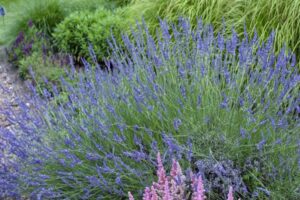

Viper’s bugloss, Echium vulgare, is a native British wildflower, bearing spikes of pretty blue and pink flowers over rosettes of blue-green, spiky leaves. A member of the borage family, it’s one of the best plants for bees as its flowers are loaded with nectar and – unlike most flowering plants – continue producing nectar throughout the day.
It’s not entirely clear how viper’s bugloss got its name, but it could have something to do with its spotted stem, which is said to resemble a snake’s markings, or from the shape of its flowers, which look like a bit like a snake’s head. ‘Bugloss’ means ‘ox’s tongue’ in Greek, and refers to its long, tongue-shaped leaves.
It’s common in coastal areas and areas of unimproved grassland and chalk downland, where you’re likely to find it covered in burnet moths and bumblebees. However it also works well in gardens and is particularly useful in dry gardens or gardens prone to drought.
Viper’s bugloss is biennial, meaning it flowers in its second year before setting seed and dying. However the cultivar ‘Blue Bedder’ grows as an annual, and has a shorter growing habit, too.
How to grow viper’s bugloss
Grow viper’s bugloss from seed or young plants, in well-drained soil in full sun – the back of a sunny border is an ideal spot. There’s no need to feed viper’s bugoss but a bit of water in very dry conditions will help its flowers keep producing nectar for pollinators. After flowering, let it self-seed around the garden or remove seedheads if you’d rather control its spread.
Where to grow viper’s bugloss

Grow viper’s bugloss towards the middle or back of a sunny border in full sun. The cultivar ‘Blue Bedder’ can be grown at the front of a border or in pots.
How to plant viper’s bugloss
Viper’s bugloss is a biennial plant, so has a large taproot. It’s therefore best to grow from seed sown where you want it to grow and covered in a thin layer of soil, as the taproot can be damaged when transplanting. You can get away with planting out young plants, however, ideally in their first year. ‘Blue Bedder’ can be planted out anytime.
Caring for viper’s bugloss

Viper’s bugloss need very little care – occasionally the flower spike topples and you may consider cutting it back to allow side spikes to develop. Watering in the very driest conditions will also keep plants looking their best.
How to propagate viper’s bugloss
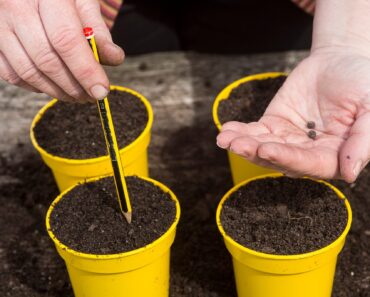
Sow viper’s bugloss seed in spring or late summer, ideally direct where it is to flower. Prepare the soil by removing weeds and raking level. Sow thinly in shallow drills 30cm apart, or scatter over a finite area. Water the soil regularly until the seedlings have established. Seedlings will appear after six to eight weeks. Thin seedlings to around 40cm apart so they have space to grow.
After flowering, allow your viper’s bugloss to self seed or collect seed to sow in a dedicated area.
Growing viper’s bugloss: problem-solving
Viper’s bugloss is easy to grow and is untroubled by pests and diseases.
Viper’s bugloss is not invasive but it can self-seed readily in sunny, well-drained gardens. If too many viper’s bugloss seedlings are turning up in your garden, simply cut the flower spikes back so they don’t develop seeds.
Advice on buying viper’s bugloss
- Make sure you know if you’re buying the tall-growing species or the dwarf cultivar ‘Blue Bedder’ as they are suited to different growing situations
- Buy seeds and young plants from reputable suppliers
- Always check plants or signs of disease or amage before buying/planting
Where to buy viper’s bugloss
Varieties of viper’s bugloss to grow

Echium vulgare ‘Blue Bedder’ – a more compact plant than the species, bearing multi-stems of bright pink-blue flowers for months on end. Grows as an annual.
Height x Spread: 45cm x 30cm