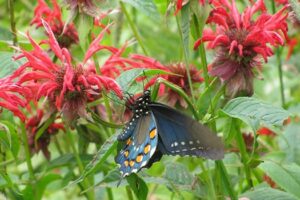

The red admiral is a large butterfly with black and red wings with white spots along the tips of its forewings and blue markings at the base of its hindwings. A migrant butterfly travelling here from North Africa and continental Europe to breed in spring before the next generation returns in autumn, some red admirals now hibernate in the UK, and they emerge on mild days to feed on winter flowers. As such, they can be found feeding on garden flowers all year round.
Mating takes place throughout the year and the female lays eggs singly on leaves of common nettle, although hops, pellitory of the wall and the small nettle are also used. After hatching, the larvae use silk to join the edges of a leaf together to make themselves a little tent, in which they can hide from predators while still feeding. As they grow they move to a new leaf and make a new tent. They go though five instars, or stages, where they shed skin as they grow. Eventually they pupate into a chrysalis, hanging from or nearby their foodplant.
This year has been a bumper year for the red admiral, with the charity Butterfly Conservation reporting a 400 per cent increase in sightings over the summer. This is most likely due to the milder winters we have been experiencing with climate change, along with last year’s very hot summer.
How to help the red admiral butterfly
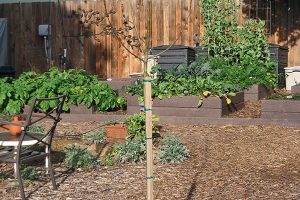
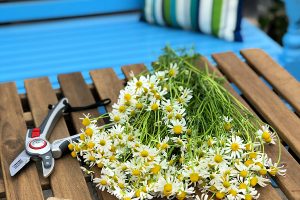
Grow nectar-rich flowers all year round, including spring blossom such as apple and cherry, alliums, greater knapweed, buddleia, echinacea and Michaelmas daisies. Let windfall fruit, particularly apples and pears, remain where they fall.
Grow nettles and keep them well watered so they don’t shrivel up in dry weather. Cut them back in stages so there is always fresh new growth for butterflies to lay eggs on, but check the leaves for caterpillars and chrysalises first, and avoid cutting any that are being used. When you do cut nettles back, leave your clippings at the base of intact plants so any caterpillars you have missed can move to fresh growth if they need to. This will also benefit any chrysalises attached to the stems of the plants you remove – if you leave them in situ and avoid creating a huge pile of them or treading on them, the adult butterflies will have every chance of emerging (eclosing) as they would if you had not cut back the nettles.