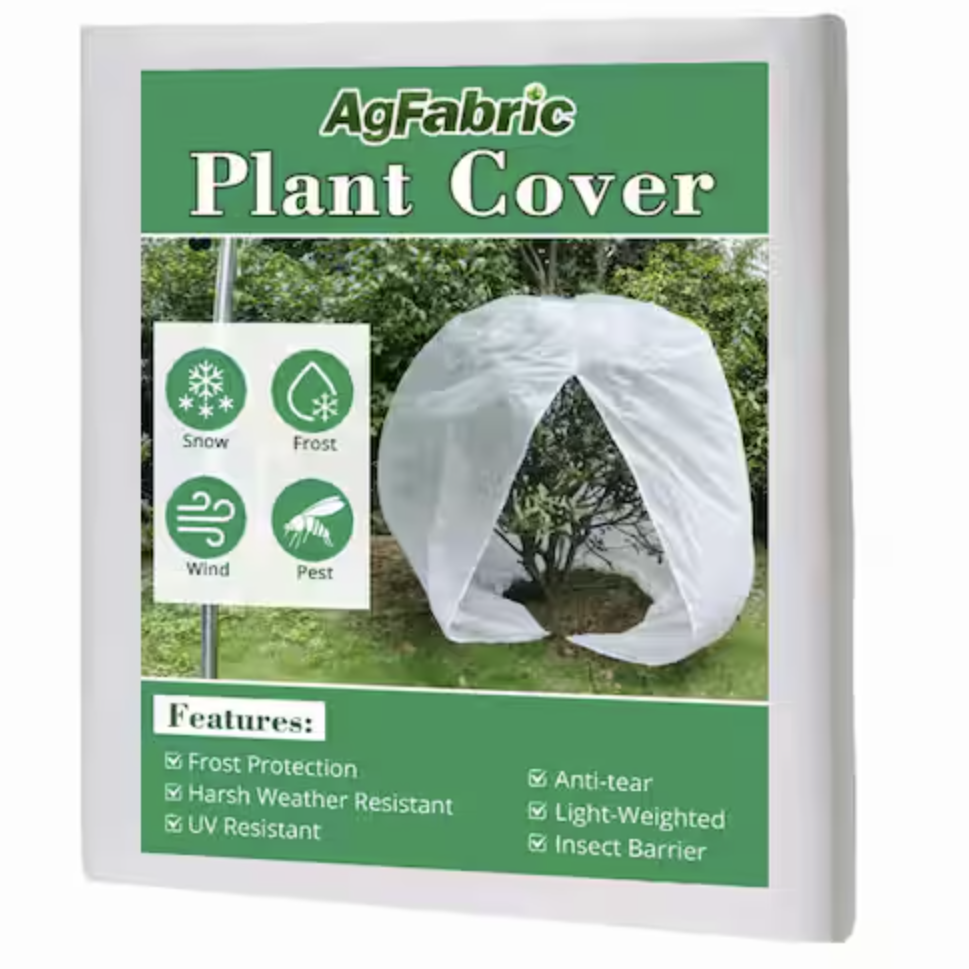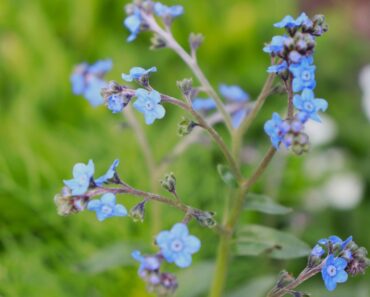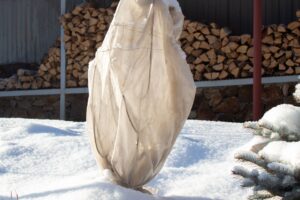
A plant frost jacket is such a simple, straightforward way to keep plants alive and well over winter, and modern designs with drawstring bases and ventilating zips make it easier than ever to use them. When winterizing a garden, zippered plant jackets don’t only protect tender beauties like banana plants and tree ferns but can help to stop sensitive souls like olive trees from dropping their leaves in a cold snap, shield citrus trees from the occasional frost if you garden in zone 9, and prevent palms from rotting.
Fleece plant covers are also incredibly useful to cocoon early-blooming shrubs like camellia and magnolia if a frost hits just as they’re setting their buds, so you can save the flower show. Young fruit trees, too, can benefit from this extra layer to stop their thin bark splitting in freezing winter conditions, and a plant cover can shield all sorts of other plants from damage caused by snow, sleet and strong winds.
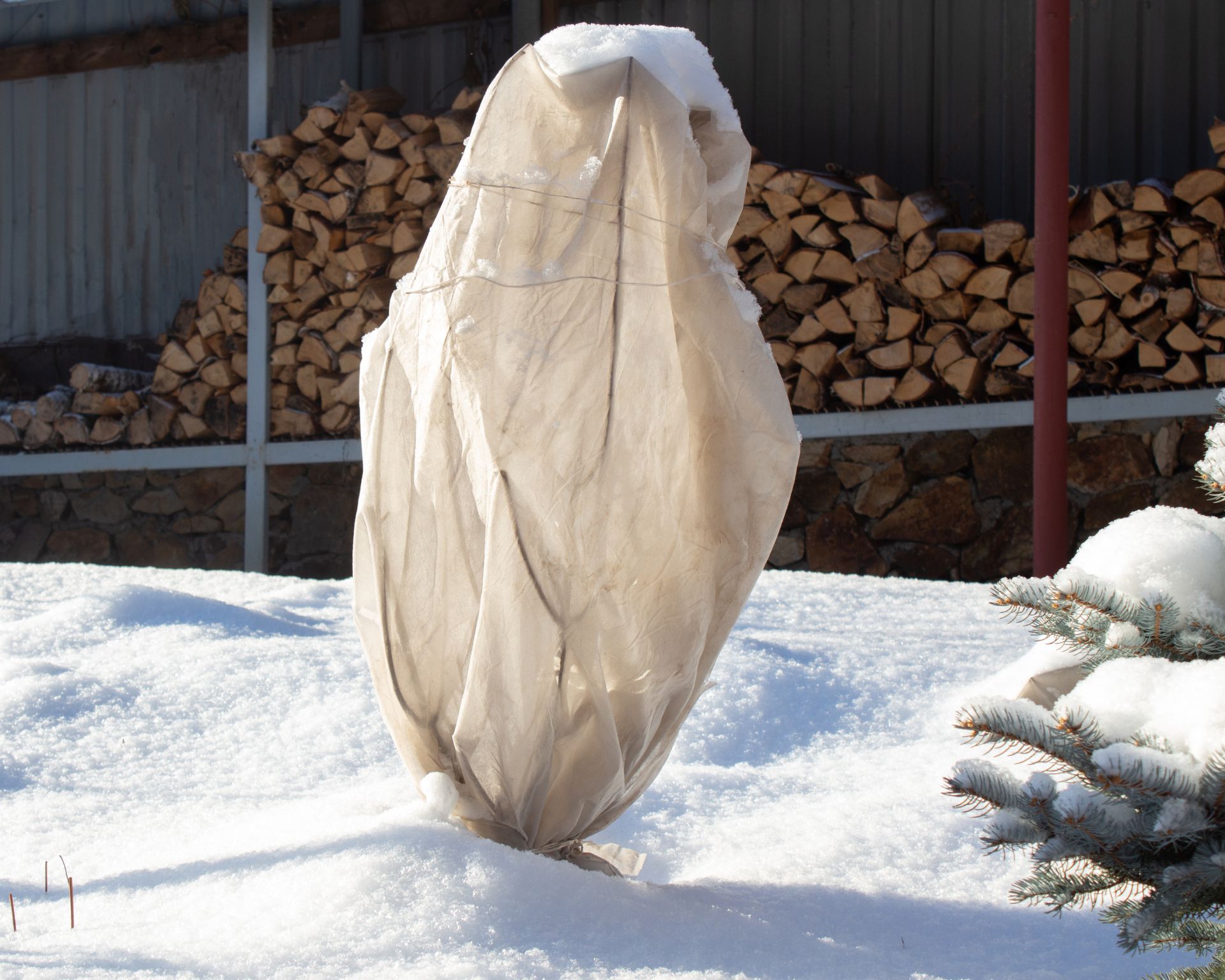
So, if you’re getting ready to winterize plants as you prepare your garden for the onset of cold weather, plant jackets should be part of your plan. Not all fleece plant covers are created equal, however, so if you want them to actually work, you need to take a close look at their weight rating. The material used to make frost jackets comes in different weights and, just like comforters offer various levels of warmth, that directly impacts how well it will protect plants in winter, but also the more sunshine it’ll block.
How are Plant Frost Jackets Rated?
Horticultural fleece is a non-woven material typically made from polypropylene, and its weight determines how much protection it offers your plant, measured in grams per square meter (gsm) or ounces per square yard (oz/sq yd). Check the label or online description to find the rating. Any good-quality frost jacket will state the rating and the higher the number, the more insulation it will provide but also block more sunlight.
- 30-35gsm or 0.9-1.2oz/sq yd indicates a medium-weight fleece, offering around 4°F of protection and letting in about 65% of sunlight.
- 50-60gsm or 1.5-1.7oz/sq yd is a heavy-weight fleece, giving about 7°F of protection but only allowing around 50% of sunlight through.
- 70-100gsm or 2-2.8oz/sq yd is an ultra heavy-weight fleece, providing around 8-10°F of protection and letting in around 20-30% of sunlight.
- You’ll also see horticultural fleece rated 17gsm or 0.5oz/sq yd and this is designed not for long-term winterizing but for throwing over late-season veggie crops to protect them from frost. This ultra-lightweight fleece lets in around 85% of sunlight but only offers about 2°F of thermal protection.
Armed with this knowledge, you can choose the exact right level of protection for whatever plant you’re winterizing in your USDA zone. While you need to ensure your plant is getting the right level of cold protection, you also need to cater for its sunlight needs.
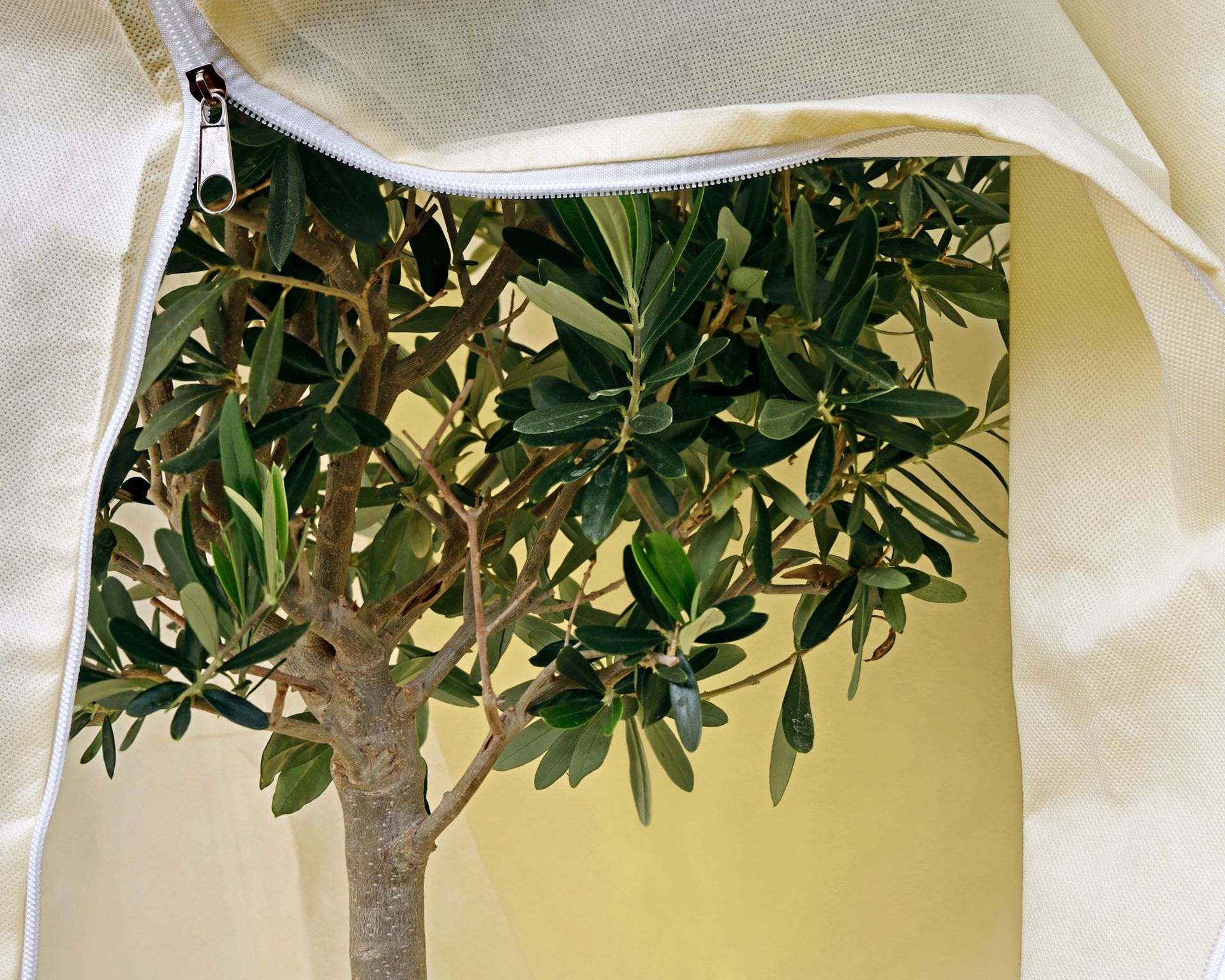
Winterizing Banana Plants and Tree Ferns
Because these plants are dormant through winter in colder zones, they don’t need sunlight so you can safely use an ultra heavy-weight fleece to protect them. The fleece alone won’t be enough to protect banana plants (Musa basjoo) and tree ferns (Dicksonia antarctica) from the deep chill of colder zones but are still useful as a cover once you’ve packed layers of insulating straw around the plant. Not only will the fleece form a great barrier against wind and rain but it’ll keep the straw in place and that wrapped plant looking tidy.
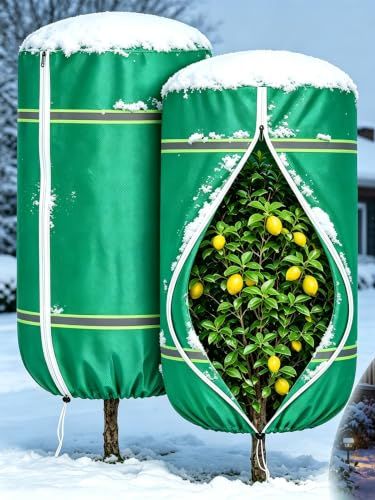
Made from 95gsm or 2.8oz/sq yd non-woven material, these plant covers have rounded tops for a good fit and come in green, beige or white in four sizes: 31″ x 25″, 47″ x 39″, 71″ x 47″ and 94″ x 79″.
Winterizing Deciduous Shrubs
Because deciduous shrubs drop their leaves in fall, they don’t need any sunlight over winter to survive so you can safely zip them up in a heavy or ultra heavy-weight plant jacket, depending on the level of protection needed in your zone. This thicker material will also keep snow from weighing down and snapping brittle winter branches. Do choose a design with a zipper as well as a base drawstring so you can regularly open up the zip on milder days to let air circulate.
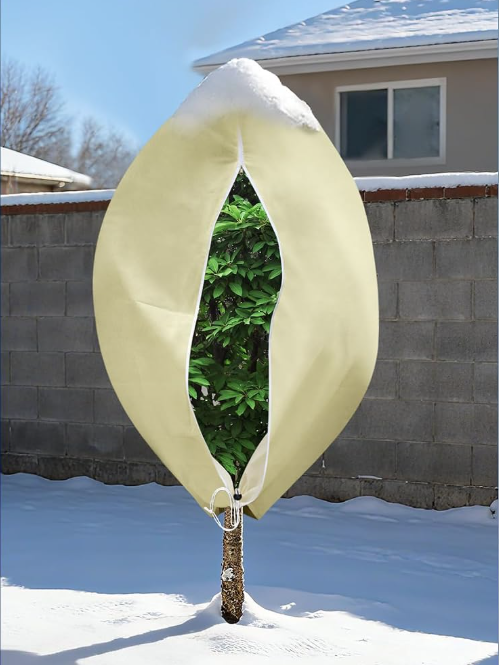
In 60gsm or 1.77oz/sq yd non-woven fabric, these zippered plant jackets are made of a minimum 50% recycled material and come in four sizes: 23″ x 23″, 39″ x 31″, 71″ x 47″ and 83″ x 71″.
Winterizing Early Spring-Flowering Shrubs
Hardy shrubs that flower early in the spring such as camellias and magnolias are typically tough enough to survive most winters without a jacket, but their flowerbuds are quickly killed by a late frost or cold snap. Throw on a medium- or heavy-weight plant jacket overnight to save those new buds from the frost.
Winterizing Evergreen Plants
Evergreen plants such as conifers still need sunlight and fresh air to survive through winter, so a medium-weight fleece is your best bet for general winterizing if your aim is to shield a hardy plant from snow, hail and wind damage. If you’re planning on leaving it on permanently through winter, use a medium-duty fleece for more tender evergreen olive and citrus trees and certain palms, too.
However, if you live in a colder climate you’ll need the increased protection of a heavy- or ultra heavy-weight fleece for these more tender plants. Either use this as an extra layer to throw on over the top of the permanent medium-weight layer in severe weather or, if you use this as the mainstay cover, you’ll need to keep unzipping it to allow sunshine and air in during milder daytime temperatures.
Most medium-duty fleeces are designed without a zipper but that’s not a problem: because the thinner material lets more air and sunlight through, they can safely be left in place.
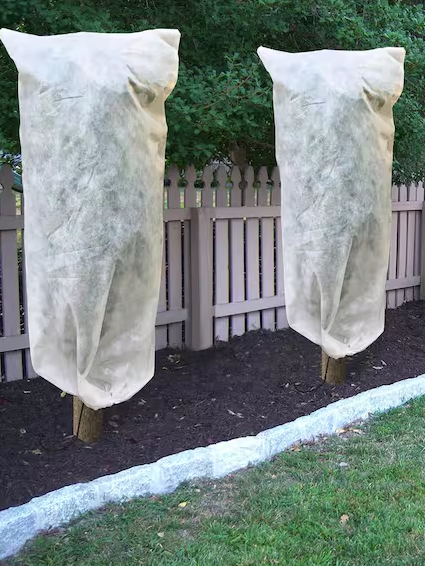
Made of 32gsm or 0.95oz/sq yd breathable material, this medium-weight plant cover has a drawstring base and is available in three sizes: 32″ x 32″, 55″ x 48″ and 72″ x 72″.
How to Use a Plant Frost Jacket Effectively
No fleece jacket can generate heat, it can only insulate from the cold, so how you use it has a huge impact on how effectively it protects your plant in winter. Choose a design with both a drawstring and a zip as this not only makes the jacket quick and easy to pop on, but allows you to fit it closely and avoids the wind ripping it off.
Wherever possible, peg the plant jacket to the ground to catch any heat rising upwards. Soil holds onto considerable warmth from the sun, so make use of this natural radiator. Use bricks or stones to weigh the jacket base down, or peg it to the ground with landscape fabric pegs, choosing a product with gaskets to prevent the fabric tearing like these Galvanized Landscape Pins from Amazon.
Similarly, if you’re winterizing a plant in a container, use a frost jacket that’s big enough to fit around the pot, too, as this will protect the roots as well as trap any heat from the soil. Roots in planters are very vulnerable to freezing temperatures so consider wrapping the pot with bubble wrap first.
To prevent moisture building up under the cover and causing mold, make sure you buy a jacket marked as breathable, and open the zip on mild days to allow air to circulate.
While you don’t want to squash a plant into a cover, it’s a wise idea to fit the jacket around the plant to prevent it flapping in the wind and metal greenhouse clamps such as these from Amazon are invaluable to gather loose material or clip a jacket to existing plant supports.
More Useful Plant Covers
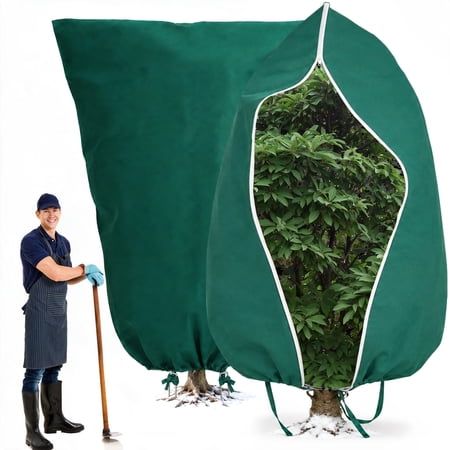 Tough
Measuring 8’ x 8’ to fit bigger shrubs and trees, this ultra heavy-weight 80gsm or 2.4oz/yd cover comes with ties and stakes so it can be pinned securely to the ground in exposed gardens.
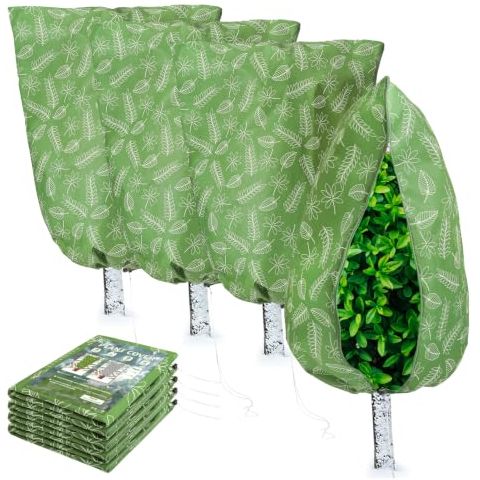 Pretty
These ultra heavy-weight zippered covers are made from 75gsm or 2.2oz/sq yd patterned fabric and are available in a green or grey print in sizes 32″x24″, 47″x32″, 71″x47″ and 83″x71″.