
Lombardy poplar or Italian poplar (Populus nigra ‘Italica’) is a fast-growing deciduous tree with a tall and slender habit, its branches growing almost vertical to the trunk. It’s a common sight in the countryside and is often found growing along riversides. It’s named for the region of Lombardy in northern Italy, where it was found growing in the 1700s, and was introduced to Britain later that century. In Europe, screens and windbreaks of poplars are widely planted to line fields and roads.
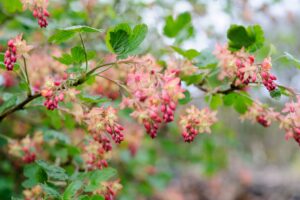
Lombardy poplar is a variety of black poplar. Its leaves are diamond shaped or almost triangular, uniformly green in summer, then turning bright yellow before falling in autumn. A male clone, it only bears red catkins in spring, never the masses of white fluffy seeds that are associated with female poplar trees. Lombardy poplar bark becomes fissured with age.
Its fast growth habit and tolerance of damp soils is useful where space permits, although this large tree is unsuitable for growing in most gardens. Lombardy poplar can reach heights of more than 40m, so is only suitable for the very largest of spaces.
How to grow Lombardy poplar trees
Site only where there is ample space to grow, in any reasonable soil except chalk, including moist or even wet ground. Plant in autumn or winter and keep watered for the first growing season.
Where to grow Lombardy poplar

Lombardy poplar grows in any reasonable soil and is also tolerant of moist ground and exposed coastal sites. Plant in rows to create tall screens, in groups, or as single specimen trees, only in extremely large gardens. Site well away from buildings and any underground services such as drainage systems, as the vigorous top and root growth has the potential to cause serious damage.
How to grow a Lombardy poplar hedge
Lombardy trees make a fine, tall hedge for a large space, and provide excellent screening and windbreak opportunities in the wider landscape. However, the speed of growth and spreading roots of Lombardy poplars mean you should consider carefully before planting a Lombardy poplar hedge in a garden situation. If you do go ahead, bear in mind that the hedge should be planted no closer than 40m to the nearest building, or underground services such as drains or septic tanks.
The spacing between Lombardy poplar saplings in a hedge depends on how quickly a dense screen is required. Young saplings can be as close as 45cm, then thinned out at a later date. Otherwise, allow 1m between saplings.
While regular trimming does encourage dense growth, the branches of Lombardy poplars still tend to become thinner at the base as they mature. Staggering the height of the trees within a hedge can mitigate this to some extent, by pruning every second tree to around 1.2m high and allowing alternate ones to grow taller.
How to plant Lombardy poplar
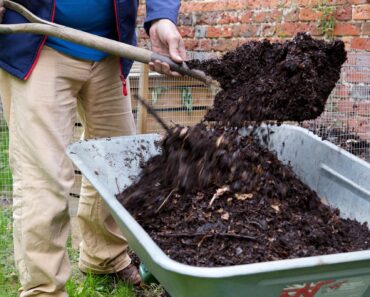
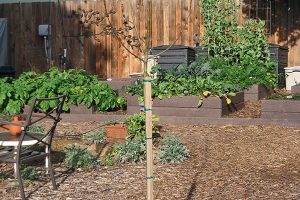
Buy and plant bare rooted trees during the dormant season. Container grown specimen trees establish best when planted in autumn. If soil is poor, improve with organic matter before planting. On damp or boggy ground, mound up the soil to plant the tree on top, to keep moisture away from the trunk. Firm in well and stake taller trees securely with stakes placed at a 45º angle. If growing as a hedge, plant in a single row with the young saplings spaced 1-2m apart, depending on how quickly screening is needed.
How to care for Lombardy poplar
Keep newly planted trees watered during their first growing season until established. Thereafter, little care is needed. If growing as a hedge, in time it may be necessary to thin out by removing every other tree.
Pruning Lombardy poplar
Only prune if needed, to avoid spoiling the tree’s shape, or when growing as a hedge. Prune in late winter, reducing growth as required, and removing any dead growth.
Pests and diseases
Lombardy poplar may be subject to several pests and diseases, although trees that are well planted and established are mostly able to withstand attack. Potential disease problems include honey fungus, bacterial canker, and leaf spots, while pests that can occur include caterpillar of various moths, sawfly, and leaf beetle. There’s usually no need to control insects as natural predators will control them – indeed one of the roles of the tree is to provide invertebrate food for predators such as birds and wasps. Fungal and bacterial diseases are unlikely to do too much damage, apart from honey fungus, which may eventually kill the tree.
Advice on buying Lombardy poplar trees
- Buy young bare rooted sapling or hedging trees in the dormant season from November to February
- Larger trees are occasionally available, usually from specialist tree growers
- Before buying, make sure you have enough space to grow this vigorous, tall tree
Where to buy Lombardy poplar trees
Frequently asked questions
Are Lombardy poplars native to the UK?
Lombardy poplar is not native to the UK despite being widely grown. It was introduced to Britain in the 1750’s after being discovered growing in the Lombardy region of northern Italy.
Is Lombardy poplar fast growing?
Lombardy poplar growth rate is exceptionally vigorous, it’s easily capable of producing 2m of growth per year. A mature tree can reach heights of to 30-40m.
What is the lifespan of a Lombardy poplar tree?
Lombardy poplar is reasonably long-lived and should last for at least 40-50 years.