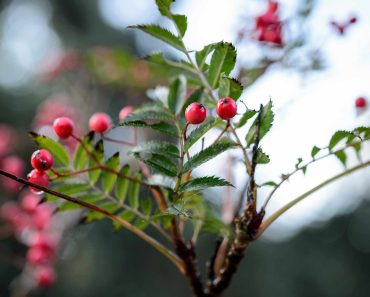

Holly, Ilex aquifolium, typically has dark green, spiny leaves and bright red berries. However, there are many different varieties of holly with different coloured laves and berries – more than 400 from around the world.
The holly (Ilex) genus ranges from small shrubs to large climbers, with diverse leaf shapes, textures and variegation and berries of different colours. Although holly will always be synonymous with Christmas, it has a life well beyond the festive period. It’s easy to grow and makes a great addition to gardens as an evergreen architectural specimen, clipped bush or hedge. Hollies also make good screening trees.
Watch our No Fuss video guide with Kevin Smith, as he demonstrates how to make a Christmas star using holly:
More on growing holly:
Where to grow holly

Most holly varieties thrive in moist, but well-drained soil in sun or shade.
How to plant holly

Plant holly bushes in the winter months. Dig a generous hole for your plant, incorporating well rotted garden compost into the soil. Back fill and firm down gently around the base of the plant.
How to care for holly

Hollies are slow-growing plants that are easy to care for. If you want Christmas berries, these are produced on female plants in late autumn to mid-winter. To get them, you need both a male and female plant to ensure cross-pollination, so always plant two. You can recognise male and female hollies from their flowers – the male flowers have more prominent stamens. It’s important to remember that the berries can be harmful to humans if eaten.
Prune hollies according to your requirements. They respond well to cutting back and can be trimmed into formal shapes and hedges, or left more free-form. Pruning should be done in late summer, before the new growth becomes woody. Read our tips for pruning holly.
If you have inherited an overgrown holly, stagger any hard pruning over two or three years to reshape it.
Watch Carol Klein discuss growing holly with an expert at RHS Rosemoor in our video guide:
How to propagate holly

Hollies can be grown from seed. Collect seed from the berries in December, January and February. Remove the flesh of the berries and rinse the small seeds. Then plant them into compost and leave to germinate outdoors.
Or you can take semi-ripe cuttings in August and September when you carry out your formative pruning; or take hardwood cuttings in winter.
Pests and diseases

Hollies are robust and relatively trouble free. However, they can be affected by holly leaf blight. This is a fungal infection of the leaves, caused by Phytophthora ilicis, which causes discoloration to leaves and stems and loss of foliage. It requires cool, damp conditions to flourish and is believed to have come from North America. It has become more of a problem over the past decade and records show it’s more common among these varieties: I. aquifolium, Ilex crenata, I. × altaclarensis, I. dipyrena and I. kingiana, I. colchica, I. pernyi var. veitchii and some clones of I. apaca. There is no treatment currently available, but if you spot blotchy leaves, cut out the infected area and burn the trimmings to prevent it spreading.
Holly leaf miner is a small fly with larvae that causes patches and blotches by feeding inside holly leaves. It doesn’t harm the plant overall, but looks unsightly. The best method of treatment is removing the affected leaves by hand and destroying them.
Advice on buying holly trees
- Make sure you have the right holly for the growing space you have in mind – if you have a small space opt for a compact variety, while in shade you may choose a variegated or silver-leafed type
- If you want holly berries, make sure you buy a female plant and check to see if it needs a pollination partner
- Always check plants for signs of damage or disease before buying
Where to buy holly trees online
Holly varieties to grow

Ilex aquifolium ‘Silver Milkmaid’ – an attractive variegated holly, bearing spiny, dark green leaves with a creamy white variegation. Red berries may be produced in autumn.
Ilex aquifolium ‘Silver Queen’ – a male holly, with distinctive silver margins on its spiny and glossy green leaves. The stems and young foliage are purple.
Ilex dimorphophylla – a Japanese holly with a rounded, compact form , well suited to small gardens and also for growing as a bonsai. It has small, glossy, spiny and ovate leaves that stay bright green all year and red berries in autumn.
Ilex x koehneana ‘Chestnut Leaf’ – a cross between Ilex aquifolium and Ilex latifolia. It bears glossy green chestnut-like leaves with lots of red berries in late autumn. Fast growing, it quickly grows into a pyramid-shaped tree.
Frequently asked questions
Can I grow holly in a pot?
Holly trees are very slow growing so can be suitable for growing in a large pot of soil-based compost, such as John Innes Number 3. It’s important to consider the eventual height of the tree – up to 12m – and how long you intend to grow it in a pot for. Consider growing a dwarf variety such as ‘Myrtifolia’ or ‘Golden King’ which won’t grow as big. What’s more, holly trees can be tricky to repot as their have prickly leaves.