The challenge a boxy backyard brings is that its square shape makes the garden feel even smaller than it already is. But steal a few tricks from landscape designers and you can manipulate the space to your advantage, and transform it into a super-stylish yard that appears larger and less enclosed. The trick is to see a square garden plot not as a hindrance, but instead as an invitation to get creative.
To draw all eyes away from the boundaries, and make the space within feel more expansive, landscape designers use a number of clever techniques. Plenty are DIY projects you can do yourself to make a small garden feel bigger. One such trick is to separate the plot into multiple areas, each with a clear function, that segue together beautifully into a whole. A lot can be achieved by utilising vertical space for growing, too, which increases planting options as well as leading the eye up to make your garden feel less cramped. Add in some curves and a focal-point feature, and suddenly you have a garden to be proud of.
A few well-chosen contemporary small garden ideas is often all it needs to add the standout factor to your garden design. Here are all the garden design ideas you need to get the transformation underway.
1. Divide the Plot into Geometric Blocks
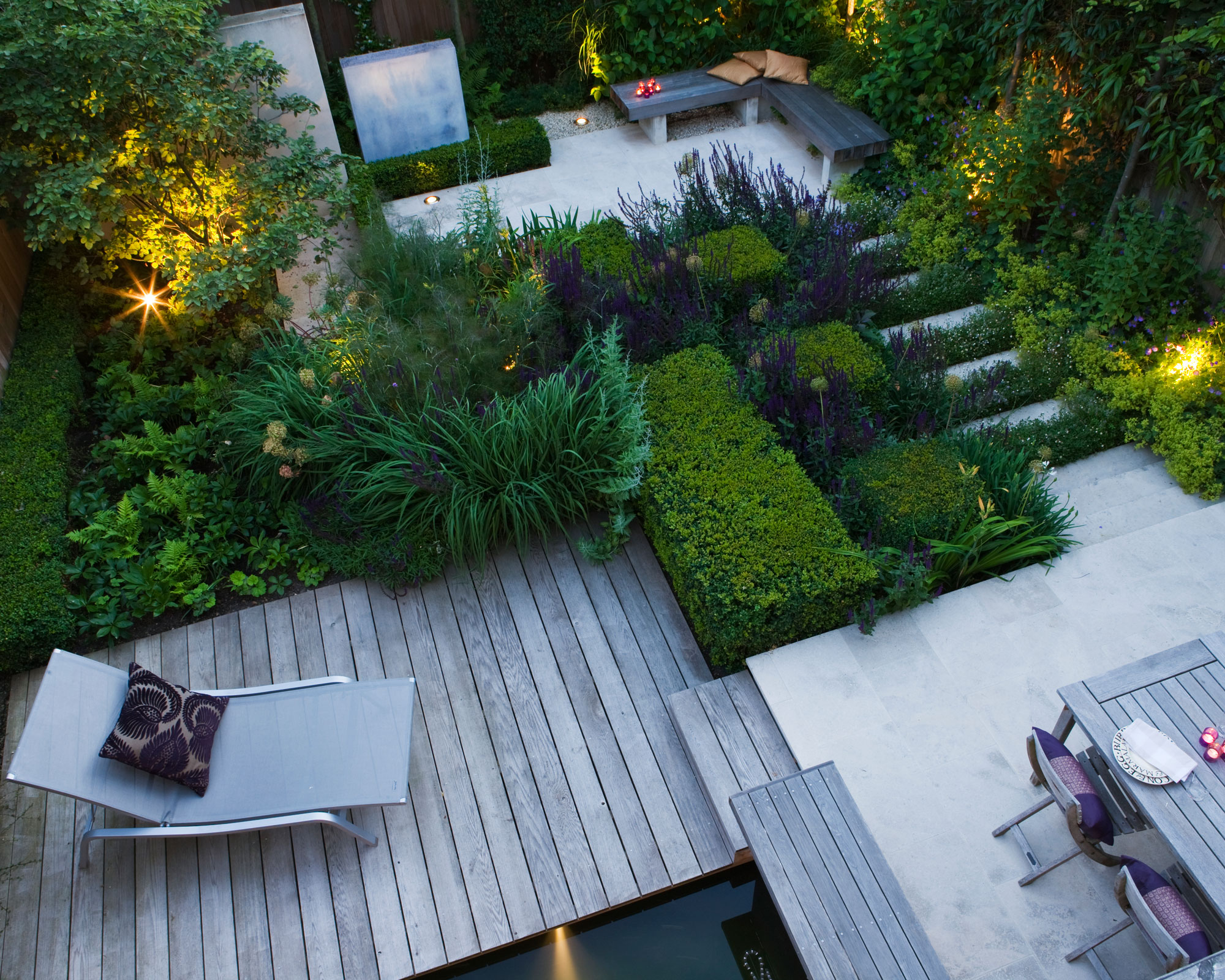
If you have a small boxy backyard, you’ll want to make the very best of the space by turning it into a stylish extension of your home. One of the easiest landscape designer tricks to tap into is reconfiguring the space using the ‘rule of three’ technique to carve up a square garden into separate yet harmonious areas.
This is a clever way of stretching a small garden and making it feel more spacious with clearly defined zoned areas, like this design (above). With separate spaces such as a patio for dining and a deck for lounging, plus a hidden destination point at the far end, this boxy backyard doesn’t feel square any more.
Using planting such as evergreen boxwood cubes and ornamental grasses to create softly sculpted divisions between the spaces adds a high-end look, as does subtle uplighting.
2. Plant Immersive Boundaries to Distract from Dimensions
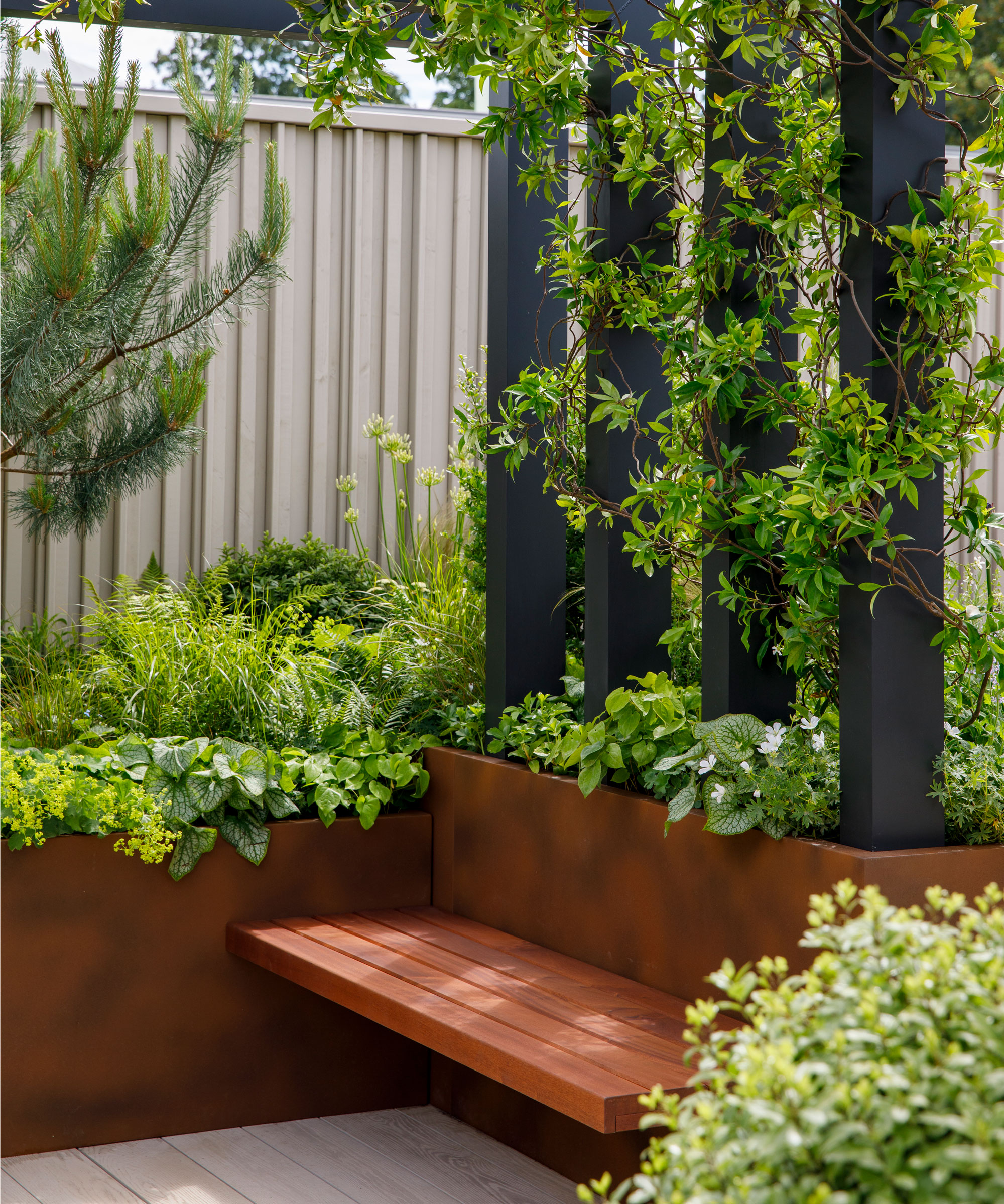
It might seem counter-intuitive to enclose a small boxy backyard with vertical planting taken to great heights, but green walls can in fact work to your advantage. Lushly planted boundaries help small gardens feel bigger by leading the eye upward to create an immersive feeling. And it needn’t take forever, as there are plenty of fast-growing vines that won’t scramble out of control.
Planting climbers also helps to blur the boundaries so you’re not sure where the garden begins and ends. Covering solid features like walls and fences in foliage softens hard edges and tricks the eye, rather than immediately revealing the limitations of a small space.
Wrapping a garden in plants such as evergreen climbers takes the gray out of an urban space year-round, or add some standout color with a clematis. Another bonus is that this increases your privacy, especially helpful if your garden is overlooked by neighbors’ windows. You can also used climbing plants to break up stretches of straight horizontal lines on the tops of fences and walls.
Climbing Plants for Boundaries
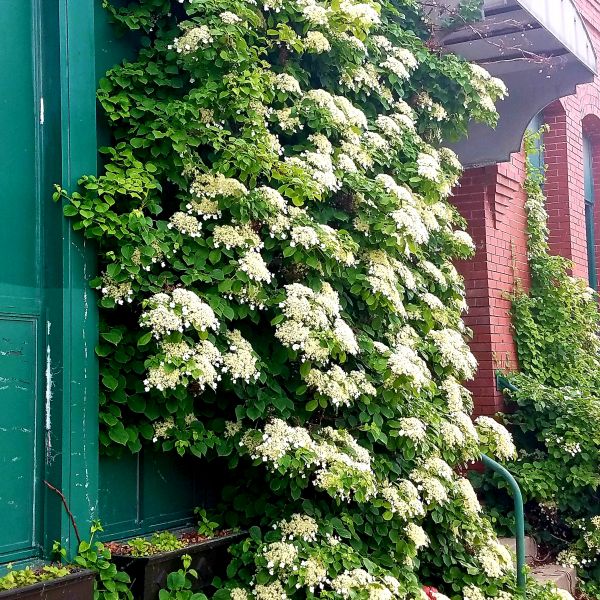 Showy White Blooms
This self-clinging climbing hydrangea is covered with fragrant white lacecap blooms. It thrives in Zones 4-10, and grows 30-40 feet tall.
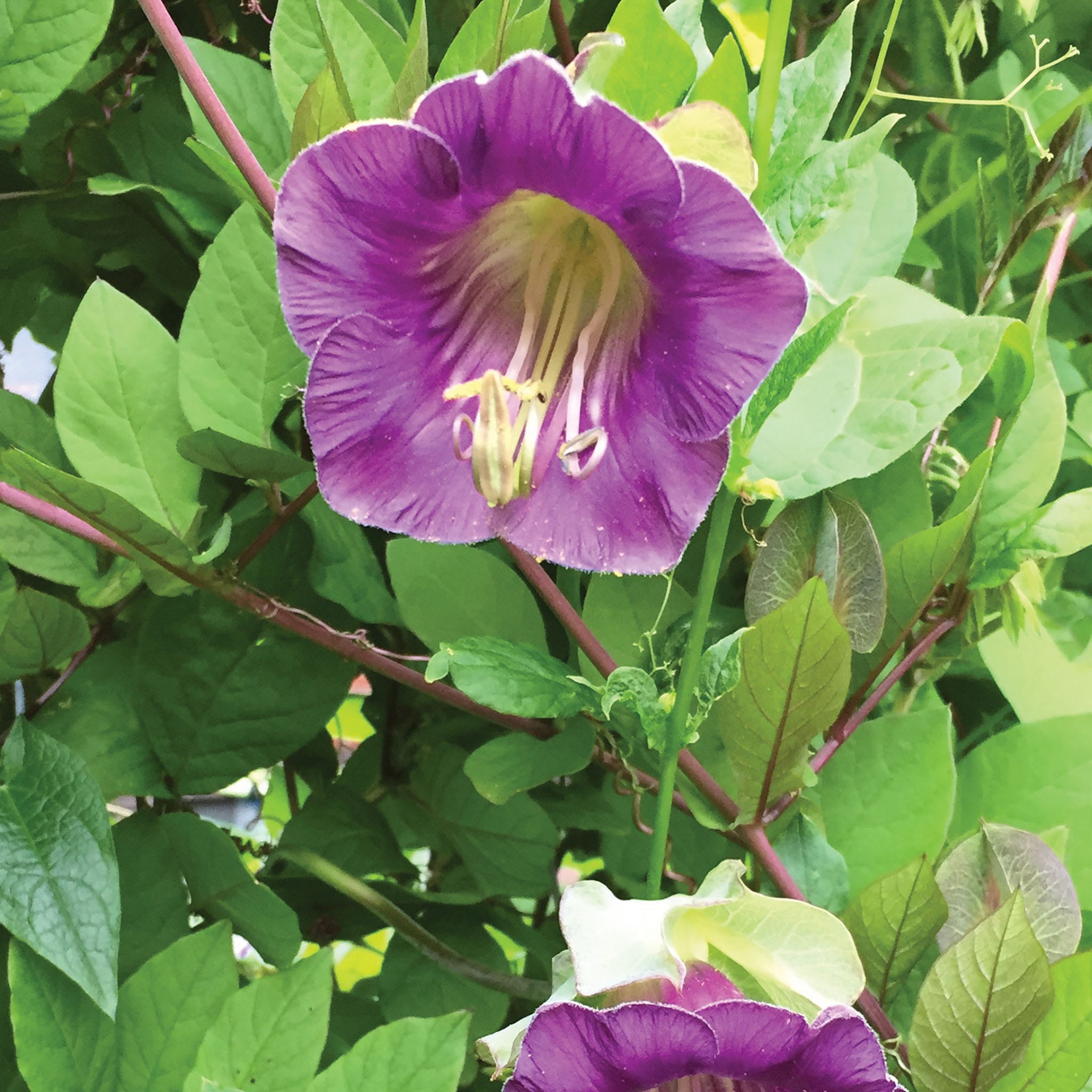 Entices Hummingbirds
Perennial in Zones 9-11, this climbing vine is festooned with pretty 2 inch bells that change from creamy pale-green to striking blue-purple.
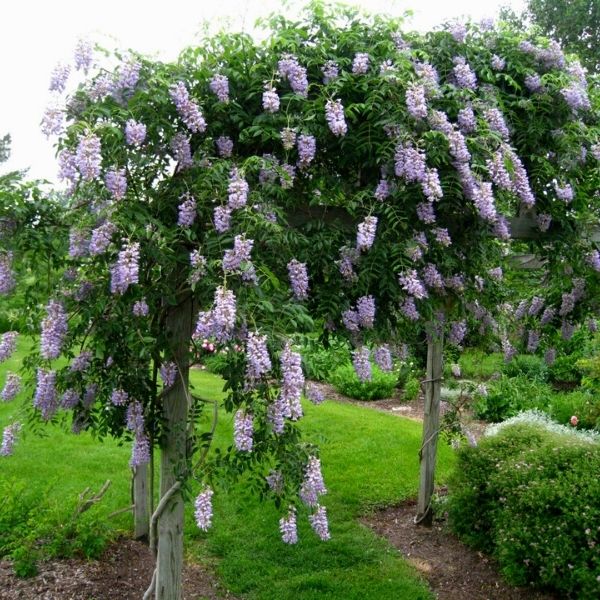 Pollinator Magnet
Reblooms up to three times a year which means you get extended purple-blue fragrant blooms. It thrives in Zones 3-9, and grows 25 feet tall.
3. Create an Eye-Catching Centerpoint
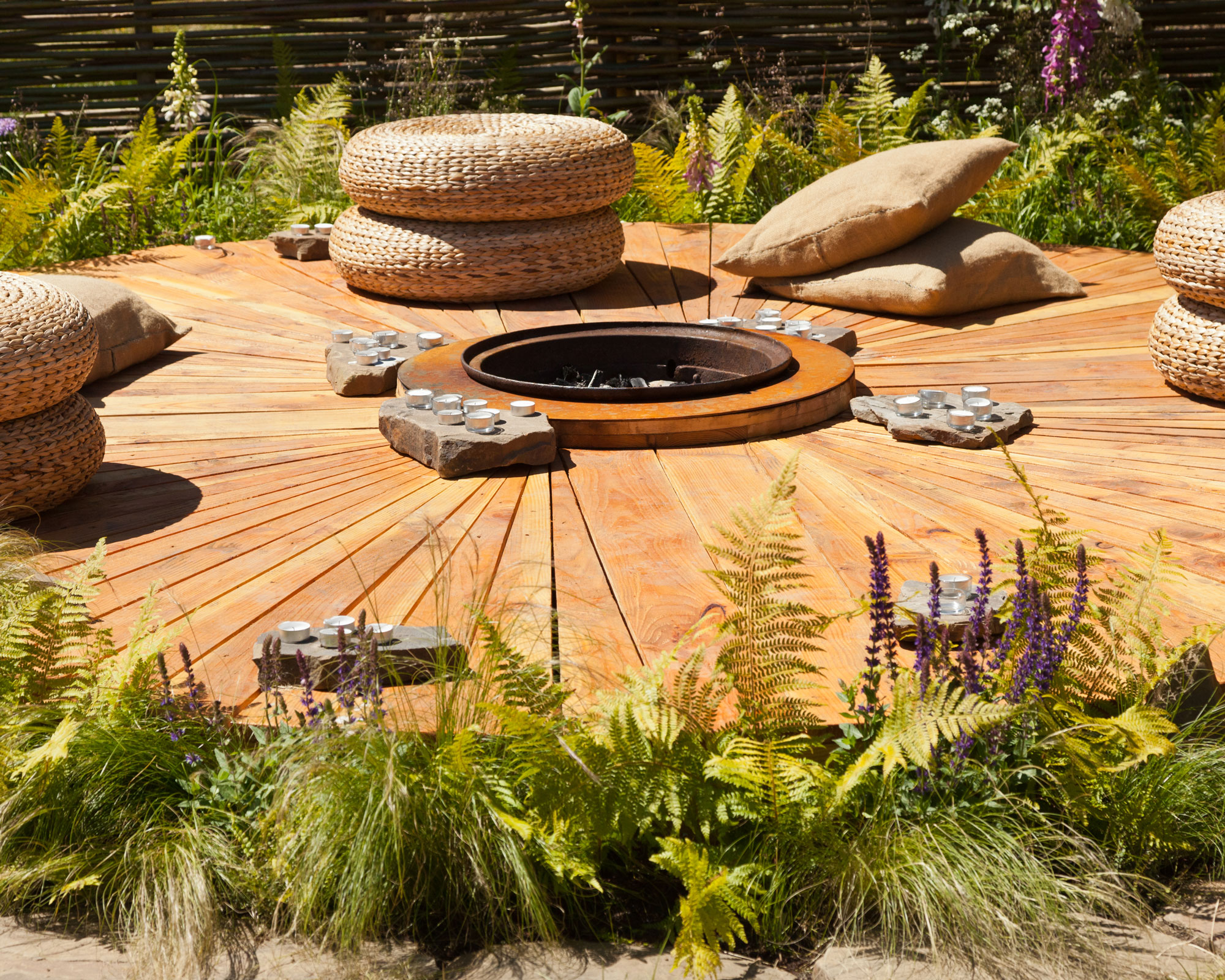
Creating a standout garden feature in the center of a square garden distracts from the restricted dimensions. Adding a focal point is a great way to make a small boxy backyard feel bigger, as your eyes will be pulled away from the edges into the center.
A circular feature integrated into a square shape immediately stands out. This eye-catching design features a firepit sunk into a round deck, surrounded by wraparound planting.
Other ideas for a centerpoint include an elegant DIY water fountain, or there are plenty of water features you can install yourself, or a piece of sculpture. Adding a circular lawn in the center of a square garden will also transform the feel of the space. A circular design feature breaks away from the boundaries, helping your garden feel more intentional and aesthetically pleasing. Circles blur harsh boundary edges and pull together the space in a gently cohesive way.
4. Add a Dazzling Accent Plant
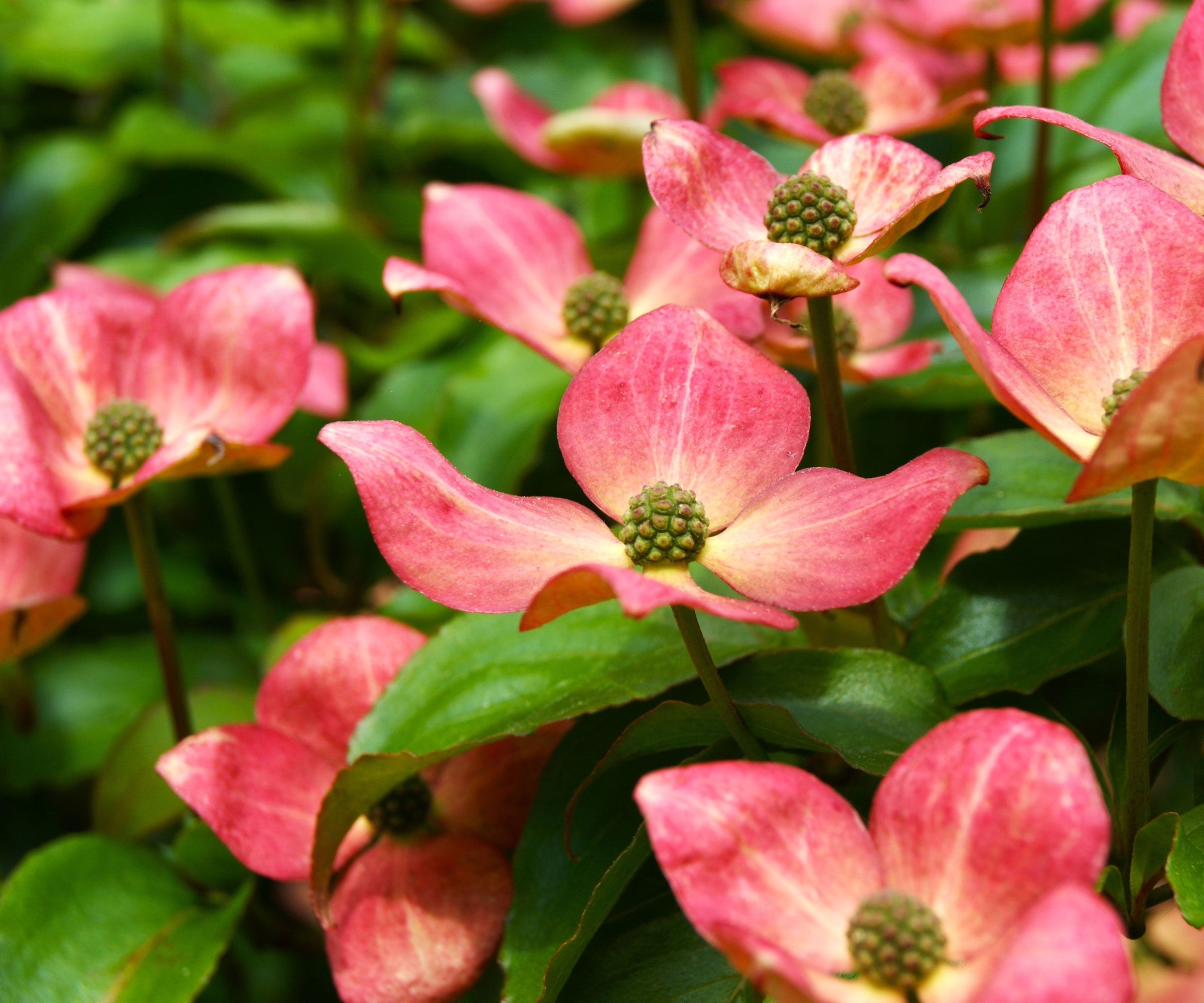
Another way to draw attention away from the outer boundaries is to add an accent plant that landscape designers love. As far as small backyard ideas go, this is such a quick and easy win but will have a huge impact. An ornamental multi-stem tree such as ‘Little Gem’ magnolia, available from Nature Hills, is perfect for small yards as it adapts well to being pruned to stay compact.
Cornus kousa ‘Satomi’, pictured above and available from Nature Hills, is another showstopper tree that commands attention but can be pruned to stay in shape.
5. Design a ZigZag Path that Tricks the Eye
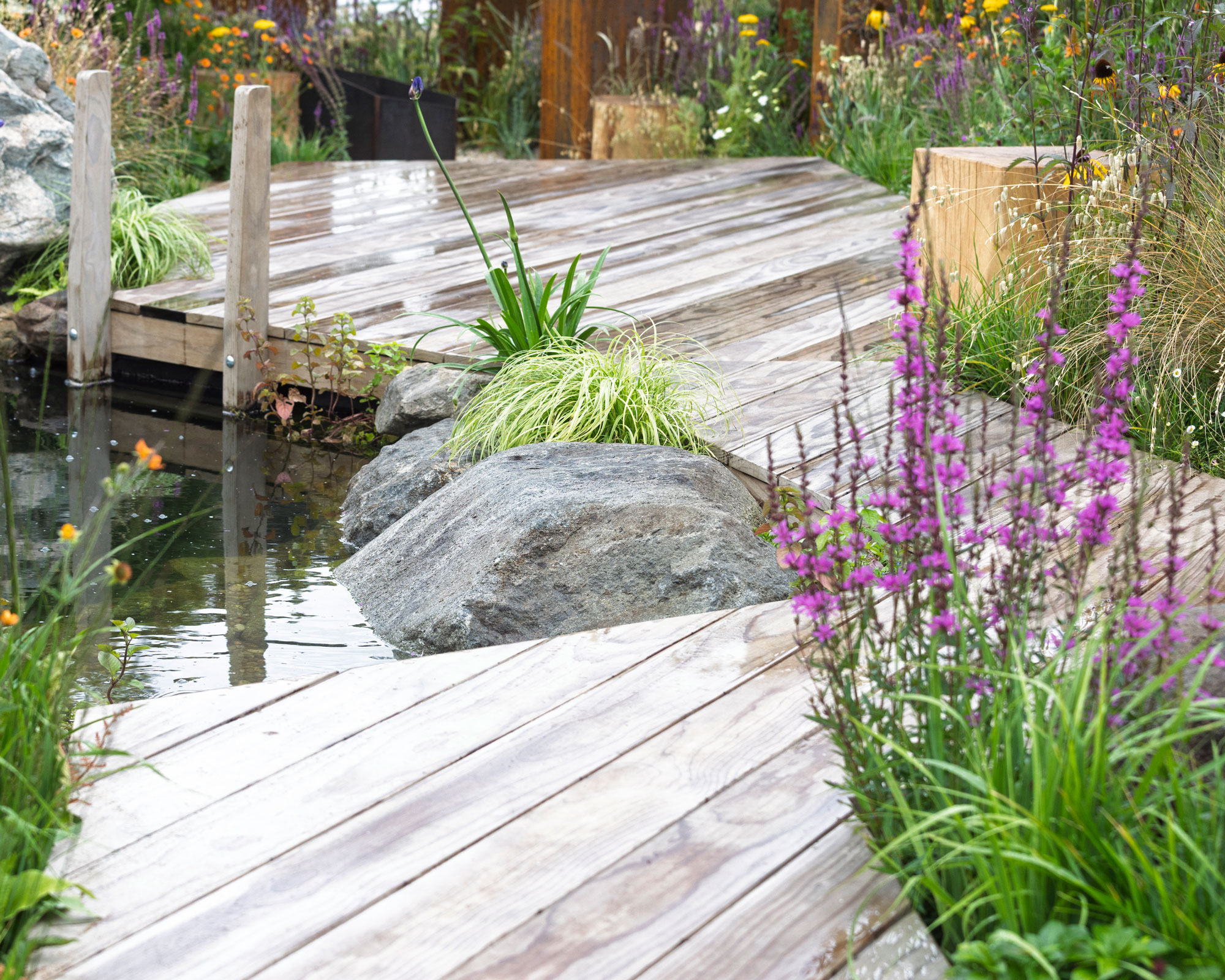
Another way to disguise a square-shaped garden is to add a feature that forces your gaze to change direction, as this distracts from the standard boxy outline dictated by the boundaries.
It’s time to forget boring straight lines and draw the eye with something clever. Setting paths at changing angles so they zigzag or have a dog leg makes a garden feel both wider and more interesting, as well as being a design feature in its own right.
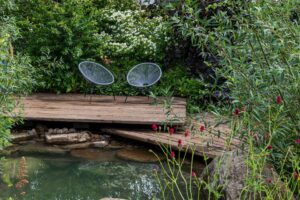
This elevated decking pathway zigzags between landscaping elements such as a pond, carefully positioned boulders and decorative border planting, which combine to distract the focus from the limitations of the space and reinvigorate a small boxy backyard.
6. Banish 90° Angles For a Softer Look
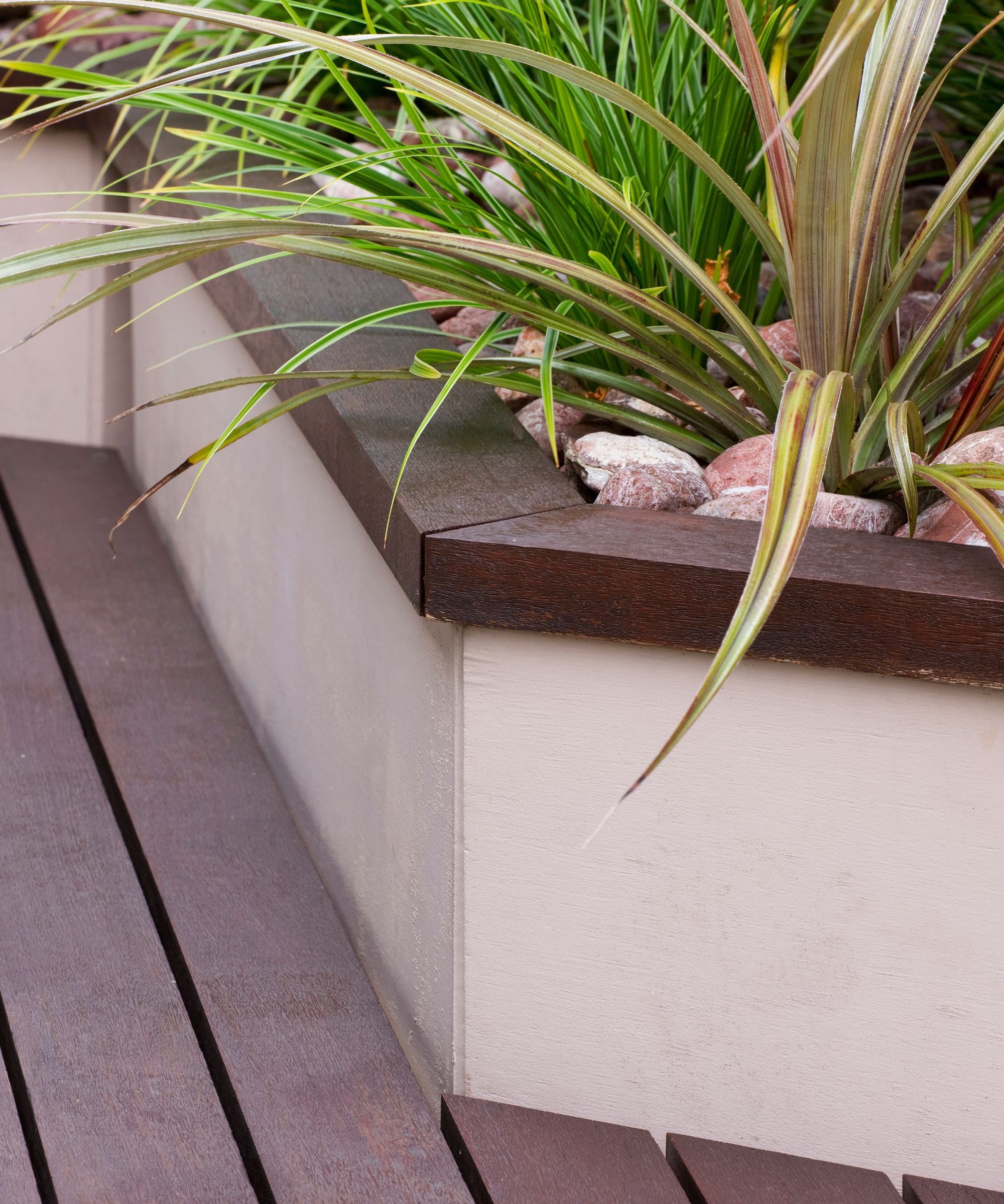
Sometimes the smallest details can make a big difference when you’re working out how to improve a garden. Obtuse angles like the one in the raised bed above create and optical illusion: because the line is longer than if a 90° angle had been used, the feature appears bigger. In an urban garden that has lots of hard landscaping, this is particularly effective trick.
A design like this also feels so much more relaxed than one that relies on sharp corners. Take a look at your small boxy backyard and it’s likely that you’ll spot myriad 90° angles. Banish them, and you’ll make much more of the space.
7. Use Asymmetric Focal Points to Your Advantage
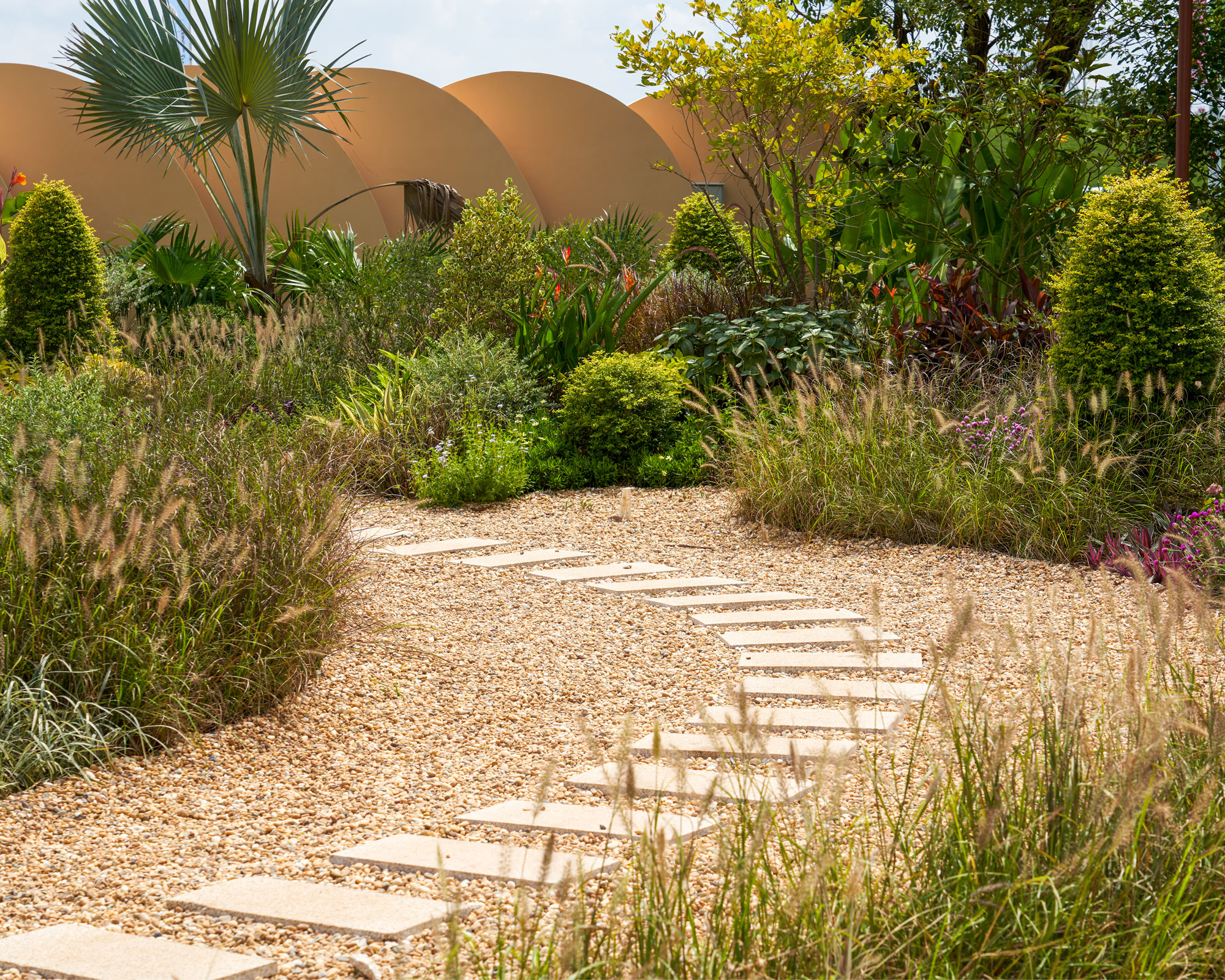
Asymmetrical garden design is a real asset if you need fresh ideas to make more of a small boxy backyard. This informal technique simply involves repeating one focal element around the garden, but staggering their position so the two sides are asymmetrical.
The aim is to deliberately create an imbalance that makes a garden layout more interesting, such as alternating trees along a path rather than placing them directly opposite each other, as would be the case in symmetrical garden design. In this design, small clipped evergreen trees are staggered along the path instead of opposite each other. The planting in the beds on either side of the path are similar but aren’t an exact mirror of each other, either, a further example of how asymmetric planting can make a small garden more interesting.
In a small yard, this can be as easy as strategically placed pots, creatively planted with standout container ideas.
Asymmetric planting schemes tend to feel less predictable, another way of offering a visual distraction from less than ideal garden dimensions.
8. Interrupt Sight Lines
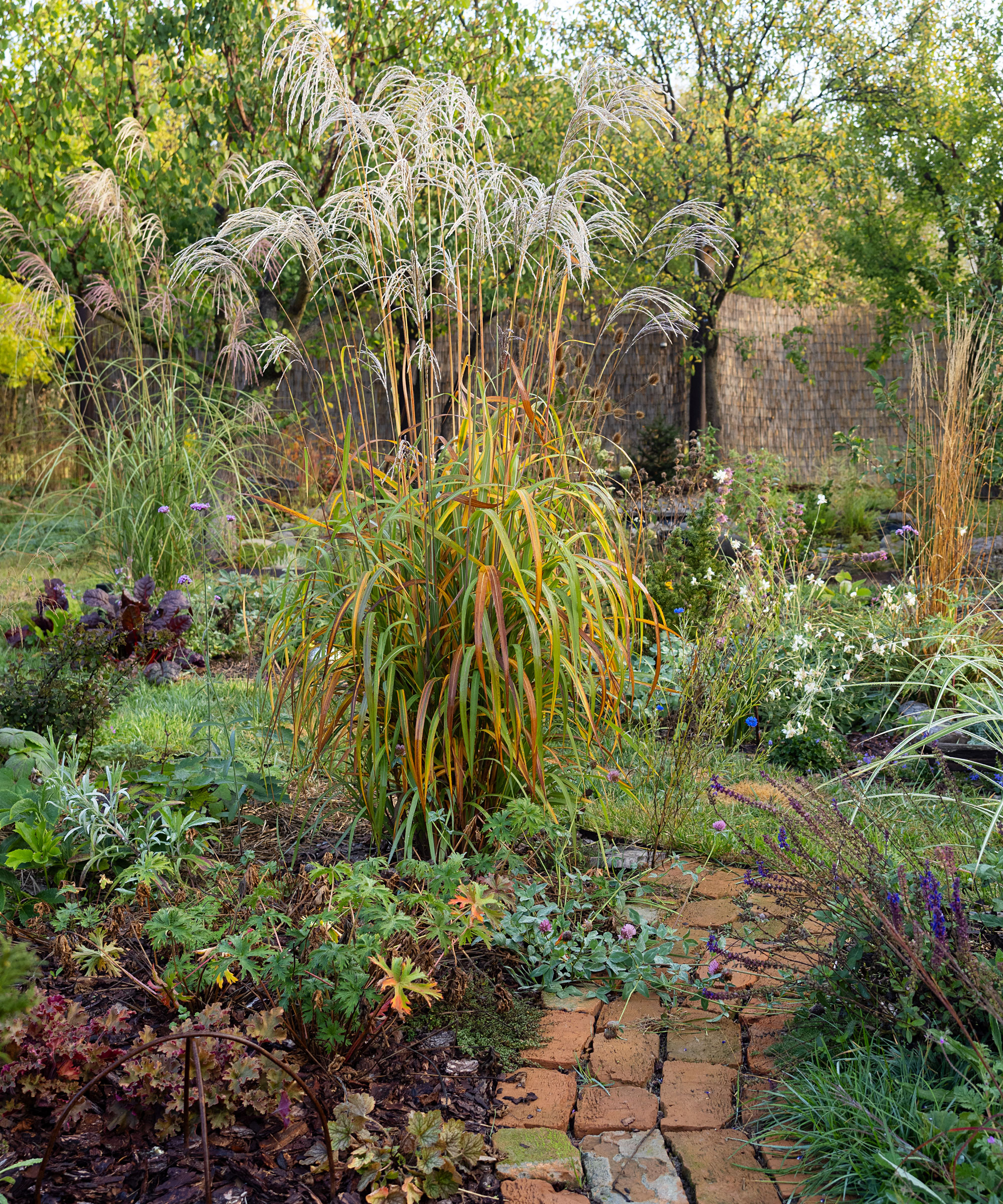
Designers use ‘sight lines’ to direct the gaze through a garden. A sight line is simply where most people might look when viewing a garden, the visual path from a starting point such as a patio. If the sight line in your garden takes you directly to the back boundary, then creating a longer, more meandering journey will make the space look far bigger.
It’s easy to achieve by strategically placing an element that interrupts the sightline, and partially blocks the view. Your eye stops at this destination point, pauses, then looks past it, so the visual path is far longer. In the garden above, graceful ornamental grass Miscanthus sinensis intentionally interrupts the sight line.
The tall ornamental grass also prevents us from seeing what’s immediately behind it, offering the possibility that the space may continue beyond what is immediately apparent, and there’s more to the garden than is first perceived.
Tall Ornamental Grasses
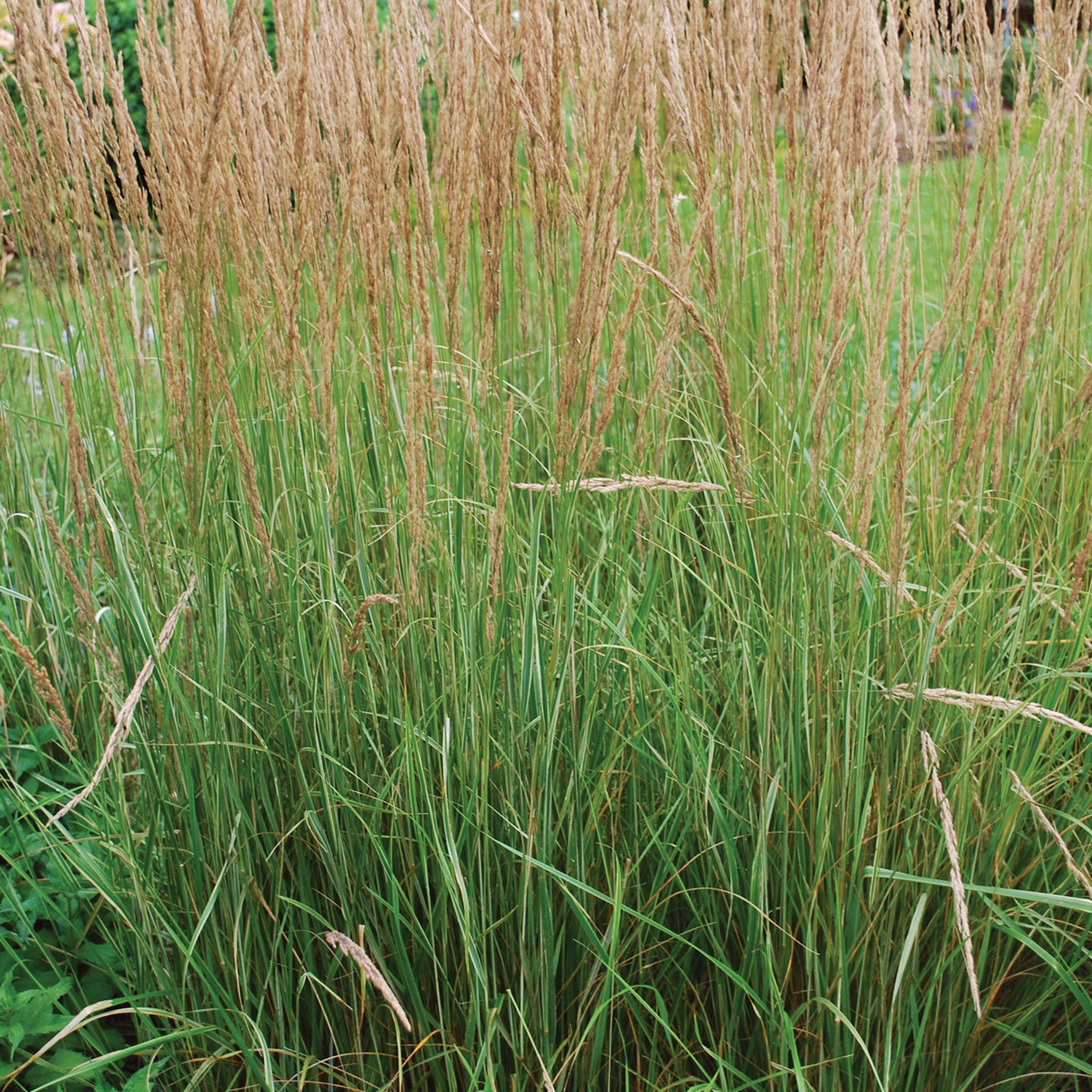 Adored by designers
This feather reed grass greens up quickly and blooms in early summer, with graceful, feathery plumes almost all season and into winter. Grows to 5 feet.
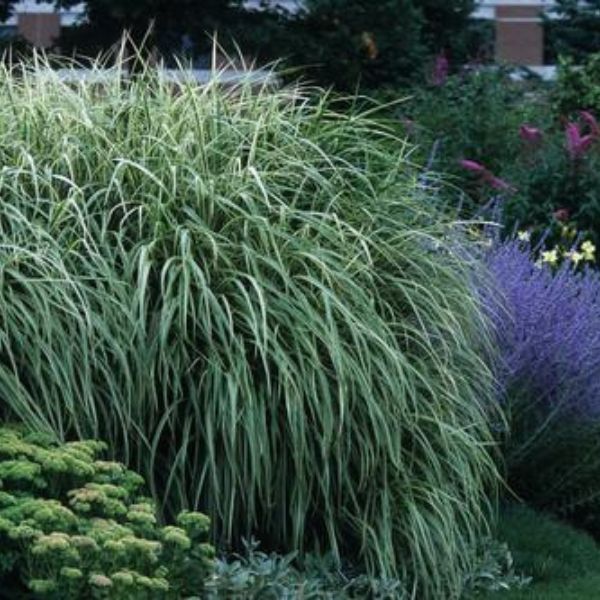 Shivers in a breeze
The cream and green striped blades of Miscanthus sinensis ‘Variegatus’ add year-round color and movement to the landscape. Grows to 6 feet.
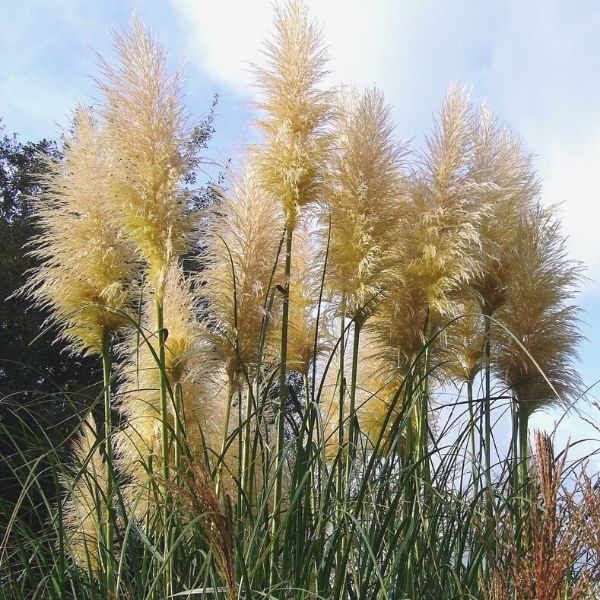 Standout plumes
This dramatic 8-10 foot tall Cortaderia selloana has silvery white plumes from late summer to early fall that are perfect for statement landscapes.
9. Move Borders Away From Boundaries
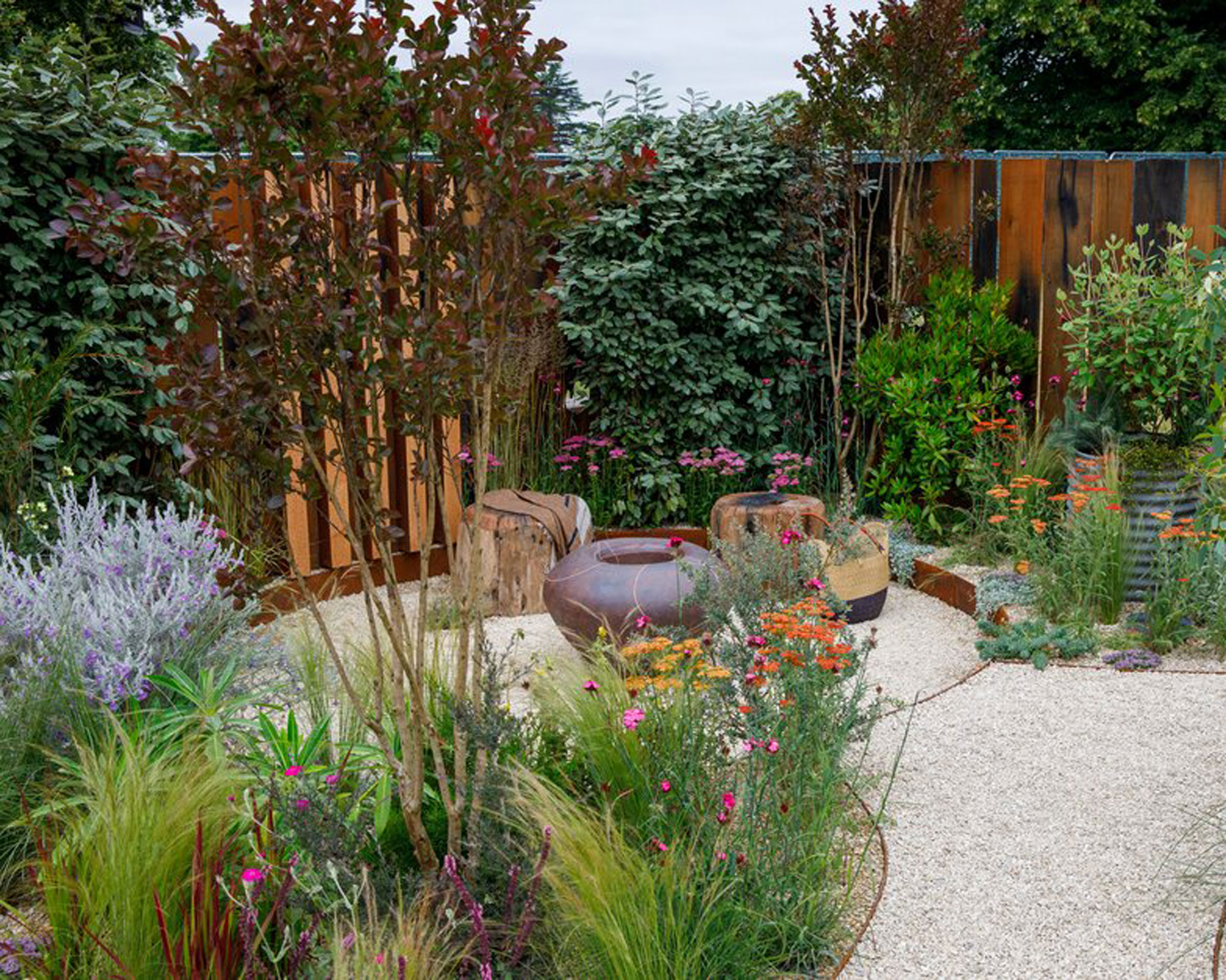
The temptation with a square garden is to push the planting out to the edges of the plot in the hope that an expanse of lawn in the middle will make the space look bigger. But all narrow fence-side borders do is draw attention to the boundaries and emphasize the plot’s square shape.
Instead, it’s a good idea to shape deep flowerbeds that flow away from a boundary, such as the semi-circular bed in the garden above. This not only brings a more immersive – and professional – feel, but allows you to appreciate the planting from all angles.
Now get more insight on garden shape design to make sure you get the most out of your square garden.