If you live in an area that gets wildfires, you take steps to keep fire away. You don’t burn your trash, you don’t let your kids play with matches, and you don’t install highly flammable plants in the landscape. We’ve all seen photos of flames racing through pine forests, even during the growing season.
As you work in the back yard this year, think about firescaping your lawn and garden. There are few absolutes in life, and there’s not a single plant that is 100 percent fireproof. But swapping out plants that burn easily with plants that don’t simply makes sense.
Let’s explore which plants you should avoid and what plants to use instead.
Replacing Flammable Plants
Late summer and fall are good times to do some revisions in the garden to make your landscape less fire-prone. Although summer is a big fire season, autumn is too, as green leaves dry and fall, creating masses of flammable groundcover.
We’ve identified five of the plants you don’t want in your garden during wildfire season. But don’t think we’ll leave you with a bare landscape. We’ve found a great replacement for each flammable shrub you remove.
1. Pine Trees
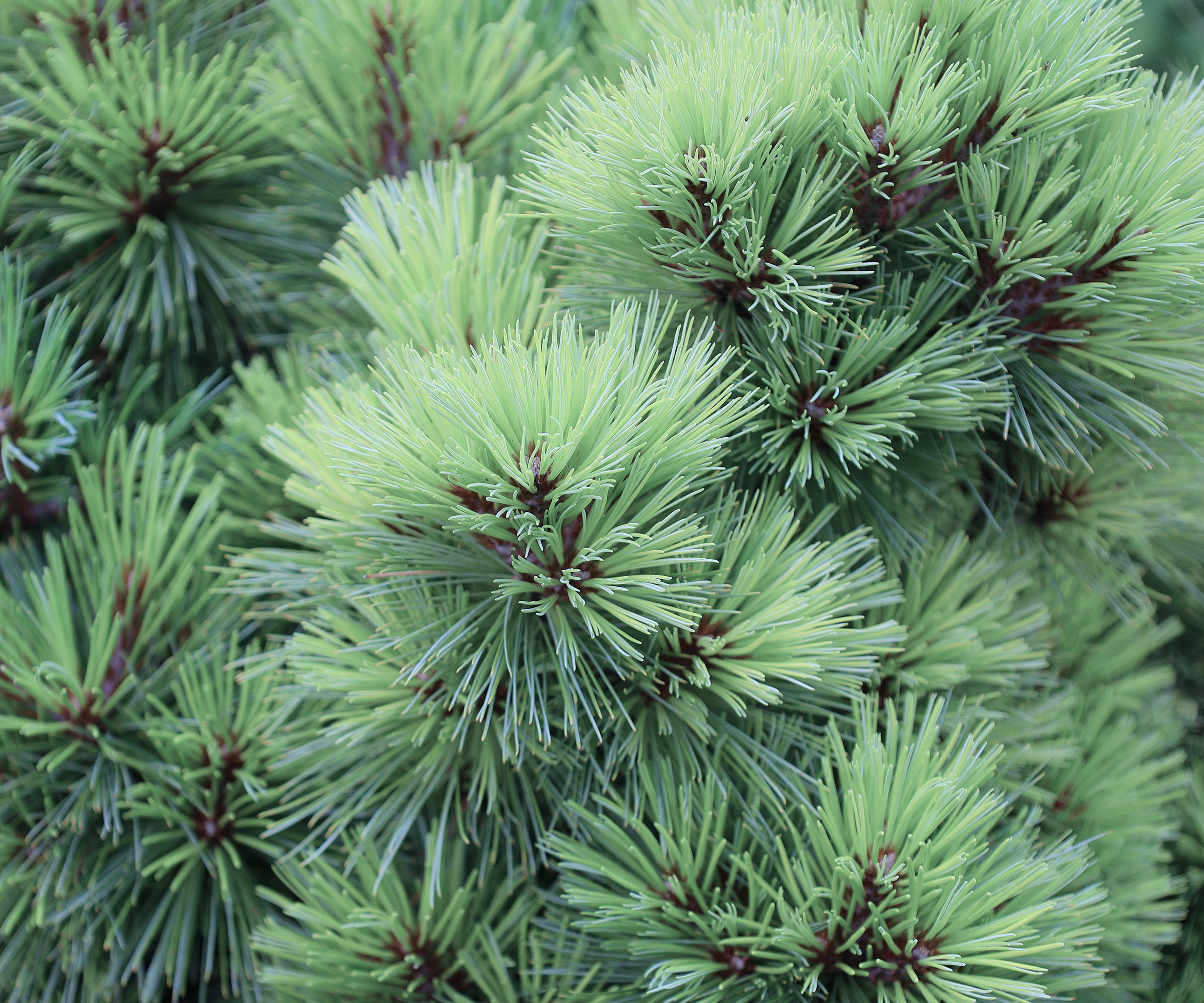
This might not sit well with the kids, but it’s time to say goodbye to all those living Christmas trees – pine or spruce – that you’ve replanted in the yard. Most conifers have needles that contain oils and resins. Pine needles, bark, and wood contain volatile, sticky compounds that burn hot and fast. Firefighters are known to call these trees “fire food”, and they are definitely not the trees you want to have in the backyard as a wildfire approaches.
Pines (Pinus spp.) tend to have low-hanging branches. These act as “fire ladders” to bring ground fires up and into the crowns of the trees. The other problem with these conifers is that they drop dead needles to the ground below them. While pine needles are considered good mulch for acid-loving plants, they are also highly flammable. These dry mats of needles catch fire easily and serve as great fuel for surface fires.
Finally, there are those cool cones. In France, people collect pine cones to use to start the wood fires in their stoves, which is to say that pine cones burn readily too. And in the wild, the burning cones can explode, sending glowing embers flying long distances in the breeze.
Plant Instead: Coast Redwood
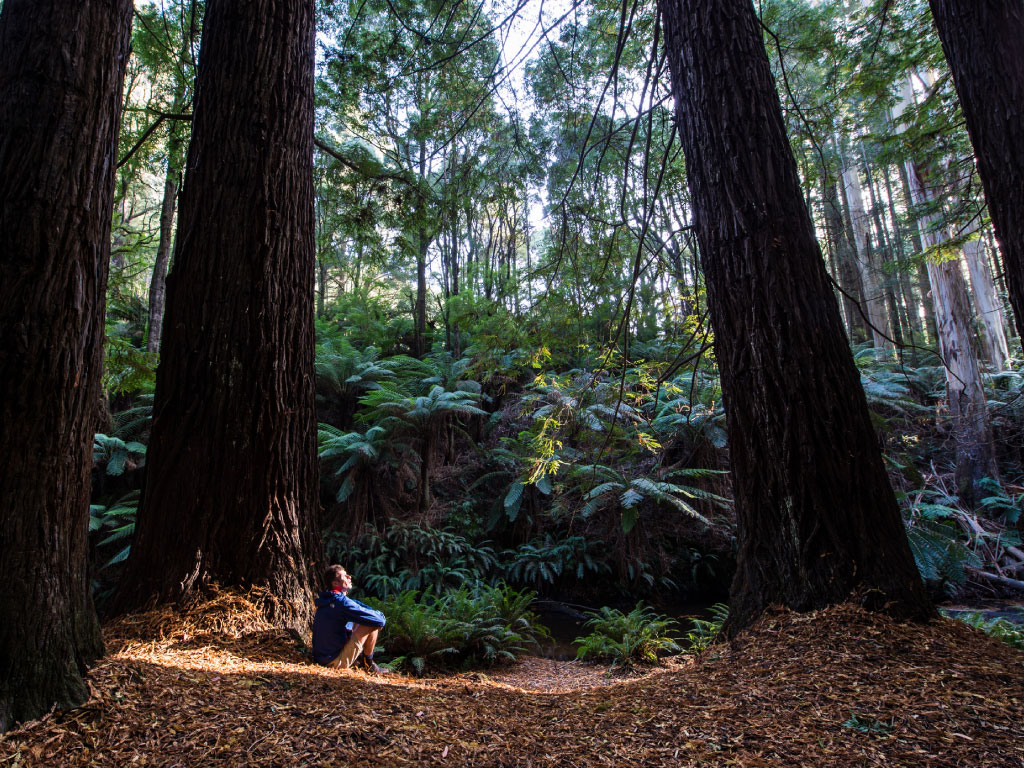
Now not everyone can grow coast redwood (Sequoia sempervirens), but if you live in USDA Hardiness Zones 7-9 in a climate that has mild wet winters and deep-soil moisture, this is your best substitute for pine trees or any conifer. While pines and spruce trees have flammable resins in their needles and bark, redwoods do not. They have developed thick, tannin-rich bark and high moisture content that resist fire. You can grow your own redwood with this kit from Tractor Supply.
2. Rosemary
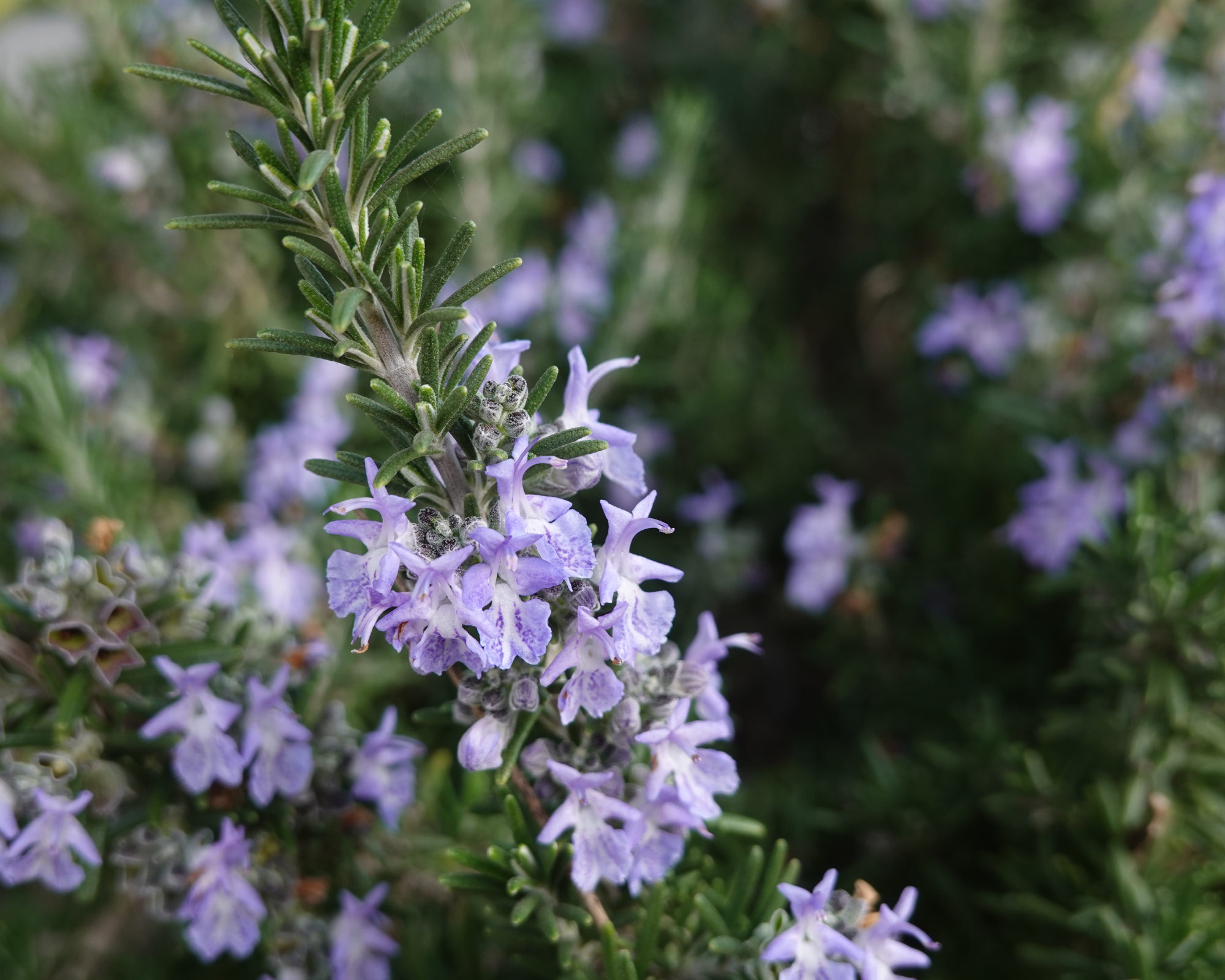
Many of my friends plant rosemary (Salvia rosmarinus) to use for cooking, but I am not among them. I planted a few rosemary bushes for the gorgeous and unexpected indigo flowers and because these herbs never seem to need human attention. In fact, rosemary seems to resent it if you give it water, which makes sense given its native environment in the toasty, dry Mediterranean region of Europe.
But I’ve learned that rosemary (and lavender for that matter) contain oils that are super flammable. Those oils are why they have such a strong, appealing smell. That means that large aromatic bushes can ignite in record time during periods of drought or extreme heat. They are highly combustible.
Plant Instead: Bush Germander
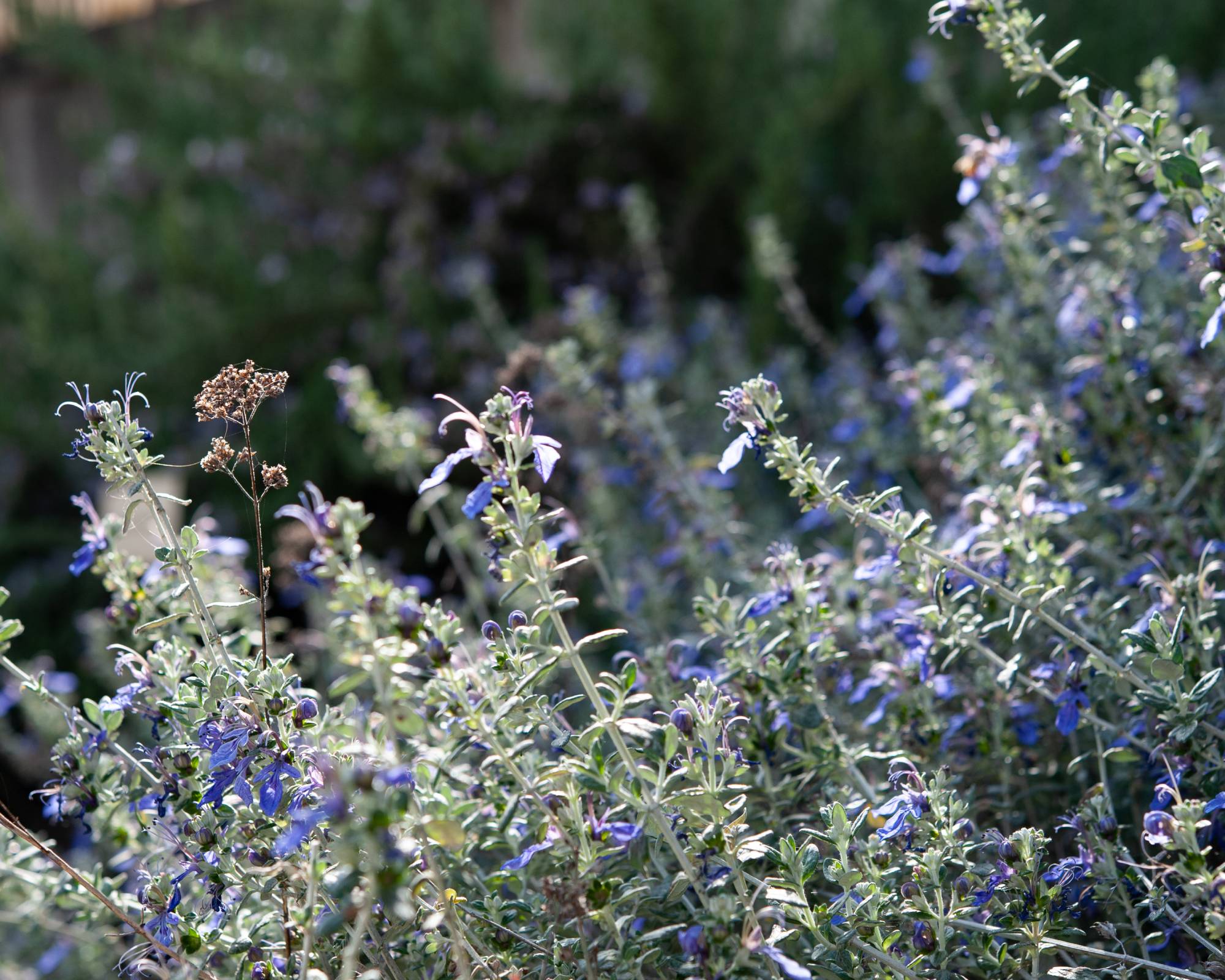
Bush germander (Teucrium fruticans) is a similar, tough plant with aromatic leaves as well as blue summer flowers, and it’s native to the Mediterranean region as well. But this plant is a spreading evergreen shrub in the mint family, containing no volatile oils. That means it doesn’t burn easily. It grows to 3 feet (1 m) tall and twice that wide, offering arching, soft shoots and shiny leaves. Like rosemary, bush germander likes a full sun location, tolerates poor soil, and requires little water.
3. Juniper
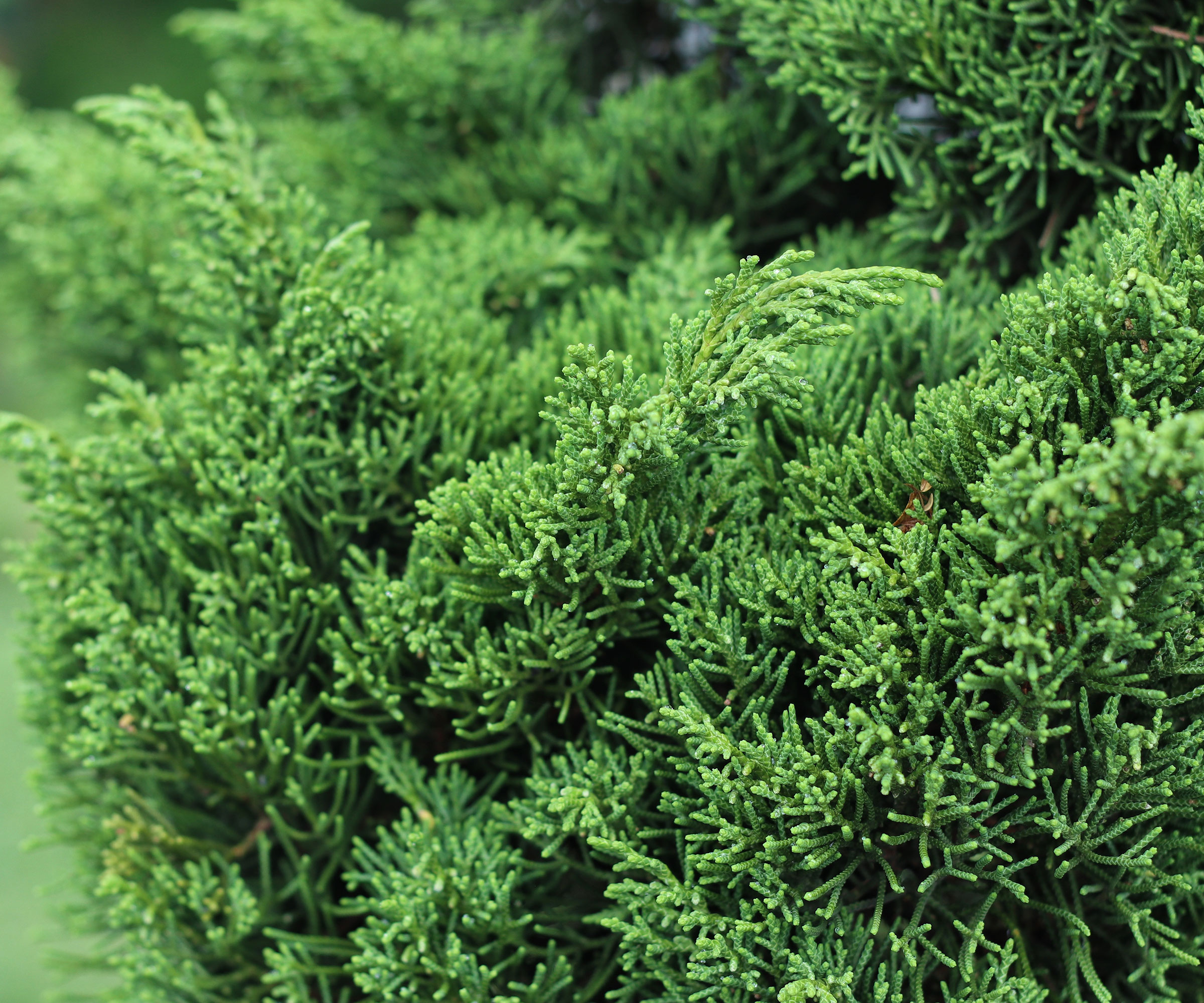
Junipers (Juniperus spp.) have short green needles that are tightly crowded on the twigs. Some varieties are tall shrubs, but many forms of juniper make good ground cover plants in hot, sunny sites.
But they might be the most flammable of garden plants, having a very high content of volatile resins and oils. They also hold onto their dead inner needles inside the dense crown and this accumulation can ignite rapidly and burn with high-heat flames that can ignite structures in the vicinity. They are sometimes called “gasoline bushes” by firefighters. They ignite so explosively that they should be eliminated from any garden in a zone with a high wildfire risk.
Plant Instead: Coyote Brush
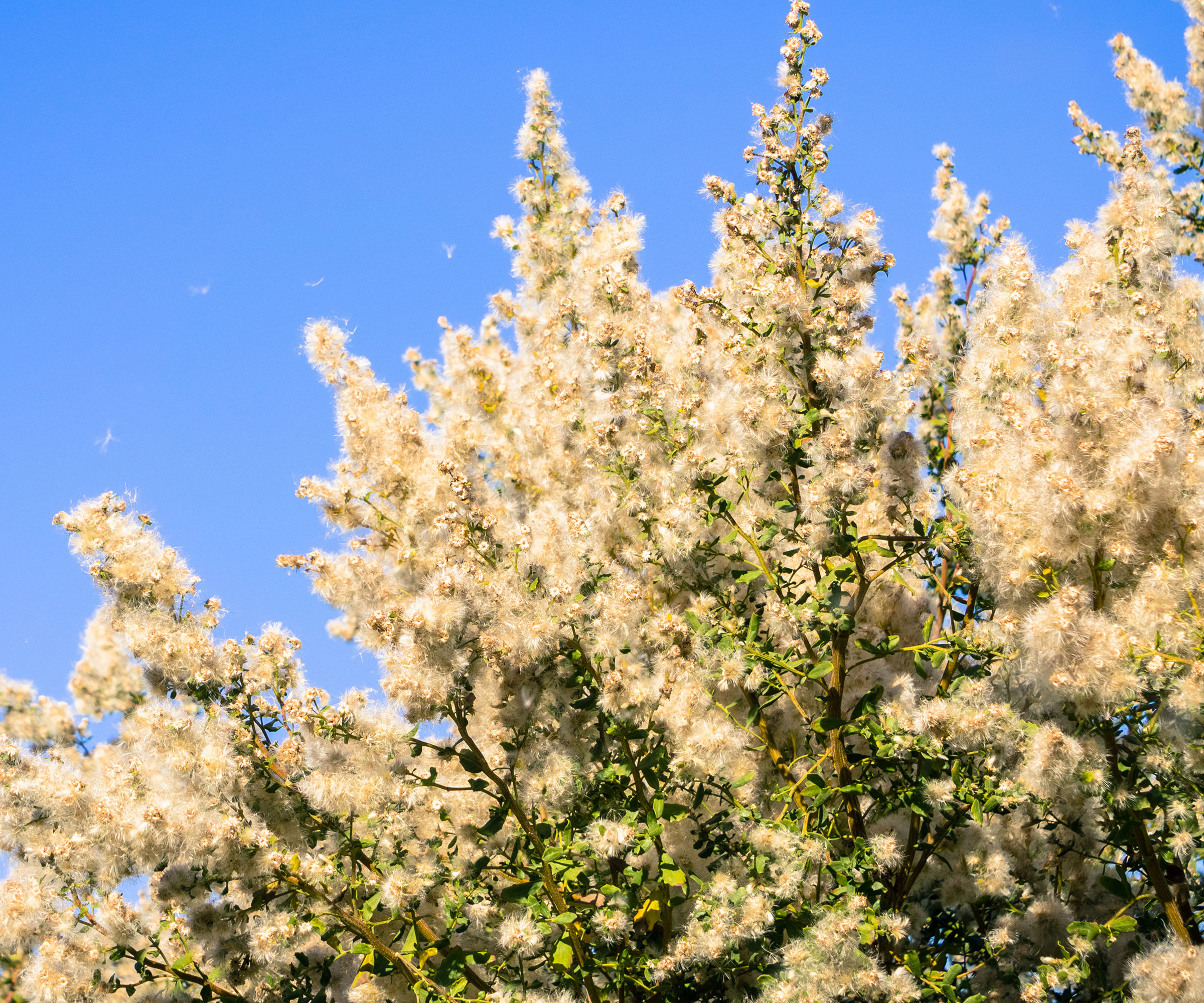
Coyote brush, also called coyote bush, looks a bit like juniper. It’s a hardy evergreen shrub that grows in a variety of dry areas ranging from sand dunes to dry mountain slopes. Like juniper, coyote brush (Baccharis pilularis) comes in upright, shrubby forms and low, spreading forms. No variety has resins and many, like dwarf variety Twin Peaks, are wonderfully dense and fire-resistant groundcover. Coyote brush seeds can be purchased from Sleepy Cat Natives on Etsy.
4. Bamboo
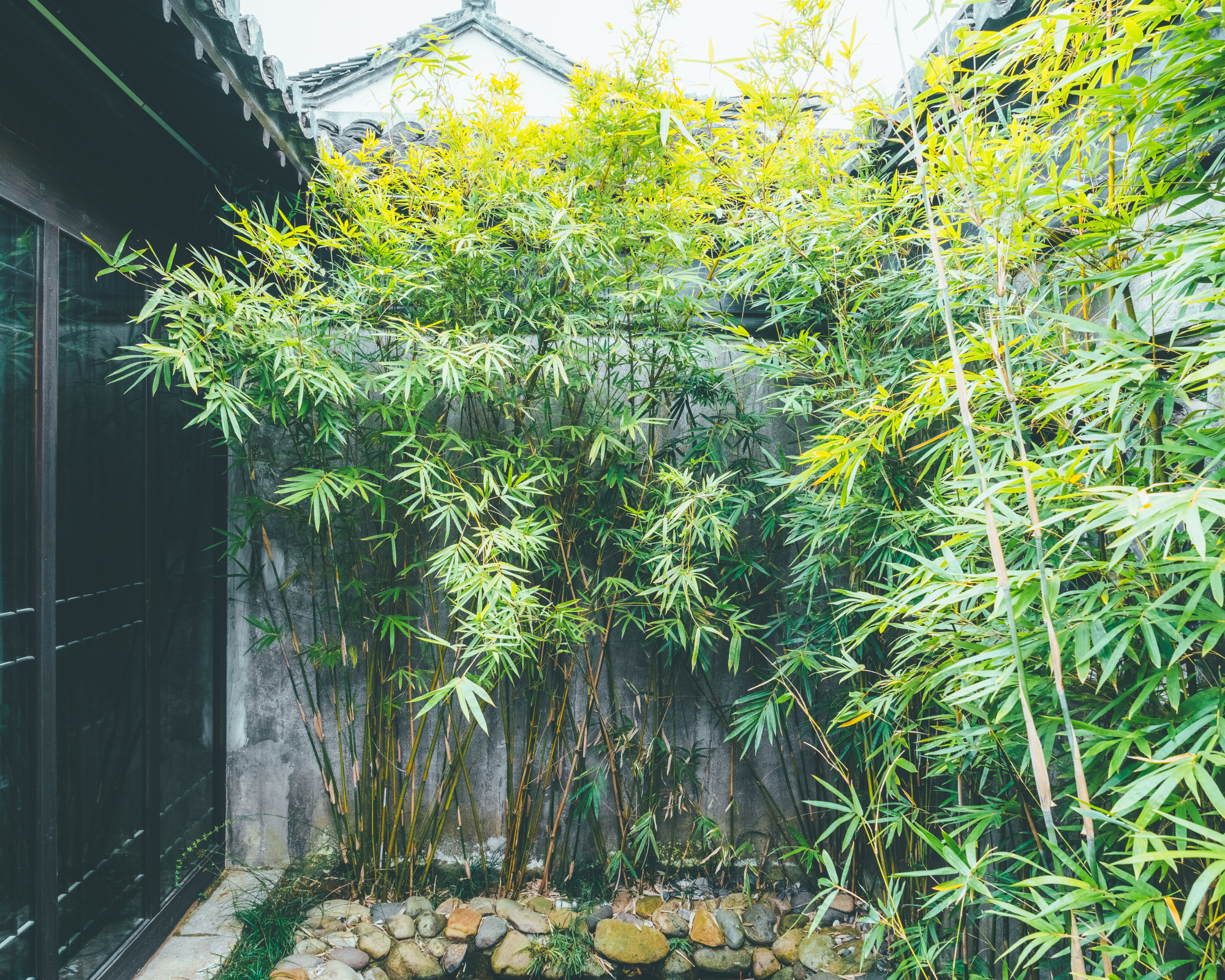
Many people plant bamboo in the landscape as a screen or hedge, but is it a fire hazard? Yes it is.
Seeing bamboo (Bambusa vulgaris) on this flammable list may surprise you, since a live bamboo cane is virtually impossible to burn. An individual live cane will have high silica and water content, making it hard to burn. But the cane quickly loses its moisture during dry, hot, windy weather. And bamboo forms tight clumps of compact clusters of stems that collect dead material, dry leaf litter, fine twig fuel, and dead interior stalks. This creates a serious fire hazard during times of drought and heat.
Plant Instead: Fern Podocarpus
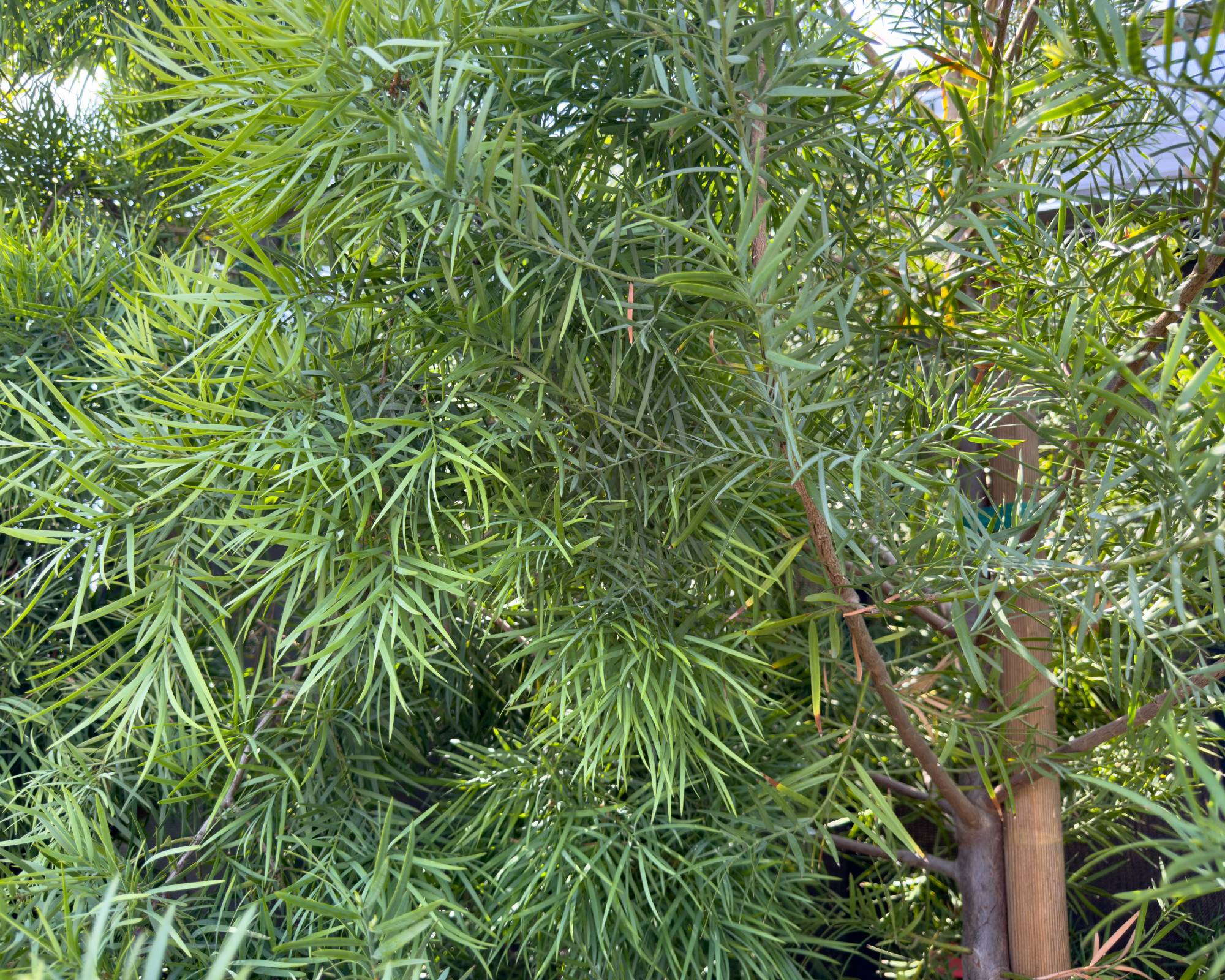
Fern Podocarpus, also known as fern pine, is a great alternative to flammable bamboo. Like bamboo, it can grow quite tall – to 50 feet (16m) – but can be kept smaller with regular pruning. It has narrow, soft leaves that have a high moisture content and does not accumulate dead inner leaves. Unlike bamboo, Podocarpus (Podocarpus gracilior or Afrocarpus gracilior) lacks explosive, heavy resins or volatile oils that feed fast-moving crown fires. Fern pines can be purchased from TropicalPlantsFL on Etsy.
5. Pampas Grass
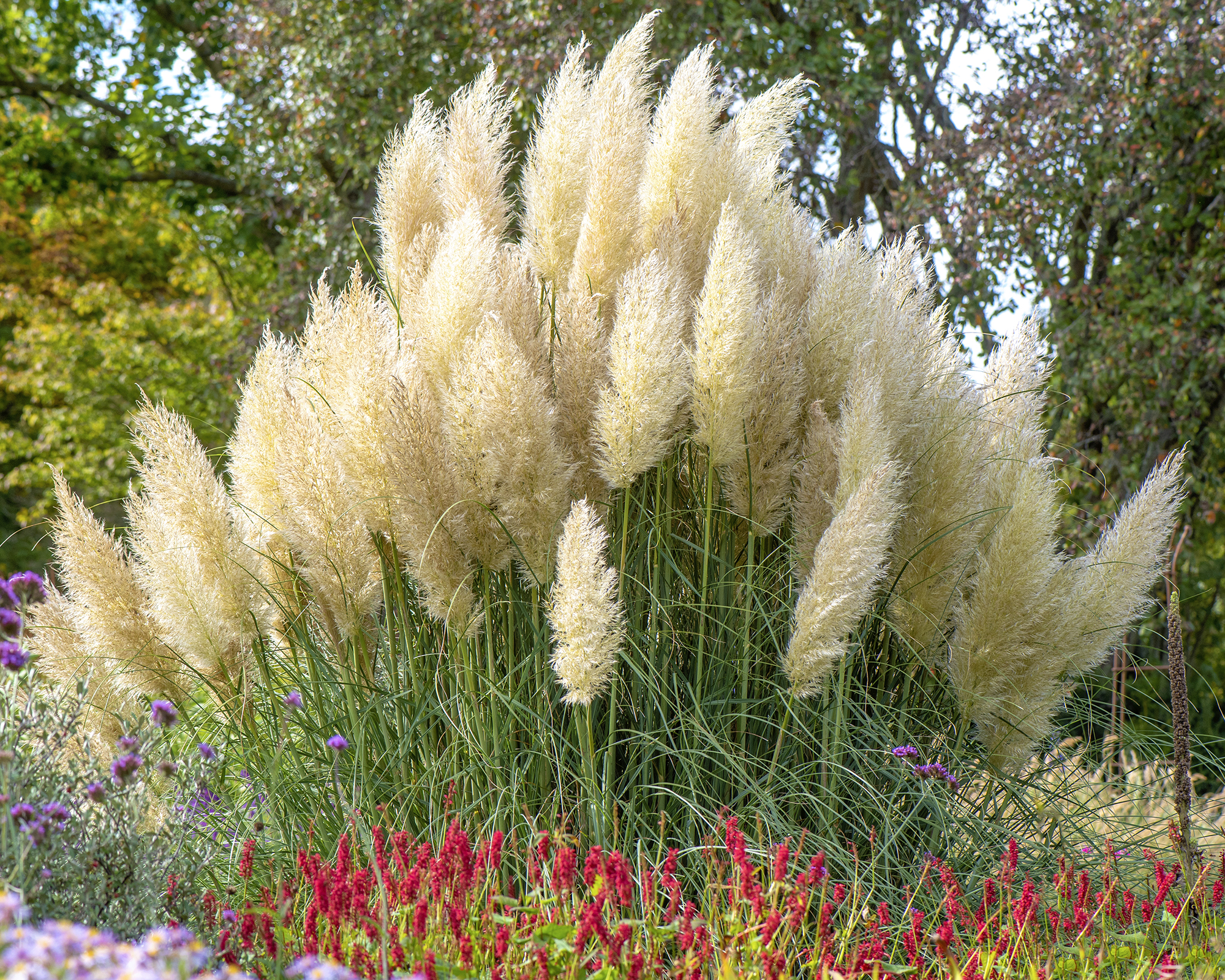
Pampas grass is a tall, popular ornamental grass native to South America. It is known for its gigantic clumps and large, pale, feathery plumes. It can grow taller than the gardener, thrives in full sun, and is widely used in landscaping. But it is known as a fire enabler, thanks to its low moisture content, and volatile oils. Even its growth pattern makes it dangerous in fire-territory, since its airy vertical growth is flammable, easy to ignite, and can become fire torches.
Plant Instead: Pink Muhly Grass
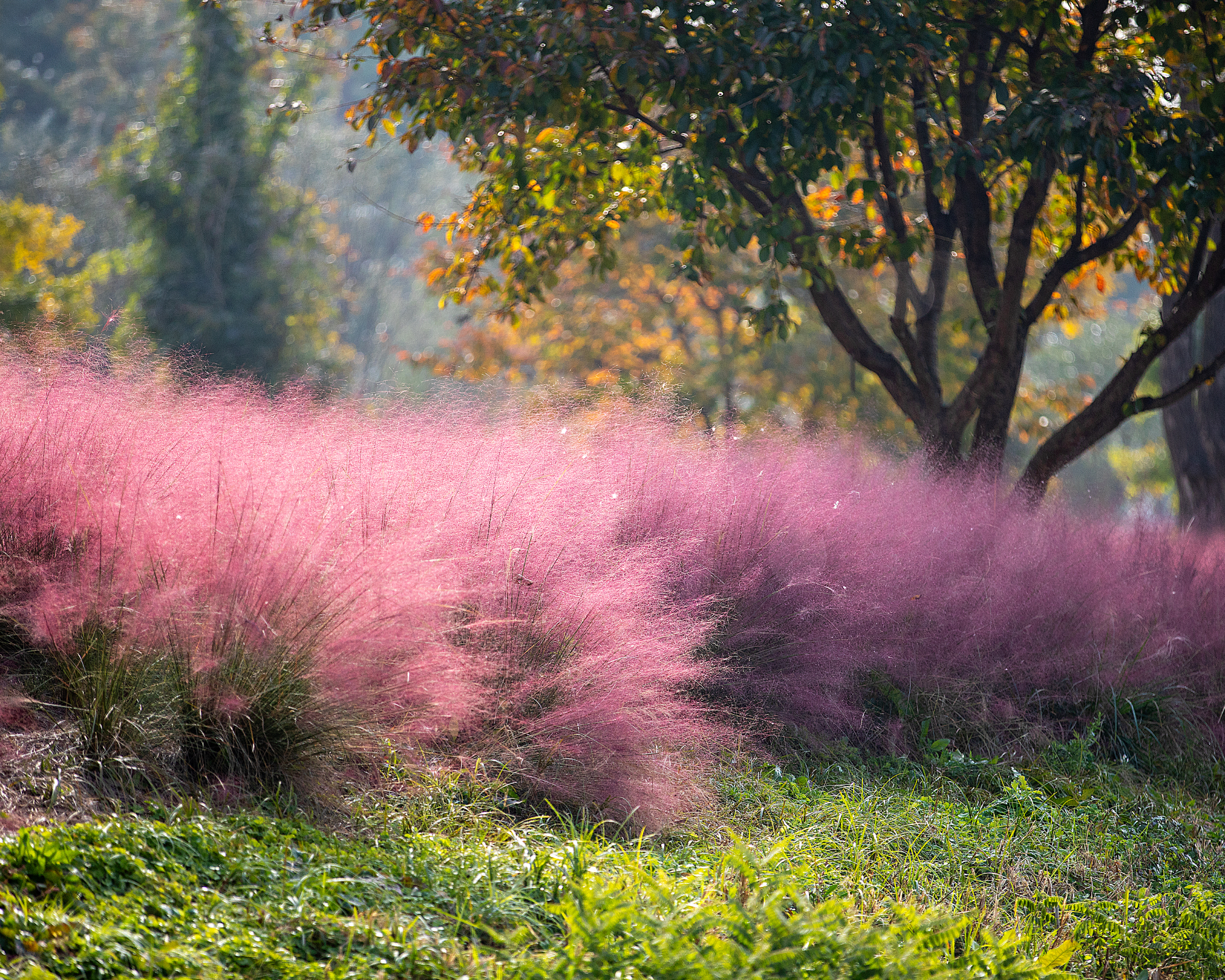
If you are taking out pampas grass, you’ll want to replace it with a safer, fire-smart option that still gives you a vertical accent and soft texture. We suggest pink muhly grass (Muhlenbergia capillaris). It grows in clumps to 3 feet (1 m) tall, offering soft, airy pink flowers. The blooms are lovely, often compared to clouds or plumes. This is a low-ignition, high-moisture perennial that – like pampas grass – grows in full sun locations, but doesn’t present a fire danger. Pink muhly grass can be shipped straight to your door from Garden Goods Direct.