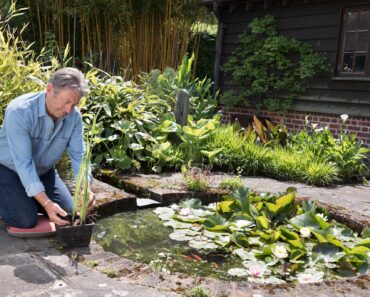
Divide your perennials and grasses now, as growth begins, to enjoy a fabulous bounty of free plants. Nearly all perennial plants and grasses can be propagated by division. Wait until they’ve formed good-sized clumps, usually after they’ve been growing in place for a couple of years, them simply dig up and separate the clump into good-sized chunks for replanting. However, remember that this method or propagation is time-sensitive, and should be done either in autumn when growth has just died back, or in early to mid-spring before growth commences.
Here are six popular plants to divide without delay, and how to do it. There are slight variations on method, depending on the type of plant and its root structure.
Michaelmas daisy

Michaelmas daisy (Symphotrichon) has a woody, fibrous root system which is fairly easy to separate into pieces. First dig up the clump, then divide. The best way to produce divisions without severing roots is to use two garden forks placed back-to-back in the centre of the clump, then lever it apart.
Sedums

Border sedums (Hylotelephium) form fleshy crowns or centres that become dense and overcrowded after several years – a handy indication that division is needed is when the flower stems flop apart. Dig up the plant and then break off the young outer parts of the clump, which often come off by hand. Then cut the centre into several pieces, using a tool such as a small saw or breadknife.
Hostas

Hostas form extremely dense clumps of fleshy roots that are best divided in spring, once the emerging shoots are clearly visible. This means you can create divisions with plenty of buds along with roots. Cut up hostas using a sharp spade or an old hand axe.
Japanese anemones

Japanese anemones are easy and reliable for late summer flowers. This plant is a ‘spreader’, sending out roots to form ever-widening clumps, so simply dig up sections that are obviously separate from the parent plants’ clump.
Ornamental grasses

Ornamental grasses are best divided in spring rather than autumn. For larger ones like miscanthus, which form substantial clumps when mature, use a sharp spade to carve up the clump in situ, rather than ruining your back by trying to dig up the whole plant. Have no fear of being brutal – just make sure each division has plenty of roots and shoot buds, keeping the fresher, younger, outer pieces of the plant and discarding out the old, unproductive centre.
Primroses and polyanthus

Primroses and polyanthus are beloved for their early flowers – prima rosa is Latin for ‘first rose’. As soon as flowering has finished, dig up mature plants that have formed dense clumps of many leafy rosettes. Shake off the soil, then separate into pieces, each with plenty of root and leaf.
Tips for success
Ensure plant roots don’t dry out, so if plants are out of the ground for more time than it takes to complete the job, cover with a tarp or polythene, and pop divided portions into a trug with a bit of water. Replant newly divided plants immediately into soil refreshed with a bucket or two of compost or rotted manure plus slow-release fertiliser. Keep newly planted clumps watered during dry spells for several months to ensure good establishment.