1: Two-flowered raspberry (Rubus biflorus – main image)
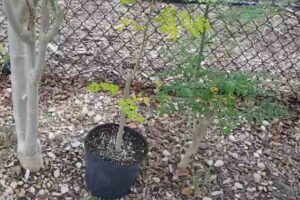
This ornamental shrub features arching, white-flushed stems and attractive foliage. In summer, it produces pairs of white flowers followed by edible red fruits. Unfortunately, it’s also known for its vigorous growth and ability to spread by suckers and self-seeding. Over time, it can form dense thickets, crowding out other plants and making maintenance a challenge. Its robust nature means it can quickly get out of hand if not regularly managed, especially in fertile or moist soils.
Invasiveness rating: 4/5
Type: Shrub
What’s the problem? Two-flowered raspberry spreads by suckering and self-seeding, allowing it to form dense, spreading thickets that can outcompete other plants.
Should I bother? Although decorative and wildlife-friendly, its tendency to spread aggressively makes it risky for smaller gardens or those seeking low-maintenance planting.
Can I get rid of it? It can be difficult to remove completely, as suckers and seedlings often return unless all roots are thoroughly dug out.

2: Cotoneaster
Cotoneasters are evergreen or deciduous shrubs, with arching branches, glossy leaves, and masses of red berries that attract birds. Certain species, such as Cotoneaster horizontalis, have become problematic due to their ability to self-seed prolifically and spread beyond the garden. Birds eat the berries and disperse the seeds, leading to unwanted seedlings in the garden and, in particular, the countryside, where they can outcompete native plants. Some cotoneaster species are listed on Schedule 9 of the UK Wildlife and Countryside Act as an invasive species, and whilst this doesn’t mean you can’t grow it in your garden, it’s a good idea to consider an alternative.
Invasiveness rating: 5/5
Type: Shrub
What’s the problem? Cotoneasters produce abundant berries that are spread by birds, allowing them to self-seed prolifically and invade both gardens and wild areas.
Should I bother? While their berries and foliage are attractive, the risk of these plants spreading out of control and into the wild makes them best avoided, especially near natural habitats.
Can I get rid of it? Seedlings can be pulled up when young, but established plants are difficult to dig out due to their extensive root systems.

3: Poplar (Populus spp.)
Poplars are tall, fast-growing deciduous trees with distinctive fluttering leaves and pale bark. They are often planted for their stately appearance and ability to provide quick shelter or windbreaks. Poplars have a notorious tendency to spread by suckers, sending up new shoots some distance from the parent tree. This can lead to unwanted thickets forming in lawns, borders, or even neighbouring gardens. Their vigorous roots can cause problems with drains and paving, and their sheer size makes them unsuitable for smaller gardens. While impressive in the right setting, poplars often outgrow their welcome.
Invasiveness rating: 5/5
Type: Deciduous tree
What’s the problem? Poplars spread by suckering, producing new shoots far from the original tree, and their roots are highly competitive.
Should I bother? Only in very large gardens or landscapes, as the risk of unwanted spread and root problems is high.
Can I get rid of it? With difficulty. Removing the main tree often stimulates even more suckers, requiring persistent follow-up.

4: Sea buckthorn (Hippophae rhamnoides)
Sea buckthorn is a deciduous shrub, native to some parts of Britain, with silvery leaves and bright orange berries that are rich in vitamins and attract wildlife. While it is valued for its ability to stabilise sandy soils and for its ornamental berries, sea buckthorn is highly invasive outside its native coastal habitats. It spreads rapidly by suckering and can form impenetrable thickets, shading out other plants and altering soil conditions. Sea buckthorn is listed on Schedule 9 of the UK Wildlife & Countryside Act in Northern Ireland and the Republic of Ireland, so although you can grow it in your garden in these countries, you will need to take measures to control it.
Invasiveness rating: 5/5
Type: Shrub
What’s the problem? Sea buckthorn spreads by suckering, forming dense thickets that outcompete other plants and alter soil composition, especially in sensitive habitats.
Should I bother? Despite its ornamental value and wildlife benefits, sea buckthorn is best avoided in gardens near natural habitats or sand dunes due to its invasive nature.
Can I get rid of it? It can be very difficult to eradicate, as suckers readily regrow from any roots left behind, often requiring persistent effort over several years.

5: Russian vine (Fallopia baldschuanica)
Also known as ‘mile-a-minute’, this is a fast-growing climber that can easily smother fences, sheds, and even trees. It produces masses of frothy white flowers in late summer, which can look attractive from a distance. If you need quick cover, this plant could be the perfect solution with its rampant growth, but it can also cause issues. It can spread over several metres in a single growing season, potentially overwhelming other plants and structures. Its stems twine tightly around supports, and it can root wherever it touches the ground, so it’s difficult to contain.
Invasiveness rating: 5/5
Type: Climber
What’s the problem? Its extremely vigorous growth allows it to cover large areas rapidly, and it can root easily from stem sections, helping it spread and dominate.
Should I bother? Despite its quick coverage and showy flowers, the risk of the plant taking over outweighs its benefits for many.
Can I get rid of it? Removing Russian vine is laborious, as it must be dug out thoroughly, and any remaining roots or stem fragments can regrow. Ongoing monitoring is usually required.

6: Running bamboo
Bamboos can be useful in the garden, whether looking for a plant to provide attractive evergreen screening or for striking colourful stems in a border. However, in the right conditions, some bamboos can become a real nuisance. So-called ‘running bamboos’ should be avoided; they spread via underground rhizomes and can be very aggressive. You may find new shoots several metres from the original plant, and, if not controlled or avoided altogether, can become impossible. Particular species to avoid include Arrow, Narihira, Phyllostachys, Sasa and Sasaella. Clump-forming bamboo should be less troublesome.
Invasiveness rating: 5/5
Type: Grass
What’s the problem? Some species spread rapidly via underground rhizomes, which can be long and pop up at a great distance from the original plant.
Should I bother? Most will provide quick screening, but their invasive nature means these species are probably best avoided.
Can I get rid of it? With difficulty, as rhizomes left in the soil can regrow. Complete removal may take many years.

7: False acacia (Robinia pseudoacacia)
False acacia, or black locust, is a deciduous tree with attractive, pinnate leaves and fragrant white flowers in late spring. Whilst often planted for its ornamental value, it is also nitrogen-fixing, meaning it enhances soil fertility. But it’s not all good news: it’s highly invasive, spreading aggressively by suckers and self-seeding. The tree forms dense thickets that can outcompete native plants, making it difficult for other species to thrive. It’s also harmful to pets and humans if eaten.
Invasiveness rating: 4/5
Type: Tree
What’s the problem? It spreads vigorously by suckers and seeds, forming dense stands that displace other vegetation.
Should I bother? Rarely, unless you have a very large area and are prepared for ongoing control.
Can I get rid of it? Difficult, as cutting stimulates more suckers and seedlings can persist for years.

8: Aspen (Populus tremula)
Aspen is a deciduous tree native to the UK, famous for its trembling, rounded leaves that flutter in the slightest breeze. It is valued for its wildlife benefits and attractive autumn colour. However, aspen can become invasive in gardens due to its tendency to produce suckers, which can appear many metres from the original tree. These suckers can quickly take over lawns, borders, and even neighbouring properties, forming dense thickets that are difficult to control. Its root system is extensive and persistent, making it problematic if planted too close to buildings.
Invasiveness rating: 4/5
Type: Tree
What’s the problem? It spreads vigorously by suckers, producing new shoots far from the parent tree.
Should I bother? Only in large, wild areas; not suitable for most gardens due to its spreading nature.
Can I get rid of it? Very difficult, as suckers continue to appear even after the main tree is removed.

9: Stag’s horn sumach (Rhus typhina)
This striking shrub has glorious displays of bold, feathery foliage that turns brilliant shades of orange and red in autumn. It is often grown for its ornamental value and dramatic seasonal colour. Unfortunately, sumach is notorious for producing suckers, which can pop up several metres from the parent plant and quickly form dense thickets. These suckers can invade lawns, borders, and even neighbouring properties.
Invasiveness rating: 4/5
Type: Shrub
What’s the problem? Spreading by sending suckers over a large area can form dense thickets that are difficult to control.
Should I bother? The vivid autumn colour is tempting, but the plant’s aggressive suckering makes it unsuitable for small or low-maintenance gardens.
Can I get rid of it? The suckers must be repeatedly dug out, and even small pieces of root left behind can regrow.

10: Leyland cypress (× Cuprocyparis leylandii )
This fast-growing evergreen conifer with feathery, dark green foliage is a popular choice for hedging and screening. Very fast-growing, with a dense, upright habit, it’s ideal for providing privacy in a short time. But be warned, though, fast growth can also cause problems. Leyland cypress quickly outgrows its allotted space, creating dense shade and overshading surrounding plants. If left unchecked, it forms an impenetrable barrier with roots competing aggressively for water and nutrients, potentially affecting the ability of other plants to thrive. Regular maintenance is crucial!
Invasiveness rating: 4/5
Type: Tree
What’s the problem? It grows extremely quickly, often several feet a year, and can easily smother or outcompete other plants, becoming too large for most gardens. It’s also a skin allergen for people and pets.
Should I bother? The rapid growth and maintenance required outweigh the benefits of quick screening.
Can I get rid of it? Mature Leyland cypress is difficult to remove due to its size and extensive root system, often requiring professional help.

11: Snowberry (Symphoricarpos albus)
Snowberry is a suckering shrub, known for its clusters of pure white berries from autumn into winter, providing seasonal interest and food for wildlife. It will grow almost anywhere, from poor soils to shaded spots, so it’s a popular choice for informal hedges or ground cover under trees. But it can become a challenge to control, with long underground runners which can produce suckers far from the parent plant. Over time, snowberry can invade lawns and borders, often proving stubbornly persistent and difficult to remove completely once established.
Invasiveness rating: 4/5
Type: Shrub
What’s the problem? Snowberry spreads by producing suckers on long underground runners, allowing it to colonise large areas and crowd out other plants. Do not grow in or near the countryside. Harmful is eaten.
Should I bother? Although its berries are attractive and it’s easy to grow, its invasive nature can make it more trouble than it is worth for many gardeners.
Can I get rid of it? Snowberry is hard to eradicate, as runners and suckers must be carefully dug out. It can take several years to fully remove it.

12: Ivy (Hedera helix)
Ivy is a familiar sight, prized for its evergreen leaves and ability to provide year-round cover for walls and fences. The glossy, lobed foliage offers shelter for wildlife and helps green up shady corners. But ivy can become a problem; it climbs by means of aerial roots, which cling tightly to surfaces and can damage brickwork, wooden fences, and even trees. Ivy can also spread across the ground, rooting at nodes and forming dense mats that suppress other plants. Left to its own devices, it can overwhelm borders and become almost impossible to remove from hard surfaces.
Invasiveness rating: 4/5
Type: Climber
What’s the problem? Ivy’s ability to root at multiple points and cling to surfaces allows it to spread rapidly both vertically and horizontally, often at the expense of other plants. Harmful to pets and people if eaten and is a skin allergen.
Should I bother? While it has superb wildlife value, its potential to spread means it is best managed with care or avoided in small, low-maintenance gardens.
Can I get rid of it? Ivy is difficult to eradicate, as it regrows from any remaining roots or stems. Removal from walls and trees can be especially troublesome and may take several attempts.

13: Plume poppy (Macleaya cordata)
This striking perennial has tall, airy plumes of flowers and grey-green foliage. It can reach impressive heights, making it a bold feature in the garden. However, its vigorous spreading habit, particularly in sandy soils, can quickly cover large areas. Once established, it can be very difficult to control or remove, as even small fragments of root can regenerate. Its imposing size and spreading nature mean it is best suited to large gardens or areas where it can be allowed to roam freely.
Invasiveness rating: 4/5
Type: Perennial
What’s the problem? It spreads aggressively by underground rhizomes, quickly forming dense colonies that can overwhelm other plants and are hard to contain.
Should I bother? Plume poppy is impressive in size and appearance, but the risk of it taking over is too great for most gardens unless you have ample space. It is particularly troublesome on sandy soils.
Can I get rid of it? It is very difficult to remove. Rhizomes break easily when dug up, and any fragments left behind will regrow, requiring persistent effort to control.

14: Gardener’s garters (Phalaris arundinacea var. picta)
Commonly known as gardener’s garters, this decorative grass has striking green-and-white striped leaves. It is often used for its bold foliage and ability to grow in a range of conditions, including wet soils. However, it is a vigorous spreader, sending out creeping rhizomes that quickly colonise large areas. If not contained, it can become a serious problem, overwhelming other plants and proving difficult to eradicate. Its resilience and adaptability make it particularly troublesome in gardens where space is limited or where other plants may be crowded out by its aggressive growth.
Invasiveness rating: 4/5
Type: Grass
What’s the problem? It spreads rapidly via creeping rhizomes, outcompeting other plants and proving difficult to contain.
Should I bother? The striking foliage is attractive, but the risk of it taking over borders or damp areas is high unless you are prepared to manage it closely.
Can I get rid of it? It is challenging to remove. Rhizomes can travel far from the original clump, and any fragments left in the soil will quickly regrow.

15: Greater periwinkle (Vinca major)
Greater periwinkle is an evergreen ground cover plant with glossy leaves and attractive purple-blue flowers. It is often used to cover large areas, especially in difficult sites such as slopes or under trees. It spreads rapidly by creeping stems that root as they go, quickly forming dense mats that can smother other plants. This vigorous growth makes it difficult to control, and it can become a serious nuisance if not kept in check. Once established, it is hard to remove, as any fragments of stem left behind will root and grow.
Invasiveness rating: 4/5
Type: Sub-shrub
What’s the problem? It spreads by creeping stems that root at the nodes, allowing it to form extensive mats that crowd out other plants.
Should I bother? It provides effective ground cover, but the risk of it overwhelming borders and lawns is high unless you have large areas to fill.
Can I get rid of it? It’s hard to eradicate; fragments of stem left in the soil will readily root and regrow, so complete removal requires persistence.

16: Green alkanet (Pentaglottis sempervirens)
Green alkanet is a perennial with bristly leaves and clusters of bright blue flowers that resemble forget-me-nots. It’s tolerant of shade and poor soils, making it a useful ground cover plant. However, it self-seeds prolifically and can spread rapidly, forming dense clumps that are difficult to remove. Its deep taproots make digging it out a challenge, and any plants left to set seed will quickly multiply. While its flowers are attractive and beneficial to pollinators, its invasive tendencies mean it can become a persistent nuisance in borders and shady corners.
Invasiveness rating: 4/5
Type: Perennial
What’s the problem? Green alkanet self-seeds readily and develops deep roots, allowing it to spread quickly and form persistent clumps that are hard to remove.
Should I bother? It is useful for ground cover and pollinators, but the risk of it becoming a persistent weed is high if not managed carefully.
Can I get rid of it? It is difficult to remove fully. The deep roots make digging laborious, and any plants left to seed will quickly recolonise the area.

17: Crocosmia × crocosmiiflora
Commonly known as montbretia, this perennial has sword-shaped leaves and arching stems of vibrant orange or red flowers in late summer. It’s easy to grow and will naturalise in borders and wild areas. However, montbretia spreads rapidly by forming dense clumps of corms, which multiply underground, quickly taking over a border, crowding out other plants. It can be challenging to control, as corms are often left behind during removal, which can lead to the plant becoming a nuisance.
Invasiveness rating: 3/5
Type: Perennial
What’s the problem? Montbretia spreads by producing numerous underground corms, which multiply rapidly and can quickly form large, dense clumps that outcompete other plants.
Should I bother? It offers reliable late-summer colour and is easy to grow, but it can take over borders unless you are prepared to manage its spread.
Can I get rid of it? Montbretia is difficult to remove completely. The small corms are easily missed when digging, and any left behind will soon regrow.

18: Cherry laurel (Prunus laurocerasus)
Cherry laurel is a popular evergreen shrub with glossy, dark green leaves, which is useful as a dense, year-round hedge. It produces clusters of white flowers followed by black berries. While attractive and effective as a screen, cherry laurel can quickly become a problem. Its vigorous growth forms large, impenetrable thickets, and it can self-seed prolifically. The dense shade it casts suppresses other plants, and its roots can also be quite competitive, making it difficult for anything else to establish nearby. Regular pruning is a must to keep it in check.
Invasiveness rating: 3/5
Type: Shrub
What’s the problem? It grows rapidly, forms dense thickets, self-seeds, and shades out other plants, suppressing competition. It is a particular problem if it spreads from a garden into natural woodland, where it can be detrimental to native woodland plants. Harmful to people and pets if eaten.
Should I bother? Only if you are prepared for regular, heavy pruning; otherwise, it can quickly get out of hand.
Can I get rid of it? Challenging, especially once established, as it resprouts from stumps and roots.

19: Japanese anemone
Japanese anemones are elegant perennials with pink or white flowers late in the season, providing valuable colour and nectar for pollinators when little else is in bloom. However, they spread by underground runners and can quickly become unmanageable, particularly in sandy soils where their roots travel easily. Once established, they form large clumps that are tricky to dig out and will reappear even when you think you’ve removed them. Japanese anemones are ideal if you have space to spare or if you’re willing to contain their spread.
Invasiveness rating: 3/5
Type: Perennial
What’s the problem? Japanese anemone spreads via underground runners, forming large, persistent clumps that can outcompete other plants and be challenging to remove.
Should I bother? They are beautiful and valuable for late-season interest, but the risk is high for small gardens or those wanting low-maintenance borders.
Can I get rid of it? They are hard to remove, as their underground runners can break and regrow. Complete removal usually requires several years of persistent digging.

20. Bear’s breeches (Acanthus mollis)
Also known as bear’s breeches, this large, architectural perennial has glossy, deeply lobed leaves and striking flower spikes. It is often grown at the back of borders where its bold foliage can create a dramatic effect. Although it does not spread aggressively above ground, its roots run deep and wide. Once established, it can be very difficult to move or eradicate, as any small piece of root left behind may quickly develop into a new plant. The plant’s robust nature means it can thrive in a variety of garden soils and conditions.
Invasiveness rating: 3/5
Type: Perennial
What’s the problem? It develops deep, persistent roots, and when disturbed or moved, fragments of root left behind can regenerate into new plants, making it hard to fully remove.
Should I bother? If you have no plans to move the plant, it can make a great bold, trouble-free addition to your garden, but if you do, then the risk of it regrowing from root fragments may outweigh the benefits.
Can I get rid of it? With difficulty, the deep roots are hard to dig out entirely, and any remaining fragments may quickly regrow, requiring repeated efforts to control.