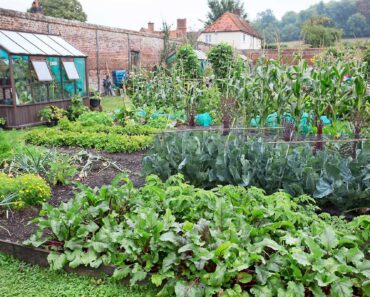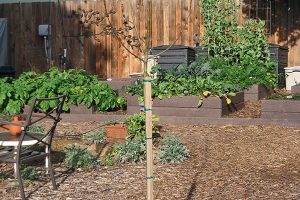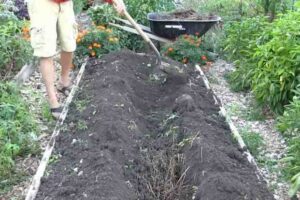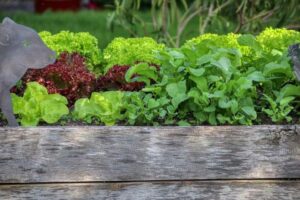
Vegetable beds are a productive and low-maintenance option for growing fruit and vegetables. They can be at ground level or raised to a variety of heights, and divided by paths that may be grass, paving or wood chippings. Beds with a maximum width of 1.2m wide can be worked from paths on either side without the need to stand on and compact the soil. This means there’s no need to dig the soil, so it stays in great condition. Winter is a good time to get ahead and get your beds in prime condition for the growing season, saving you time in spring.
Here’s what to do:
Refresh edges and paths

Check the structure of raised beds and replace or repair any wood that has started to rot. For beds in grass, use a half-moon edging tool to cut crisp new edges, then reduce future maintenance by installing an edging strip which sits just below grass level so the mower can run over the top. Sweep paving and pressure wash if needed to remove dirt and algae that can make slabs slippery.
- Buy a half moon edging tool from B&Q
Clear old crop debris

Removing old crops is a traditional winter task, thought to prevent diseases and pests from building up. However, we now know that leaving old plants intact over winter creates homes for wildlife, including beneficial insects like ladybirds and lacewings, which eat aphids. What’s more, leaving crops to rot slowly back into the earth mimics natural processes, and is good for the soil. If you need to clear beds for early planting then do so, but make sure you also leave some fallow until spring – this will benefit you in the long term as there will be more insect predators on hand when you need them. Dig up or rake off crops that have died, wilted, or bolted (run to seed) and put them on the compost heap. Put any diseased plant material in a ‘hot’ composter or your council green waste collection.
Remove weeds

Using a digging fork, lift all the roots of perennial weeds like couch grass, creeping buttercup, bindweed and nettles. Don’t add these to the compost heap, compost them in old polythene sacks instead, turning over the sack top to exclude light, and leave them to rot down for at least a year. Clear annual weeds with a hoe, you may need to remove them to stop them regrowing in the soil. If seeds have already developed on the plants, put them in a ‘hot’ composter or leave out for your garden waste collection.
- Buy a digging fork from B&Q
- Buy a hoe from Harrod Horticultural
Spread mulch

Organic mulches, such as home-made compost or well-rotted manure, protect the soil from extremes of weather and will be taken deep into the ground by worms and other soil organisms, boosting soil health. Home composting your garden waste and leaves is a great way to create plenty of mulch, or you can buy in well-rotted manure or composted green waste (both should be at least six months old). Spread a layer at least 8cm thick. Avoid using manure where you’ll be growing root crops, particularly carrots, as this causes them to fork.
Warm the soil

Put light-excluding material on your beds to keep soil clean and weed-free, and to warm it up ready for spring sowing. Plastic weed membrane is available but it frays at the edge and results in small pieces of plastic entering the environment, and it’s difficult to remove. Biodegradable weed control matting, made of materials such as hessian, jute, paper, or wool, is much better for the environment. Or, if you can get hold of large brown cardboard boxes for free, these make a great soil cover when flattened, with all tape removed, and laid with the edges overlapping. Come spring, just add the cardboard to your compost heap, or place soil or compost over it and plant directly into that.
- Buy biodegradable weed membrane from British Hardwood