
The Indian bean tree (Catalpa bignonioides) is native to southeastern parts of the United States, including Florida, Alabama, Georgia and Louisiana. The ‘Indian’ part of the name relates to the botanical name given by the European botanist who first recorded it. He named it after the local native American (Red Indian) tribe, Catawba, although he incorrectly wrote ‘Catalpa’.
Indian bean tree grows into a large, domed tree growing up to 12m in its native range (typically smaller in Britain). It’s grown in UK gardens for its large, heart-shaped leaves, which become smaller as the tree matures. Unusually, the leaves don’t appear until late June, and they have extrafloral nectaries on the undersides, which secrete nectar. These are followed by masses of white, horse chestnut-like flowers, with pink and yellow markings. From late summer, long (up to 45cm) runner bean-like pods develop, which burst as they mature, releasing silvery winged seeds.
How to grow Indian bean tree
Grow Indian bean tree in a sheltered spot in full sun and fertile, well-drained soil. Lightly prune annually to keep the leaves growing large, and mulch annually with well-rotted manure or compost.
Where to grow Indian bean tree

Grow Indian bean tree in a sheltered spot in full sun. It works well as a focal point in the centre of a lawn, and is excellent for casting much-needed shade in summer. It also makes a great backdrop for other plants at the back of a border.
How to plant Indian bean tree
Plant Indian bean tree from spring to autumn.
- Dig a hole and loosen soil around the edges so the roots can penetrate into the soil
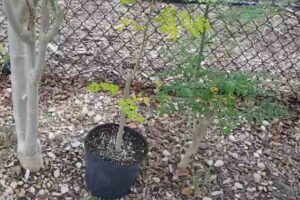
- Remove the tree from the pot and loosen the roots at the bottom. Plant the tree so the top of the rootball sits level with the surface of the soil
- Backfill with soil, firm gently and water well
- Mulch around the base of the tree with well-rotted manure or compost, making sure it doesn’t come into contact with the trunk of the tree
How to care for Indian bean tree

Mulch annually with well-rotted manure or compost. Protect young plants from frost as young wood can be susceptible to frost damage.
Indian bean trees don’t need regular pruning, but an annual trim will ensure the leaves stay large. Otherwise, remove weak, crossing and damaged branches. Once mature, you may want to remove the lower branches, so you can sit beneath it.
Growing Indian bean tree: problem-solving
Indian bean trees suffer few problems, but may be affected by aphids and mealybugs. A healthy tree should be able to shrug off attack, while natural predators such as house sparrows will help control them.
Bear in mind that the combination of large leaves, flowers and pods result in a lot of litter around the tree, so you may spend more time than you would expect, clearing beneath it.
Advice on buying Indian bean tree
- Indian bean tree may be available from your local garden centre, but you’ll find a wider range online or from specialist nurseries
- Always check plants for signs of damage or disease before planting
Where to buy Indian bean tree
Indian bean tree varieties to grow

Catalpa bignonioides ‘Aurea’ – a lighter leaved version of the species. Bright yellow leaves have a bronze flush when young. Height x Spread: 10m x 8m
Catalpa bungei – a dwarf Indian bean tree, growing to just 7m, with pink flowers. H x S: 7m x 4m
Catalpa x erubescens ‘Purpurea’ – a purple-leaved variety with white leaves, more suited to pollarding than other species, and grown as a shrub. H x S: 8m x 4m though can be pollarded to 4m x 2m