Sure, you can buy a soil test to determine whether your soil is acidic or alkaline. If it shows a pH at 6.5 or under, you are the proud owner of acidic soil. But there’s a shortcut that can give you a quick and easy answer: take a look at the plants that thrive in your yard.
If the hydrangea bushes are always full of lush blue flowers and your blueberries are the biggest and best in the neighborhood, your soil is probably acidic. And that means that other acid-loving plants will grow well in your landscape.
But which plants can be classified as acid-loving plants? There are more than a few. But if blue mophead hydrangeas and blueberries thrive in your backyard, here are the top plants to add to your garden in September.
Acid-Lovers to Plant in Autumn
Acid-loving plants are ones that thrive in soil with a pH level below 6.5, often preferring a pH of between 4.5 and 6.0. These plants require soil that is acidic in order to absorb nutrients like iron and manganese. In alkaline soil, these nutrients cannot be absorbed and the leaves of acid-loving plants turn yellow and fail to grow.
September is an ideal time to add acid-loving plants to your garden. Early fall is perfect since cool air temperatures and warm soil help the plants’ roots establish before winter.
Here are some wonderful plants to grow in your garden alongside hydrangeas and blueberries. And if you want to make your soil more acidic in order to grow some of these beautiful species, use this soil acidifier from Espoma.
1. Azalea
|
Botanical Name |
Rhododendron spp. |
|
Hardiness |
Zones 5-8 |
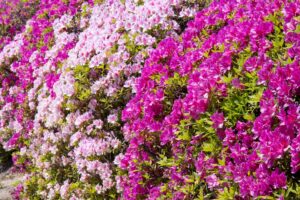
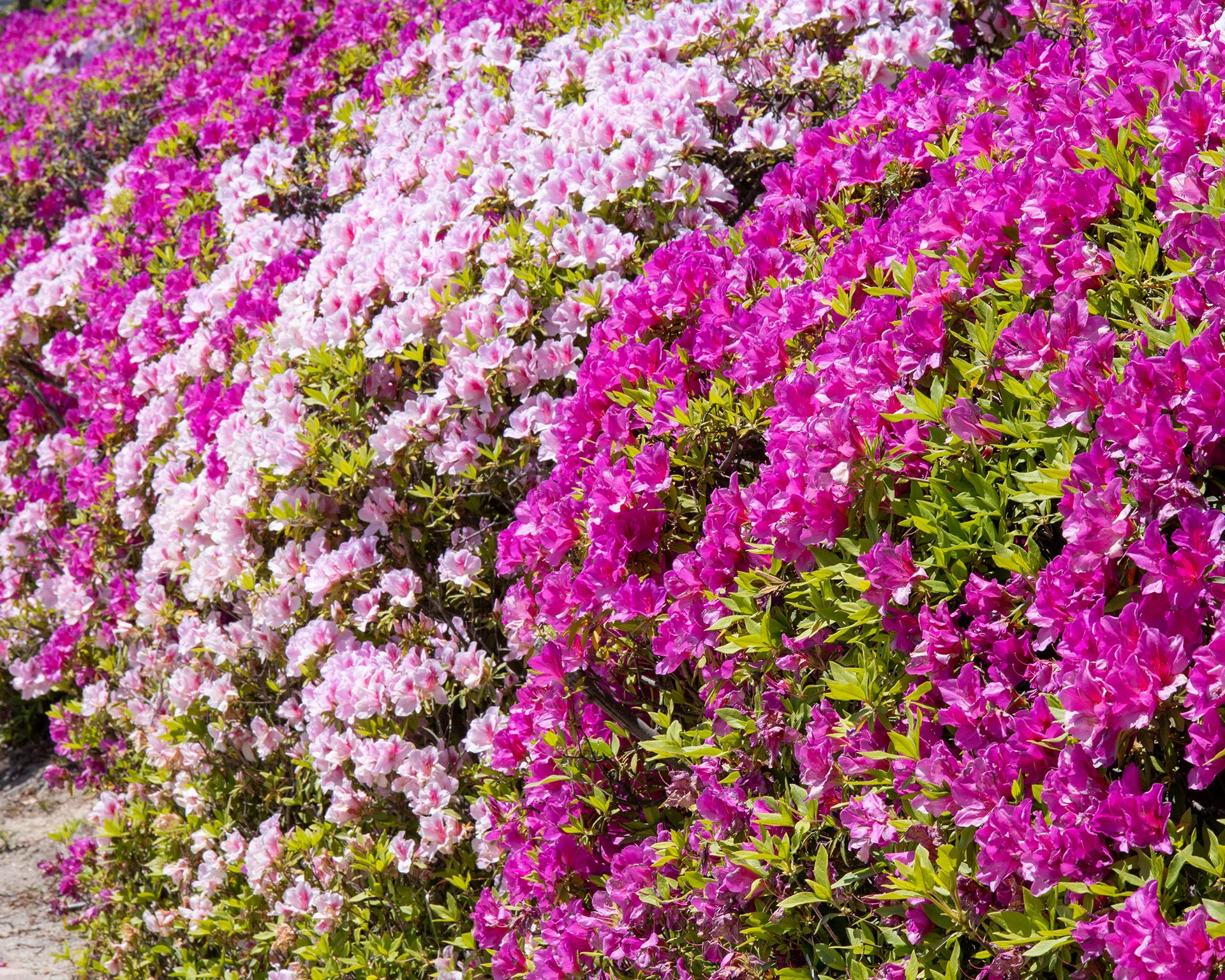
Azaleas are flowering shrubs that grow well in shady locations and acidic soil. Fan-favorites in the gardens, azaleas are both beautiful and incredibly versatile. You can find them in many different shapes, sizes, and colors – some evergreen and some deciduous. The azalea blossoms are funnel-shaped, often two-lipped blooms in shades of pink, red, purple, orange, and white.
The one downside to azaleas is their relatively short blooming season, only some three weeks. But azaleas can play other roles in the garden, offering stunning beauty when in flower and as a reliable green backdrop to let other plants shine throughout the year. They thrive in shade to partial sun in well-drained, acidic soil. Water regularly until the roots are established.
Try this reblooming azalea from the Home Depot for bright pink blooms from spring through fall.
2. Rhododendron
|
Botanical Name |
Rhododendron spp. |
|
Hardiness |
Zones 5-8 |
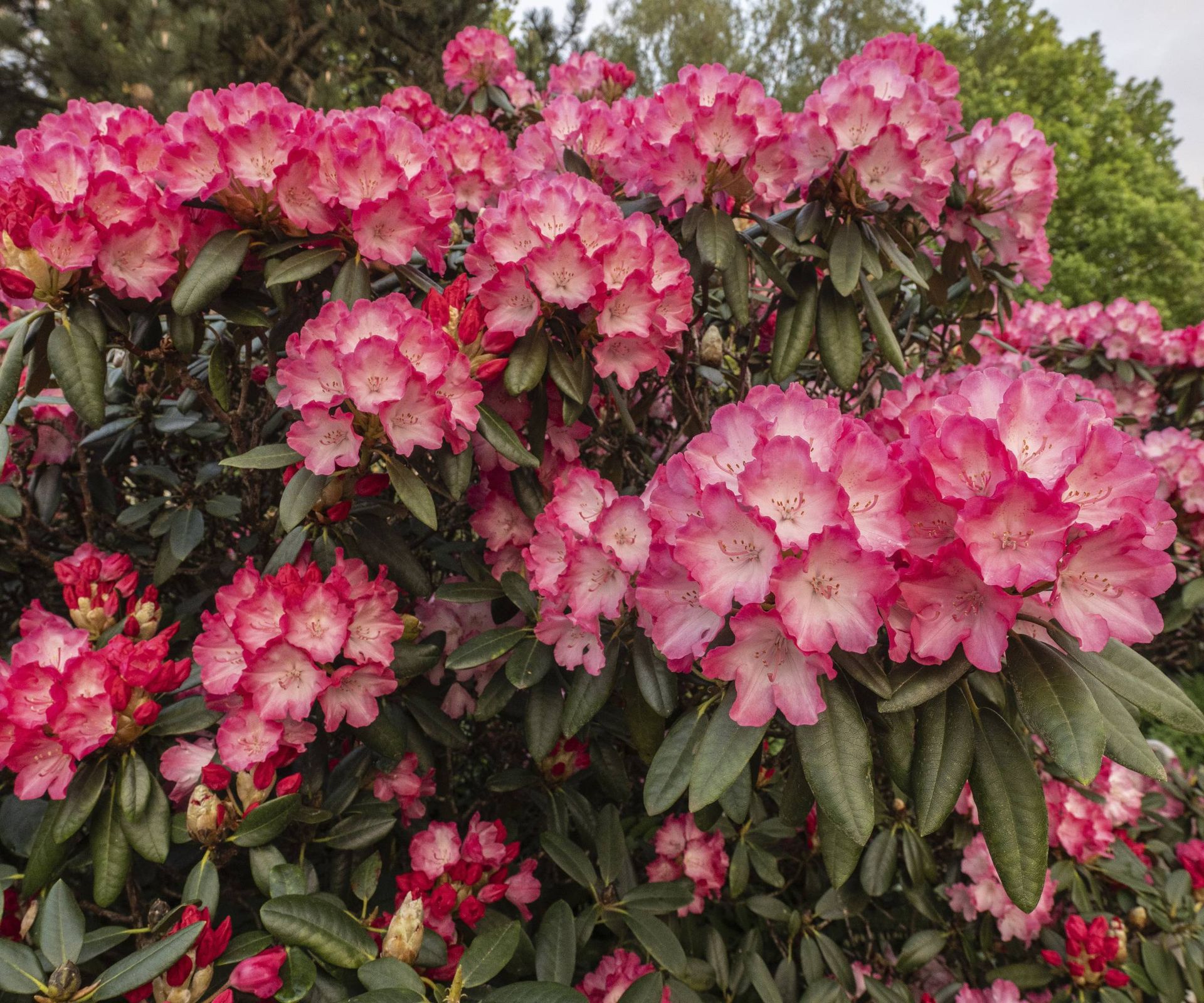
While every azalea is a rhododendron, all rhodies are not azaleas. Rhododendrons are large, evergreen shrubs with bold, glossy leaves and huge flower clusters. Rhododendrons are among the most famous of acid-loving garden plants, and among the plants most widely used in landscaping in this country. Their magnificent spring-blooming blossoms can come in pinks, reds, mauves and shades of white.
Grow rhododendrons in a location with partial sun, dappled sun, or light shade. They need acidic soil with top drainage. Apply a thick layer of pine bark mulch around the base of the shrubs to keep the roots cool and moist. Rhodies should be trimmed just after the flowers fade.
Want gorgeous violet blooms? Choose this ‘Florence Parks’ rhododendron from Home Depot.
3. Camellia
|
Botanical Name |
Camellia spp. |
|
Hardiness |
Zones 7-9 |
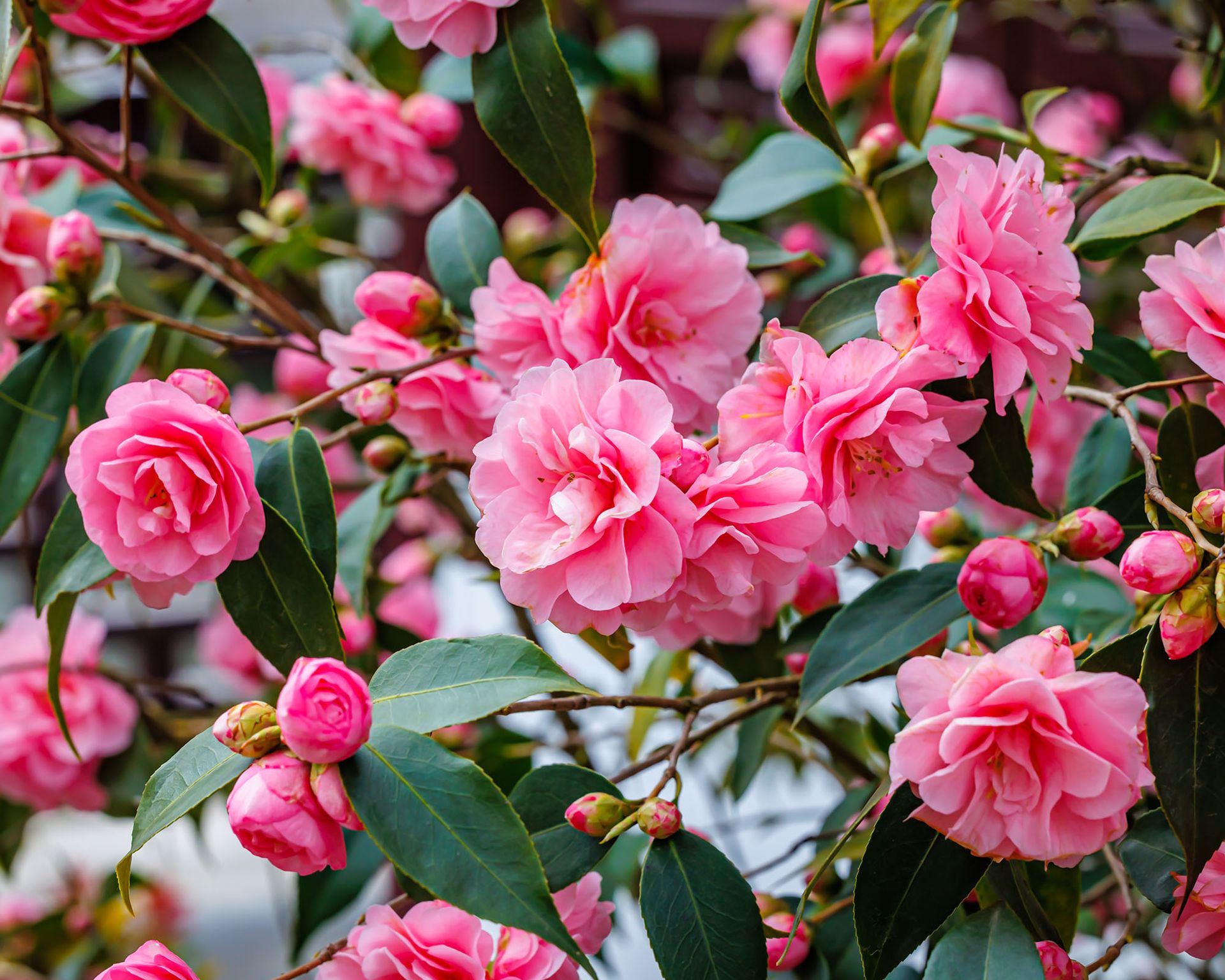
Shrubs in the camellia genus are evergreen plants with glossy leaves. They offer big, beautiful blooms – some as wide as your palm – in a wide variety of colors, from white, to pink, to gold. These beautiful flowering plants are one of the workhorses of southern gardens.
These acid-loving plants prefer moist, well-draining soil that is rich in organic matter. They prefer a soil pH of between 5.5 and 6.5. Plant them in a site with partial shade or dappled sun, always offering protection from hot afternoon sun and winter winds.
The soil should be kept evenly moist until the plants establish, and water during dry summers – this is when the buds for the following season are forming. Trim your camellias when the flowers fade, but never prune after the buds are set in late summer or fall.
Explore dozens of lovely camellias for sale from Plants by Mail.
4. Bunchberry
|
Botanical Name |
Cornus canadensis |
|
Hardiness |
Zones 2-7 |
Go native whenever you can, if you want to make your life as a gardener as easy as possible. Native plants require little fertilizer, are drought tolerant, and live in harmony with native insects on native soil.
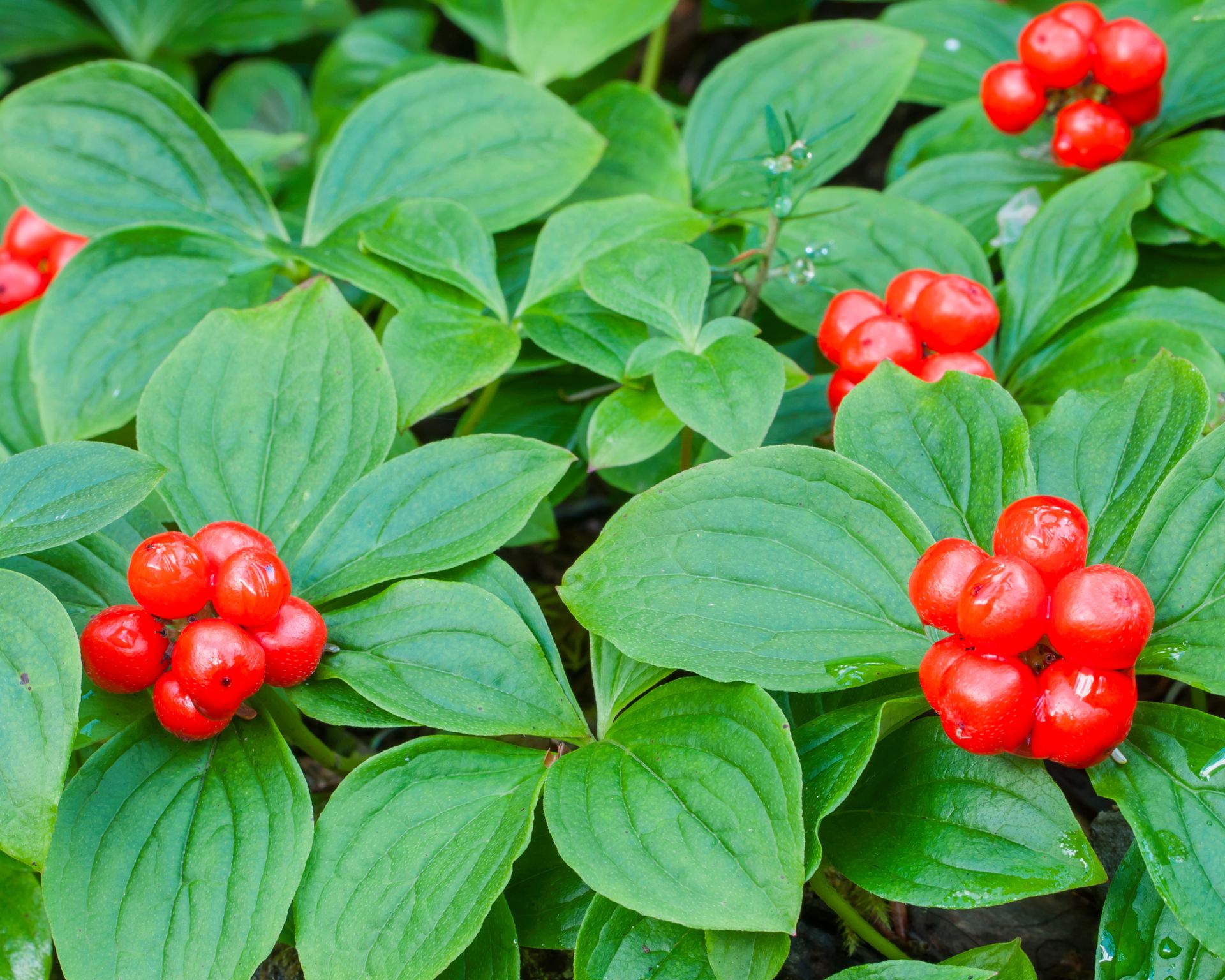
If your soil is acidic, one great native option is bunchberry, a low-growing, acid-loving plant with tiny spring blooms surrounded by bone-white bracts and glossy green leaves that turn red and purple in fall. Bright red berries make a dramatic addition and attract birds.
Bunchberry thrives in shady areas and moist, well-draining soil with a pH between 5.5 and 6.8. Keep the soil moist, irrigating during dry spells. Light organic mulch can help hold moisture into the soil.
You can find this unique native ground cover online from White Flower Farm.
5. Holly
|
Botanical Name |
Ilex spp. |
|
Hardiness |
Zones 5-7 |
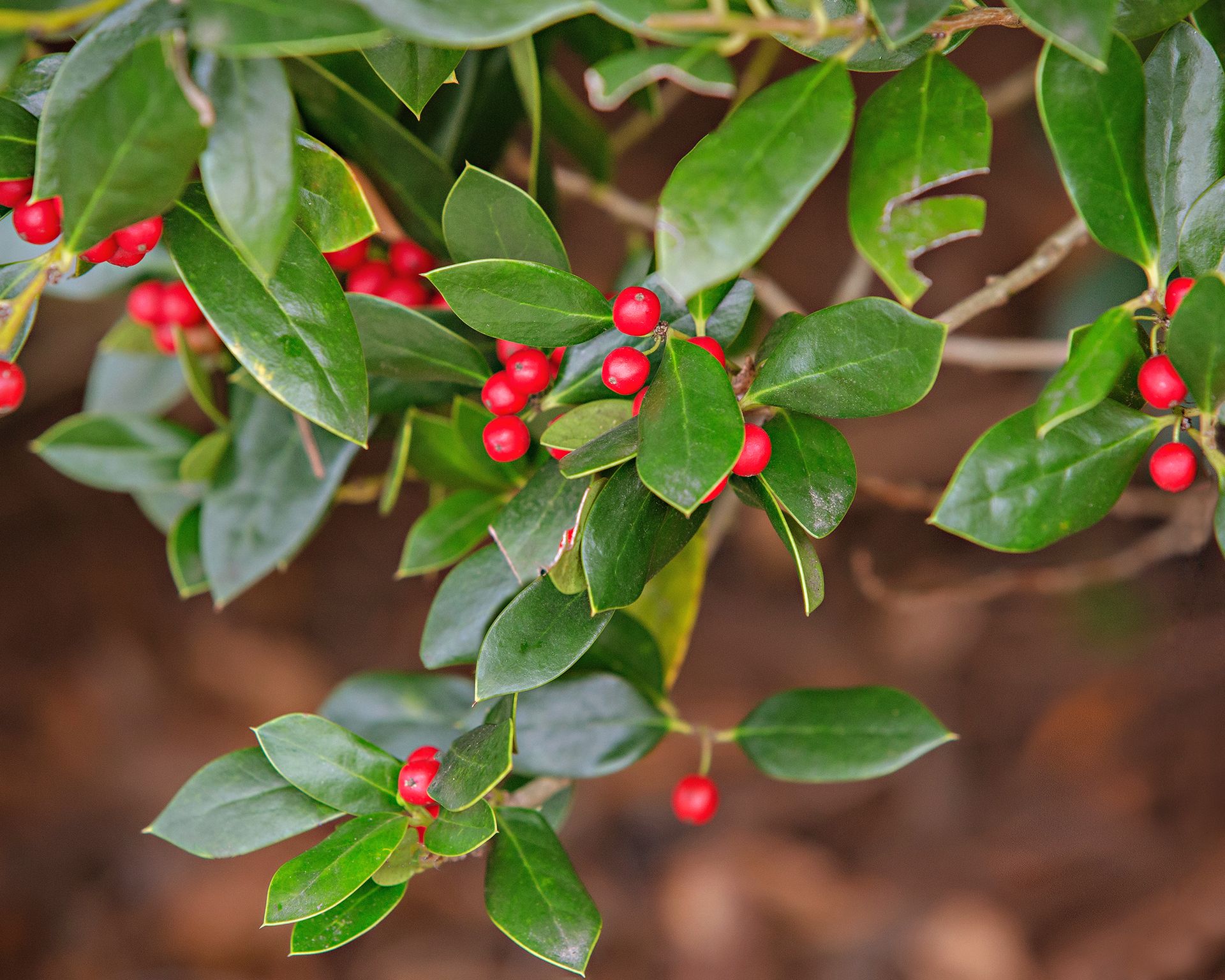
Forget decking the halls! You are likely to fall in love with your holly bushes and warn friends and family not to clip off a single branch! Most of the many varieties of holly are shrubs, with shiny green leaves and – if the shrub is a female and there is a male holly plant in the neighborhood – bright berries. The dense foliage makes hollies a good choice for a privacy screen.
Most holly varieties grow best in a sunny area. While full sun is great, be certain your holly gets at least 3 hours of sun a day. The soil must be well-draining and acidic, and it should be kept moist the entire first growing season to allow the shrub to establish roots. Prune the holly very lightly to shape it in late winter before new growth begins. thrive best in full sun to partial shade (at least 3 to 6 hours of daily sun).
Shop both native and non-native holly bushes and trees from Trees.com (formerly Fast Growing Trees).