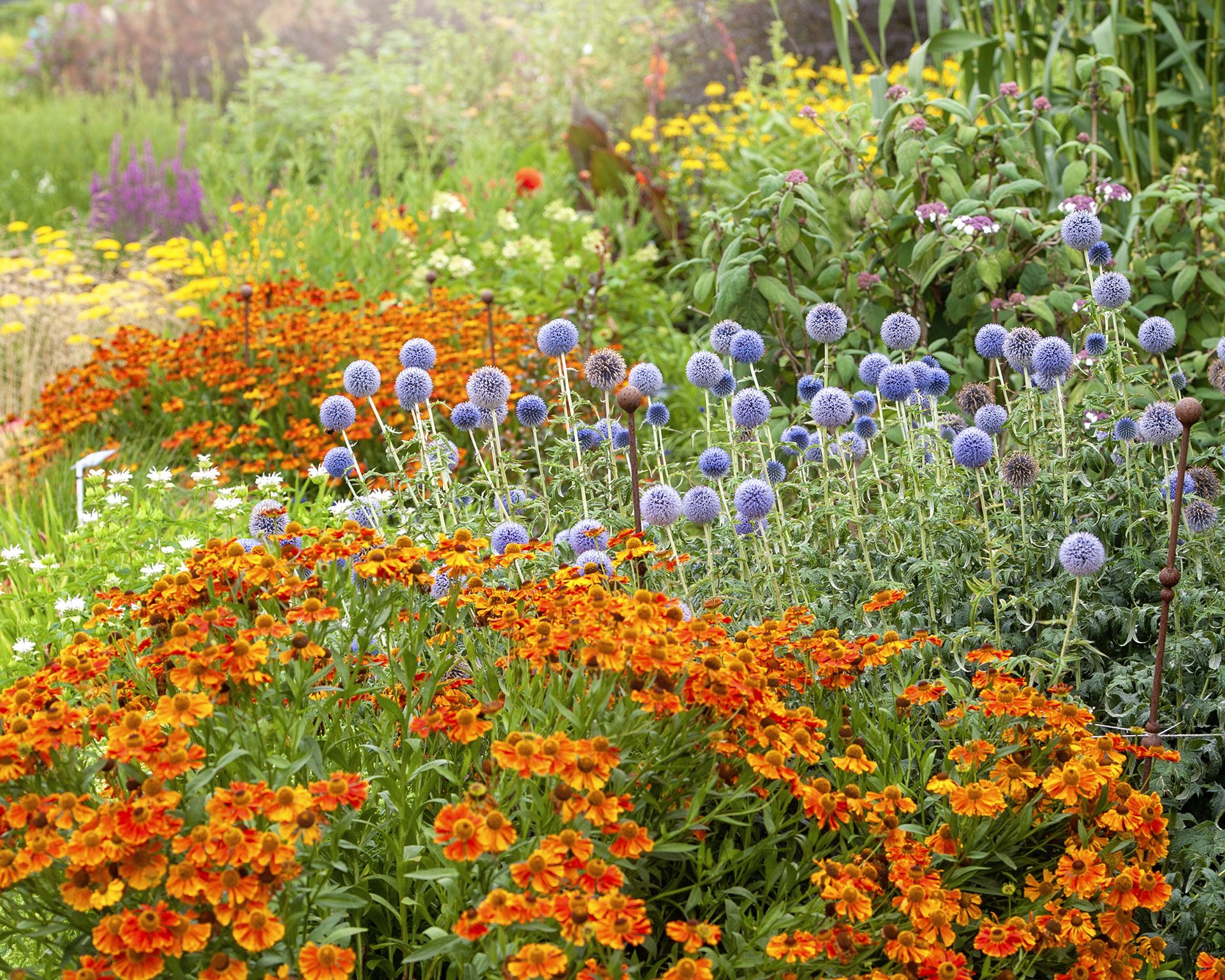
They say opposites attract, and while my slightly unhealthy rom-com addiction has taught me that it’s the basis of many successful relationships, it also provides the spark for some of the best plant pairings in the garden. There’s just something irresistible about flowers with contrasting colors and forms coming together in perfect harmony. And as we head towards fall, few combinations bring as much energy to a border as helenium and globe thistle. A pure fire-meets-ice pairing, it’s so alive you can almost hear it crackling.
Make room for my latest Plant Matchmaker pairing in your borders and you’ll be rewarded with a low-maintenance display that reaches its peak just as most summer flowers are starting to fade, bridging that awkward gap before fall properly sets in. Depending on the varieties you choose, both plants can be grown across a broad range of climates, roughly USDA hardiness zones 3–8. Globe thistle (Echinops) can continue flowering as late as October, but even if it fades in September, it leaves behind sculptural seed heads, while heleniums (Helenium autumnale) won’t stop blooming until the first heavy autumn frosts.
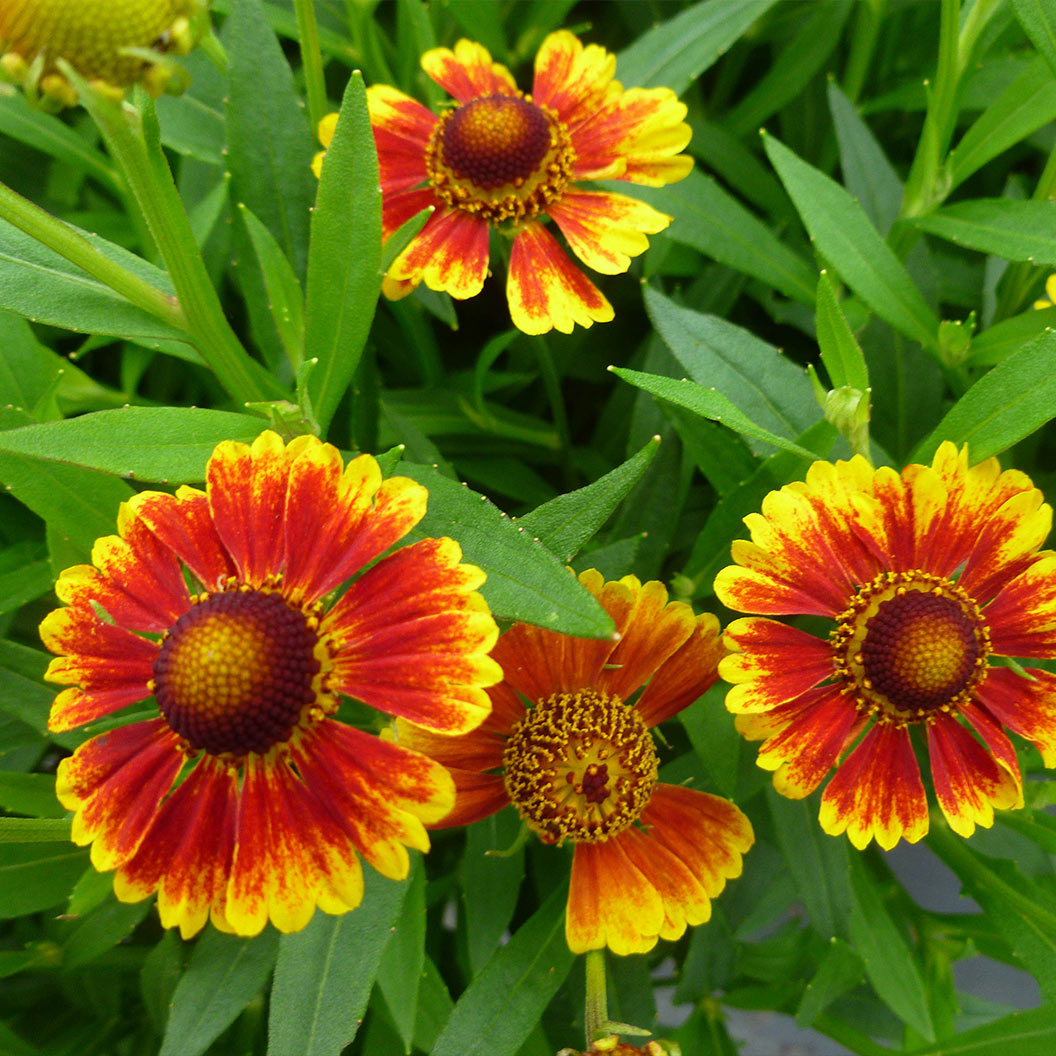
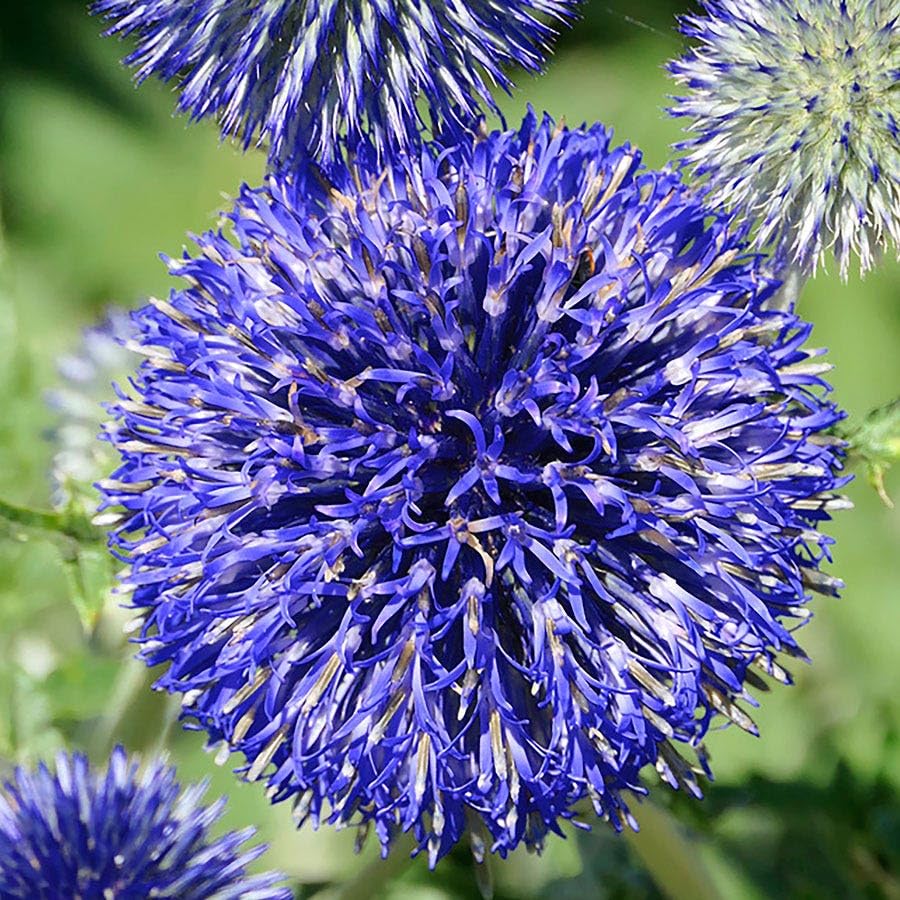
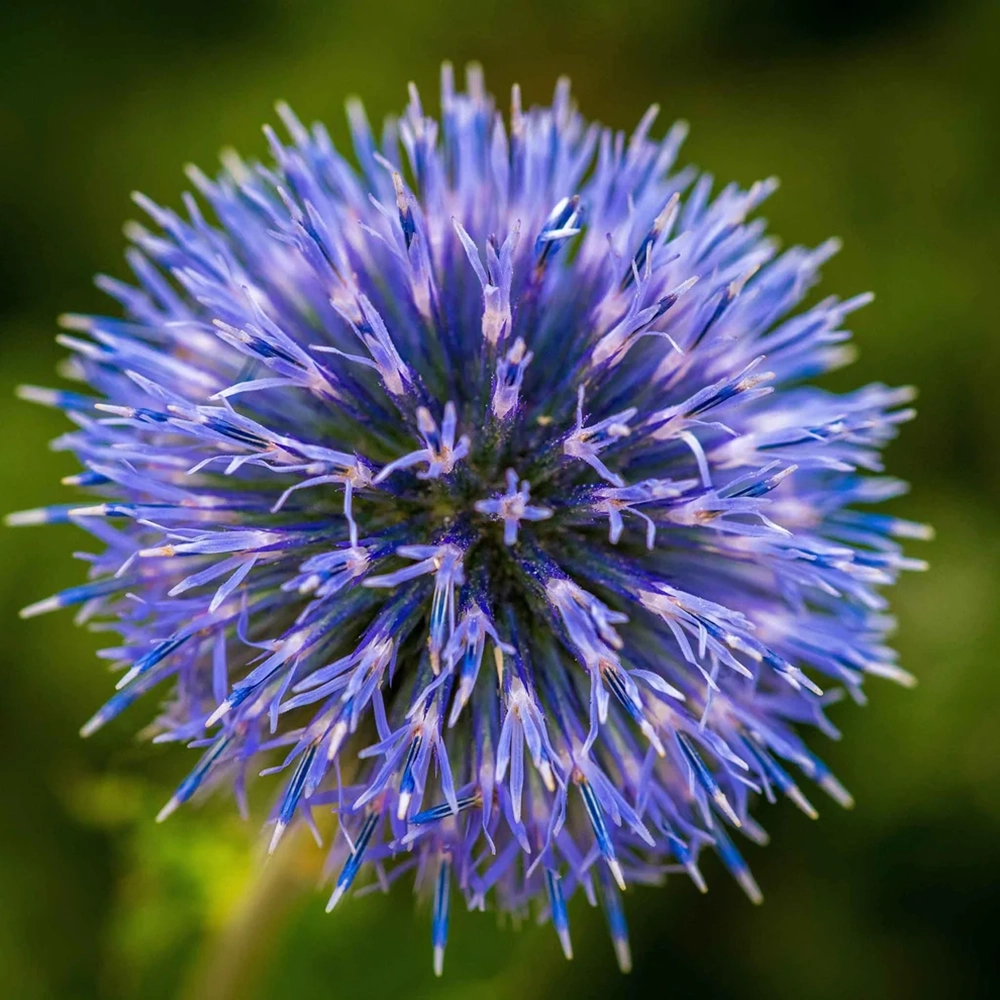
If not for their bold spherical shape, the cool blue-lavender flowers of globe thistle could almost seem understated, but they provide an elegant architectural foil for cheery, fluttery heleniums. Also known by the less-than-flattering common name sneezeweed, these daisy-like flowers bring glowing orange, gold, and copper tones that light up borders. They’re like little shots of sunshine on a dreary day.
Why Helenium and Globe Thistle Work Together
On paper, helenium and globe thistle couldn’t be more different: one is sunny, soft, and loose; the other is cool, strong, and upright. Rather than competing, though, the two forms exaggerate one another. Orange and blue sit opposite each other on the color wheel, creating a strong complementary contrast that’s far less common in gardens than the classic yellow and purple flower pairings.
Heleniums generally shine from late summer into fall, while Echiniops tend to start and finish a little earlier. This provides a useful overlap in flowering seasons at the latter part of summer. Together, the plants provide invaluable interest when most of the garden has begun to fade.
And don’t be too quick to clear everything away at the end of the season. Globe thistle’s spherical seedheads continue to provide structure long after the blue flowers have faded, extending the interest and offering a valuable late-season food source for garden birds like goldfinches.
Which Varieties to Choose
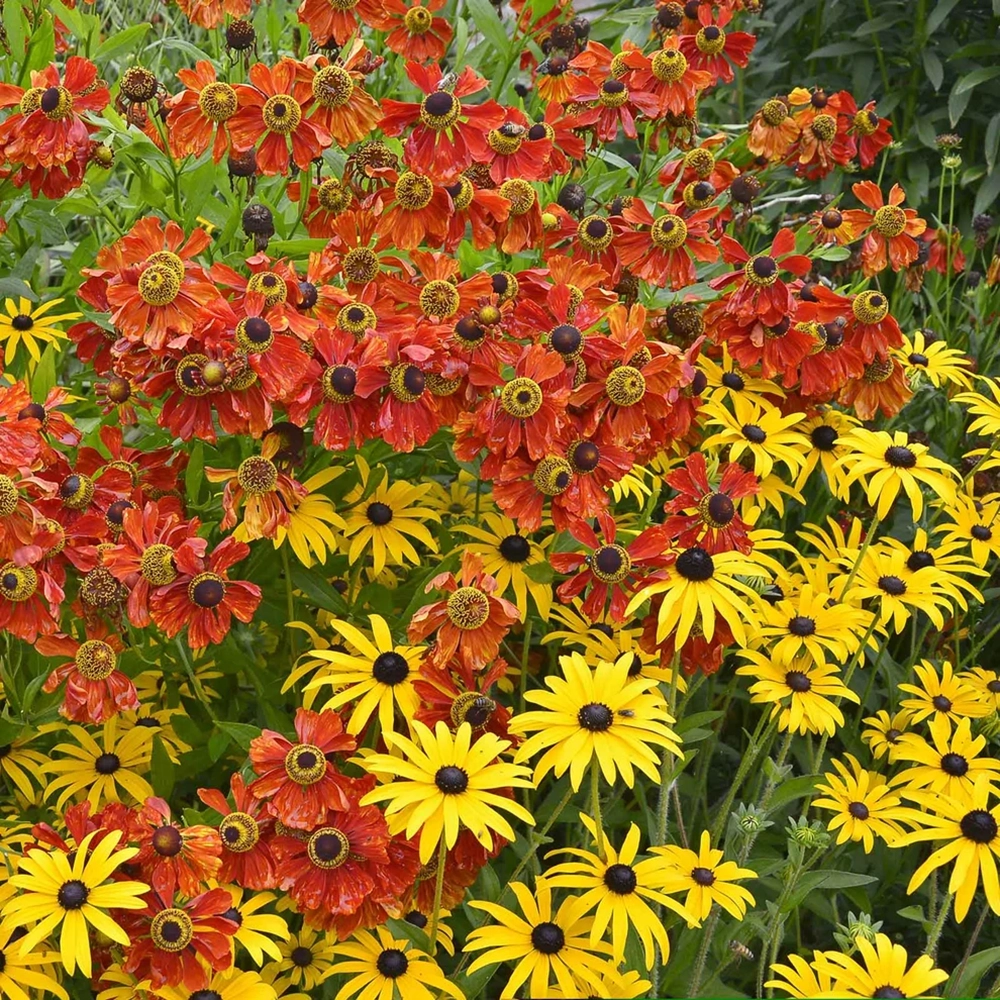
For the richest possible contrast, opt for predominantly orange-toned heleniums, rather than a pure yellow variety. Think burnt orange, copper, and russet shades to make that cool blue contrast even more intense.
Try the deep copper-red Helenium Moerheim Beauty, available to preorder from Eden Brothers in a collection with black-eyed Susan, another late-season star. For something more varied, Salud Embers, available from Trees.com, produces shifting warm sunset hues. You can also save money by growing heleniums from seed, which can be planted in the fall.
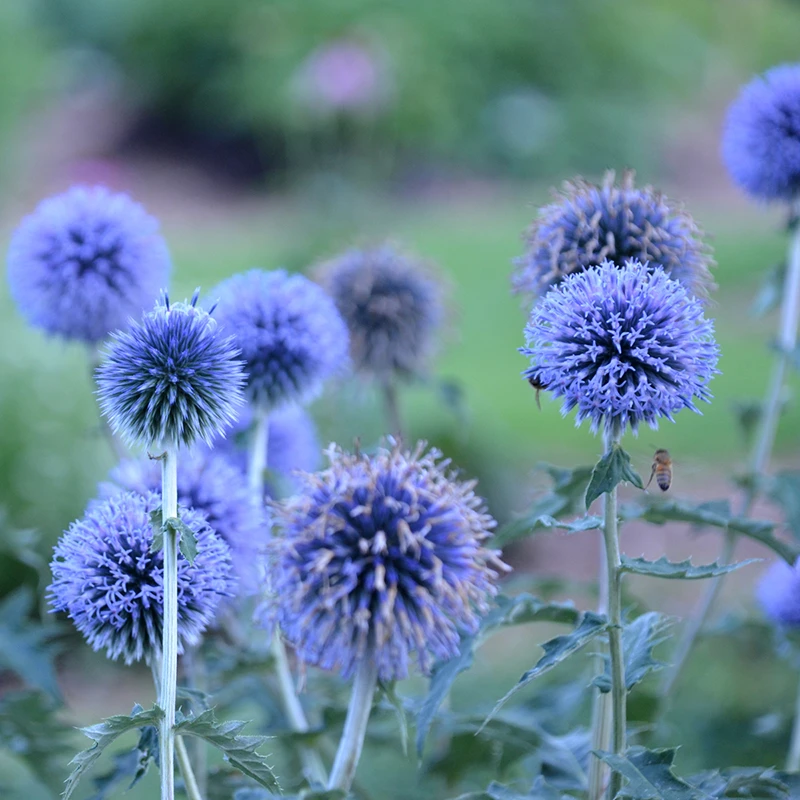
To provide the strongest architectural contrast, choose taller globe thistles, like Echinops bannaticus ‘Blue Glow’, available from Plant Addicts. Growing up to 4 feet (1.2 m) high, its blue spheres can rise above the heleniums rather than disappearing among them. More compact forms like Echinops ritro, available to preorder from Eden Brothers, are a better option if you want the same color contrast at a slightly lower level, as they reach 2.5–3 feet (75–90 cm). You can start globe thistles from seed in the autumn for flowers the following year.
As heleniums commonly reach around 3–5 feet (90–150 cm), check the mature height of both varieties before deciding where each should sit in the border.
How to Grow Them Together
OK, so there is one small catch with this plant match: helenium and globe thistle don’t share identical moisture preferences. Helenium prefers consistent moisture, while globe thistle is a drought-tolerant superstar. But because both are sun lovers, there is some middle ground here. Choose a sunny border with soil that holds enough moisture for helenium but is well-draining enough so that globe thistle doesn’t have soggy roots.
If your soil is very dry and sandy, concentrate extra watering around the heleniums. In heavy or waterlogged ground, improve drainage around the globe thistles, or position them towards the higher, drier part of the bed.
Both plants have enough stature to work through the middle or back of a perennial border. Rather than colorblocking the flowers, thread the globe thistles loosely between groups of heleniums. Their round heads will appear to float above a sea of sunshine, creating the layered effect that makes this combination look “designed”.
Once established, globe thistle requires very little attention. Avoid overfeeding, as rich soil can encourage floppier growth. Helenium appreciates more attention paid to fertilizing and watering, and cutting taller plants back earlier in the season can encourage bushier growth and more flowers.
Get the balance right, and you can sit back and watch the sparks fly – few late-season combinations can make orange look hotter and blue look cooler than helenium with globe thistle.
More From Plant Matchmaker
This feature is part of our Plant Matchmaker series, which explores creative, practical plant combinations to help your garden feel more thoughtfully designed.
Romantic Prairie Pairing
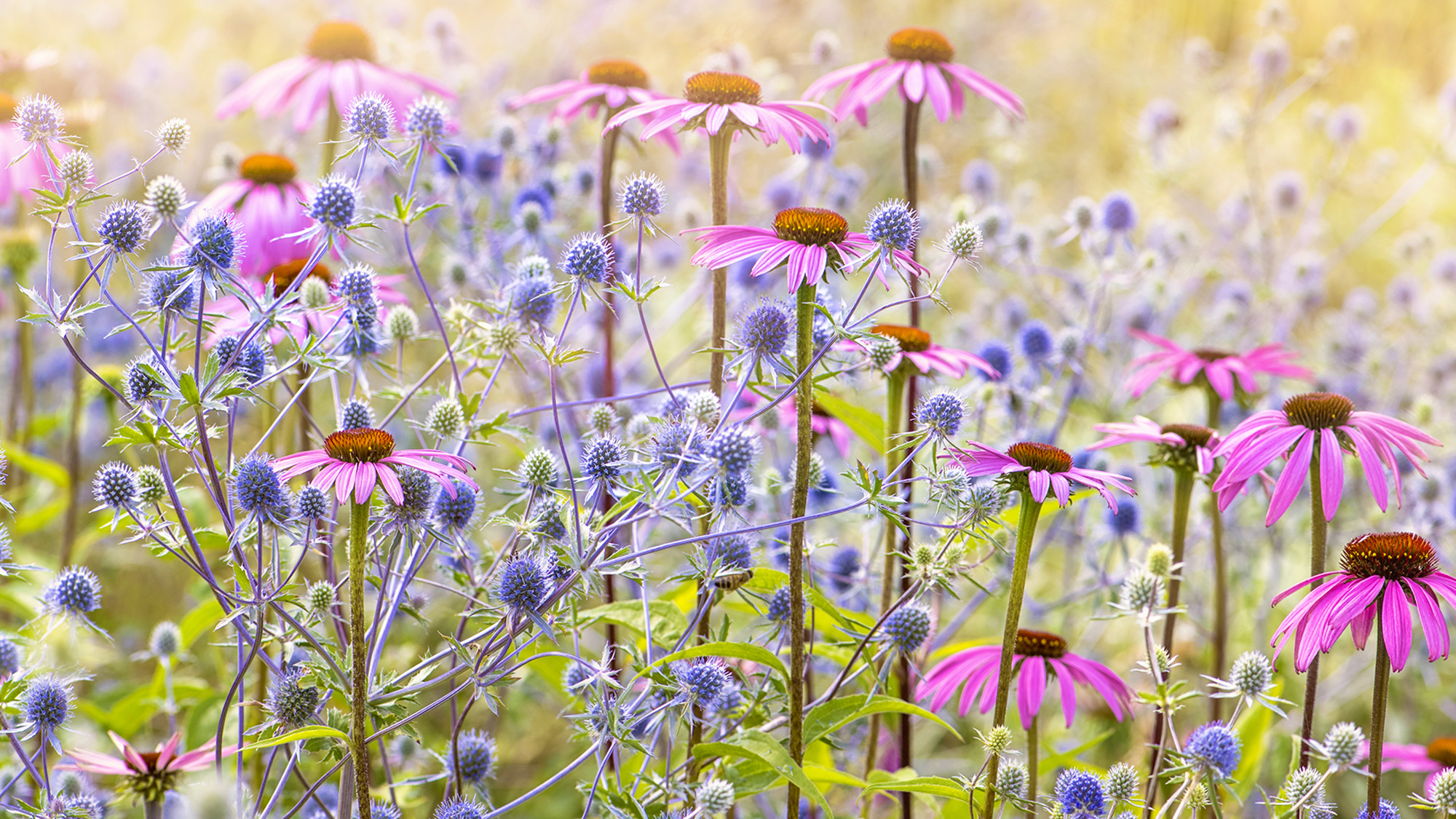
Discover a beautiful pairing of soft, colorful blooms and sculptural seedheads that keeps borders vibrant from summer into fall.
Jewel-Toned Display
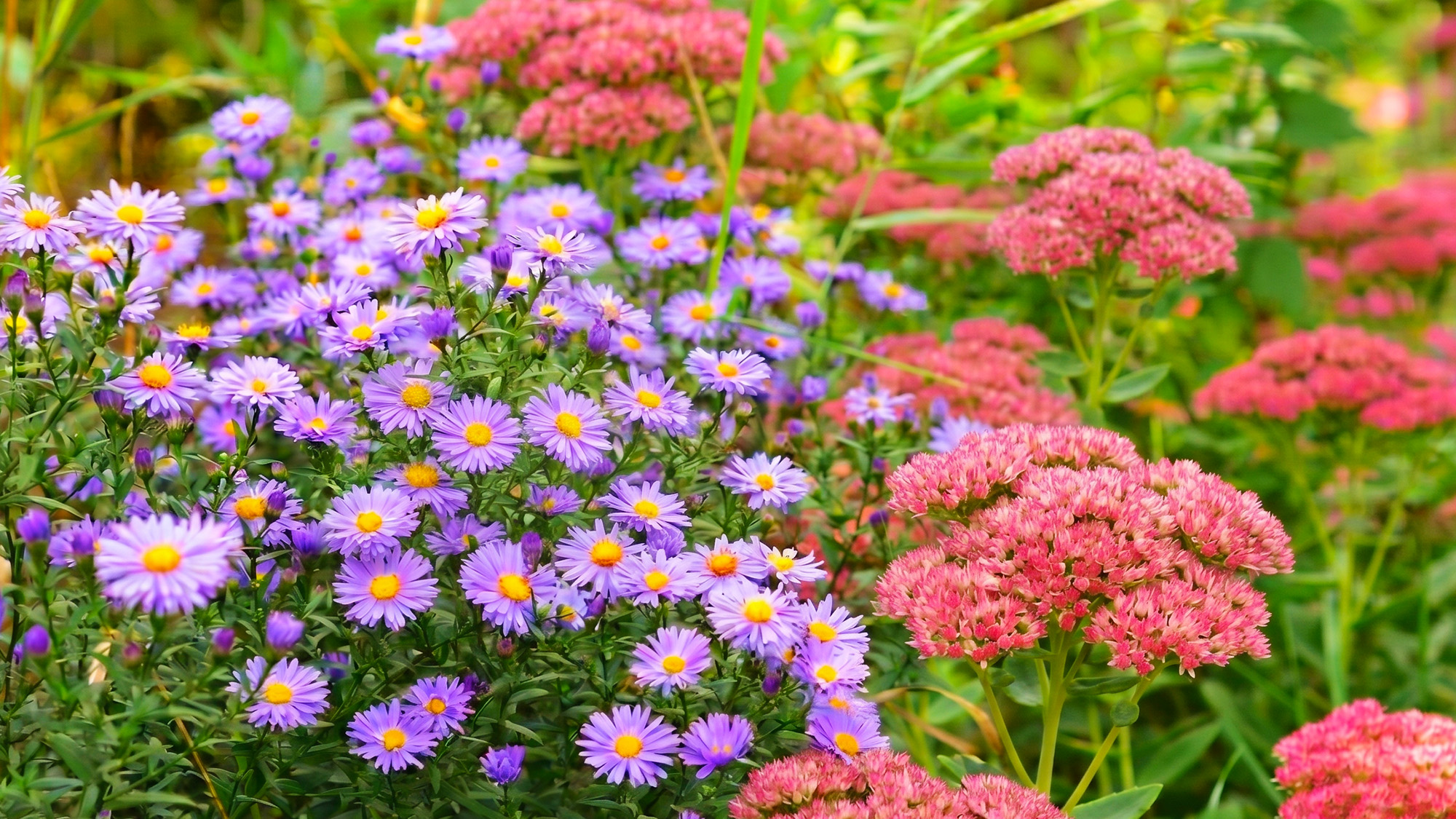
This popular fall plant pairing provides a rich color contrast and keeps borders buzzing late into the season.
Dreamy Fall Perennials
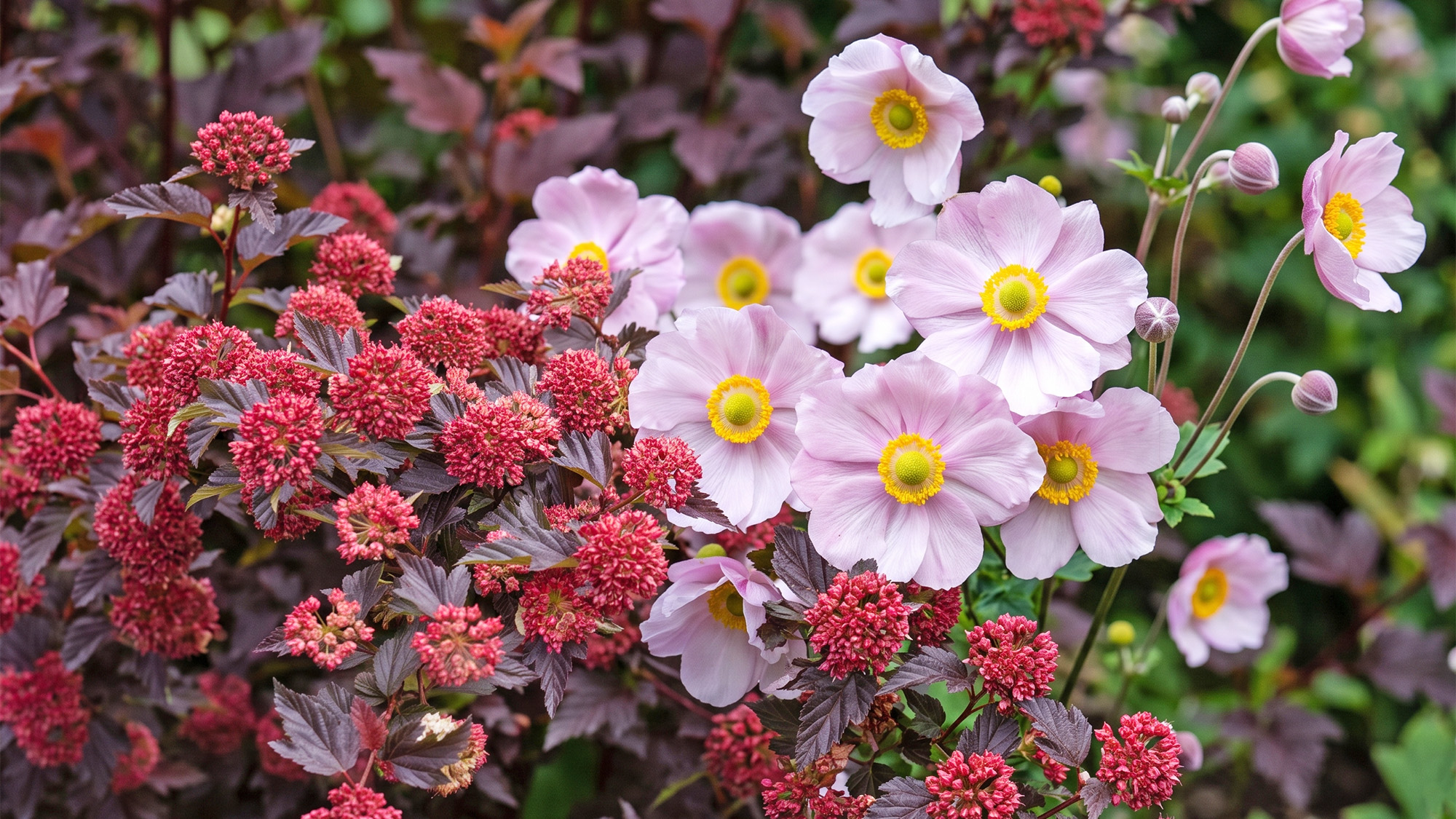
Contrast delicate pink flowers with dramatic burgundy foliage for a late-season display that reaches its crescendo in early fall.