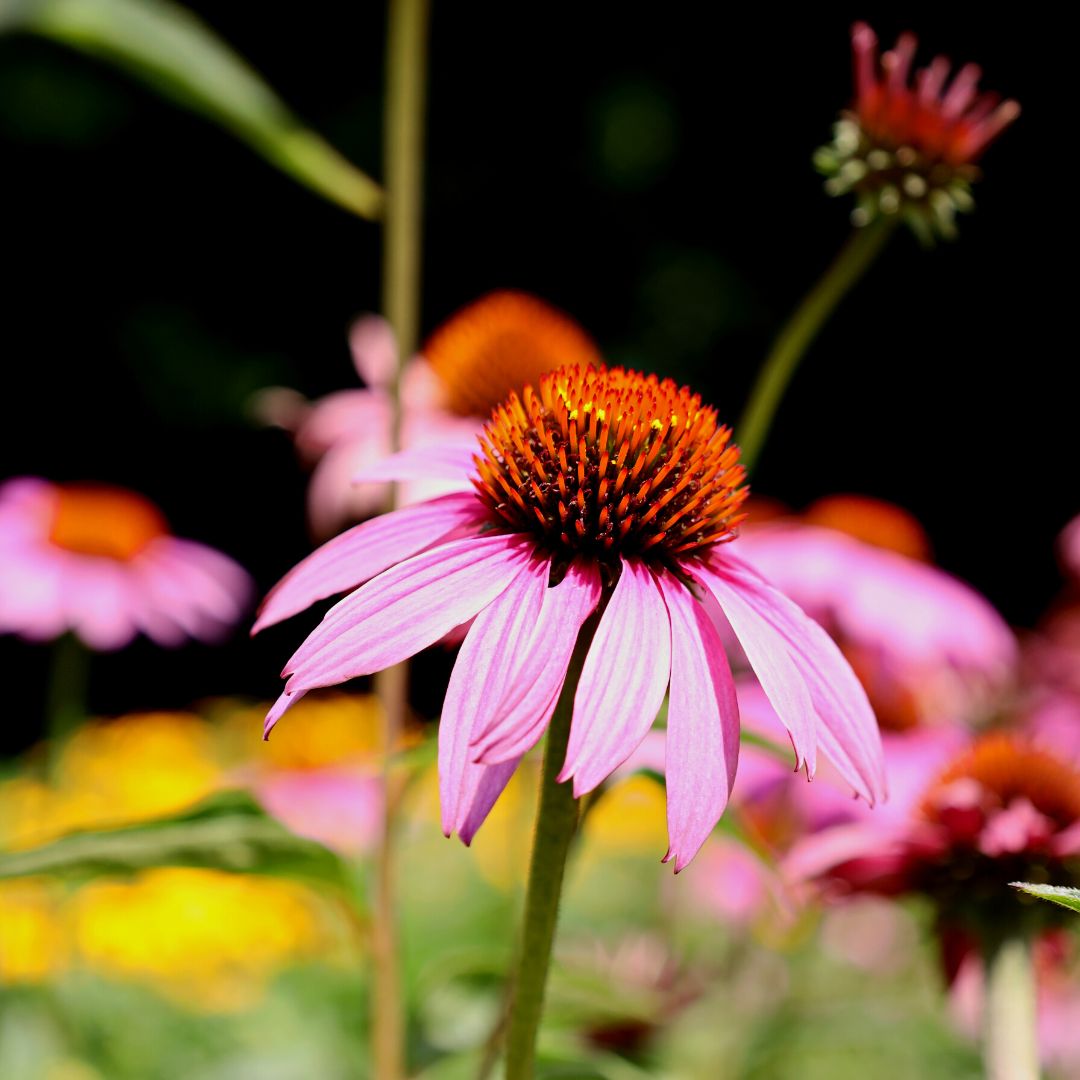
What do you get when you cross fluttery purple coneflowers with spiky blue sea holly? The answer is prairie planting perfection – romantic, sculptural, and made to shimmer in the soft dappled light that stretches from late summer into fall. Looks can be deceiving, though, as these graceful beauties are hard as nails, tolerating heatwaves and drought as if they were minor inconveniences.
Add my latest Plant Matchmaker pairing to your garden now, and you’ll get weeks of flowers this year, followed by months of structural seed heads through late fall and winter. Then, the perennial plants will be established in time for next summer, giving you floral fireworks for months on end.
Coneflower (Echinacea) is, without question, one of the best native perennials you can add to your garden, bringing months of color while feeding pollinators and birds. Sea holly (Eryngium) is its tougher-looking counterpart, with steely blue flowers and spiky bracts that add contrast, texture, and a slightly wild edge. When planted together, they offer the perfect blend of softness and structure, and as they both have similar growing requirements, they’re easy to grow side by side.
Which Varieties to Choose
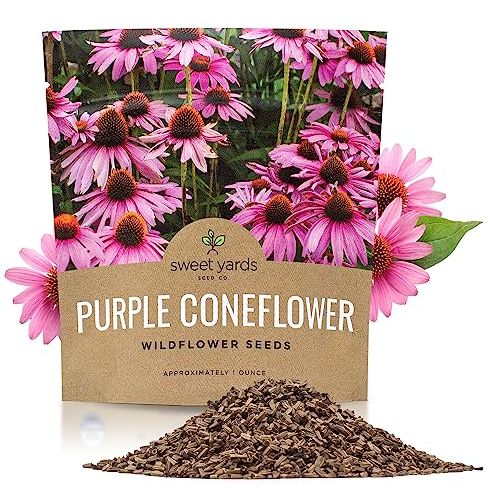
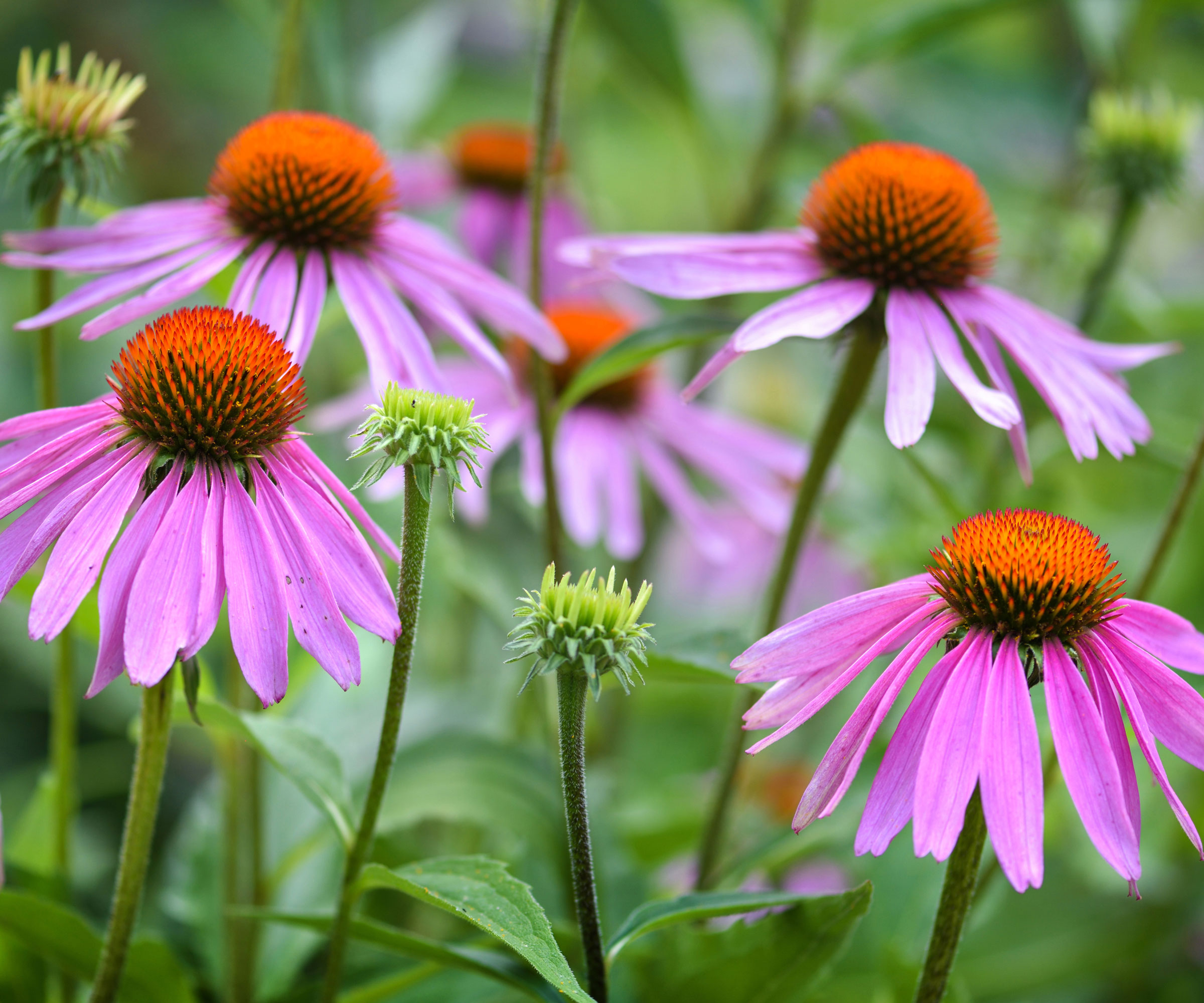
There are endless Echinacea varieties to choose from, but the classic look of purple coneflower is simply irresistible here. Try the Magnus purple coneflower, available from Woodies Garden Goods, for the lovely airy prairie planting effect pictured above. To save money, you could also start seeds this fall for plants next year, with these Sweet Yards purple coneflower seeds, from Amazon.
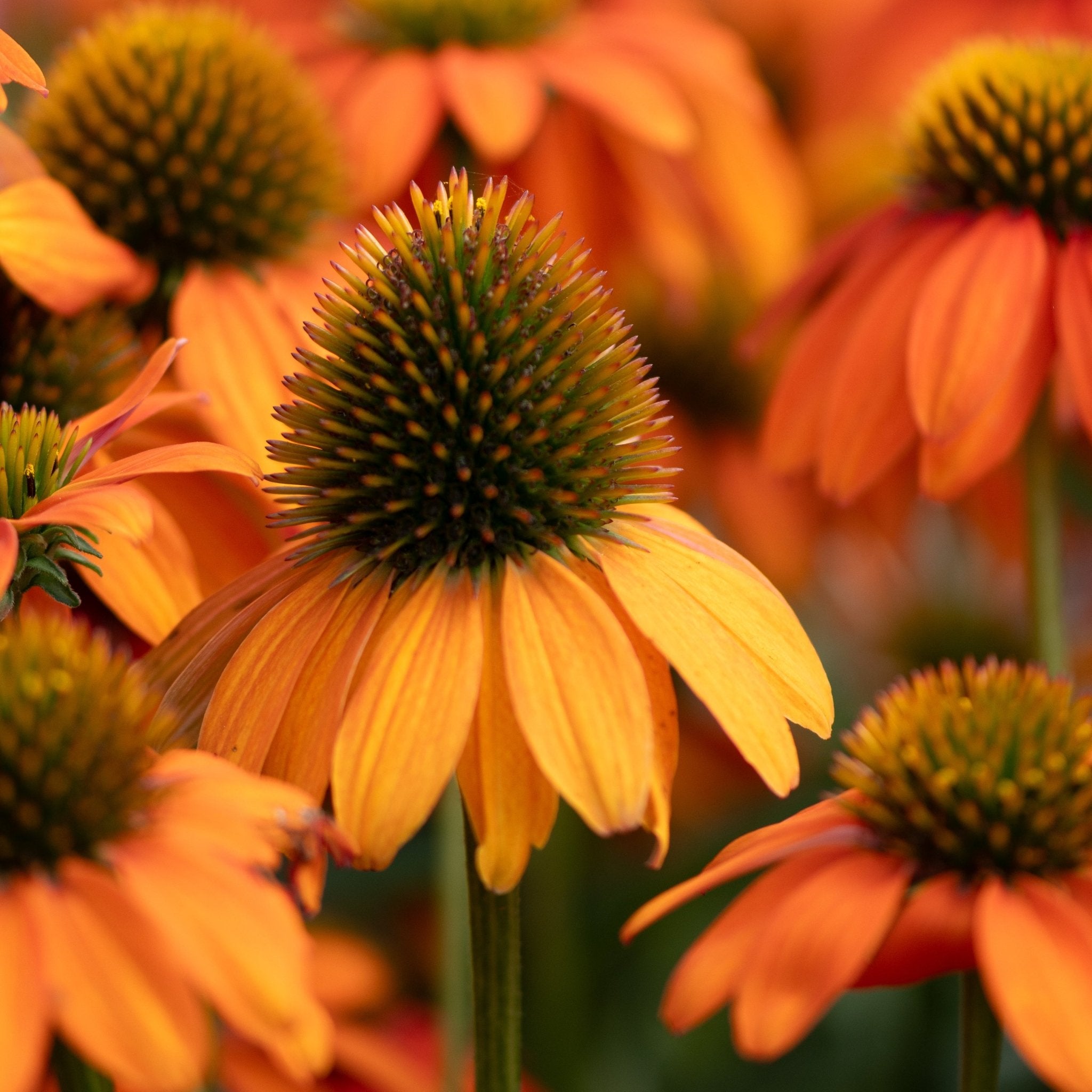
If purple’s not your thing, then an orange coneflower, like Artisan Soft Orange Coneflower from Nature Hills, will give a lovely warm contrast that feels more modern and energetic while keeping the prairie character.
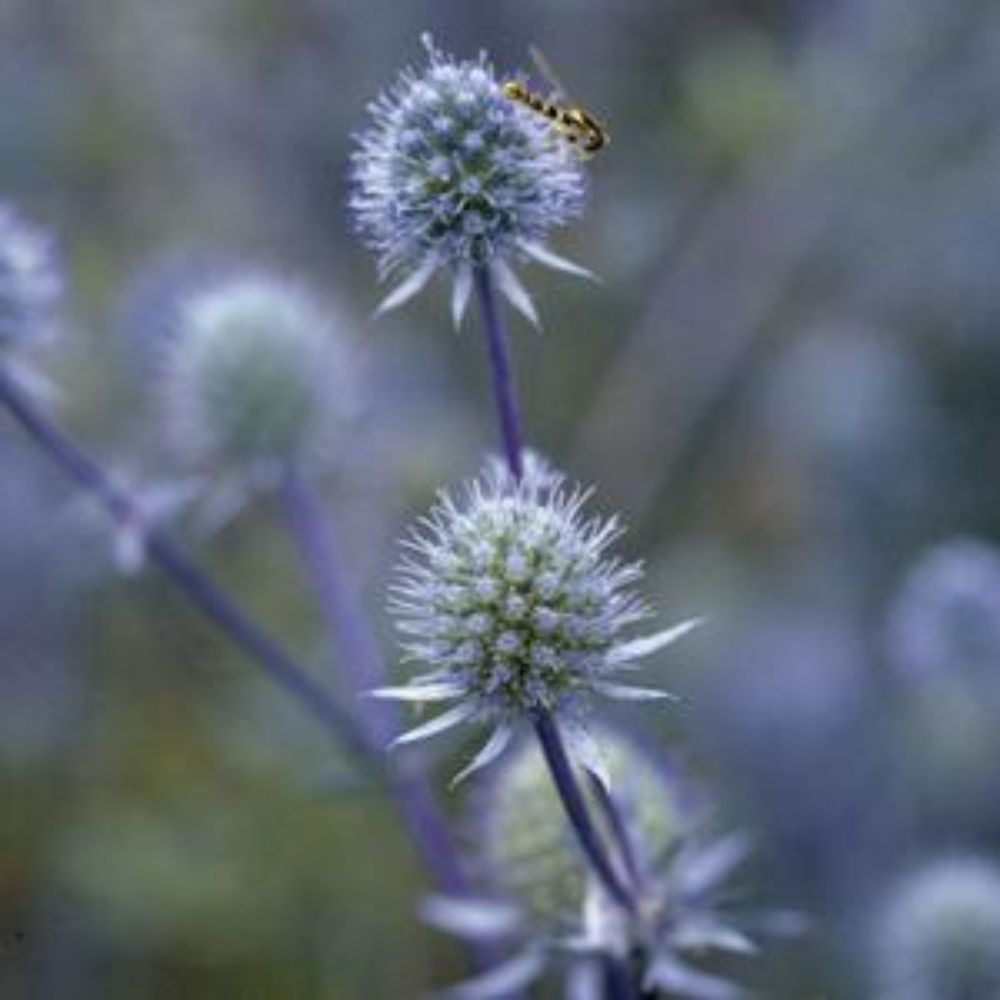
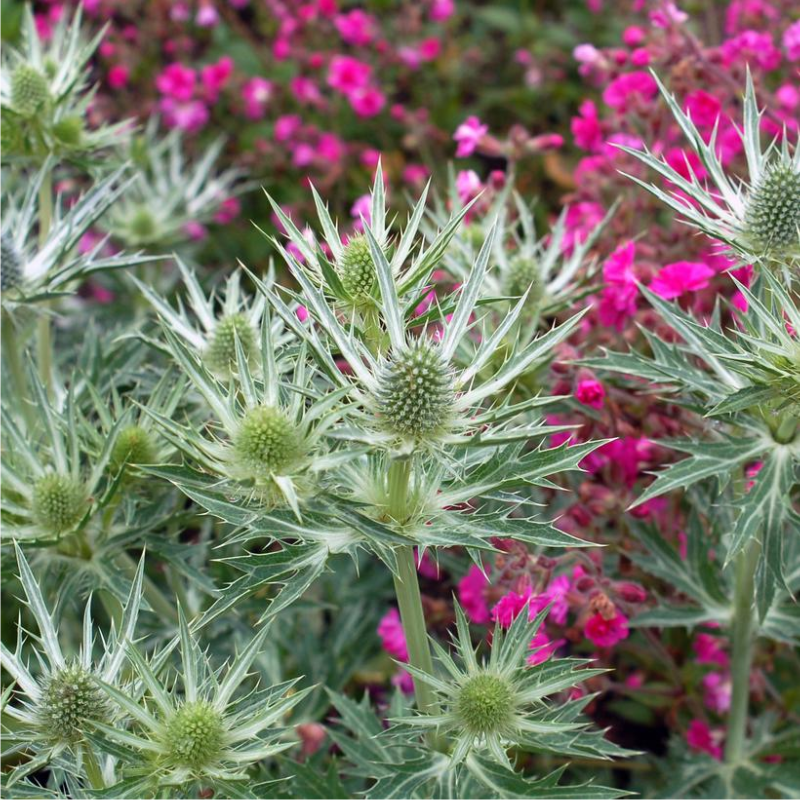
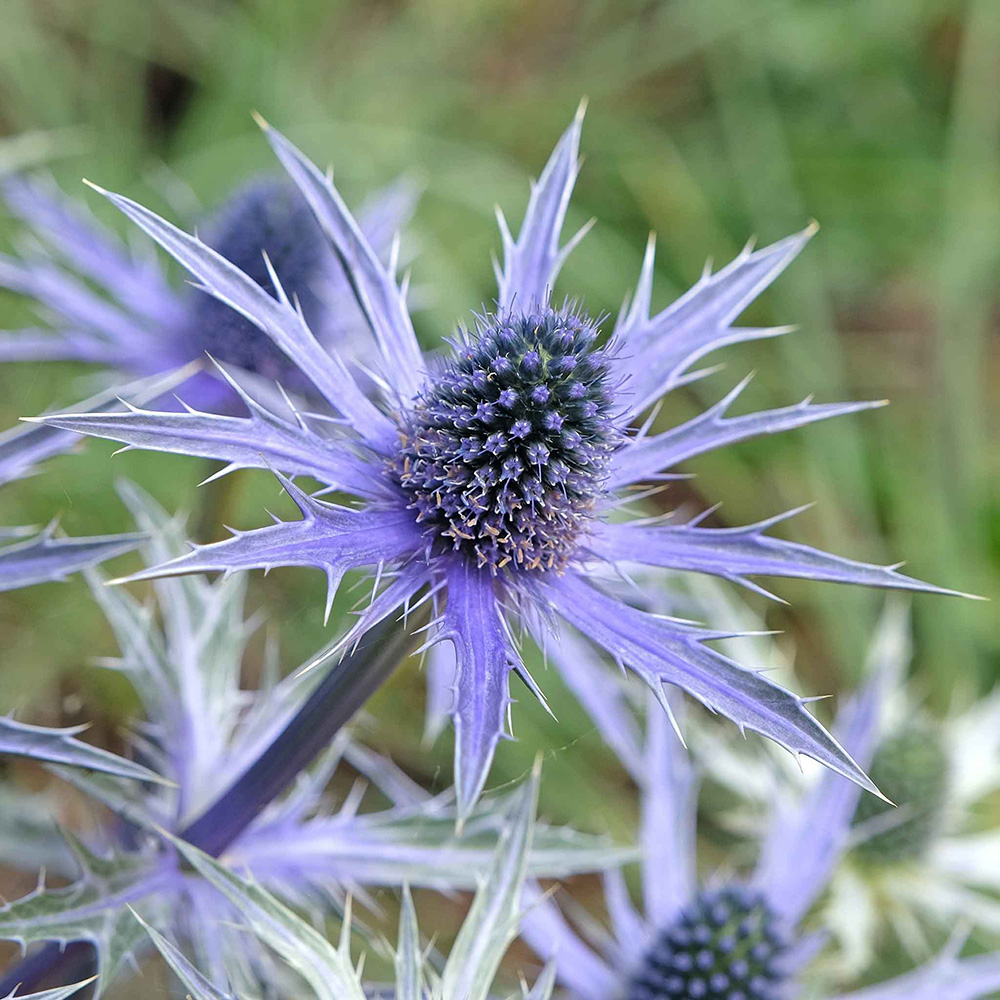
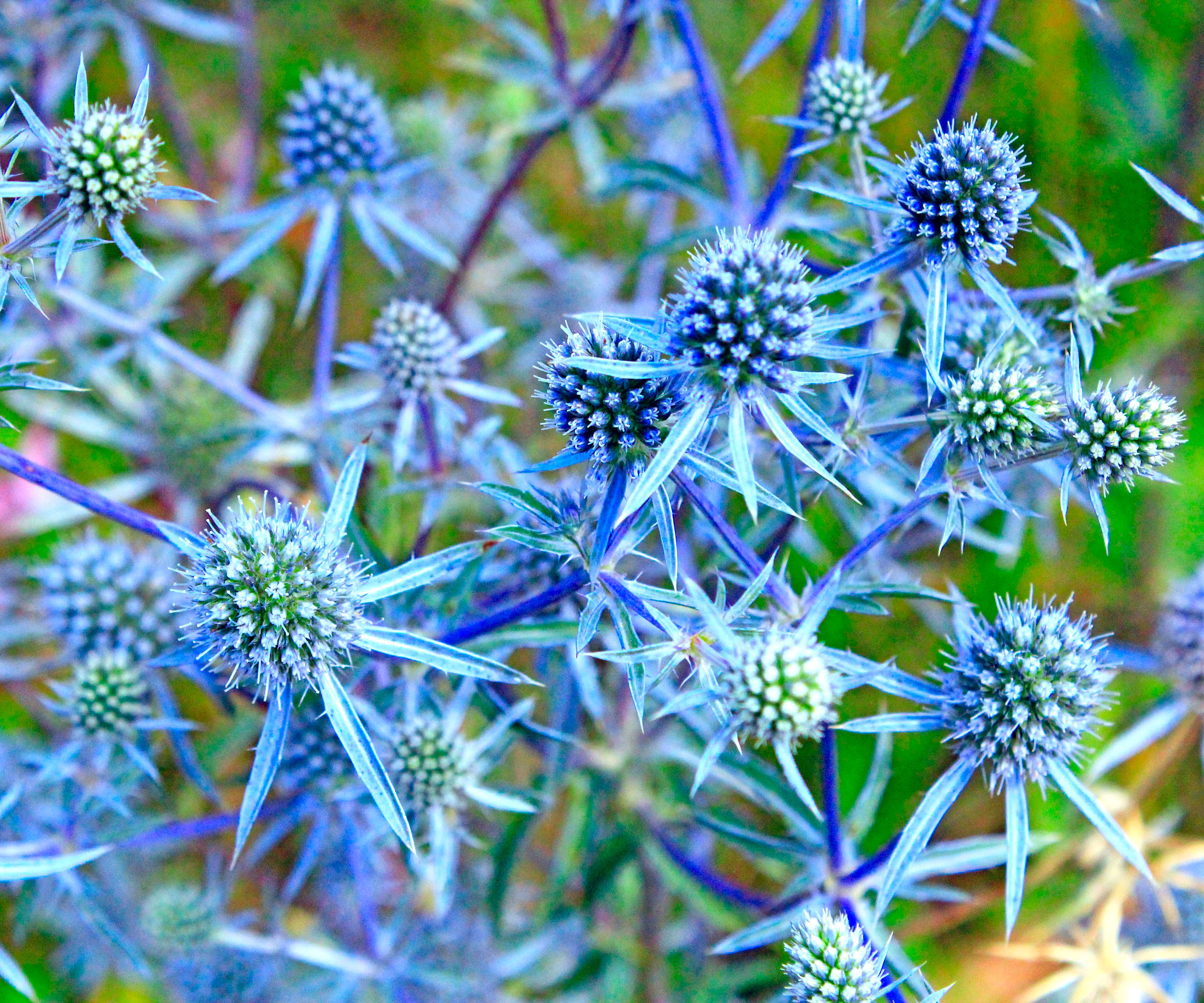
For sea holly, I love the look of tall, frothy Blue Glitter sea holly, available at Plant Addicts. When the light hits the plant just right, it shimmers and gives an electric blue aura. If you prefer larger heads, then Big Blue sea holly, also at Plant Addicts, is a great choice. Blue Star, available to preorder as roots from Eden Brothers, is a striking alternative if you don’t mind waiting until spring, as each divided bract is like a ruff around the flower.
Why Coneflowers and Sea Holly Work Together
If long bloom times (2–3 months) followed by architectural seed heads in winter sounds appealing, then a coneflower and sea holly pairing hits the Plant Matchmaker jackpot. They flower at similar times, yet each brings something completely different to the table.
Coneflowers, with their tall, slender stems, carry soft, daisy-like petals surrounding rounded central cones, while sea holly adds spiky, structural flower heads and metallic blue tones. Together, that contrast makes both plants look more interesting. Their colors work naturally, too: purple coneflower blends beautifully with blue for a romantic prairie look, while orange varieties create the kind of dramatic contrast that Van Gogh would approve of.
The plants’ flowering seasons also overlap beautifully, and both hold onto striking seed heads long after the last petals have fallen, giving extra structure into fall and winter.
How to Grow Them Together
Coneflowers and sea holly make natural companions in garden borders. Both thrive in full sun, prefer well-drained soil, and become impressively drought tolerant once established. Most coneflowers are hardy in USDA zones 3–9, while many sea hollies suit zones 4–9, although it is worth double-checking the recommendations for your chosen varieties.
To ensure strong plants and abundant flowering, give the pairing at least six hours of direct sun each day. Neither plant likes sitting in wet soil, and sea holly in particular prefers the soil to be on the dry side. They will tolerate a range of soil types provided drainage is good, though if you have heavy clay soil, you’ll need to improve drainage before planting. Avoid making the soil overly rich, though, as this can encourage floppy growth.
For a natural prairie effect, weave the plants together, rather than planting each variety in a separate block. Allow roughly 18–24 inches (45–60 cm) between plants, depending on the mature size of your cultivars, and repeat small groups through the border, so the purple or orange coneflowers appear to float among a sea of metallic blue.
Consider height when deciding on position. Taller coneflowers like Magnus can sit towards the middle or back of a border, with similarly tall, airy sea hollies like Blue Glitter threaded between them. But more compact varieties can be brought further forward, so their contrasting flower shapes are easier to appreciate.
Water newly planted perennials regularly during their first growing season, to allow roots to establish. After that, you’ll find both plants to be pleasingly low-maintenance. Simply water during prolonged dry spells and avoid heavy feeding. Coneflowers can be deadheaded to encourage more blooms, but leave at least some faded flower heads standing in fall to continue the display into winter.