As our summers seem to get hotter every year, I’ve found myself rethinking the plants I grow. Instead of choosing varieties that simply survive the heat, I’m looking for ones that actually thrive in it – and reward me with color, fragrance and plenty of wildlife, even during the warmest spells.
That’s why I’m always on the lookout for fragrant plants that do more than just look pretty. A beautiful perfume can completely transform a garden, especially if you spend summer evenings outdoors, and there’s nothing better than catching the scent of flowers drifting across the garden on a warm breeze.
If you’re searching for perfumed patio plants that can cope with rising temperatures while making your outdoor space feel like a Mediterranean escape, there is one heat-loving climber I’d happily recommend. Because, with its glossy evergreen foliage, masses of starry white blooms and an unforgettable fragrance, it’s a plant that earns its place year after year.
The Heat-Loving Climber You Need To Try
No surprises here, but confederate jasmine (Trachelospermum jasminoides) is the heat-loving climber that has been stealing the show in gardens everywhere this summer.
Although it isn’t a true jasmine, its intensely sweet perfume is often compared to – and by some gardeners even preferred over – the fragrance of roses. On warm evenings, the scent drifts through the garden, making patios, pergolas and seating areas feel like an outdoor retreat.
Unlike some vigorous climbing plants, confederate jasmine (also known as star jasmine) is generally well behaved, making it easier to keep within bounds with a light trim after flowering. And it loves sunshine and warmth, making it an excellent choice for gardeners in USDA Hardiness Zones 8 to 10.
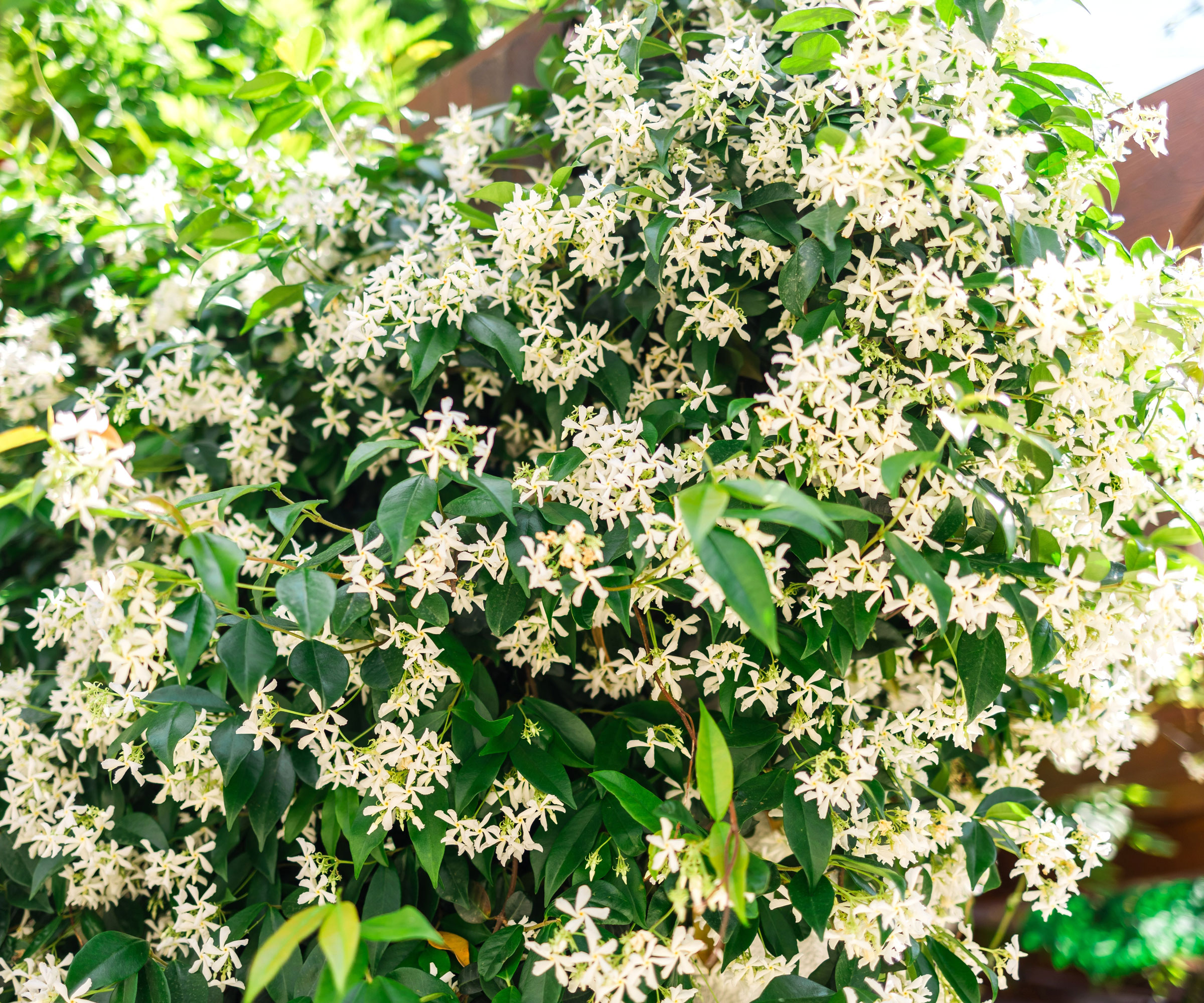
No surprises here, but this heat-loving climber grows happily in full sun or partial shade, although the strongest flowering and fragrance usually come from plants that receive at least six hours of sunlight each day.
Once established, confederate jasmine is also relatively drought tolerant. Regular watering during its first growing season helps it develop a strong root system, sure, but mature plants are capable of coping with periods of dry weather better than many flowering climbers.
If you live in a colder climate, don’t rule it out entirely. Many gardeners successfully grow star jasmine in large containers that can be moved to a sheltered spot during winter.
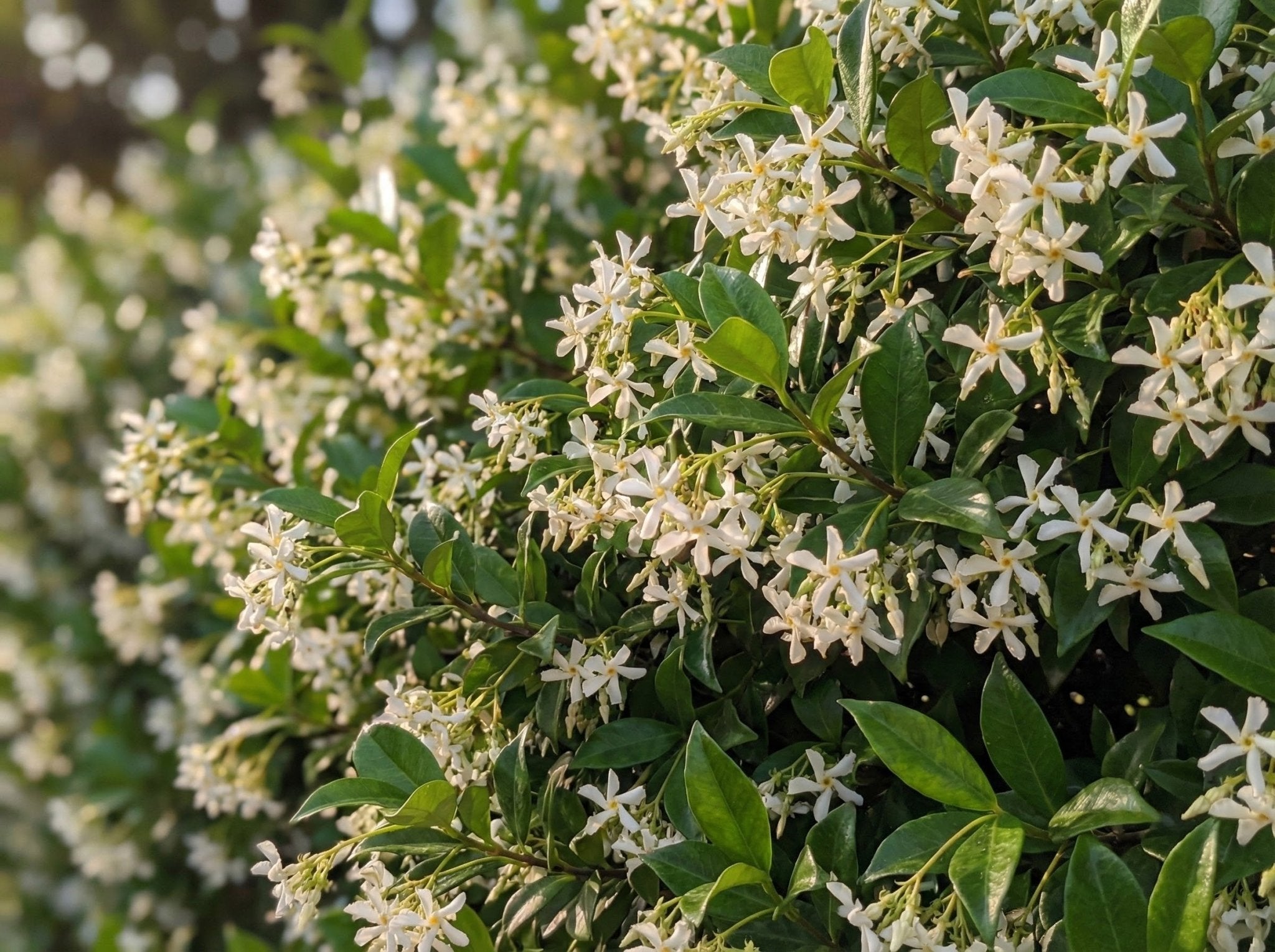
Confederate Jasmine is a sensory masterpiece that transforms ordinary landscapes into fragrant retreats.
The heavenly fragrance isn’t just for people to enjoy, either, as the nectar-rich flowers attract bees, butterflies, hummingbirds, and other beneficial pollinators (including your birth month bug, probably). Its dense foliage, too, can also provide valuable shelter for small birds, making it a triple threat.
There’s lots you can do with a confederate jasmine. Train it over a pergola to create a scented canopy, or let it soften a plain fence or brick wall. It also performs beautifully around entrances, and it can even be grown as an evergreen ground cover on slopes or banks where its spreading stems help suppress weeds while creating a lush carpet of foliage.
Whichever location you choose, make sure the soil drains well, as confederate jasmine absolutely loathes sitting in waterlogged ground.
Shop Confederate Jasmine Now:
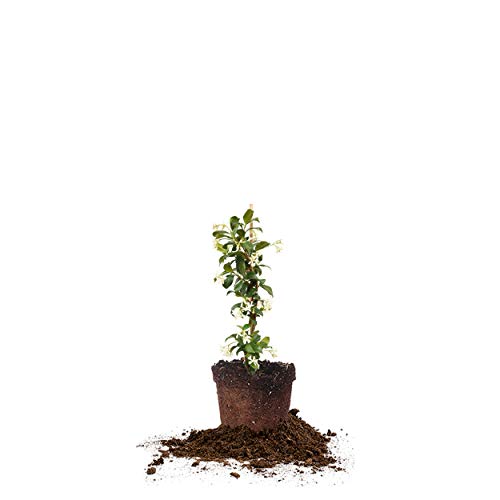
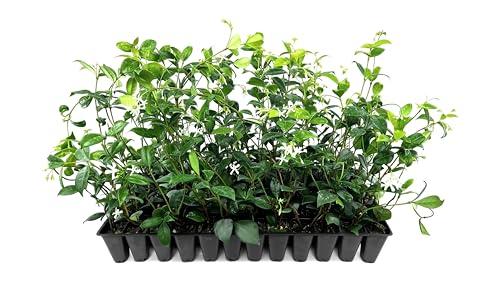
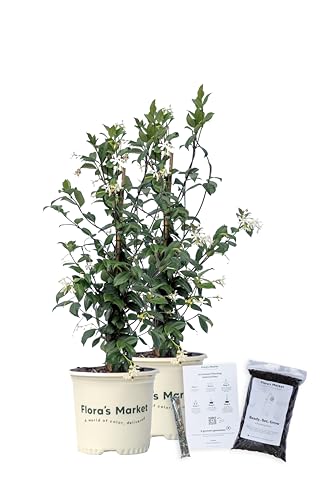
For gardeners who want maximum impact without constant upkeep, star jasmine is hard to beat. Aside from occasional watering during prolonged dry spells and a light prune to keep growth tidy, it asks for very little in return (think a spring application of a balanced fertilizer and a layer of mulch).
Honestly, it’s easy to see why so many gardeners consider star jasmine one of the best climbers for warm-climate gardens. Jump on the bandwagon, I say! Once it’s in full bloom, you’ll understand why so many people pause to enjoy its scent every time they walk past.