Bindweed is a perennial weed that’s a common problem in gardens. It has fast-growing, long stems that can grow to around 3m. These stems climb by twining through garden plants, not just spoiling their appearance, but weakening and smothering them. Bindweed dies right back in winter, making it easy to forget it’s there until new growth appears in spring, growing rapidly both above and below ground.
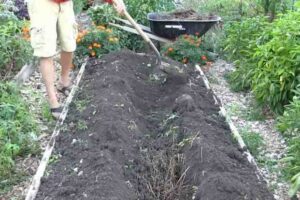
Act before spring to get the upper hand on bindweed in your garden before it takes hold. The best way to do this is by digging out the roots. These are long, creamy white in colour, and vary in width from spaghetti to pencil thickness. As well as stopping bindweed in its tracks, it’s easier to tackle bindweed now, when veg beds are at their emptiest and garden plants are dormant. It’s simpler to lift and dig around plants to winkle out bindweed roots at this time of year than in summer when borders are packed with plants.
How to identify bindweed

There are two types: hedge bindweed (Calystegia sepium) and field bindweed (Convolvulus arvensis), but it’s hedge bindweed which causes the most problems. Hedge bindweed stems can grow to 3m with long roots, whereas field bindweed is smaller with leaves that are up to 6cm long, flowers up to 2cm wide, less vigorous growth and stems up to 1m long.
Identify hedge bindweed by these characteristics:
- White to pink funnel-shaped flowers up to 5cm wide, between June and September
- Green, heart-shaped leaves up to 12cm long
- Thin green, winding stems
- Creamy white roots
How to deal with bindweed

- Look out for bindweed seedlings and fork them out before they put down strong roots
- Use a digging fork to excavate bindweed roots, rather than a spade that will slice up roots. Even the smallest piece left in the ground will develop into a new plant, so remove every bit. For the same reason, don’t rotavate bare soil if bindweed or other perennial weeds are present
- Tackle bindweed when the soil is moist, but not wet or frozen. It’s much easier to remove long sections of root from soil that can be loosened with a fork first. Pull gently, as the creamy-white roots are brittle and break easily. Extracting long lengths of root is really satisfying
- If bindweed roots are growing through the root ball of a plant, first loosen the soil on either side and try and pull it all out. If that’s not possible, dig up the plant, remove the bindweed and then replant. If bindweed is growing through herbaceous perennials and ornamental grasses, this is a good way of combining two jobs in one as mature plants benefit from dividing and replanting while dormant, and you can remove bindweed in the process
- Prevent bindweed invading from neighbouring gardens. Roots travel easily under fences from neglected gardens and waste ground. Dig a trench along your boundary and put in a root barrier membrane or another type of impermeable material.
- If weedy ground won’t be used for growing for a while, kill perennial weeds, including bindweed, by keeping them in the dark for at least a year. Cover the soil with light-excluding material such as flattened brown cardboard boxes or weed control fabric (plastic-free, if possible, to avoid environmental problems).
Organic weed control is always safest for your own health and that of the environment. While the systemic weedkiller glyphosate is still available for use on bindweed, there are growing concerns about its toxicity to human health, aquatic and soil life. There is also research to show that it can adversely affect honey bees. It’s also worth remembering that bindweed flowers are beneficial to wildlife, such as bees, butterflies and hoverflies, while the leaves provide food for some caterpillars.