
Blackthorn tree (Prunus spinosa) is a deciduous, suckering shrub in the rose family, traditionally grown as a thorny hedge as a barrier against livestock. If left unclipped, blackthorn will develop into a free-standing tree. Blackthorn provides interest throughout the year, bearing white flowers in spring and spherical, bluish-black fruits, known as sloes, in autumn.
In the garden, blackthorn is an excellent choice for a wildlife hedge along with other native trees such as hawthorn, hazel and spindle. Its vigour and tendency to produce suckers make it less suitable for small gardens.
With many regional names such as snag-bush or heg peg, blackthorn has long been associated with myths of bad luck and witchcraft. Witches’ wands and staffs were said to be made of blackthorn wood.
In folklore, the old phrase ‘blackthorn winter’ is thought to have referred to a spell of cold weather in spring when hedgerows are covered in white blackthorn blossom, resembling a light fall of snow. Blackthorn wood is dense and tough. It burns well, creating good heat and little smoke.
Identifying blackthorn
Blackthorn is a tree of hedgerows, scrub and woodland edges where it grows naturally as a dense, thicket-forming shrub. It is common in much of the British Isles, except in the far north of Scotland. Blackthorn suckers freely and the dark grey-brown stems are downy when young. The leaves of the blackthorn bush are dark green and oval-shaped with toothed margins.
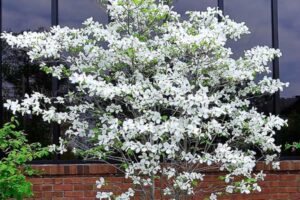
Blackthorn blossoms in March and April, before the foliage appears. It’s often confused with hawthorn (Crataegus monogyna), which flowers after the leaves, in April and May. If you see a bare-stemmed tree covered in pure white blossom, you can identify it as blackthorn. Another difference is that hawthorn flowers emerge from the same place as the buds, whereas blackthorn has buds along the length of the spines.
Blackthorn can also be confused with cherry plum (Prunus cerasifera), a native of southeast Europe and western Asia, which has very similar flowers. Cherry plum is often found in hedgerows and has naturalised here in the UK. A purple-leaved form called P. cerasifera var. pissardii ‘Nigra’ is popular as a street tree. Cherry plum usually blooms earlier than blackthorn, and the red or yellow fruits are bigger than sloes.
Each five-petalled blackthorn flower has both male and female reproductive parts and they appear on the black stems singly or in pairs. Flowers develop into small, round blackthorn fruits that look rather like little plums.
Size, height and spread
Blackthorn can be grown as a hedge or left to develop into a small tree with a height of up to 6m and spread of 4m.
Value to wildlife
Blackthorn is an extremely valuable wildlife plant. Over 200 insect and mite species have been recorded feeding on blackthorn, including the caterpillars of the magpie moth and sloe carpet moth. It is also the main larval food plant of the brown hairstreak butterfly. Removal of hedgerows and annual flailing of blackthorn destroys brown hairstreak eggs, as well as other wildlife, and contributes to the ongoing decline of this rare species.
Blackthorn’s early blossom attracts pollinators such as newly-emerged queen bumblebees and mining bees. The plentiful autumn sloe harvest provides food for birds and small mammals, while the thorny tangle of branches creates sheltered areas and nest sites.
How to use sloes
The astringent fruit of the blackthorn are often referred to as sloe berries but, like all stone fruits, they are in fact ‘drupes’ (fleshy fruit that usually contain a single seed). Fruits grow to 1-1.5cm and are best known as the key ingredient in sloe gin. They can also be used in jellies and to flavour sloe vodka and port.
When to pick sloes
Sloes develop after the flowers have been pollinated. They should be picked when ripe, often in October or November, when they are soft and dark purple-black in colour. When foraging, use a good field guide to identify plants or go on a guided walk with an expert. Don’t pick unless you are absolutely certain your identification is correct. Only collect where plants are abundant and leave plenty behind for wildlife.
Sloes for gin are traditionally collected after the first frost once the skins have split, but they can be gathered earlier and kept in the freezer overnight to simulate the effect of frost.
How to grow blackthorn
Grow blackthorn in moist but well-drained soil in full sun. Blackthorn can be grown in most types of soil and copes with exposed as well as sheltered sites. It is a tough, fully hardy shrub.
Where to plant blackthorn

Blackthorn can tolerate dappled shade, but thrives in a sunny spot. Avoid planting in waterlogged soils. It makes an excellent addition to a native wildlife hedge. As a single-species hedge, it creates an impenetrable barrier due to its bushy growth and ferocious spines.
How to plant blackthorn

Container-grown blackthorn is best planted in autumn or spring, but can be planted at any time of year, provided the ground is not frozen. Blackthorn hedging is usually planted bare-root during the dormant season from November to early April, when inexpensive plants are readily available.
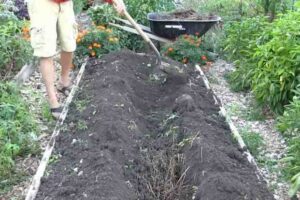
- Dig a trench and soak plant roots in water for 30 minutes prior to planting
- Trim off any overlong or damaged roots to encourage growth
- If using mycorrhizal fungi, which are beneficial to bare-root plants, mix into excavated soil and sprinkle over roots
- Space plants in the trench about 30-45cm apart at the same depth they were growing in the field
- Spread out roots, backfill the hole and firm down gently with your heel
- Cut plants back to 30cm high to encourage bushy growth
- Water thoroughly and keep well-watered in dry periods for the first year
- Mulch around plants with a thick layer of organic matter (7.5cm) to conserve moisture in the soil, but leave a circle of 10cm around the stem free to avoid rotting
How to care for blackthorn
This low maintenance shrub requires little attention other than minimal pruning and removing suckers to prevent thickets developing.
How to prune blackthorn
If necessary, prune blackthorn in late winter or early spring when plants are dormant, providing conditions aren’t freezing. Hedges can be cut to the desired height which will also encourage side branching. Suckers should be removed regularly to prevent thickets developing. Wear thick gloves and eye protection, and take care when pruning as the long thorns are sharp and can cause nasty cuts which can get infected.
How to propagate blackthorn
Blackthorn can be propagated from seed, softwood cuttings, suckers or by layering. Collect seeds in autumn, store them in the fridge overwinter to provide a period of cold stratification, and then sow in spring. Branches can be layered to produce new plants and softwood cuttings taken from spring to early summer. Alternatively, suckers can be carefully severed from the parent plant, lifted and replanted in spring.
Pests and diseases
Silver leaf affects several tree species, including apples, plums and cherries, causing branch dieback and silvery foliage. If this fungal disease is a problem in your area, carry out any pruning in mid-summer when fewer spores are present
Like many fruit trees, blackthorn can be affected by blossom wilt, causing leaves and blossom to brown and wilt
Blackthorn can also be affected by a gall-forming fungus called Taphrina pruni, which causes plants to produce small, shrivelled fruits
Aphids and caterpillars may damage leaves, but generally cause little harm to the plant and are an important part of a healthy garden ecosystem
Bullfinches like to eat blackthorn buds, but numbers have decreased by 40 per cent in the last 60 years, so if you are lucky enough to be visited by one of these attractive finches, you know your wildlife hedge is supporting local bird species
Blackthorn is a potential high-risk host for the bacterial disease Xylella fastidiosa, which has not been discovered in the UK, but can affect a wide range of plants
Advice on buying blackthorn
- Blackthorn hedging is often sold as bare root plants. They can be bought and planted in the dormant season between November and early April
- Plant bare root trees as soon as you receive them. If you can’t plant on the day of arrival, soak them in a bucket of water plant in a bare patch of soil until the planting site is ready
Where to buy blackthorn
Varieties of blackthorn to grow
Prunus spinosa ‘Plena’ – beautiful double-flowered white blossom in March and April.
Height x Spread (if unpruned): 5m x 4m.