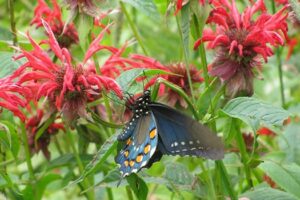

June has some of the finest weather we experience in the UK. The nights are at their shortest, which means that those in the most northerly parts of the country may never get full darkness, and even at the most southerly points, the evenings are drawn out, long and balmy. This is lovely for us gardeners and crucial to many of our plants. These short nights influence flowering in summer flowering plants, helping fill our gardens with colour and the buzz of pollinators.
Now is the perfect time to prune spring-flowering plants that have finished their display for the season. This includes cytisus and Berberis darwinii, which need just a light trim, and spring bulb leaves, which can be cut six weeks after flowering. Removing bulb material too early or tying it up can reduce vigour for the following year. Birds may still be nesting in shrubs, so go easy with the hedge trimmers and focus on any flowering shrubs that no longer look their best.
More pruning advice for now:
- Adam Frost’s guide to the Chelsea chop
- Alan Titchmarsh on pruning spring-flowering shrubs
- Seven pruning mistakes to avoid
Plants to prune now:
Now is the perfect time to concentrate on pruning to encourage strong new growth that will bear next year’s spring flowers. A little reshaping now can be really effective.
Deutzia

Give deutzia a light all-over trim to create a more solid shape or remove one in three old stems to rejuvenate the shrub.
Hippophae

Once the leaves appear, prune out any dead wood and on established, bushy plants, thin out one or two branches. Leave some to carry berries.
Philadelphus

Thin one or two of the oldest philadelphus stems right after flowering, so new shoots have enough time to produce next year’s flower buds.
Clematis montana

Those plants that have become congested and unruly can be pruned as needed, once flowering has finished.
Avoid pruning:

- Grapevines: Although you will start thinning the fruit as soon as you see it forming, grapevines should only be heavily pruned when they are fully dormant.
- Group 3 clematis (viticella or texensis types): These should be pruned in February/ early March. Any later and you won’t get flowers.
- Roses: Although deadheading is recommended after flowering, do not prune roses hard now, as they are just starting the flowering season.
- Walnuts: Walnut trees can bleed if any major pruning is carried out this month, so just stick to removing any dead material.
Step by step: Pruning chaenomeles

These are magnificent shrubs that bear beautiful flowers in spring (if the blue tits don’t eat all the flower buds). They can traditionally be grown as a kind of climber, though they do not naturally cling to surfaces in any way.
Chaenomeles have a tendency to flop forwards, and once they become robust shrubs, training them back can be tricky. It’s better to start them off well and get them growing where you want them as soon as they are planted. Ideally wait until just after they flower. The finished result should be a natural fan shape, on a strong wall or fence, where every branch has healthy buds and room to grow.
Step 1

Assess the shape of the shrub, looking for the strongest branches (the ones you will keep) and where things are going awry. Check if any part of it is diseased, damaged or dead.
Step 2

Using canes tied into securely attached horizontal wires, tie in the strongest and most healthy stems so that they follow the framework. Aim to cover the fence or wall evenly.
Step 3

Prune out stems that are unhealthy or sticking out away from the fence, and growing in the wrong direction. Also take out any growth that is congesting the base of the plant.
Step 4

Encourage more flowering by pruning back long growth to the flowering spurs. This shrub is still in flower, so it is easy to see where flowers will form – generally in clusters by the main stems.
Also prune this way:
Spring-flowering evergreen ceanothus (California lilac) has a similar woody structure and can also be trained against a wall or fence, so it requires similar treatment to chaenomeles. It should also be pruned immediately after the flowers (beloved by pollinators) have faded.
Tie in the new growth regularly. When the branches reach the end of the canes making a fan-shape, you can tie in more canes. When thick woody stems have formed you can remove the canes, letting the plant form a fan-shape without them