A chewed leaf is usually a clue, and not just an eyesore. The shape of the damage and where it shows up usually point straight to whoever’s responsible, and naming the culprit is most of the battle.
You put in the work all spring, and then one morning the leaves look like someone went at them with a hole punch. It is common to happen, and it’s rarely a mystery for long. Most of the bugs that eat plants leave a calling card—a particular style of damage that gives them away. Once you learn the signs, the rest is mostly follow-through.
This isn’t about reaching for the strongest spray on the shelf, either. Half of identifying garden pests is just looking closely—at the holes, sure, but also the leaf undersides where things hide, and the little black specks they leave behind. Match the damage to the bug, and the fix usually turns out simpler and gentler than you’d expect.
Match the Damage: 7 Common Culprits
None of this needs a lab. Most damage falls into a handful of patterns, and once you’ve seen each one a couple of times, you’ll start spotting the culprit at a glance. Here’s how the usual suspects sign their work.
1. Slugs and Snails
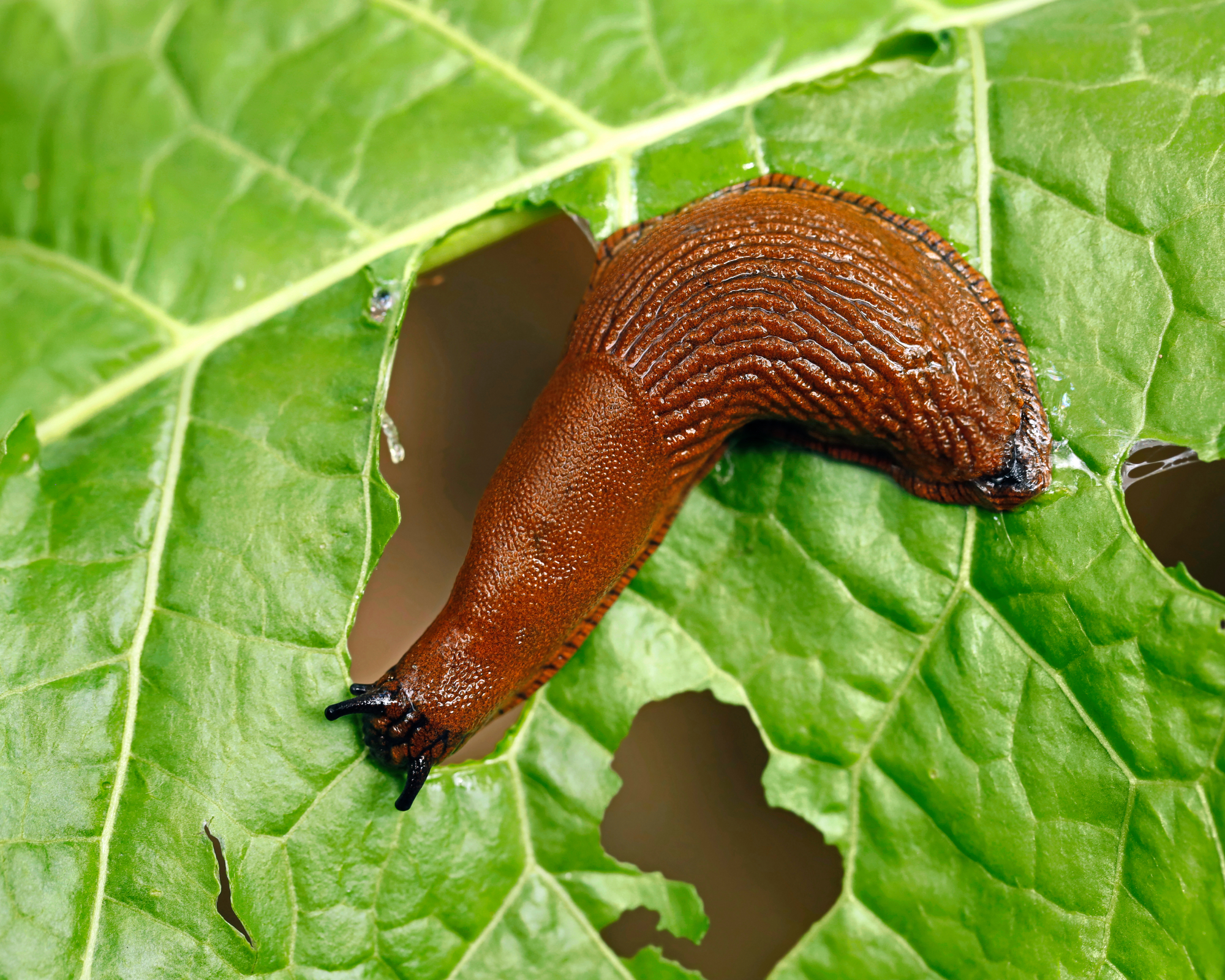
If the holes turn up overnight and there’s a silvery trail glinting nearby, you’re looking at slugs or snails. They go for soft, low growth—seedlings especially—and they’re at their worst after rain. Heading out after dark with a flashlight to pick them off works, though it’s not everyone’s idea of a good evening.
A few slug hacks gardeners swear by include beer traps, copper tape, and trap boards. Beer traps sunk level with the soil pull them in, and copper tape around a pot gives them a jolt they won’t cross. For a real infestation, an organic slug bait from Amazon (currently 20% off for Prime Day) uses iron phosphate is safe around pets and wildlife, unlike the older pellets. Mostly, though, clearing the damp boards and pot rims they shelter under does more than any trap.
2. Caterpillars
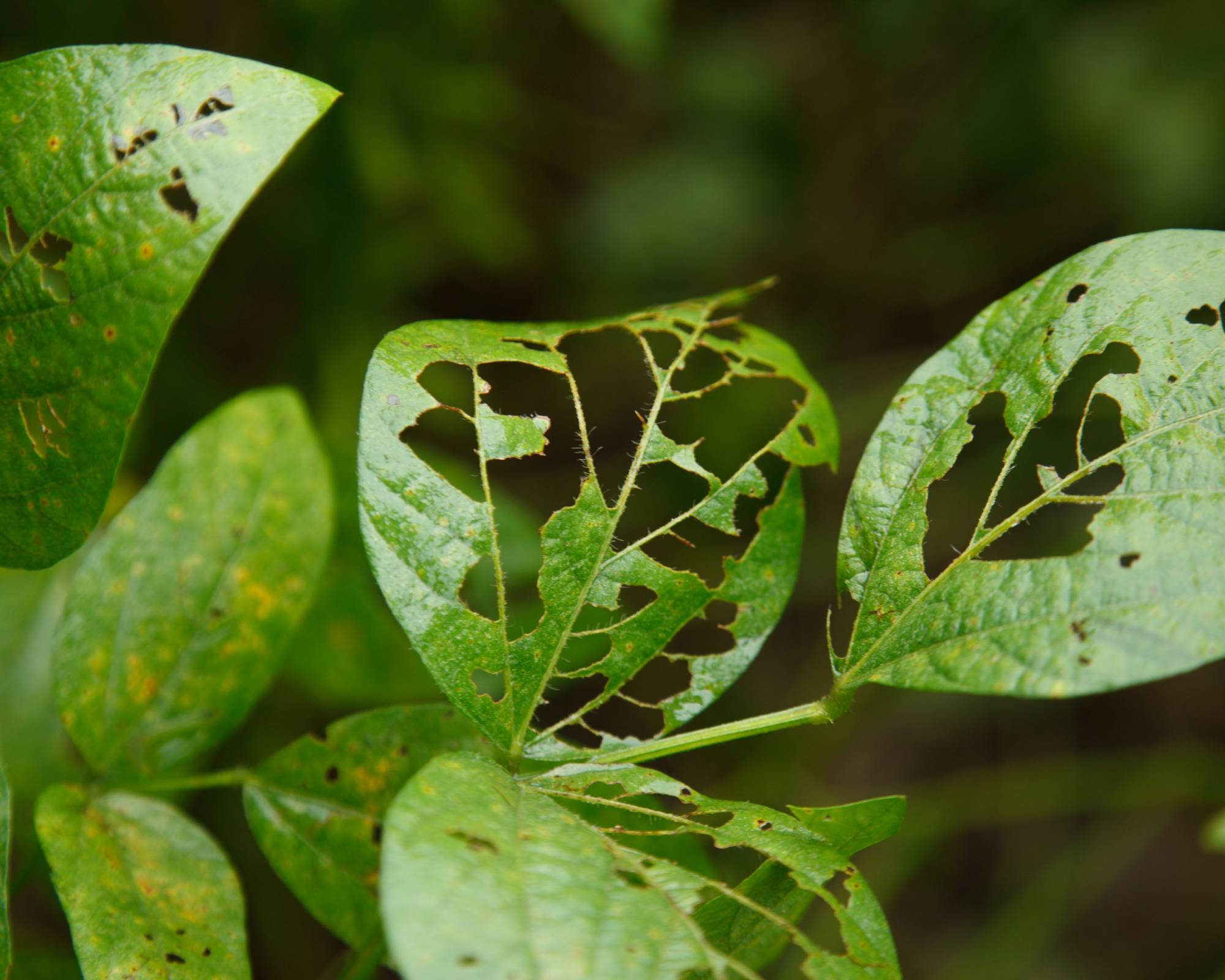
Look for the droppings. Large, irregular bites out of the leaves, plus a scatter of dark frass pellets on the foliage below, almost always means caterpillars. They like to hide on the undersides by day, so flip a few leaves over. A tomato hornworm can strip a plant in a day or two if you miss it.
Hand-picking honestly works if you keep at it; drop them in soapy water and move on. When there are too many to chase, a spray of Bacillus thuringiensis from Amazon (Bt) hits caterpillars only and leaves the bees and everything else alone, which most sprays can’t manage to do. Netting over the crop stops the moths laying eggs to begin with.
3. Japanese Beetles
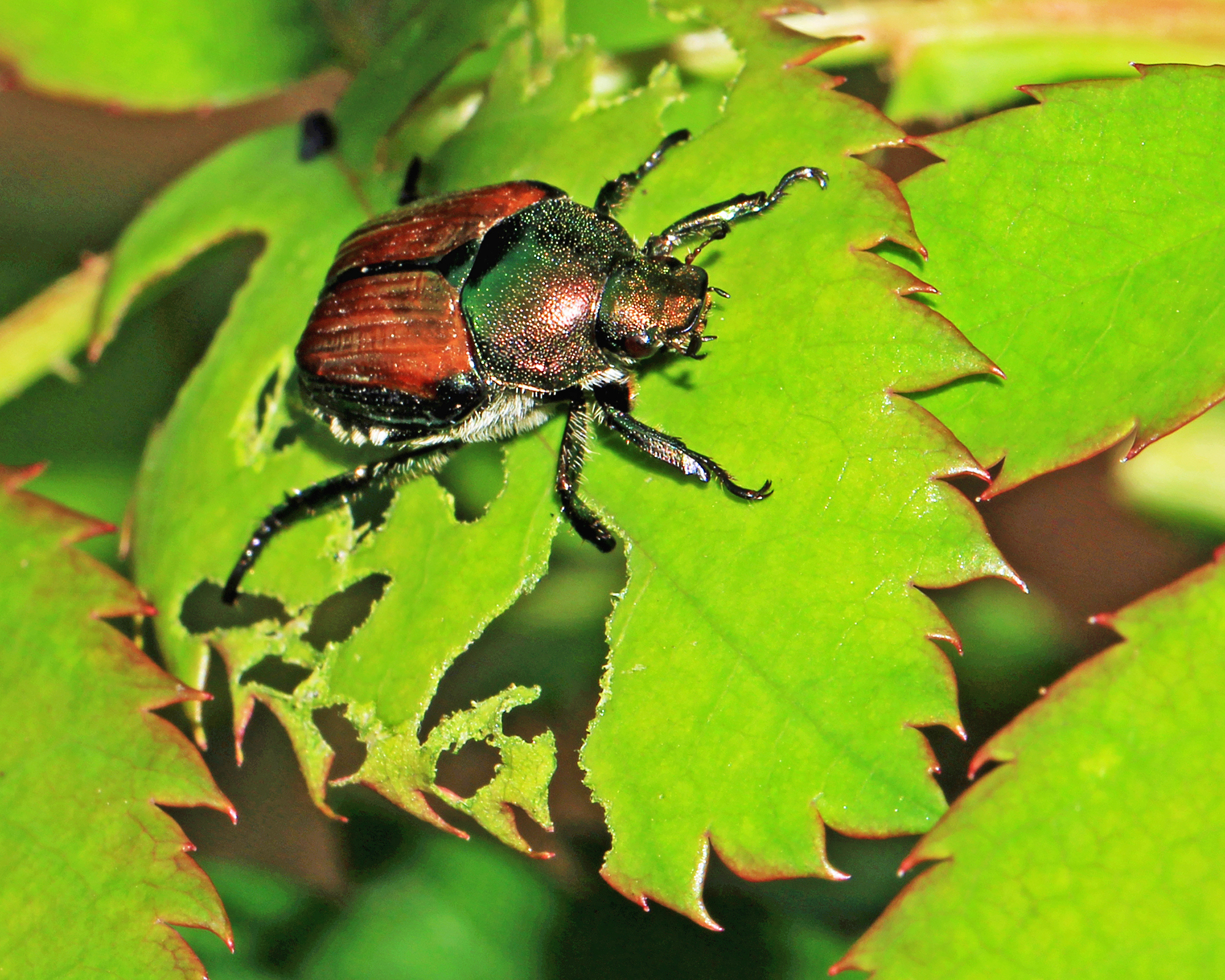
You’ll usually catch Japanese beetles in the act. Fat, metallic green-and-copper beetles clustered on a rose in the afternoon sun, the leaf behind them eaten down to a lacy net of veins. They’re among the showiest bugs on garden plants, and among the most maddening. Knock them into a tub of soapy water early in the morning while they’re still sluggish; it thins a group fast.
Skip the pheromone traps, whatever the box promises—they pull in more beetles than they catch. Neem oil from Amazon makes the leaves less appealing, and since the grubs spend winter in the lawn, treating that breaks next year’s cycle. Plan on staying after this one all season.
4. Flea Beetles
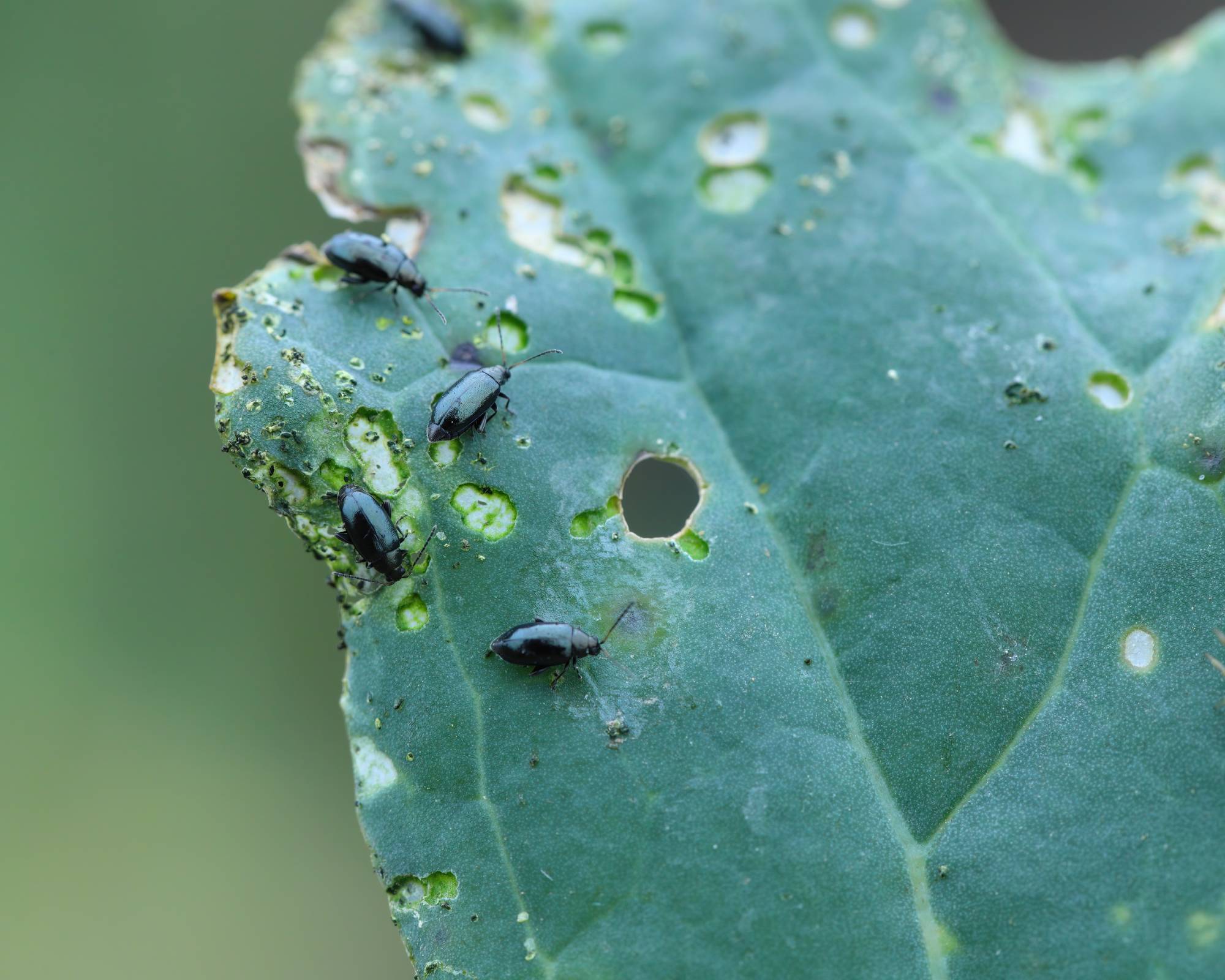
It looks like someone fired birdshot at the foliage. Dozens of tiny round holes peppering the leaf. That’s flea beetles, and they live up to the name, springing away the second you lean in. Seedlings take it hardest; young brassicas and eggplant can stall out completely under a heavy attack.
The surest answer is keeping them off from the start. A floating row cover from Amazon dropped over the bed at planting lets in light and rain while shutting the beetles out. Sticky traps catch the adults, and once a plant is big and growing strong, the damage isn’t near as noticeable.
5. Earwigs
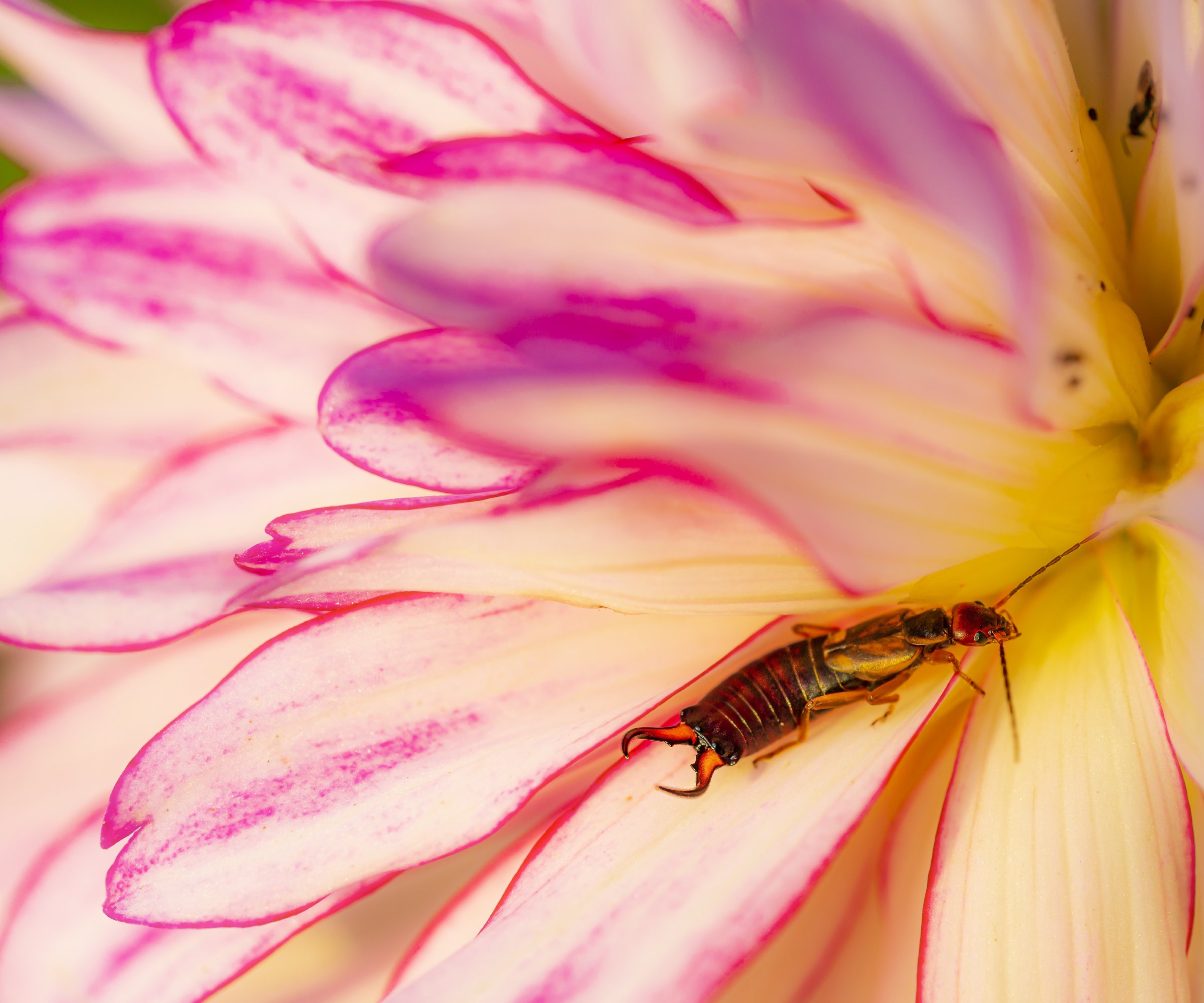
No slime, but soft leaves and flower petals chewed into ragged holes, and nothing in sight during daylight? Suspect earwigs. Dahlias and marigolds are favorites, along with any tender seedling. They feed at night and tuck into tight, dark crevices by day, which is exactly how you beat them.
Set out a loosely rolled damp newspaper, or an upturned pot packed with straw, and empty the hideouts come morning. One catch worth remembering: earwigs also eat aphids and other small bugs eating plant leaves, so a few around the garden actually earn their keep. Step in only when they’re wrecking blooms you really care about.
6. Sawfly Larvae
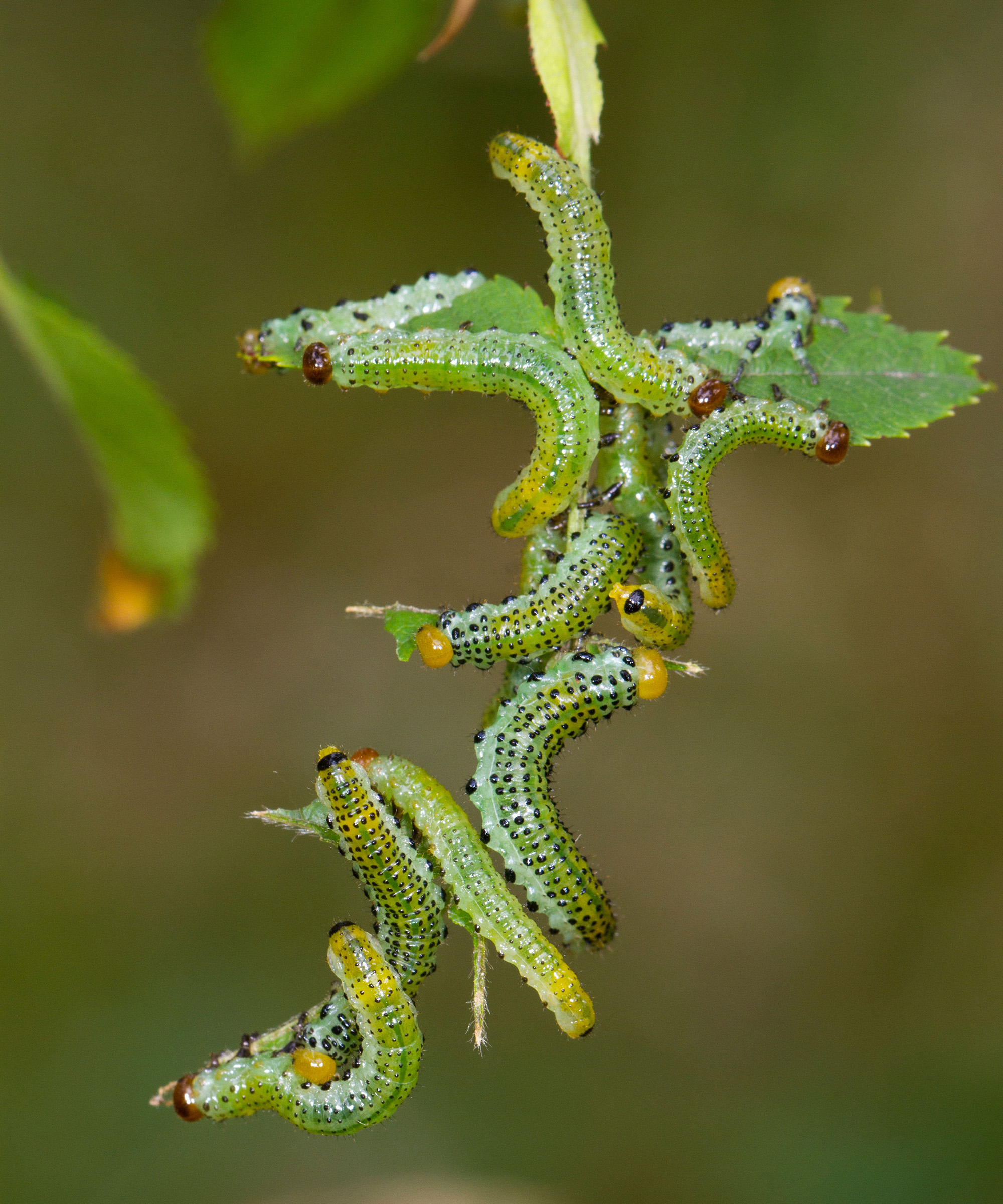
Sawfly larvae get mistaken for caterpillars all the time, which sends people reaching for the wrong product. They graze the surface off a leaf and leave a thin, translucent windowpane – green veins showing through where the tissue’s been scraped away. Rose slugs are the common version.
Because they aren’t true caterpillars, Bacillus thuringiensis does nothing here, so you have to go at them directly. They gather on leaf undersides, often in tidy rows, so a hard blast of water knocks plenty off, and insecticidal soap or neem mops up the stragglers if you hit where they feed. Get on it early. Five minutes of squishing now spares you a skeletonized bush in July.
7. Vine Weevils
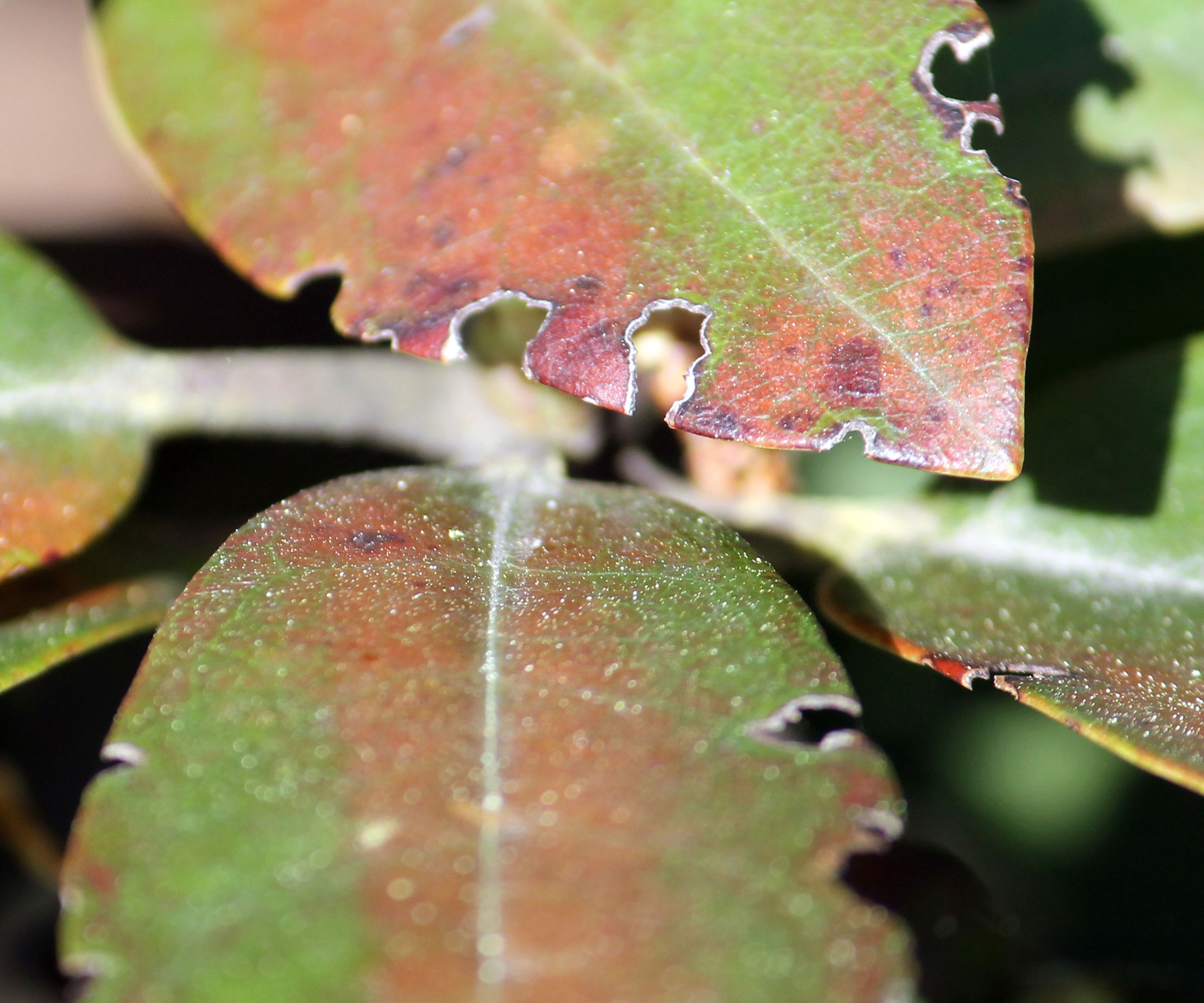
The notched leaf edges are the obvious part of vine weevil damage. The neat little scallops bitten out of the margins almost look decorative, but the real trouble is out of sight. Cream-colored grubs chew through the roots underground, and the first you know of it is often a potted plant that wilts and topples over for no clear reason.
Container heucheras and primulas are prime targets, strawberries too. The adults can’t fly and wander at night, so hand-picking or a sticky barrier handles them. The grubs are the harder problem. An application of beneficial nematodes in late summer, while the soil’s still warm, is the one thing that reliably reaches them down there.