Every fruit tree drops a share of its crop before harvest. By late August the ground under an apple or pear is usually a carpet of bruised windfalls. Raking bruises them further. Bending with a bucket works, until your back gives out.
A nut gatherer handles the task standing up. Among ergonomic garden tools, it is probably one of the odder-looking options. The whole idea is a springy wire cage on a long handle, rolled across the ground like a carpet sweeper. Fruit pops between the wires and stays put. You can find nut gatherers on Amazon, your local hardware store, and sometimes even in garage sales!
The tool gets sold as a “nut” gatherer because that was its first job. But clearing fallen fruit may be the use that pays off most in a garden, and the reasons run well past tidiness.
What Is a Nut Gatherer?
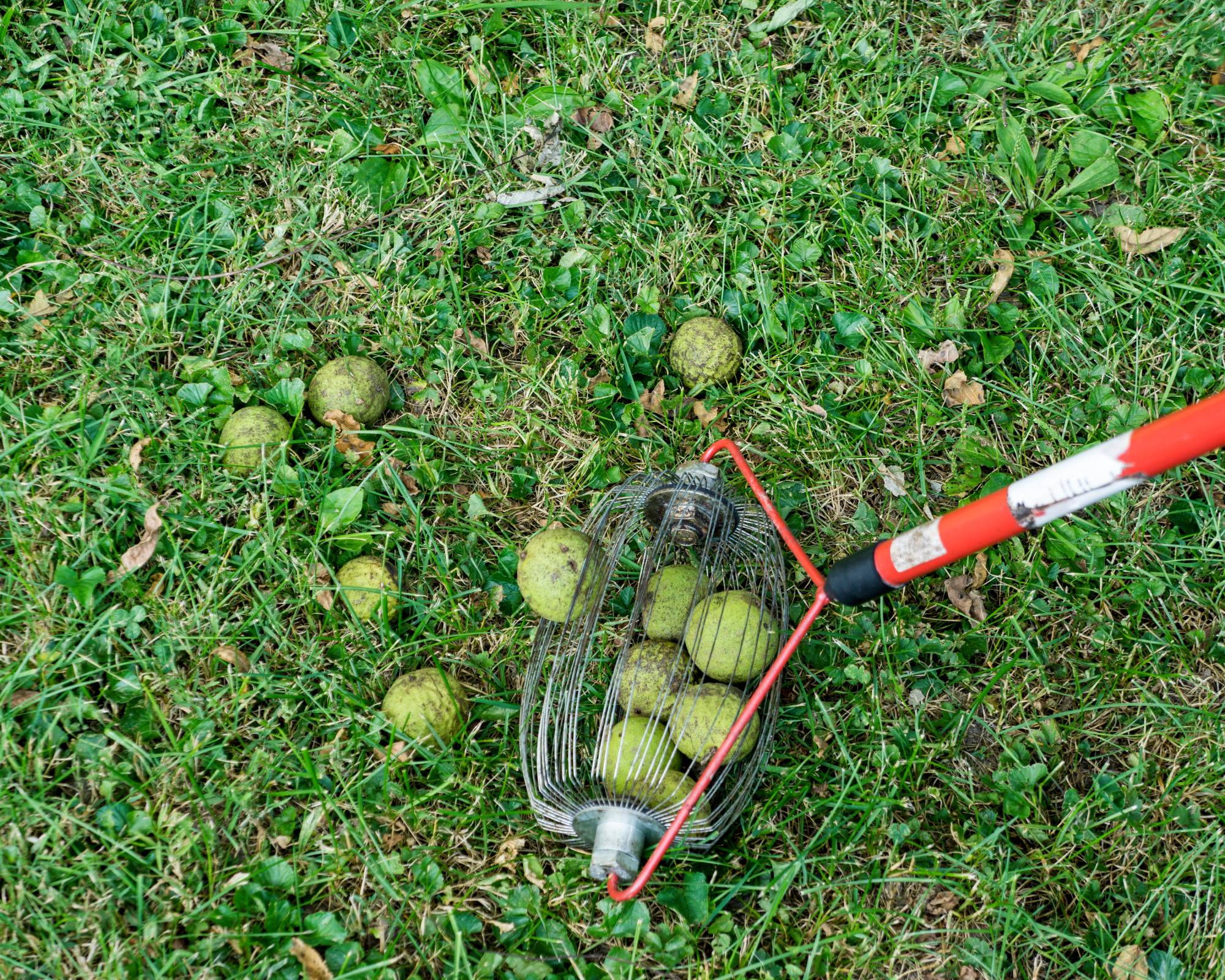
One rotating cage does all of it. Heat-tempered steel wires run around a rotating drum at a fixed spacing. Pressure spreads them just far enough to let an object through before they close behind it. Roll the tool back and forth over a patch and the cage fills. A quick-release spreader on the handle opens the wires again to dump the load.
Size limits what any of these will pick up. Each model takes a set diameter band and ignores everything outside it. The Garden Weasel large nut gatherer from Amazon handles objects about 1.5 to 3 inches (4-8cm), which covers pears and black walnuts, along with all but the biggest apples. It will not touch acorns or pecans. Cherries and small plums roll straight underneath. Measure the fruit before ordering (Garden Weasel make smaller sizes, too).
Why Clearing Windfall Fruit Matters
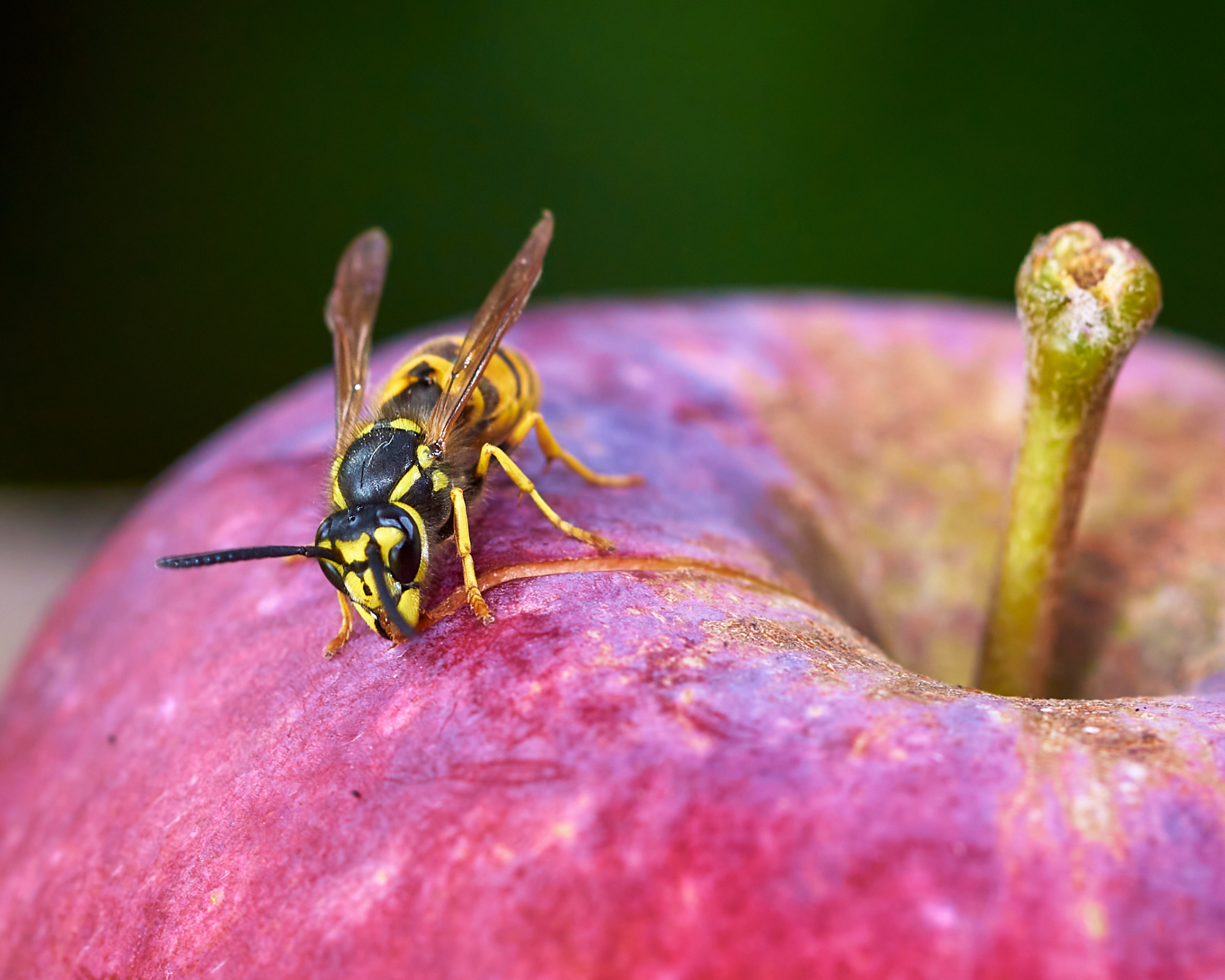
Yellowjacket colonies peak in late summer and early fall. A single nest may hold a few thousand workers by August, and as the season turns the colony diet shifts away from insect prey toward sugar. Fermenting fallen fruit under a tree is usually the strongest sugar signal in a yard. Eastern yellowjackets (Vespula maculifrons) will work a patch of rotting apples all day. Stings tend to come when somebody reaches into long grass, or runs a mower across the patch.
The pest side runs deeper. Apple maggot larvae (Rhagoletis pomonella) feed inside the fruit, leave it once it hits the ground, then pupate in the soil below and emerge as flies the following summer. Codling moth (Cydia pomonella) benefits from the same neglect. Brown rot behaves differently again, since Monilinia fructicola overwinters in dried mummies lying on the ground, ready to start the cycle in spring. Guidance for home orchards is usually a weekly pickup from early August through harvest.
How to Use a Nut Gatherer
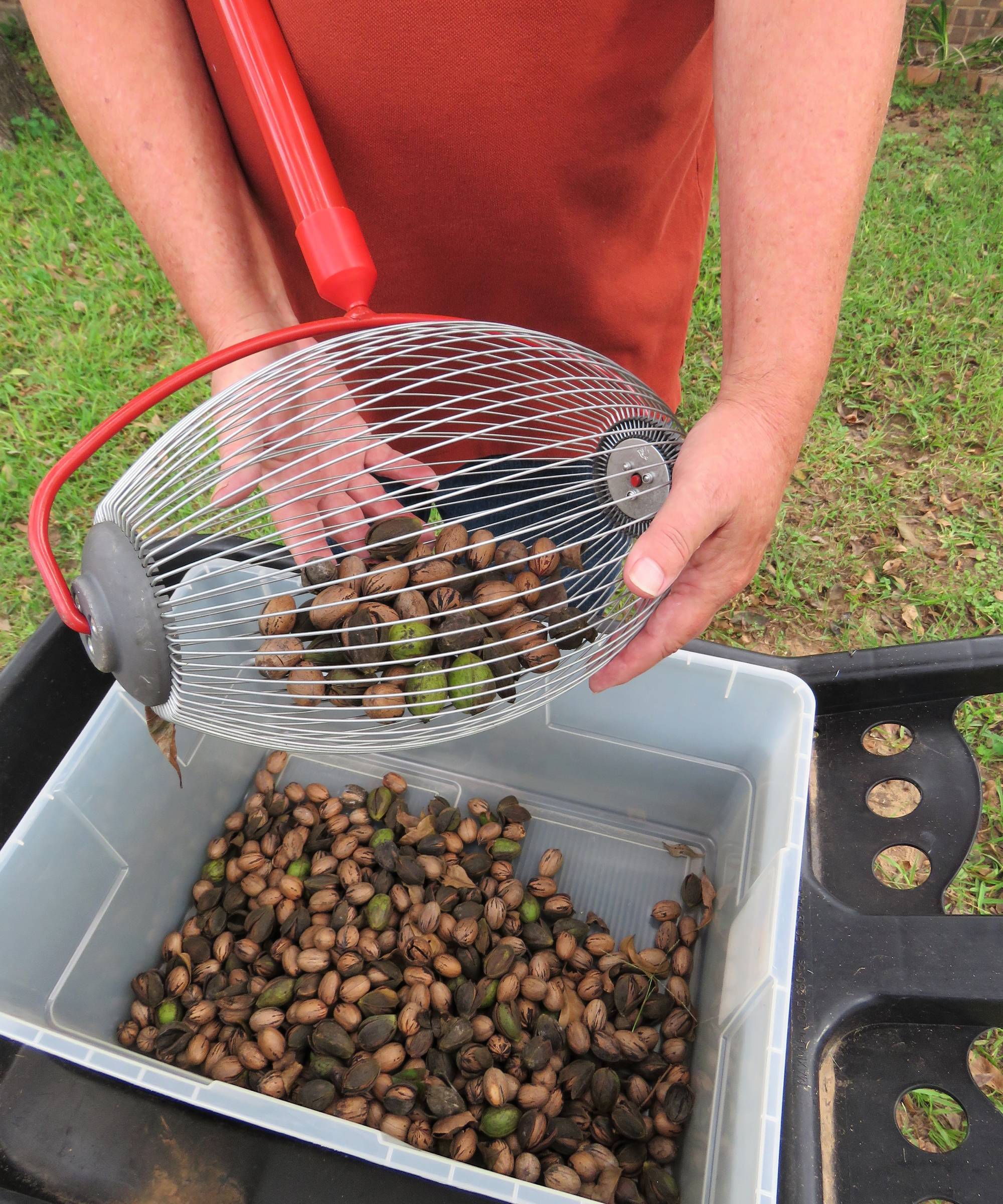
Work in one direction across the drop zone, then cross it again at right angles. The cage misses the occasional item on rough ground, and a second pass catches most of what the first one left. Empty into a bucket rather than onto the grass, since fruit that goes back down defeats the point.
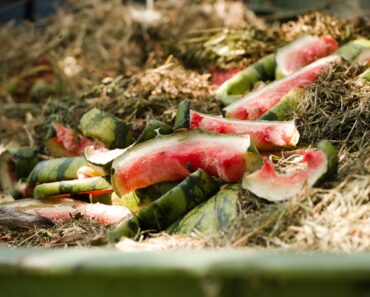
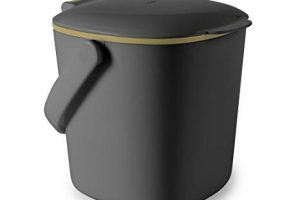
What comes out should not go on the compost heap. Apple maggot larvae and brown rot spores both survive ordinary backyard composting, which runs far cooler than the temperatures needed to kill them. Bag the fruit for household waste, or bury it deep where that is impractical. A lidded can keeps yellowjackets out of the bin in the meantime.
Different Types of Nut Gatherers
Sizing and the emptying method can vary quite a bit between models, though the basic design has barely changed in decades. Match the cage to whatever is on the ground and the rest comes down to preference.
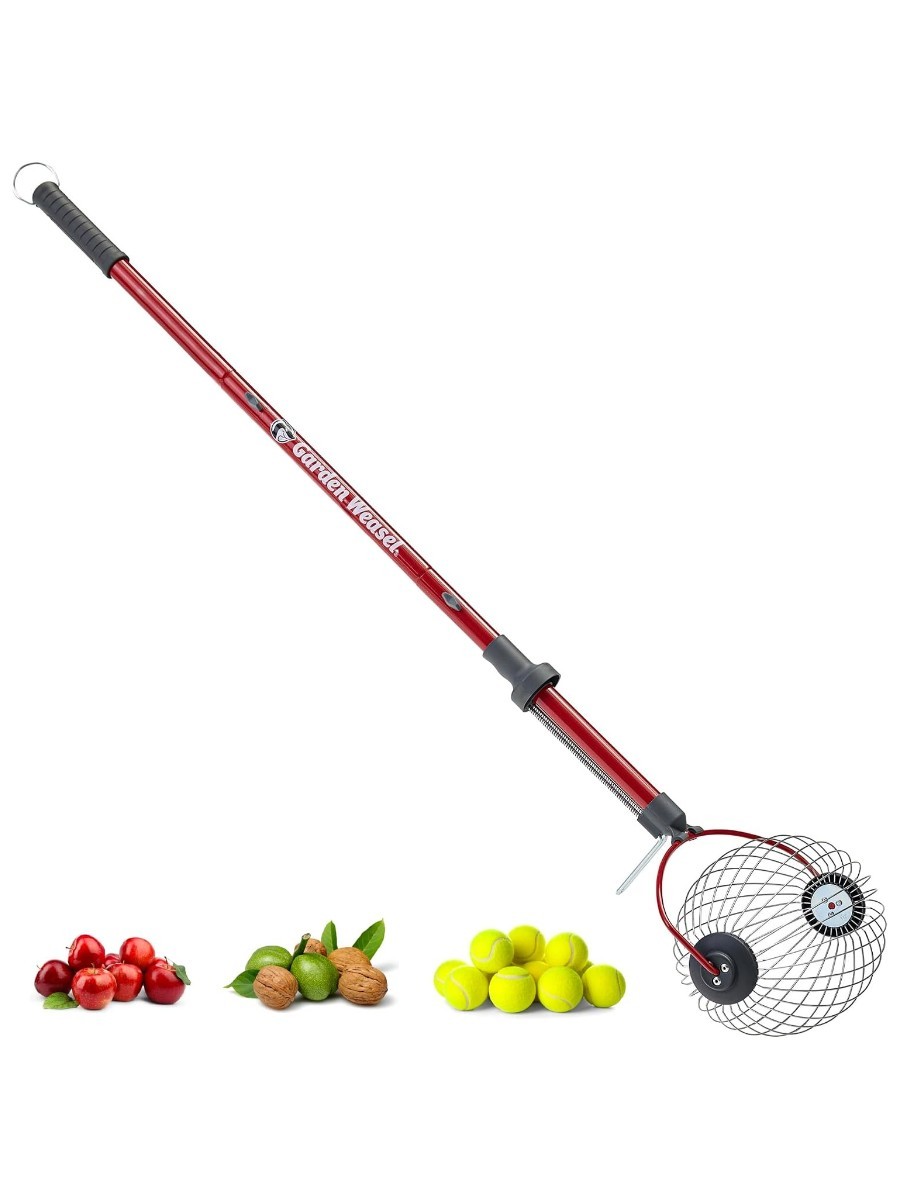
The default choice for windfall pears and small to midsize apples, plus citrus (and even tennis balls). Its steel cage takes 1.5 to 3 inch (4-8cm) objects and holds roughly 1.5 gallons (5.7L), all on a fixed 47.5 inch (121cm) handle. This version has an easy-open cage that is operated from the handle.
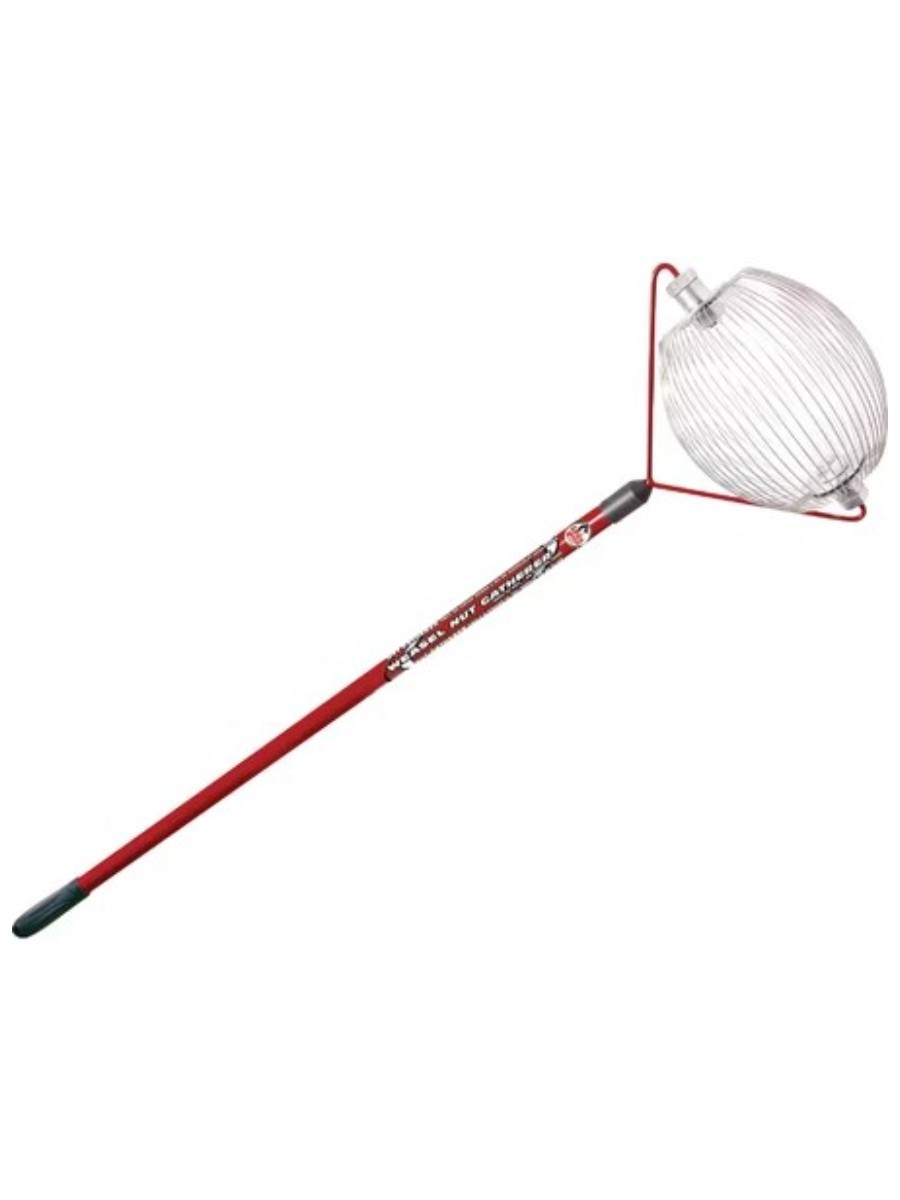
Drops the range to 0.75 to 2 inches (2-5cm). Pecans and hickory nuts are the listed uses, along with large acorns and sweet gum balls. Crabapples or small plums sit in the same band. Capacity is about 1 gallon (3.8L), so it fills faster under a heavy dropper.
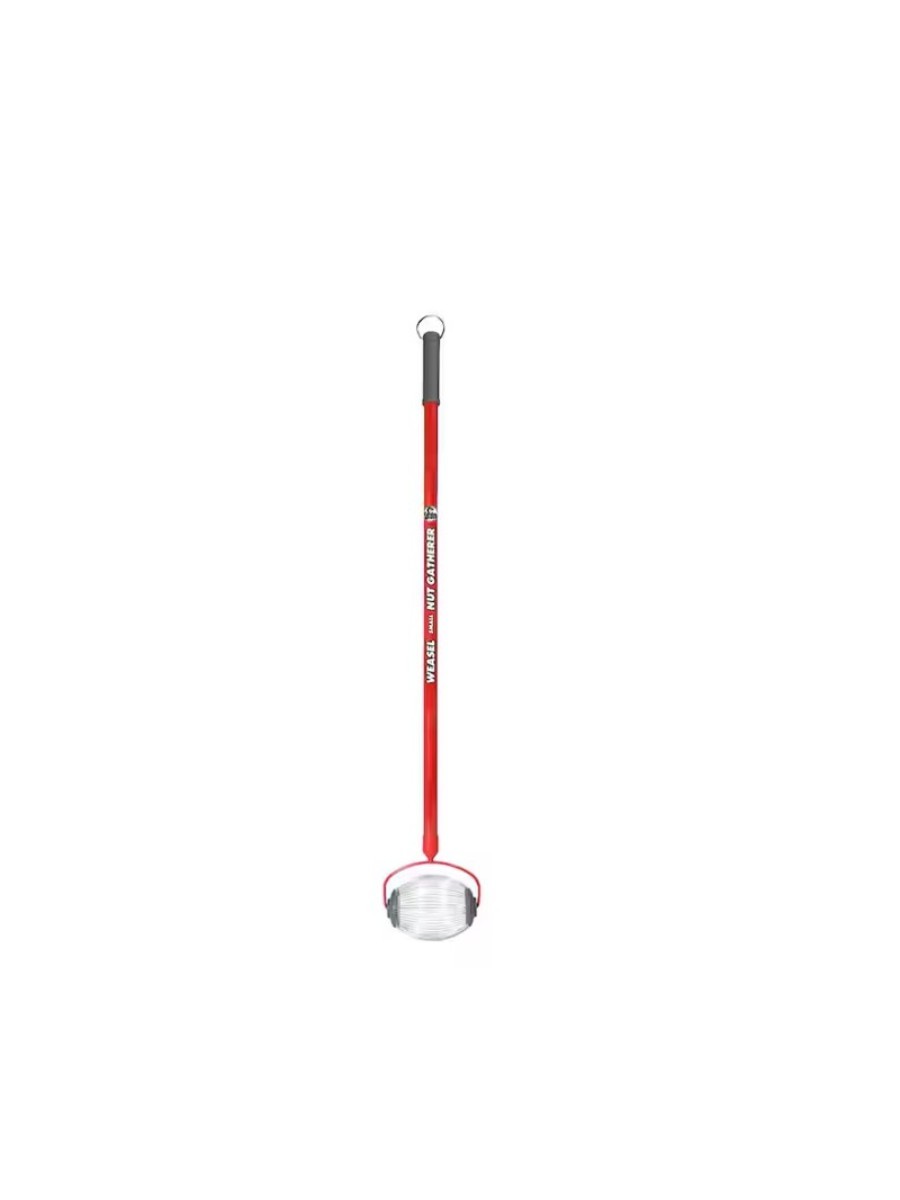
Built for a narrow 3/8 to 3/4 inch (1-2cm) band. Small acorns and buckeyes are its territory, beech nuts too. Windfall fruit generally sits well outside that range. This one is really for the oak rather than the apple tree.
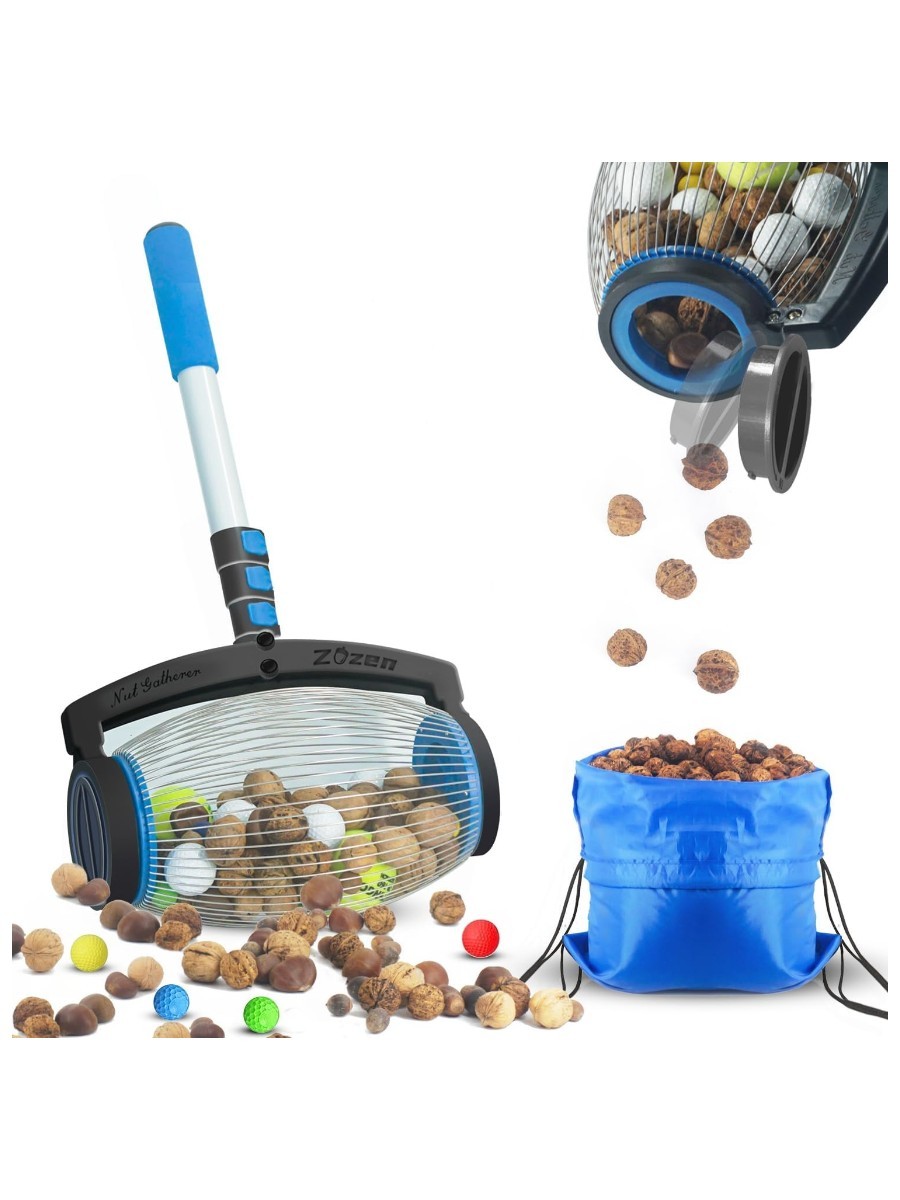
Emptying is where the basic cages annoy people. Open the side outlet and the contents can be dumped out. Capacity runs to about 1.5 gallons. Easily picks up nuts and fruits 3/4 inches to 2 inches in size.
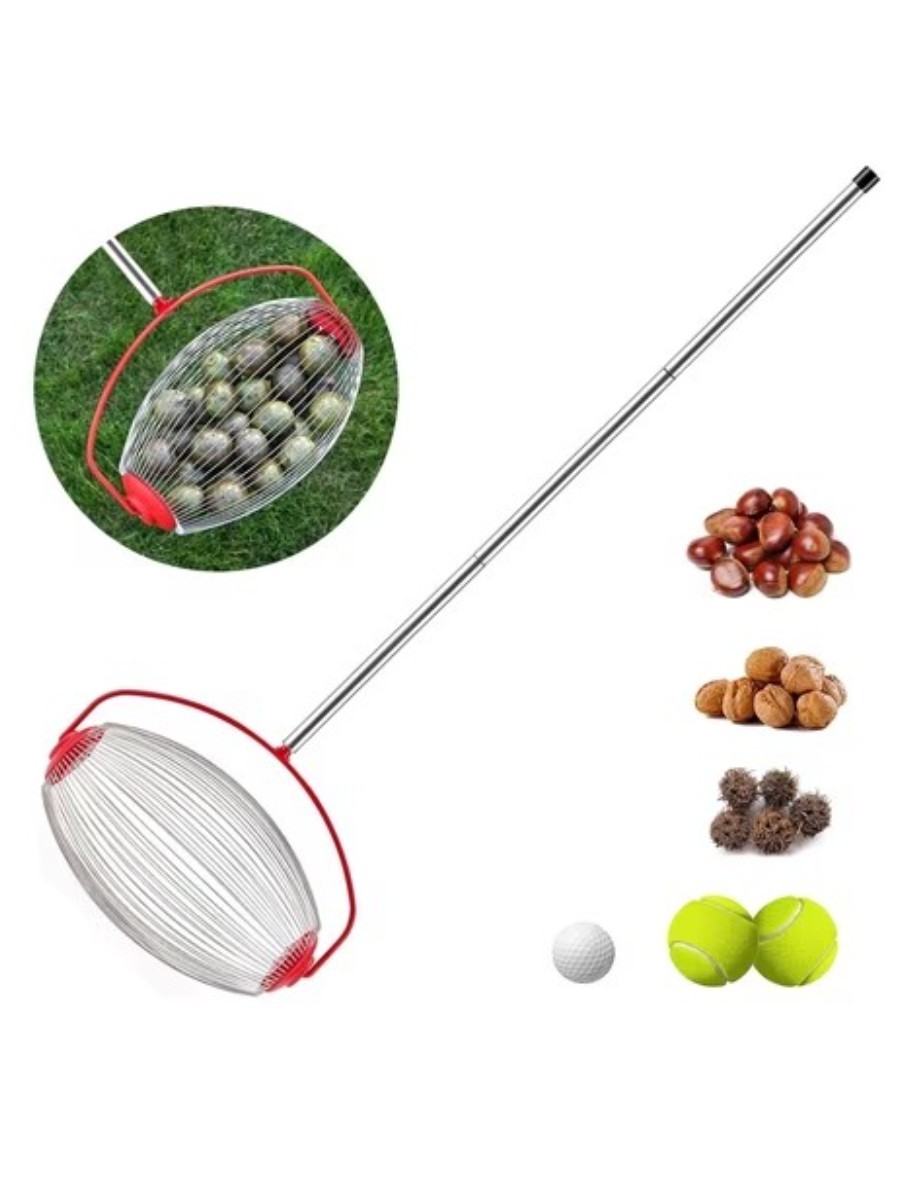
Fixed handles usually suit average height and leave taller gardeners stooping anyway. This one extends from 28.75 to 50.5 inches (73-128cm), takes 0.75 to 1.5 inch (2-4cm) objects in a 14.6 inch (37cm) oval basket, and holds around 1 gallon (3.8L). One reviewer notes it works best on short grass or a smooth surface.
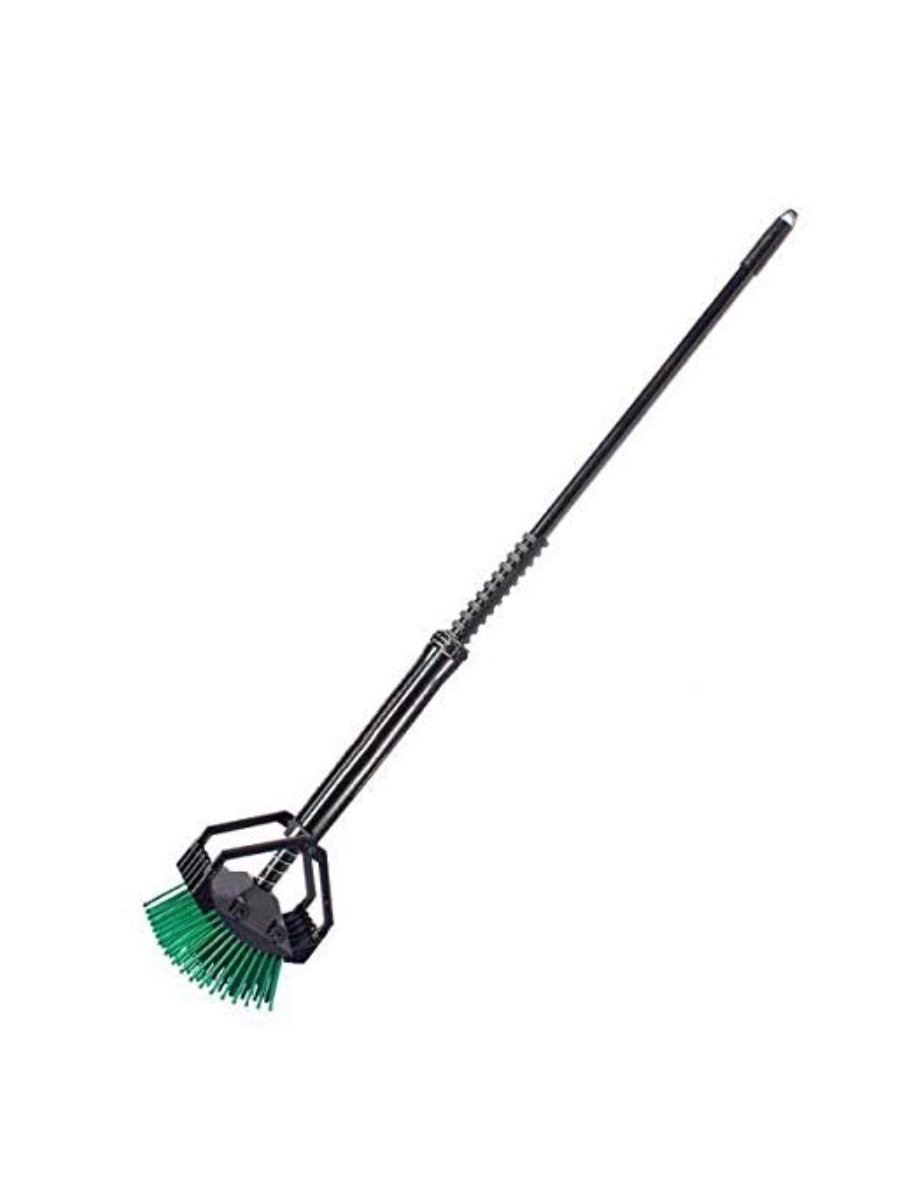
This tool has flexible tines that allow you to “stab” at crabapples, nuts, and other small fruits 3/8 to 1.25 inches to that have fallen under trees. Once collected in the tines, use the ejector handle to deposit the fruit into a bucket or yard waste bin.
An afternoon of clearing now can save a season of stings and a spring of reinfection. That is not bad for a tool that looks like somebody welded a whisk onto a broom handle!