A lawn mower has one setting most owners use: however it came from the factory. That works until the weather turns and then it really doesn’t. Cut too short in the heat of summer and the grass scorches or leave it shaggy through a wet spring and it mats down and invites disease. The right mowing height isn’t a single number. It changes with the season.
But there’s more to knowing how to mow a lawn than picking the right mowing height and forgetting about it. Knowing when to change the mowing height is important, too. A lawn races ahead with growth in spring, then crawls as the summer heat sets in. So a height that suits it in May does your lawn no favors by August.
Change your mowing you’ll be paid off with a lush lawn with gorgeous green color and fewer weeds. Here’s how to get it right.
Always Follow the One-Third Rule
Before prescribing any season-specific number, one rule governs all of them: never take off more than a third of the grass blade in a single cut.
Go shorter and it loses too much leaf at once. Roots stall while your grass recovers. The crown sits exposed as well and a few mowings on the turf looks thin and stressed, browning in patches for weeks.
This is also why height changes should come gradually across a few mowings, instead of one drastic drop. It helps to know your current height before adjusting anything. Set the mower on a flat, hard surface and measure from the ground up to the blade edge.
Measuring is easiest with a mower height gauge from Amazon, though a plain tape measure does the job fine. Eyeballing it may end up with a shorter height and short is the direction that causes trouble.
Spring: Start Low, Then Ease Up
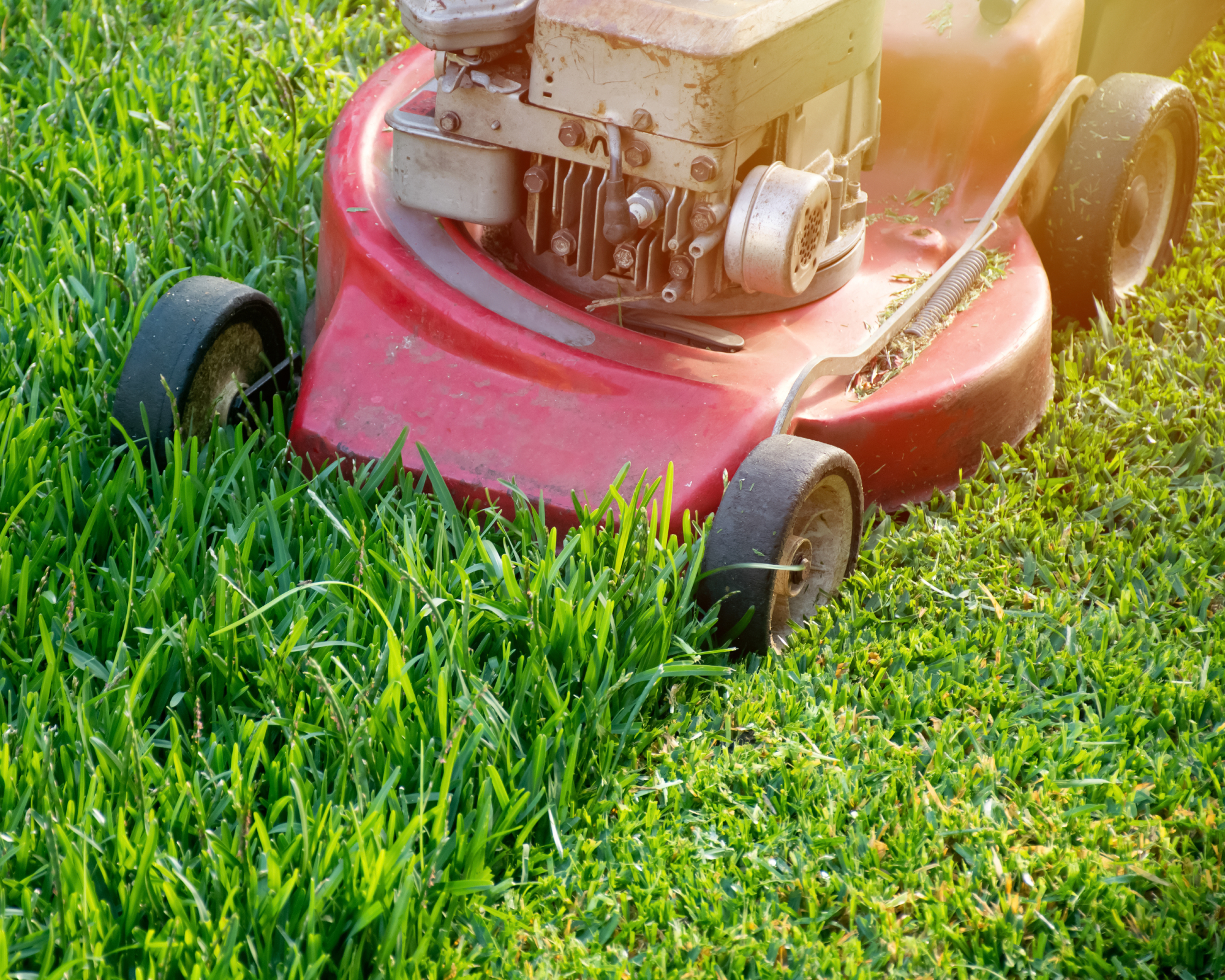
Spring is the one time you can cut a touch shorter. That first mow of the season can come in a touch lower than usual to clear the dead, matted growth winter left behind. This lets sunlight and air down to the crown to wake up your lawn faster. For cool-season grasses like fescue and bluegrass, that means starting around 2.5 inches (6 cm).
Once your lawn growing in earnest, raise the deck back up. For most cool-season lawns, around 3 inches (7.5 cm) is the spring sweet spot. It’s tall enough to shade the soil and crowd out weed seedlings, but short enough that the grass won’t flop.
Warm-season types of grass should be cut lower, around 1-2.5 inches (2.5-6.4 cm) high. Bermuda, zoysia, the southern grasses all do well under that height. But the logic still holds. Take the winter-killed growth down at green-up, then let the height creep up as it grows through the season.
Summer: Let It Grow Tall
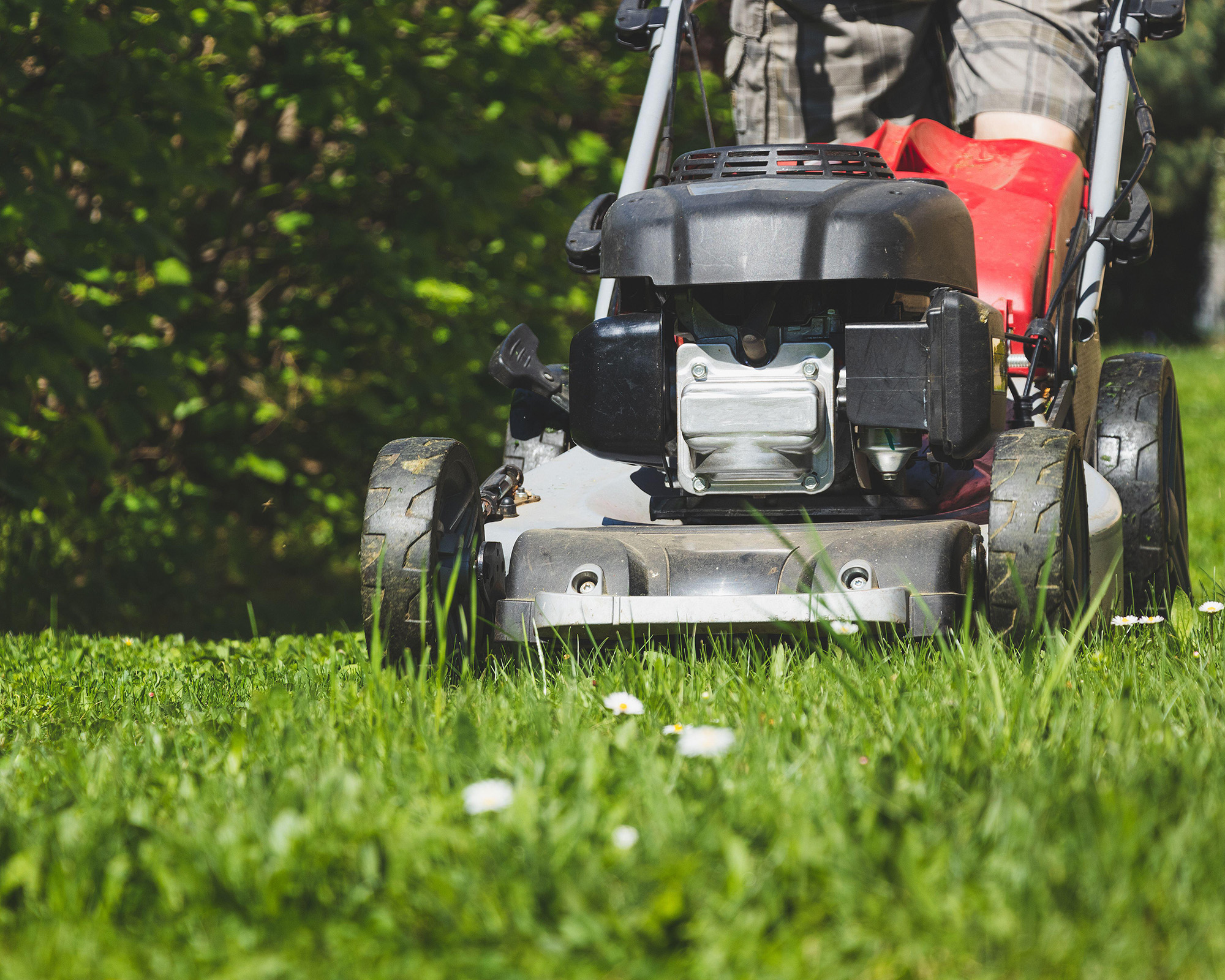
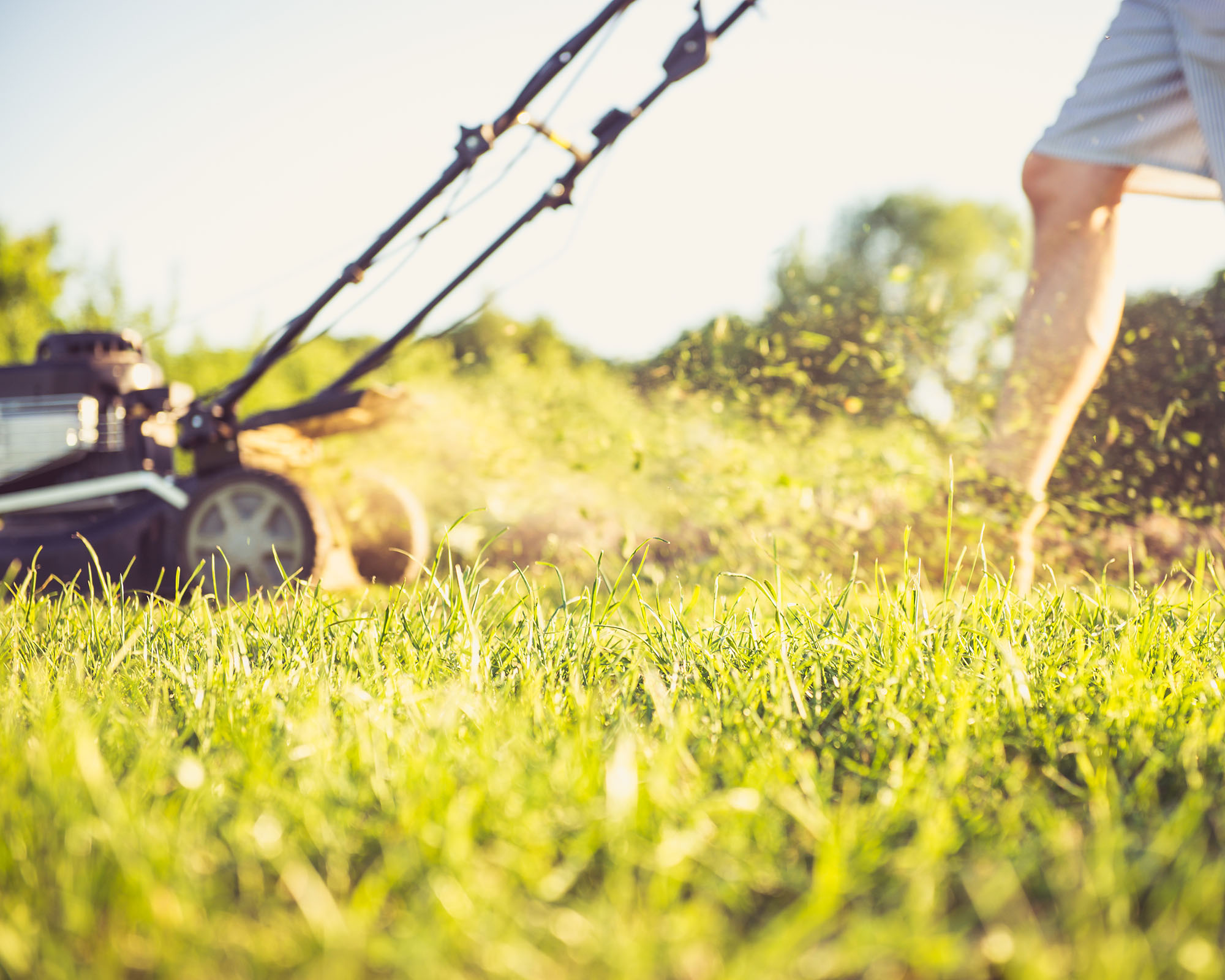
Summer is the season that mowing height is the most important. Let the grass grow a bit long and it shades its own soil, cooling the roots and slowing how fast water burns off up top.
In a brutal July, when the heat won’t quit and rain is hit or miss, that shade is key to keeping your lawn green. Cool-season lawns would prefer a high cut here, up around 3.5 to 4 inches (9-10 cm).
Longer blades grow deeper roots, too, which reach water further down when the surface dries out. Resist the urge to scalp your lawn in order to mow less often. That backfires fast in July, leaving your grass heat-stressed and making your lawn turn brown.
Warm-season grasses take the heat better and can hold closer to their usual height, though even those appreciate a slightly higher cut through a bad drought.
Fall: Bring It Back Down
When temperatures finally back off, cool-season grass gets its second wind, growing strong again like in spring. The deck comes back down with it to that same 2.5 to 3 inches (6-7.5 cm) from spring.
Fall is recovery time. The lawn is rebuilding after the summer beating and sending growth down into the roots. A middling height gives it room without sitting so tall it’s exposed.
The last cut of the year is the one to get right. Dropping it a notch lower for that final mow, down toward 2 inches (5 cm) high, keeps long blades from matting under snow and heads off snow mold over the winter.
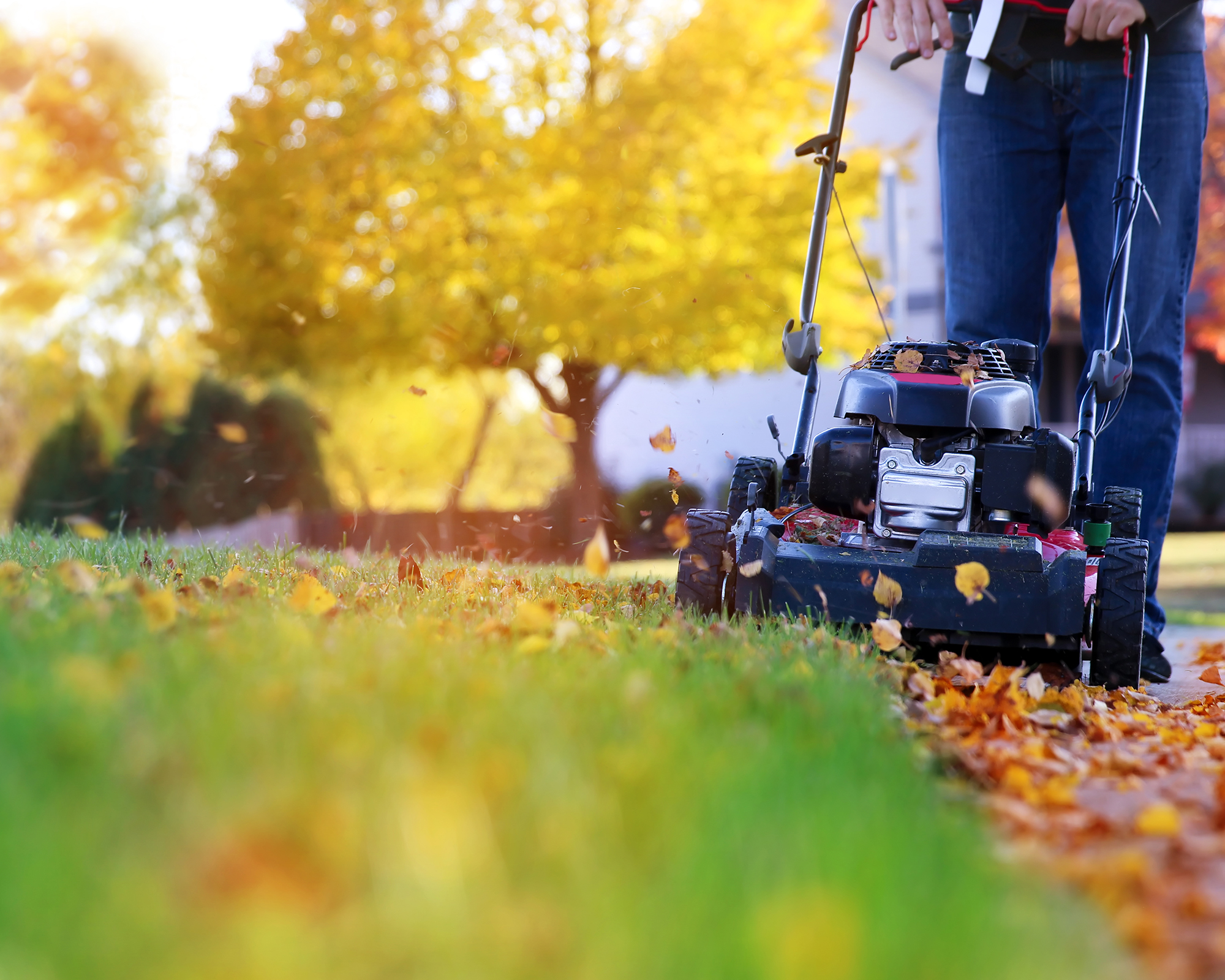
Fall is leaf season as well and a mulching blade from Amazon chops fallen leaves finely enough to drop back into the lawn as free fertilizer instead of bagging them. Just don’t let a thick layer sit long enough to smother the grass.
Winter: Dormancy
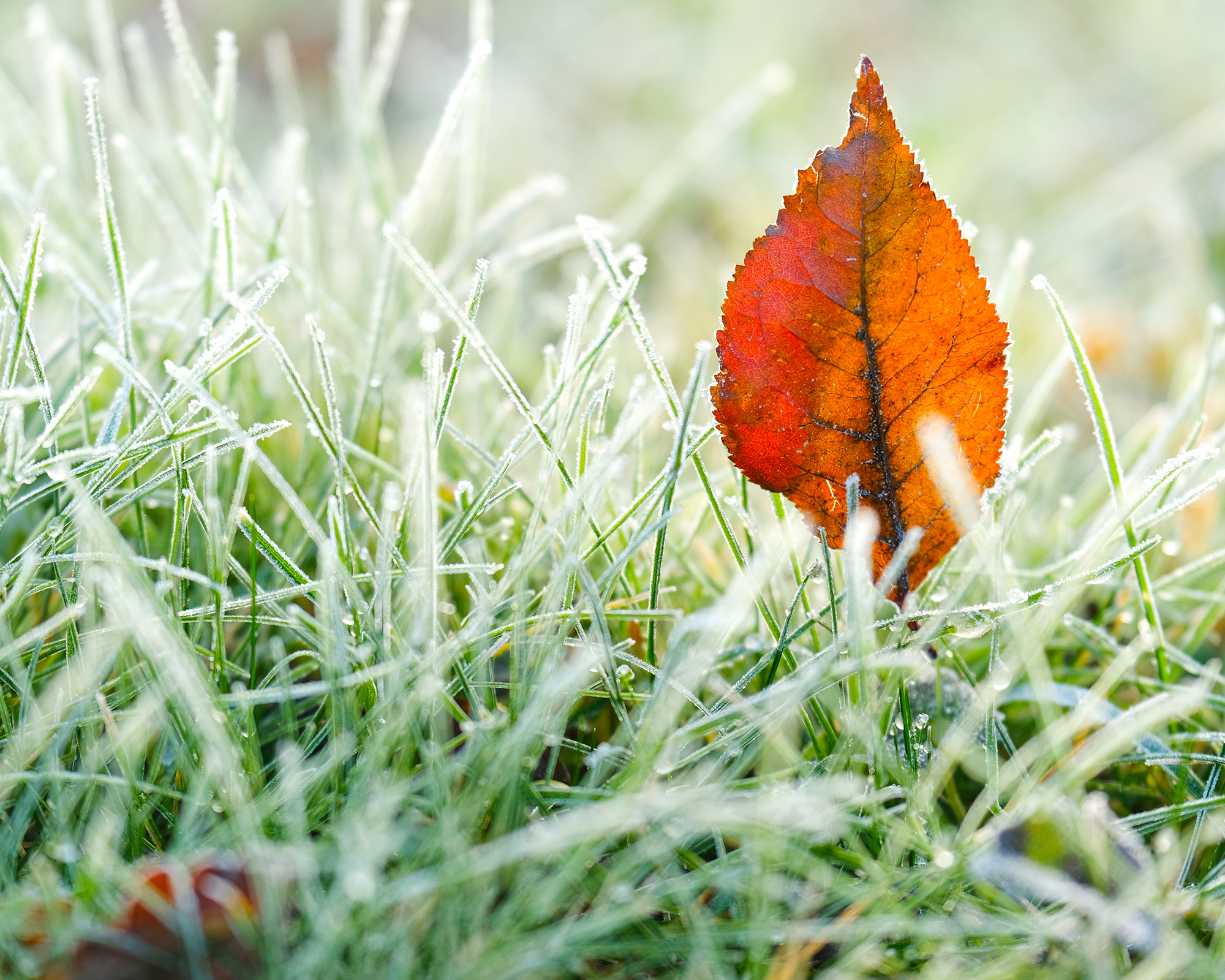
Once growth stops, mowing should stop as well. Dormant grass – brown and still in the cold or just not pushing new top growth – gains nothing from being cut. Rolling a heavy mower over frozen or frosted turf does real harm, snapping the brittle blades and compacting the soil underneath. In most regions the mower goes away for the season and stays there.
The only exception is mild southern lawns. Where grass keeps creeping along through winter or where a warm-season lawn has been overseeded with ryegrass for off-season color, an occasional cut keeps things tidy. Mow at the higher end of the range and only when the grass is dry and actively growing. Otherwise, winter lawn care comes down to staying off the grass and letting it rest.
How to Change the Mowing Height
Changing the cutting height on a lawn mower takes a minute once you find the lever, but it’s pretty much the same on every machine.
On a walk-behind push mower, like this Troy-Bilt mower we reviewed, it’s a spring-loaded lever by each wheel or on some models one central lever for the whole deck. Squeeze it and run it through the notches, each one a set height.
Riding mowers, like this battery-powered lawn tractor we reviewed, use a lever or dial by the seat. Check the manual for which notch is which.
Here’s the part that gets overlooked: the height means little if the blade is dull. A blade that’s cuts all season goes blunt and a blunt edge rips the grass instead of slicing it cleanly, leaving frayed brown tips no height setting can save.
A blade sharpener from Amazon keeps it touched up at home or a hardware store will grind one for a few bucks. Skip it and you can dial in a perfect height and still wind up with a ragged, browning lawn.