One of the best things about The Celebrity Traitors right now? Jerry Hall, who is proving to be almost as delightfully kooky as her neighbor, Richard E. Grant.
Between the unexpected personalities and the wonderfully eccentric energy, many of us have found ourselves wanting to know more about the supermodel beyond the castle walls. Naturally, that led us down a little Instagram rabbit hole, and straight into her rather spectacular garden.
Now, I have to admit, I’m a little jealous of Jerry’s garden. Not only does the supermodel and actress have an enviable collection of plants, but she appears to have landed on one of the most effective garden color planting palettes without making it look overly designed: purple, purple, and a little more purple.
Jerry Hall’s All-Purple Garden
That’s right; Jerry Hall’s garden, which features wisteria and lilacs among its purple blooms, is a lovely example of what happens when you commit to one color family rather than trying to squeeze every shade of the rainbow into a border.
And while purple might seem like a purely aesthetic choice, there’s actually some very good garden-design thinking behind it. Before we get into that, though, check it out for yourself:
If you’re looking at Jerry Hall’s garden and wondering why all that purple flowers work so well, take a closer look at what’s surrounding them: green.
Now, green and purple are a favorite combination among professional gardeners, and it’s easy to see why; the contrast is strong enough to give a planting scheme some definition, but it isn’t so dramatic that it becomes overwhelming. Purple also has a slightly receding quality in the landscape, which can help garden beds feel deeper and more spacious.
That makes purple flowers particularly useful when you want a garden to feel abundant and interesting without looking chaotic. Rather than competing with every other color, a purple-and-green scheme gives the eye a clear thread to follow. And there’s another benefit: purple flowers can be particularly attractive to bees and butterflies, making them a valuable food for pollinators.
Shop Purple Plants:
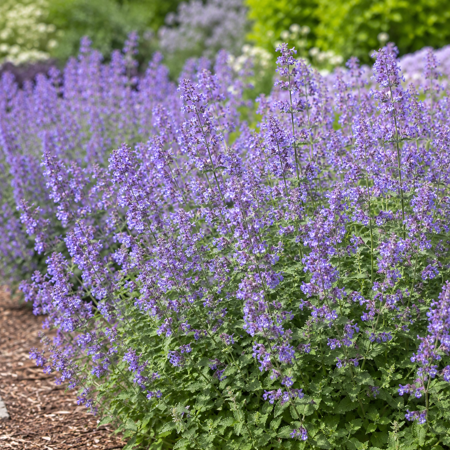 CATMINT
Catmint blooms forever, looks beautiful, and doesn’t go woody!
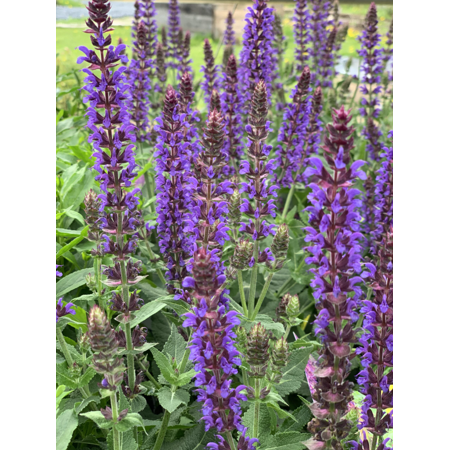 SALVIA
Another fragrant perennial, salvia is an absolute pollinator magnet.
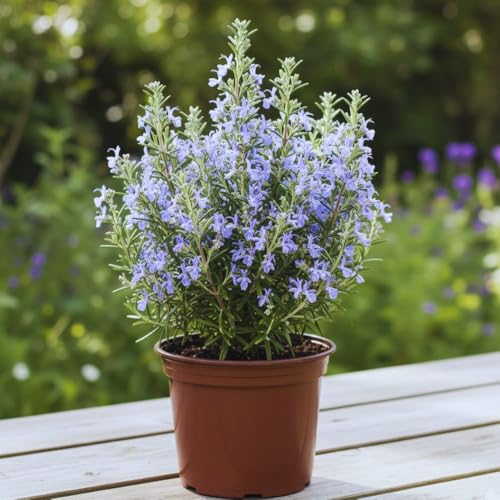 ROSEMARY
A classic upright rosemary boasts a fabulous scent and purple hue.
Tempted to try it for yourself? Of course you are, and I have good news for you on that front: you don’t need acres of garden – or a supermodel’s landscaping budget – to borrow the idea. Because… well, because you don’t have to go full Jerry Hall
The easiest way to try the look at home is to think of purple as a thread running through your planting rather than a rule you have to follow religiously. Lavender (like this Grosso Lavender from Nature Hills) is an obvious starting point, while salvias, catmint, alliums, geraniums, pansies, purple-leaved heucheras, hellebores, and aquilegias can all bring different versions of the shade into a border.
Soft pinks can make the scheme feel romantic, blues can deepen the cool tones, and even brighter shades can work when they’re anchored by plenty of green. All of which means that, no, you don’t need to turn your entire garden into a purple paradise.
But after seeing Jerry Hall’s? Well, I can certainly understand why you might want to.