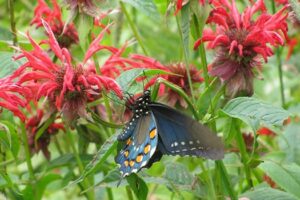

June is a month of ornamental poppies. Of foxgloves and lupins, of the first of the roses, and of the incredible insect life that comes with it. As well as the usual suspects, such as bees and butterflies, look out for the other critters that often go unnoticed.
Spend time in your borders and look out for shield bugs and froghoppers, rose chafer beetles and ladybird larvae. Turn your compost heap to find rove beetles, centipedes, and slow worms. These tiny beings all make up the fabric of life we share our gardens with. And the more we find, the healthier our gardens.
More wildlife inspiration:
June wildlife inspiration
Featured in this video:
Roses
The variety of roses to grow in our gardens is enormous. But spare a thought for the wildlife – many roses have been bred to produce so many extra petals that their pollen and nectar is inaccessible, while their glossy leaves have been bred to be resistant to disease. These advances may benefit the gardener, but what about the bees? Happily there are some wonderful single-flowered and floppy-leaves roses still available.
Single-flowered roses – where there are fewer petals and you can see the centre of the flower – provide easy access to pollinators. Some also have soft or floppy leaves, which are used by leafcutter bees to line their nests. These varieties then go on to produce hips, which are eaten, by squirrels and birds in autumn.
Viper’s bugloss
Thought to be one of the best plants for bees, viper’s bugloss is a gorgeous, tall biennial plant with fascinating blue flowers with bright pink stamens. A member of the borage family, its blooms refill with nectar regularly, so bees always have something to drink.
As well as familiar bumblebees, look out for less common solitary bees on your viper’s bugloss flowers, including the green-eyed flower bee, a wonderful little bee with very green eyes. Butterflies and hoverflies also flock to this nectar tower – it really is one of the best pollinator plants around.
Grasses
What does the word grasses mean to you? Ornamental types like stipa and miscanthus? Weeds like couch and Timothy? What about fescues, cock’s foot, and Yorkshire fog? These are all meadow grasses, which, when allowed to grow long, contribute to the diversity of plant and insect life in the garden.
Many species of butterfly breed in long grass, laying their eggs among the thatch for their caterpillars to climb and eat. They don’t just choose any grasses, though. Cock’s foot supports the meadow brown, ringlet and speckled wood; Yorkshire fog is favoured by the marbled white and speckled wood, while fescues are used by the gatekeeper and meadow brown. The greater diversity of grasses you grow in your garden, the greater diversity of beautiful butterflies. Food for thought as you mow the lawn this month.