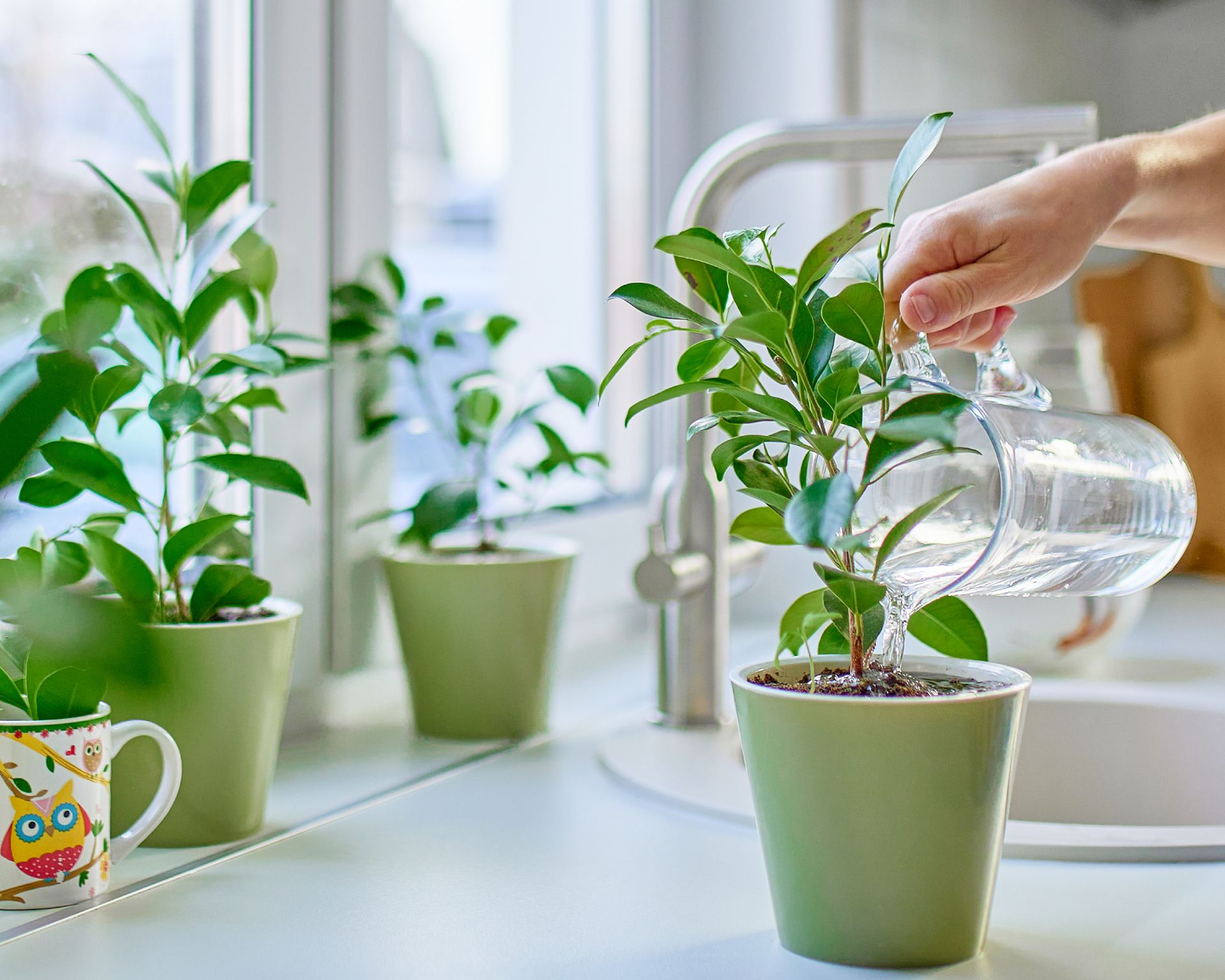
Turning fruit and vegetable seeds and peelings into new plants on your kitchen windowsill is such a satisfying process, for us adults as well as kids. Grow plants from lemon seeds and you could raise a citrus houseplant with glossy, aromatic leaves, or root a pineapple top for a striking pot of spiky foliage. Or how about growing a feast of fabulous foliage from an avocado stone? Seedlings grown from apple and pear seeds can be shaped into stylish bonsai trees, too.
If you like the idea of free food as well as free plants, then cabbage bases will grow a tasty supply of cut-and-come-again leaves for salads and stir-fries, while carrot tops produce herby foliage that’s so flavorful blended up into a pesto.
Propagating is a great way to get plants for free and, as well as creating garden plants with cuttings in October, a spot of indoor plant-baby-making is just the thing for rainy fall days. Got a little free space on a sunny kitchen windowsill? Then let’s make a start on your soon-to-be-favorite gardening project…
1. Lemon, Lime, Orange and Grapefruit
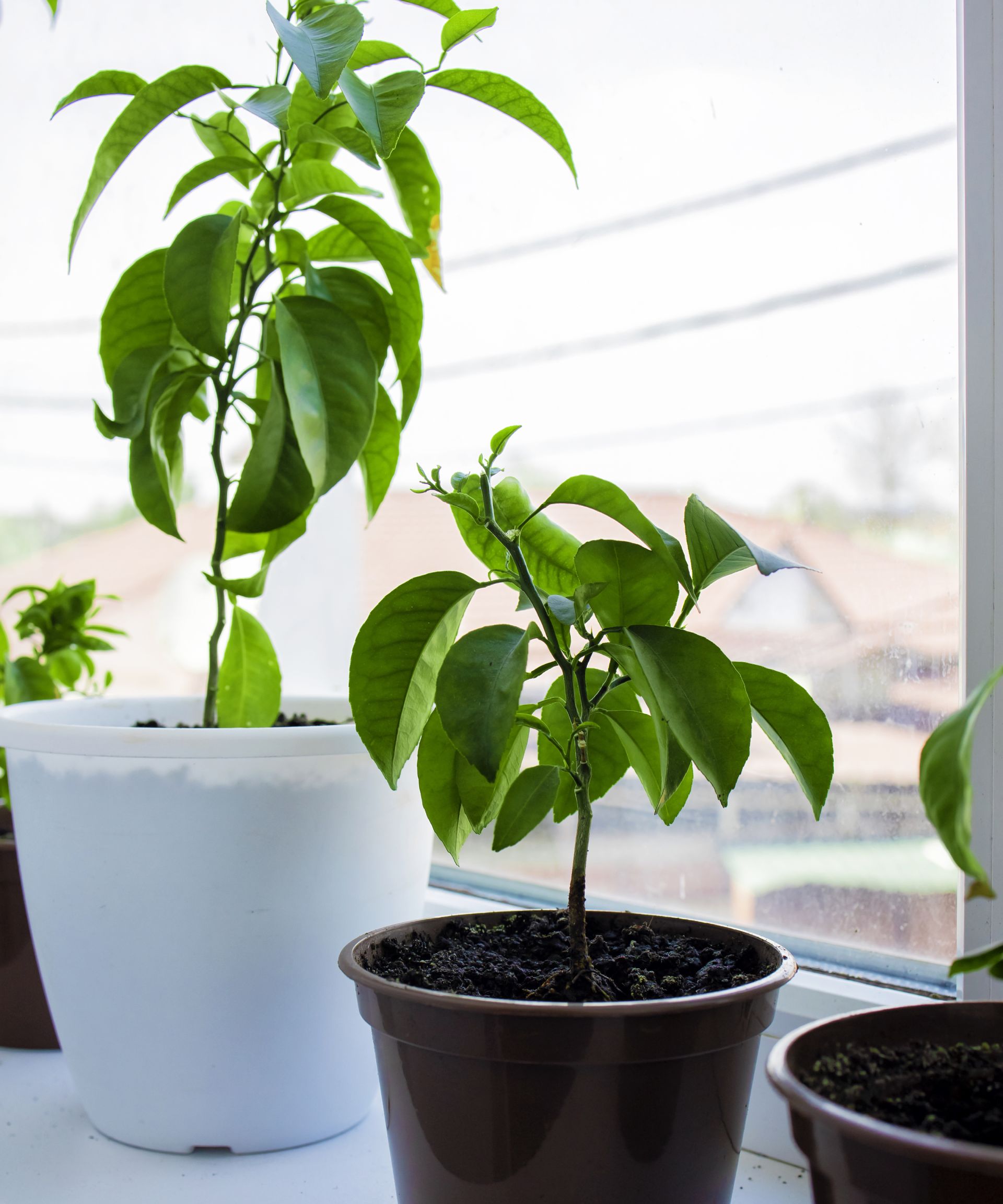
Creating houseplants from citrus seeds is a relatively quick process and with the right care, a seed will grow into a foot-tall plant by its first birthday. While you’ll have to wait a decade or so for fruit, citrus trees make beautiful foliage-first houseplants with glossy leaves that release a fresh, aromatic fragrance when rubbed. Lemon and lime plants will have pointy oval leaves, while orange and grapefruit foliage is rounder. All can be grown the same way so, if you’ve always dreamed of growing a lemon tree, why not try a whole citrus selection?
First wash the seed so it’s free of any citrus pulp. Carefully scratch off the outer shell with your fingernail to reveal the brown seed inside – though this step isn’t essential, it will speed germination. Sow the seed ⅓-inch deep in a small container of moist potting soil and use a clear cover to lock heat and moisture in.
You could use an old yoghurt pot with a drainage hole poked into the base and a clear plastic bag fixed over the rim with an elastic band, or make life easy with domed propagation pots like these 4″ Nursery Pots from Amazon. Using a tailored potting mix like Gardenera Citrus Potting Soil, also available from Amazon, will support good germination and strong root growth. Stand the pot on your sunniest south-facing windowsill and remove the cover once you spot growth.
2. Avocado
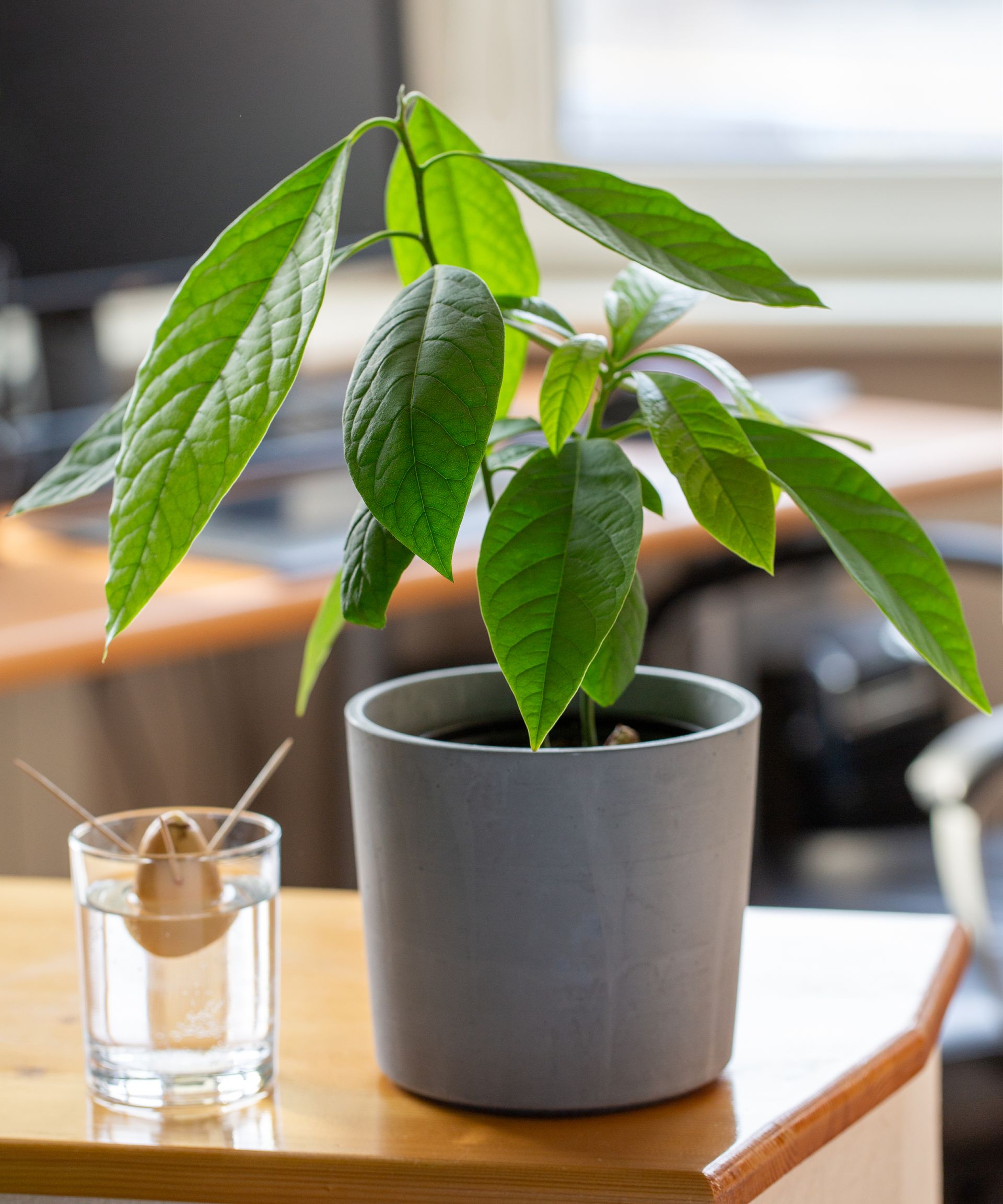
Growing an avocado stone into a tropical tree-let is straightforward, and fast growth makes this a great project if you’re gardening with children, but it’s fun for adults too. While you can absolutely let your avocado grow tall, it’s easy to keep smaller by pruning, and the 8-12-inch leaves mean this is a standout houseplant.
First, clean the stone. It’s best to sprout avocado seeds in water rather than soil, with just the bottom, broader third sitting in the water. You can do this with a jam jar by pushing three or four toothpicks into the sides of the stone so it sits on the jar rim, or use a purpose-made avocado vase and skip the toothpicks.
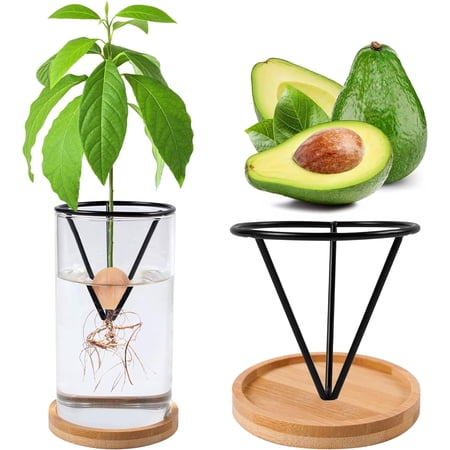
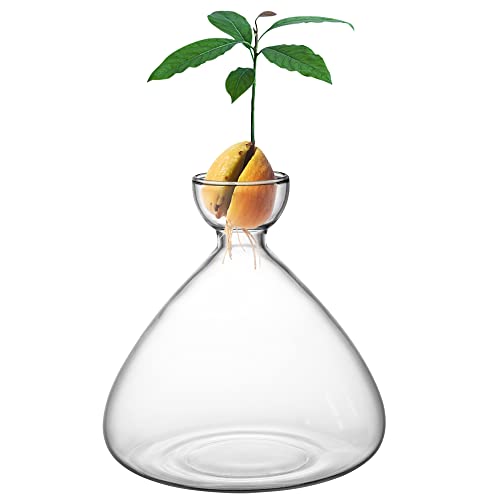
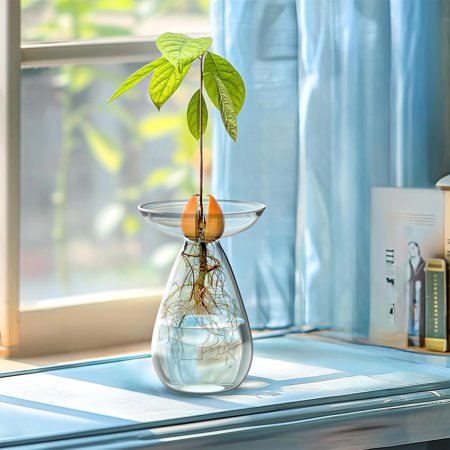
Stand the jar in a bright spot with plenty of indirect sunlight – an east- or west-facing windowsill is ideal – in a warm room as avocados are tropical plants. Change the water every 2-5 days and wash the jar as needed, and keep levels topped up so the seed base remains wet and the top stays dry. Rainwater is best but tap water is fine, but do make sure it’s at room temperature so as not to shock the roots.
Once the stone has cracked open (this can happen very quickly, but be patient as it can sometimes take up to two months), there are a couple of inches of roots and you can see leaves forming on the top stem, move the plant into a pot of potting soil. Avocado plants need good drainage so use an all-purpose houseplant mix like Miracle-Gro Indoor Potting Mix, available from Lowe’s.
Your growing avocado will naturally form a single stem with a canopy of big leaves at the top – which gives a great architectural look. If you want a bushier, leafier houseplant however, simply prune off the top set of leaves once the stem reaches 6 inches high to force the plant to grow multiple branches.
3. Apples and Pears
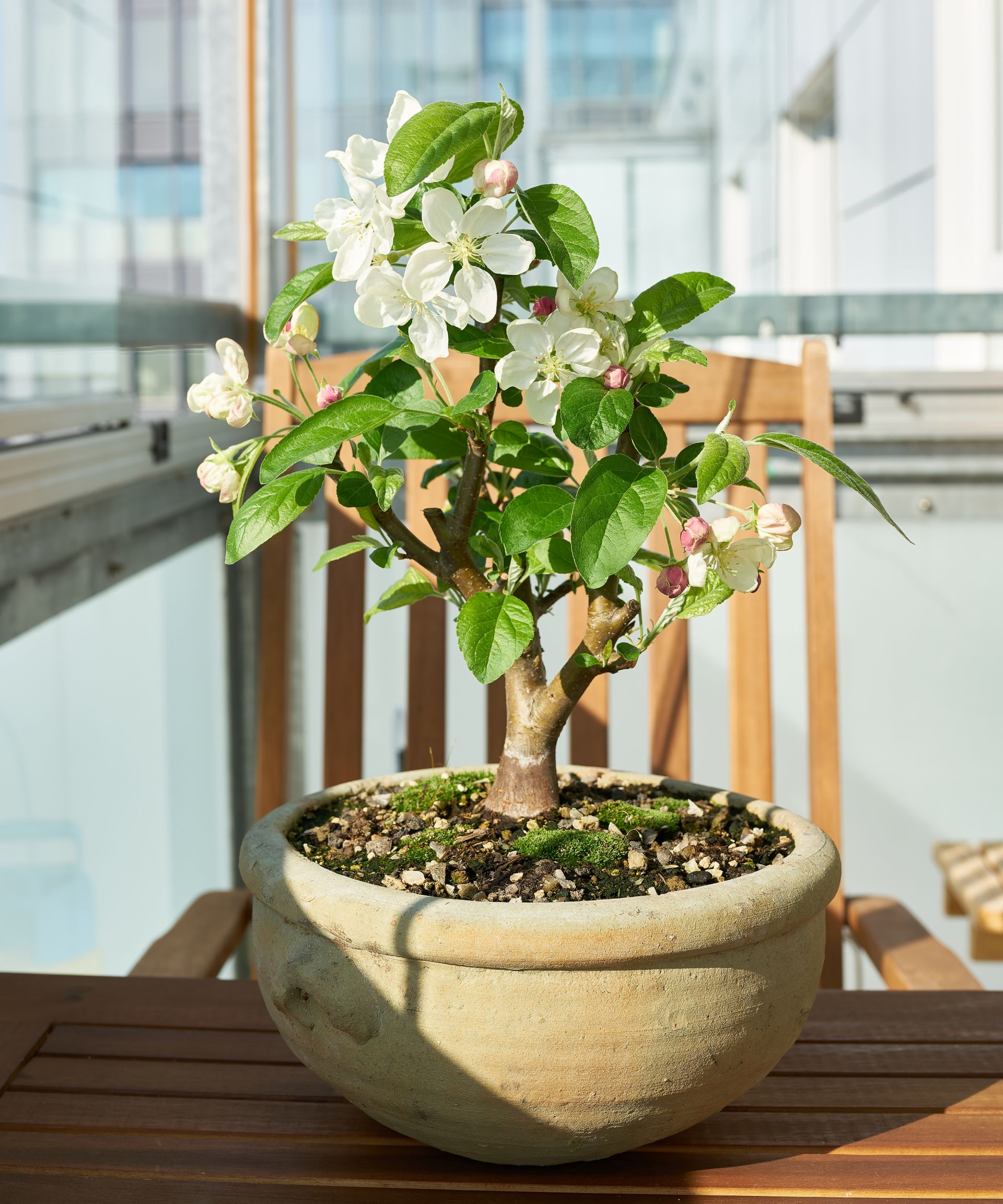
An apple or pear tree grown from a seed can produce an attractive garden tree – but don’t expect to be eating its fruit! The genetics of apple and pear trees are complex and seeds almost always revert to a wild ancestor with small, acidic fruit. However, apple and pear trees make great candidates for bonsai trees as they have lots of small fibrous roots and flexible branches that are easy to wire. If you fancy a little long-term gardening project, growing a bonsai fruit tree for your garden is so rewarding, and the spring blossom is so pretty.
Drop the seeds into a jar or water and slosh them around to clean. Ignore any seeds that float to the surface – these won’t germinate – but save the plumpest ones that sink to the bottom. Wrap these in a just-damp piece of kitchen paper inside a sealed zip-lock bag and pop them in the fridge to mimic winter, which is essential for germination. Check the kitchen paper is just-damp every week and, by around the sixth week, you’ll likely spot a white root protruding from the seed.
Then fill small pots or old yoghurt pots with a seed-starting mix like Back to the Roots Organic 3-in-1 Seed Starting Mix, available from Amazon. Use your little finger to poke a ½-inch hole, pop in the sprouted seed with the root downwards and gently push the soil over to cover. Pop this on a warm, sunny windowsill, keep the compost just-damp and in a couple of weeks you’ll see a green shoot.
In a few months, you’ll need to snip off the taproot and move your tree into a bonsai starter pot like this from Walmart and begin pruning branches and wiring into shape with training wire like this, also from Walmart. You can keep your mini apple or pear tree indoors over its first spring or summer but by autumn, move it outdoors.
4. Pineapple
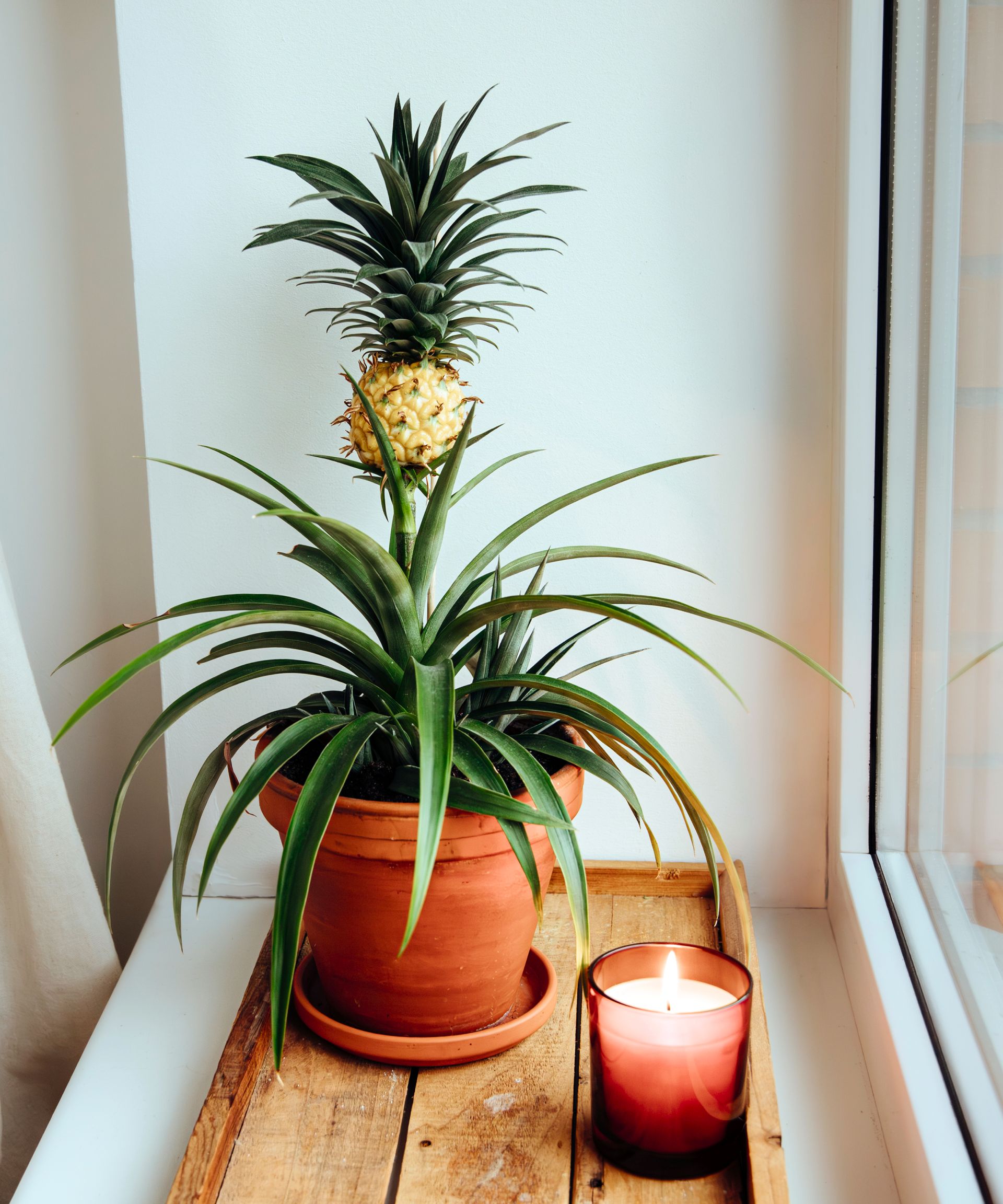
It’s a hoot to grow a plant from a pineapple top, and as they’re part of the bromeliad family, pineapples make good-looking houseplants with striking leaves. It’s unlikely to fruit, but so exciting if it does!
Rather than slicing off the pineapple top, hold the fruit in one hand and the leaves in the other and twist firmly in opposite directions. The top stem should pop out cleanly. Strip off the lower 5-8 layers of leaves until you have around an inch of naked stem. Let this dry – just leave it on a kitchen counter top – for 3-5 days until the base scabs over.
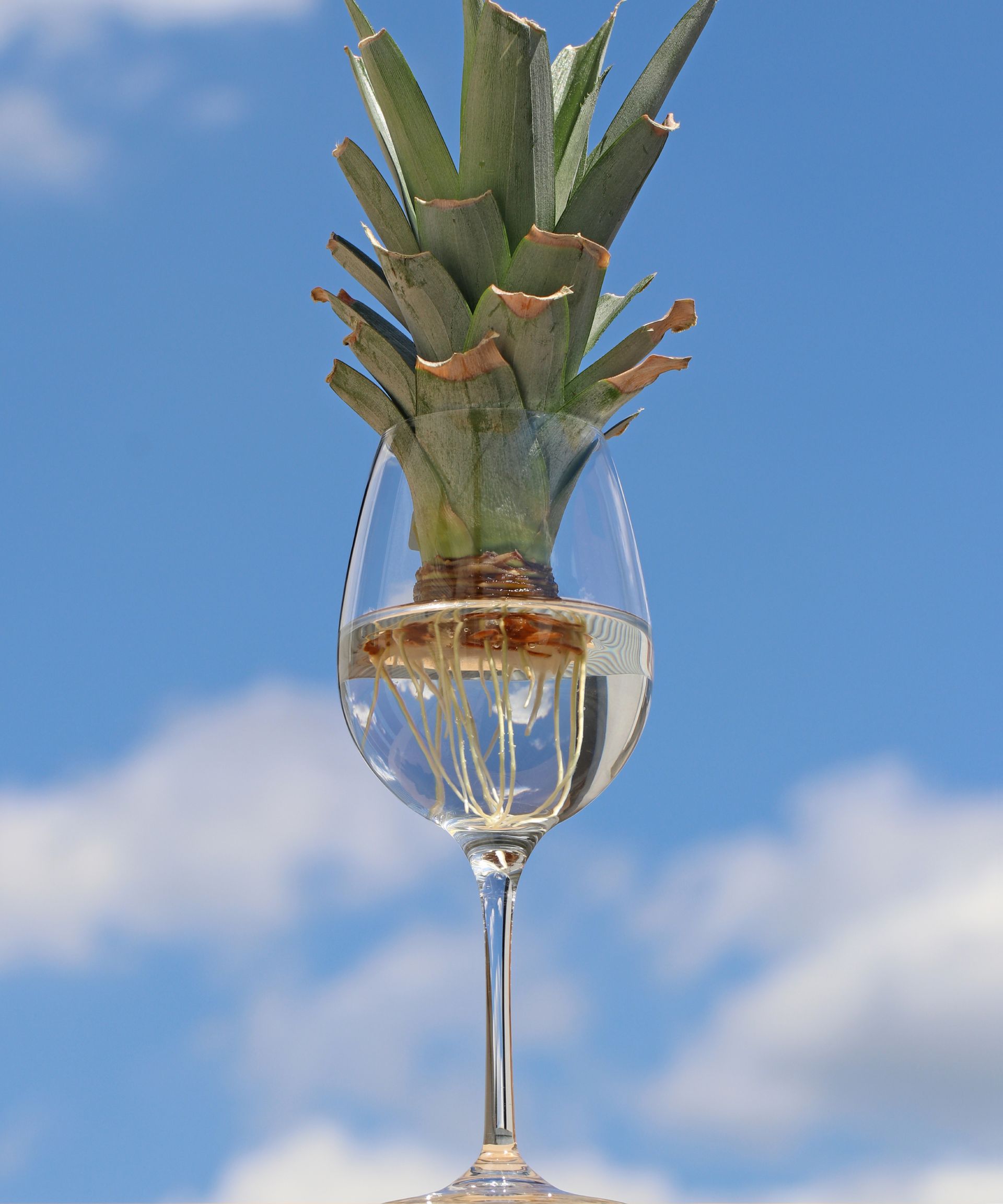
Treat the stem like you would an avocado stone, using toothpicks and a jar, an avocado vase or even a large wine glass to submerge the bare stem in water but keep the leaves dry.
Place this set-up on a warm, sunny south-facing windowsill, change the water every 2-3 days and, within a month, you should see roots. When roots are 2-3 inches long, move into a pot of potting soil tailored for cacti like Back to the Roots Organic Succulents & Cacti Mix, available from Amazon to grow your pineapple houseplant on.
5. Cabbage
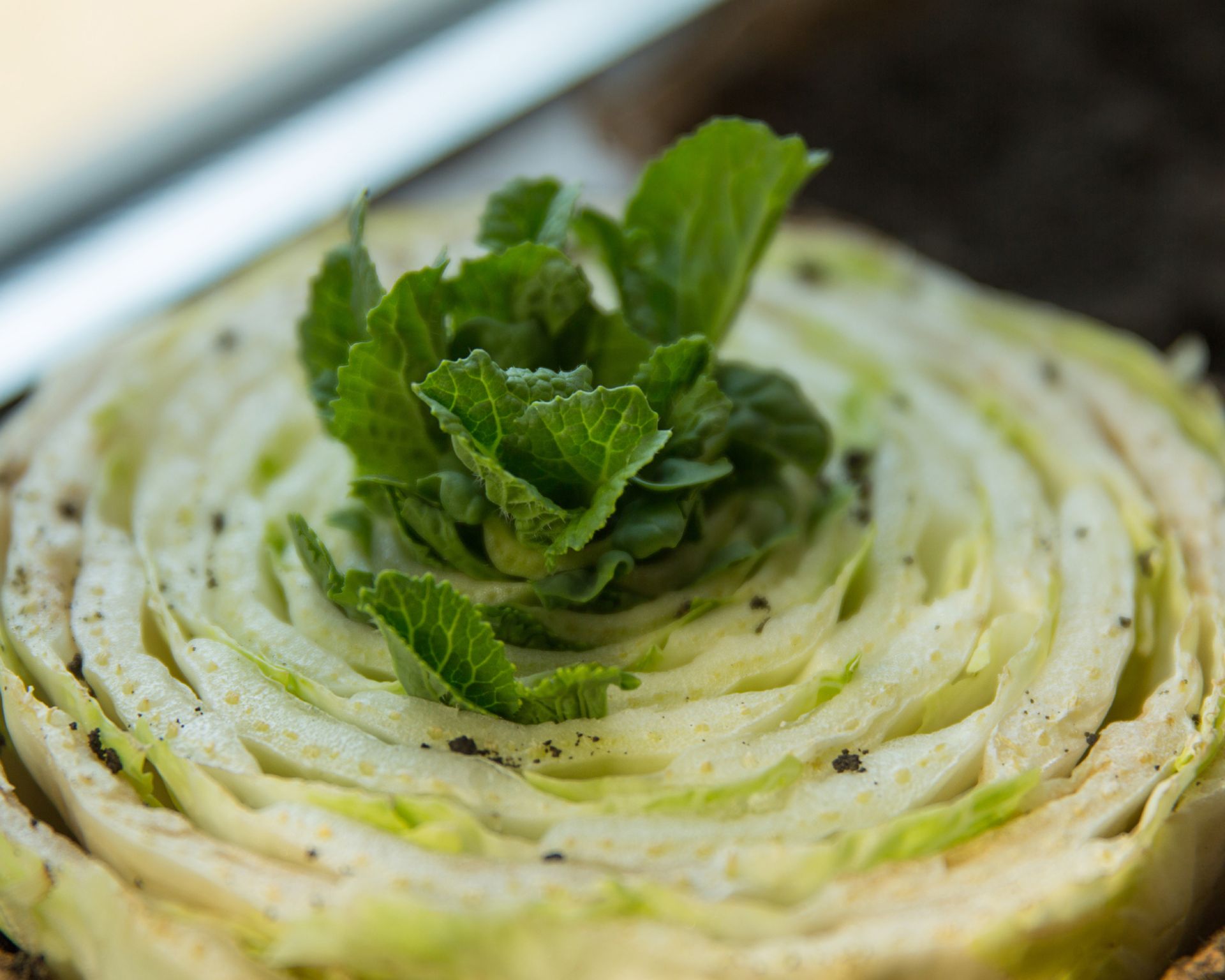
Save the base of a cabbage and it’s easy to regrow fresh cut-and-come-again leaves to toss into salads and stir-fries. Slice the bottom 2-3 inches from a fresh cabbage and peel away outer leaves to expose the bare inner stem. Set this, cut side up, in a shallow bowl of water – or, if you want to make your cabbage crop into a fancy feature on a sunny kitchen windowsill, pop into margarita glasses like these from Amazon!
Keep the bottom edge of the cabbage base submerged and the top rim dry. It’s vital to change the water every day to prevent rotting, but you’ll be well rewarded with new shoots that grow from the core within days. Crop only the outer leaves to prolong the harvest.
6. Carrots
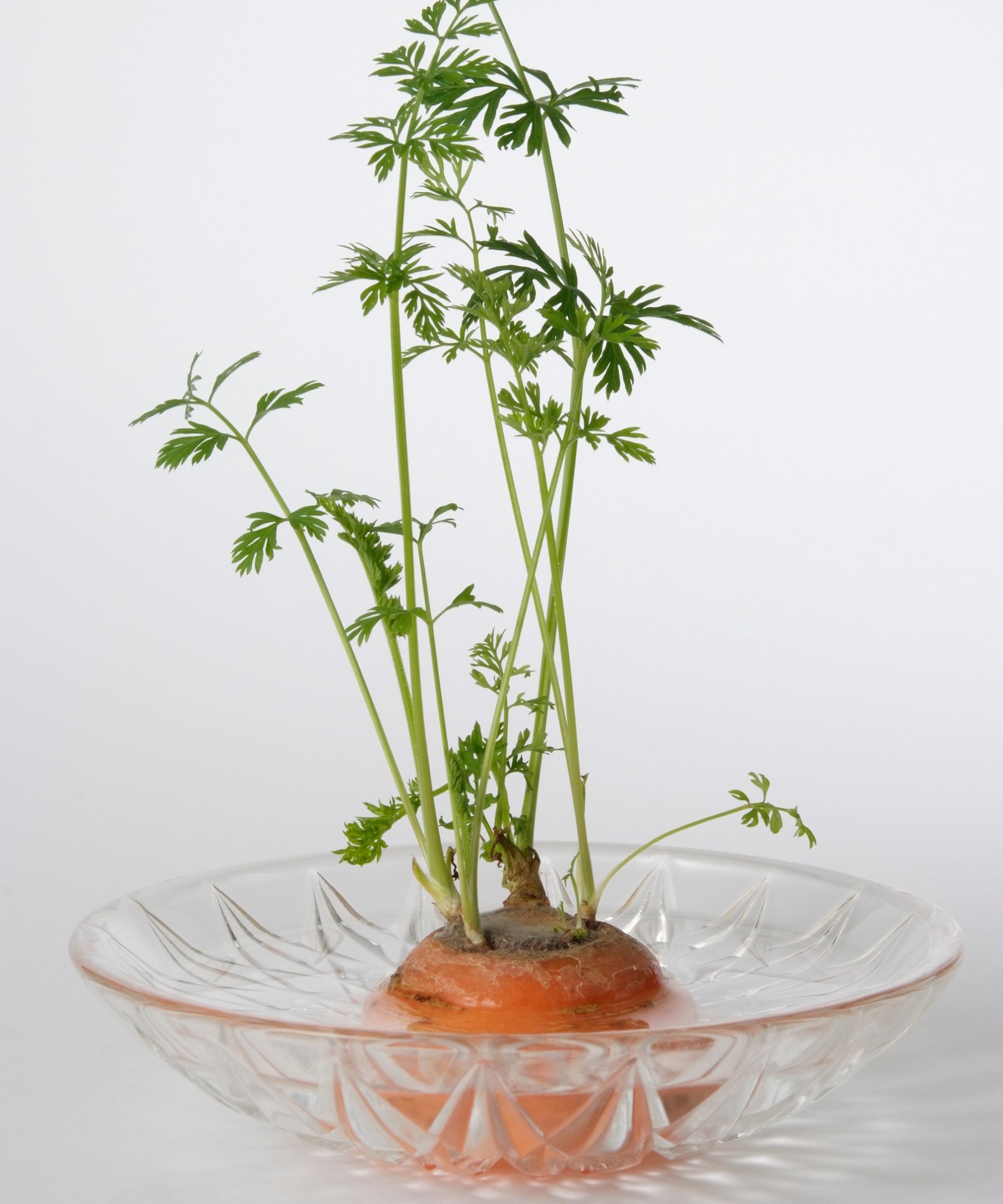
You can use the same method to grow leafy greens from carrot tops, which taste rather like parsley and are delicious as a herby garnish or blended into a pesto. Simply cut the top inch from the carrots, trimming any green stems off, then pop cut-side down into a shallow saucer of water. It’s vital that the water doesn’t cover the top of the carrot stub where the leaves emerge, and that you change the water every day.
Your kitchen windowsill will soon be full of all sorts of lovely leafy greens, and I hope you enjoy your plethora of new plants!