As your summer annuals fade and you start to cut back perennials, tough weeds will take the opportunity to fill in the gaps left behind. What you need is to fill those spaces with something even tougher.
Ground covers are low-growing plants that will fill empty areas with attractive foliage. They’ll shade the ground and compete with weeds. August is a good time to start planting ground covers, as they have time to establish roots before winter. Make sure you water them well to speed this process along and ensure success.
These are some of the best ground cover plants to prevent weeds now and that you can enjoy next year, too.
1. Creeping Phlox
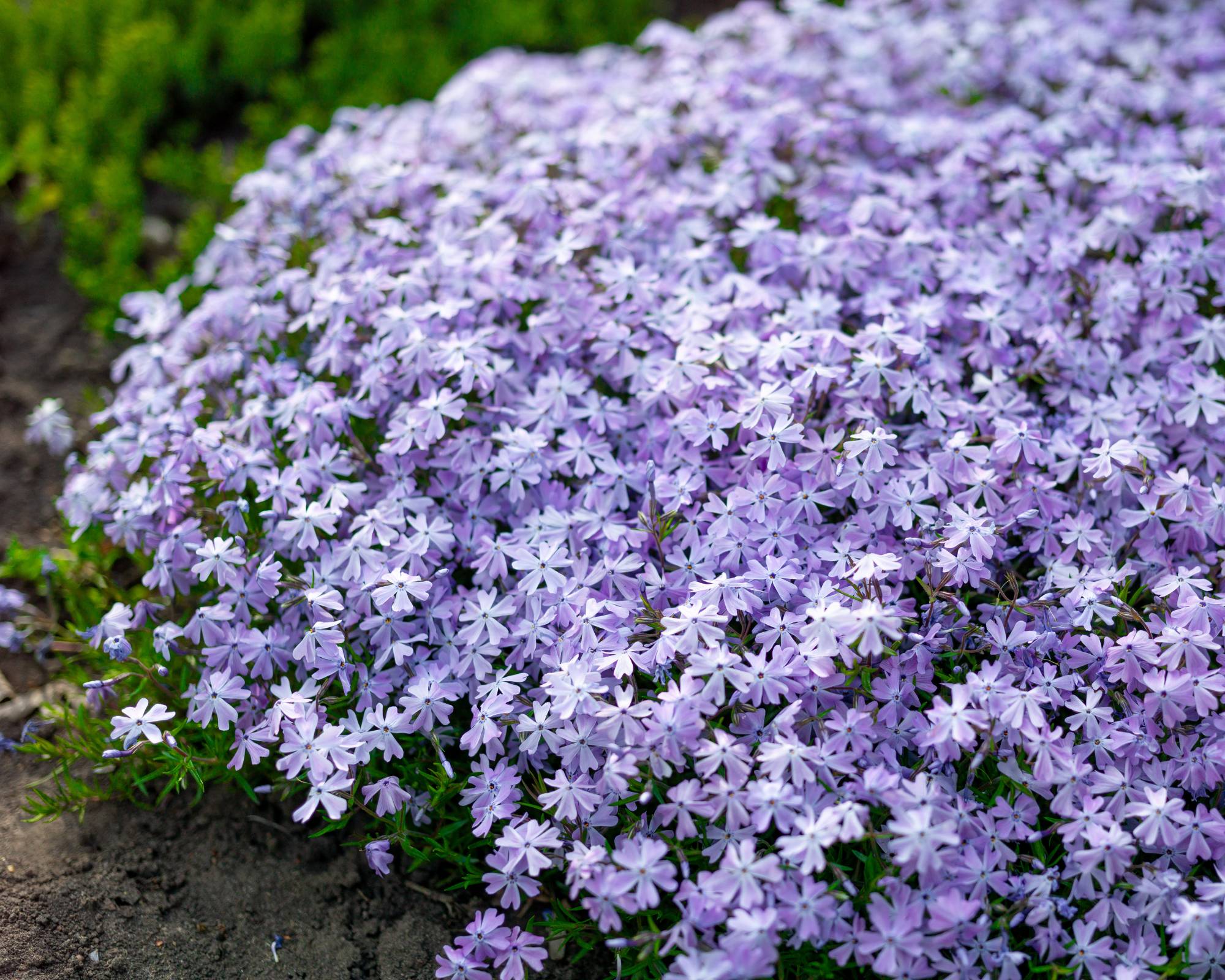
Creeping phlox (Phlox subulata) is a low, mat-forming perennial that creates a dense carpet of evergreen or semi-evergreen foliage. While prized for its abundant and colorful spring flowers, creeping phlox is also attractive long after the blooms fade.
The dense growth of this phlox does a good job of shading out weeds. The evergreen leaves continue to do the job into fall and provide some winter color. Plant creeping phlox in a sunny spot in well-drained soil and allow space between plants to allow them to grow and spread.
For an elegant twist, try this white creeping phlox called ‘Amazing Grace’ from American Meadows.
2. Creeping Thyme
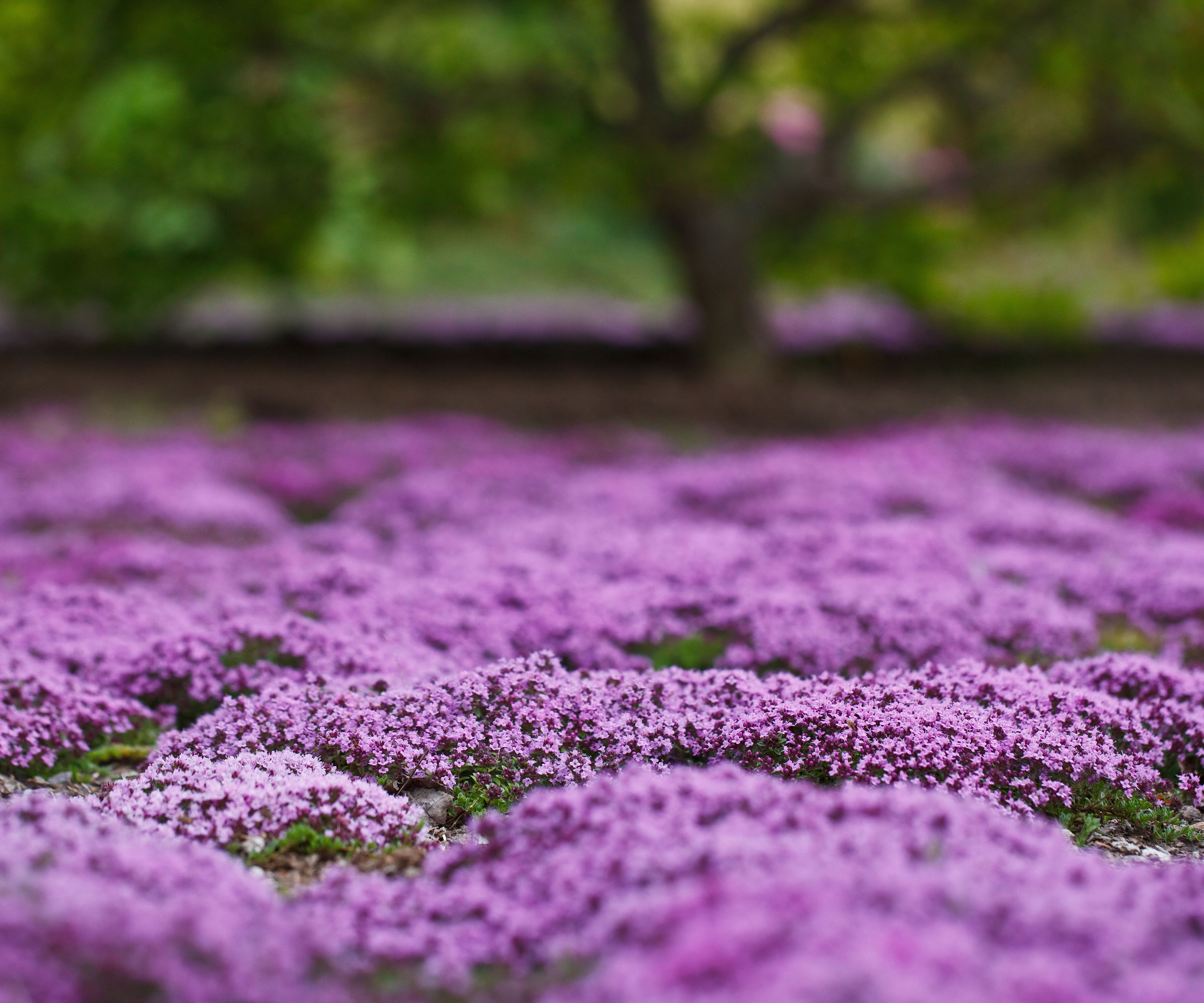
Another great creeping plant for this job is creeping thyme (Thymus serpyllum). This is a very tough perennial that grows well even in poor conditions, making it an excellent competitor for weeds. There are bonuses too: an attractive aroma, evergreen foliage, and pretty little summer flowers. This thyme is also deer-resistant and can take some foot traffic.
Creeping thyme is very easy to grow and spreads readily. It needs a sunny location and soil that drains very well. It can even grow in rocky or sandy soil and has excellent drought tolerance. Plant creeping thyme in rock gardens, around pavers, and along pathway borders.
Late summer to early fall is the perfect time to sow creeping thyme seeds, which you can get in bulk on Amazon, to fill in large areas of your landscape with this fragrant ground cover.
3. Bugleweed
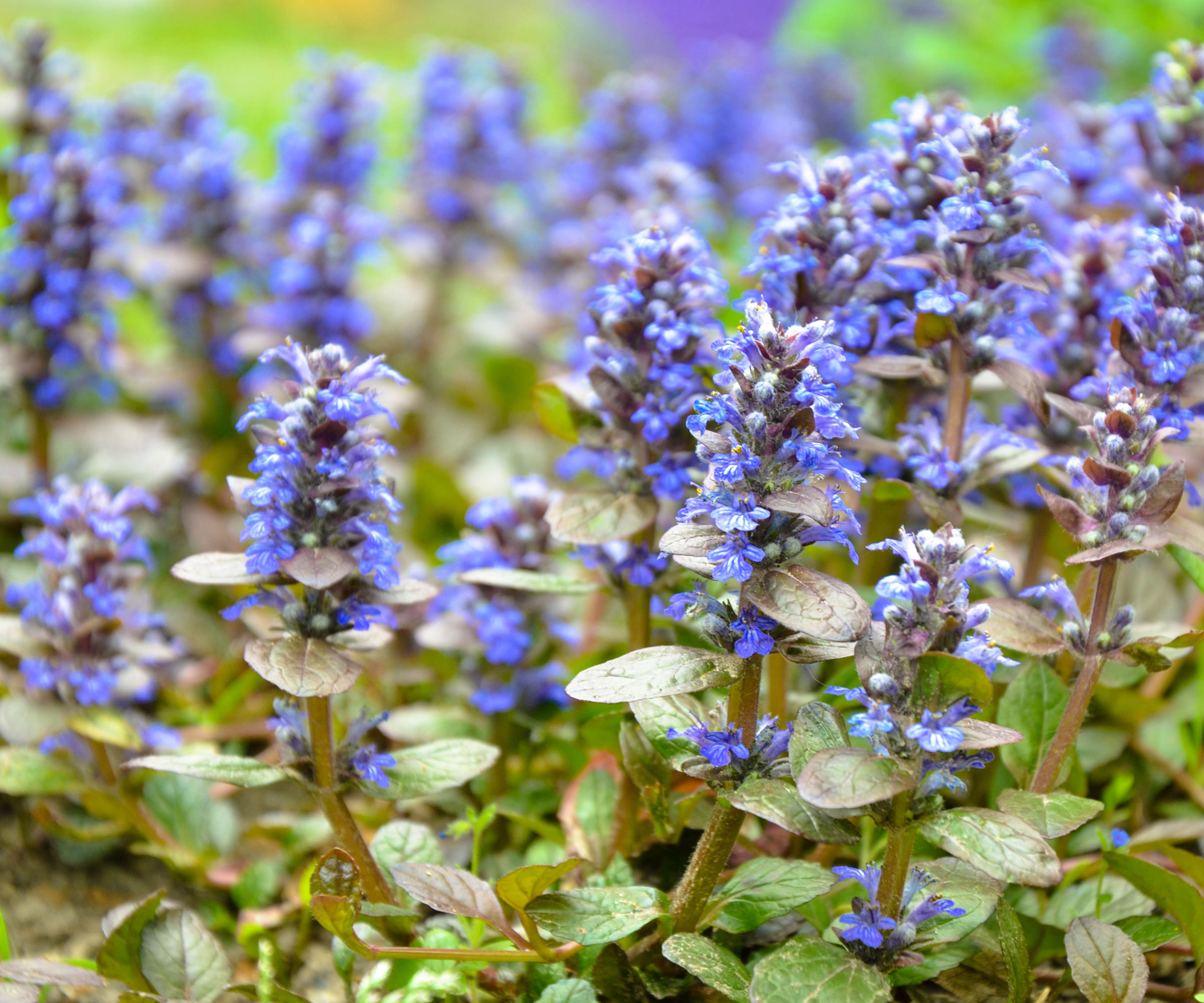
Bugleweed (Ajuga reptans) grows low to the ground and spreads rapidly by runners. It grows very vigorously and is good at outcompeting weeds. This means it can also be a nuisance, so grow bugleweed in areas where aggressive spread won’t cause issues or keep an eye on runners. Pull up unwanted runners as needed during the growing season.
Bugleweed has glossy green leaves that are evergreen or semi-evergreen and spikes of purple flowers that bloom in summer. Grow this ground cover in full sun or partial shade, depending on the type. Plant in well-drained soil, but water regularly all fall to get bugleweed established.
4. Creeping Jenny
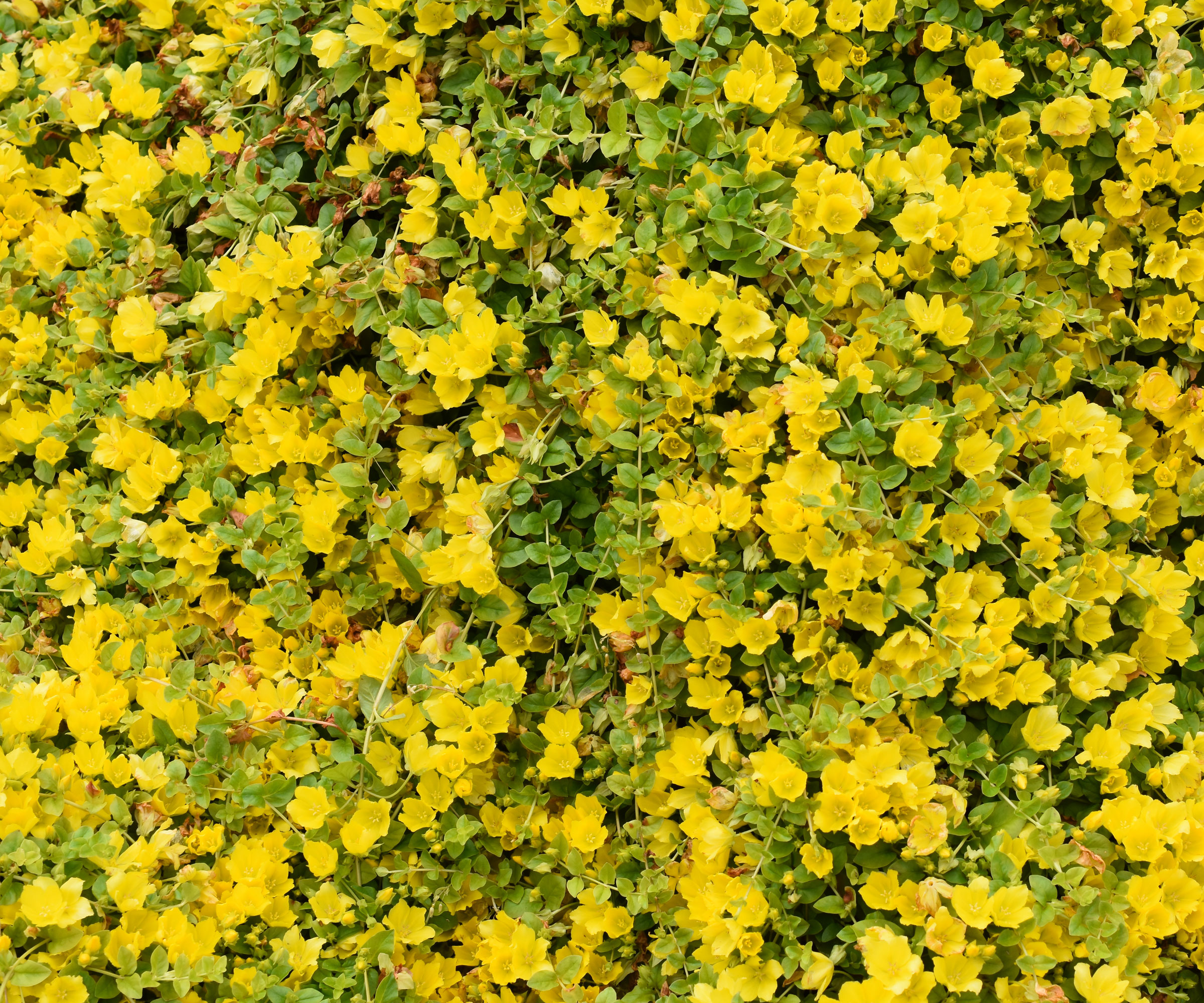
Creeping Jenny (Lysimachia nummularia) is similar to bugleweed in that it is easy to grow but can be a rapidly spreading nuisance if you’re not careful. However, its rapid, creeping growth is a great way to manage weeds in tricky areas. Also known as moneywort, the leaves are bright and round, resembling coins. Small yellow flowers bloom for a short period in summer.
Creeping Jenny can grow in full sun or partial shade. It prefers soil that stays consistently moist, so it’s a good option for wetter areas where other ground covers might struggle. Water well after planting creeping Jenny and manage its spread by redirecting or removing stems that get into areas you don’t want them.
You can get a 4-pack of creeping Jenny plants from the Home Depot to fill in large garden beds fast.
5. Wild Ginger

Wild ginger (Asarum canadense) is a good choice if you prefer to plant native species. This is a woodland perennial native to the eastern U.S. Don’t let the name fool you, though. This is not culinary ginger. It’s a low-growing herbaceous plant with kidney-shaped leaves that are naturally dark green. You can also find cultivars with different colors.
This is an excellent native ground cover option for managing weeds in shady areas. Grow wild ginger under trees or in shady beds where the soil is rich and moist but also drains well. Make sure it gets enough water after planting and well into the fall before it goes dormant.
6. Bunchberry
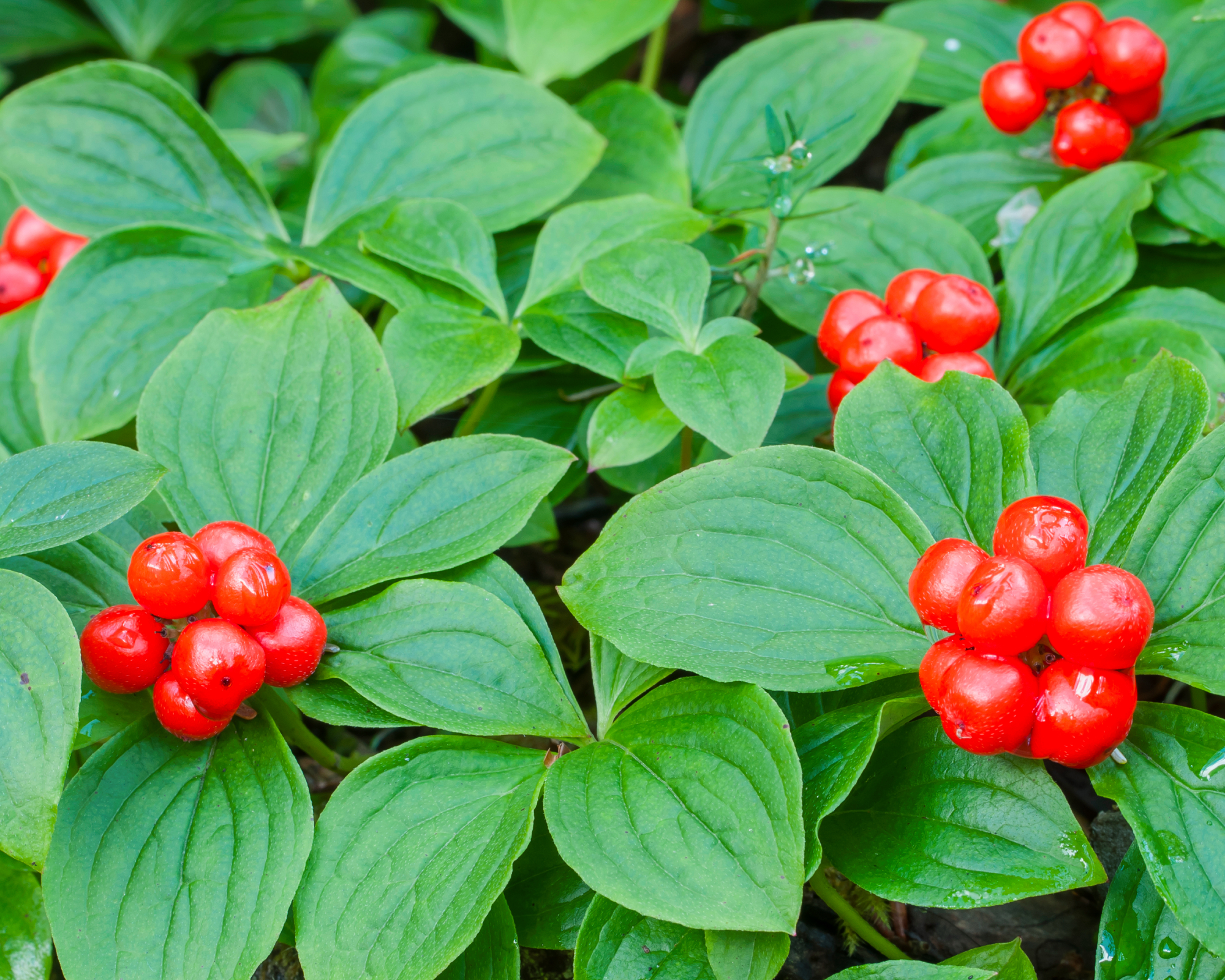
Another native option is bunchberry (Cornus canadensis). It is a woodland plant, so it is also another choice for shady areas. It’s also good for northern gardeners, as it is hardy to zone 3. The leaves create a broad canopy that shades the ground very well, keeping weeds down.
In addition to the green leaves that turn shades of red and purple in fall, bunchberry blooms with striking white bracts in spring and develops bunches of bright red berries later in the season.
Bunchberry needs a cool spot in shade or partial shade with soil that will stay consistently moist. Water the plants regularly this season to help them get established. This is especially important in the late summer heat.
You can find bunchberry plants for sale online from White Flower Farm.
Whatever you do, don’t leave your beds wide open this fall. They’ll be vulnerable to weeds that are tough to dig out later. A pretty ground cover won’t totally solve the problem, but it will reduce it. So give your new plants the right start with a weed-free bed, plenty of water to get established, and a layer of mulch.