
by Matt Gibson
Compost and soil are not the same thing — and using the wrong one (or the wrong ratio) can actually hurt your plants. Gardeners often use the terms interchangeably, but they serve very different roles. Compost is a soil amendment: something you add to soil to improve it. Soil is the growing medium itself. Understanding the difference tells you what to buy, when to use each, and how to combine them for the best results.
Compost vs. Soil at a Glance
| Compost | Topsoil | |
|---|---|---|
| What it is | Decomposed organic matter (food scraps, leaves, yard waste) | The top layer of earth — minerals, rock particles, and some organic matter |
| Primary purpose | Soil amendment — improves nutrition, texture, and drainage | Growing medium — the base in which plants root and grow |
| Nutrients | Rich in nutrients and beneficial microorganisms | Varies widely; bagged topsoil is often nutrient-poor |
| Can plants grow in it alone? | Usually no (exceptions: cherry tomatoes, small herbs, spring onions) | Yes, but results are better when amended with compost |
| How it’s made | By humans — decomposing organic materials over weeks to months | By nature — rock weathering and organic accumulation over centuries |
| Cost | Free if homemade; sold by the bag or yard | Sold by the bag or bulk yard |
| Best use | Improving existing beds, top-dressing, mixing into new plantings | Filling new beds, leveling lawn areas, creating base layers |
What Is Compost?
Compost is decomposed organic material — a mix of green matter (food scraps, grass clippings) and brown matter (dry leaves, twigs) that has broken down with the help of oxygen, water, and bacteria. The end result is a dark, crumbly, earthy-smelling material that is dense with nutrients and beneficial microorganisms.
Compost is not a growing medium on its own. It is a soil amendment — something you add to soil to boost its nutrition, improve its texture, and help it retain moisture. Think of it as a vitamin supplement for your garden beds.

How to Use Compost
There are several ways to work compost into your garden:
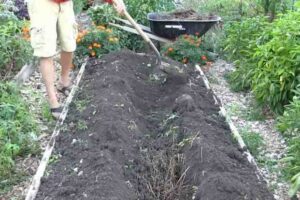
- Mix into soil: Spread 1–3 inches over the bed surface and till it in to a depth of 6–8 inches. Best done at the start or end of a growing season.
- Top-dress: Spread a 1–2 inch layer over the surface of flower beds or a 3-inch layer over vegetable gardens, as you would mulch. No tilling required.
- Compost tea: Steep finished compost in water, then use the liquid to water plants. The nutrients and microorganisms leach into the liquid and feed the soil directly.
- Trench composting: Dig a trench in an unused section of the garden, fill it with compost materials, and cover with soil. The nutrients work into the surrounding soil as it breaks down.
Advantages of Using Compost
- Boosts nutrients throughout the entire soil profile
- Feeds beneficial microbes that support plant health
- Helps soil retain moisture
- Improves drainage in dense clay soils
- Suppresses weeds and helps soil fight disease
- Can be made at home for free from kitchen and yard waste
- More environmentally friendly than synthetic fertilizers
Disadvantages of Using Compost
- Takes months to make from scratch
- Can be smelly during the decomposition process
- Requires space for a compost bin or pile
- Requires physical labor to turn and manage
- Too much compost can actually harm plants (see FAQ below)
- Should not be used where plants have soil-borne pathogens
Types of Compost
Composted Green Waste — Made from garden trimmings and kitchen scraps in a compost bin. The most common homemade type.
Composted Wood Waste — Made from wood chippings and tree cuttings. Lower in nitrogen, good for improving soil structure.
Composted Manure — Raw animal manure that has been composted, often with straw. Rich in nitrogen. Let it fully compost before use to avoid burning plants.
Sterilized Loam Compost — A blend of sand, silt, and clay treated to remove unwanted chemicals and organisms. Used in specialty growing mixes.

What Is Soil (Topsoil)?
Soil is the naturally occurring top layer of the earth’s surface. It forms over hundreds to thousands of years through the weathering of rock, the accumulation of organic matter, and the activity of living organisms. A healthy topsoil contains a mix of sand, silt, clay, minerals, and organic material — and it’s the medium in which plants root and grow.
The EPA estimates there are more than 70,000 types of soil. The three most relevant to gardeners are clay, loam, and sandy — and each behaves very differently in the garden.
Types of Topsoil
Clay soil — Composed of tiny particles that hold water and nutrients well but drain slowly. If your soil stays soggy after rain, you likely have clay. Adding compost or coarse sand can improve drainage.
Loam soil — A balanced mix of sand, clay, silt, and organic material. The ideal garden soil. It holds nutrients and moisture well while draining properly.
Sandy soil — Drains quickly but doesn’t hold nutrients or water well. Needs more frequent watering and fertilizing. Adding compost significantly improves sandy soil’s ability to retain moisture and nutrients.
Advantages of Using Topsoil
- The primary growing medium — plants need it to root and grow
- Good for filling new garden beds, raised beds, and large areas
- Can be used to level an uneven lawn
- High-quality topsoil added to existing beds replaces depleted nutrients without fertilizer
- Encourages thatch decomposition when layered on lawns
Disadvantages of Using Topsoil
- Bagged topsoil varies widely in quality — some is nearly nutrient-free
- Not ideal for containers on its own; plants in pots do better with potting mix or a compost blend
- Doesn’t improve existing depleted soil as effectively as compost does

When to Use Compost vs. Topsoil
| Situation | Use Compost | Use Topsoil | Use Both |
|---|---|---|---|
| Starting a new garden bed | ✓ Best option | ||
| Filling a raised bed | Mix in 20–30% | Fill with topsoil | ✓ |
| Amending existing beds each spring | ✓ | ||
| Top-dressing a lawn | ✓ | ✓ | |
| Container gardening | 20–50% of mix | Not ideal alone | ✓ With potting mix |
| Improving clay soil | ✓ Best option | ||
| Improving sandy soil | ✓ Best option | ||
| Filling a large area cheaply | ✓ More economical | ||
| Leveling an uneven lawn | ✓ | ||
| Planting new trees or shrubs | Mix 10% into backfill | Use as backfill | ✓ |
The Right Compost-to-Soil Ratio
More compost is not always better. Too much can actually harm plants by overloading the soil with nutrients like nitrogen and phosphorus. As a general rule:
- General garden beds: 1–2 inches of compost worked into the top 6–8 inches of soil (about 5–10% compost by volume)
- Vegetable gardens: Up to 3 inches of compost per season
- Flower beds and landscape plants: 1–2 inches per season
- Container gardening: 20–50% compost mixed with potting soil
- New trees or shrubs: About 10% compost mixed into the backfill soil
- Lawn top-dressing: A thin 1/4 to 1/2 inch layer worked into the grass
When there’s too much phosphorus from excess compost, plants struggle to absorb manganese and iron, which can cause interveinal chlorosis. Excess nutrients can also wipe out beneficial mycorrhizal fungi and cause plants to grow too quickly, making them more vulnerable to pests.
Frequently Asked Questions
Are soil and compost the same thing?
No. Compost is made of decomposed organic material and is used as a soil amendment. Soil (or topsoil) is the naturally occurring growing medium that contains minerals, rock particles, and organic matter. Compost is something you add to soil — it becomes part of it over time, but it is not soil on its own.
Can I use compost instead of topsoil?
In a pinch, yes — but grind it to a fine texture first so it behaves more like topsoil. You’ll also need to add fertilizer, since compost alone doesn’t contain enough nitrogen, phosphorus, and potassium for most plants. Use a layer 6–12 inches thick to give roots room to develop, and check the pH before planting.
Can I plant vegetables in compost alone?
Most vegetables need compost mixed with soil. A few lighter crops — cherry tomatoes, baby carrots, spring onions, and small herbs — can grow in pure compost, as long as the pH is between 6.0 and 7.0. For everything else, mix compost into your soil rather than planting directly into it.
Does compost turn into soil?
When compost fully decomposes and integrates into topsoil, it becomes what’s called humus — the dark, stable organic matter that makes garden soil rich. So in a sense, yes: over time, compost becomes part of your soil. But fresh or partially composted material is not the same as topsoil.
Can I compost directly in my garden?
Yes — this is called trench composting. Dig a trench in an unused section, drop in your compost materials, and cover with soil. Wait about six weeks before planting on top. It’s one of the easiest composting methods, though it can’t be used in winter in regions where the ground freezes.
Do I need fertilizer if I use compost?
Usually yes. Compost improves soil and adds nutrients, but it doesn’t contain enough nitrogen, potassium, and phosphorus on its own to replace fertilizer — especially for heavy feeders like tomatoes and corn. Use compost and fertilizer together for best results.
Can you add too much compost?
Yes. Excess compost leads to nutrient overload — too much phosphorus and nitrogen can become toxic to plants, wipe out beneficial soil fungi, and cause rapid, weak growth that’s more susceptible to pests. Stick to the ratios above and resist the urge to pile it on.

What should you not compost?
Avoid composting: meat, fish, dairy, cooking oil, bread, citrus peels, diseased plants, plants that have gone to seed, invasive weeds, cat or dog waste, glossy paper, sawdust from treated wood, and anything nonbiodegradable. Coffee grounds and tea leaves (without the bag) are fine to include.
How long does it take for compost to be ready?
Depending on the size of your pile, the materials used, and how actively you manage it, compost can be ready in as little as 3 months or take up to 2 years. Hot composting (turning frequently, maintaining moisture and heat) speeds things up considerably.
Does compost go on top of soil or mixed in?
Both work. You can top-dress by spreading compost on the surface like mulch (1–2 inches for flowers, 3 inches for vegetables), or mix it in by tilling to a depth of 6–8 inches. Top-dressing is easier; mixing in delivers nutrients faster to plant roots.
Should I mix sand with topsoil?
Adding coarse sand to topsoil can improve aeration, drainage, and looseness — all of which make it easier for roots to grow. It’s especially helpful in clay-heavy soils. Just make sure you don’t end up with more sand than soil, and use coarse sand rather than fine play sand.

The post Compost vs. Soil: What’s the Difference — and When Should You Use Each? appeared first on Gardening Channel.