
The Victoria plum, Prunus domestica ‘Victoria’, is Britain’s best known plum variety. It produces heavy crops of delicious, egg-shaped fruits, ideal for use in jams and chutneys as well as eating straight from the tree. Prunus domestica ‘Victoria’ tends to be grafted on to a semi-dwarfing rootstock, which produces a compact tree suitable for small to medium-sized gardens. A Victoria plum tree will reach about 4m in height. If you want to grow Victoria plum tree in a container, choose a dwarfing rootstock such as Pixy.
‘Victoria’ is a great choice for a small garden as it’s self fertile and doesn’t need a pollination partner to be planted nearby. The plums can be used as a dessert or eating plum, making it a versatile choice for a home grower. Victoria plum tree blossom can be affected by early spring frosts as the tree’s flowering time is from April to May. To protect a small plum tree, you could cover it with fleece.
The lifespan of a Victoria plum tree varies depending on rootstock and soil type, but you would expect a tree on a vigorous rootstock such as St Julien to live on average 20 years. Some may live considerably longer.
How to grow a Victoria plum tree
For the sweetest, juiciest plums, grow Prunus domestica ‘Victoria’ in full sun and well-drained soil. Water newly planted trees regularly until established.
Where to plant a plum tree
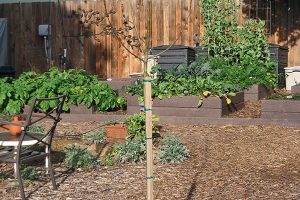
The best place to plant a Victoria plum tree is in a sunny, sheltered spot with well-drained soil. Ideally, plant your tree during the dormant season, from November through to February, to give it a chance to establish. It can take a few years for a newly planted plum tree to produce fruit. After 2-3 years it should produce a small crop with a good crop between 3-5 years after planting.
How to care for a Victoria plum tree

Water newly planted trees well during their first year. Mature trees shouldn’t need watering unless there is a long hot spell. In this case, it’s a good idea to give them a soaking, especially in early summer as fruit is developing.
Mulch around your plum tree in spring to conserve moisture in the soil and keep down weeds. In summer, thin out fruits if there is a big crop. This will prevent branches becoming overloaded with fruit and breaking and give the remaining fruit room to develop.
Feed in winter with a high potassium fertiliser such as fish, blood and bone.
Pruning a Victoria plum tree
The best time to prune a Victoria plum tree is near the end of July. Unlike other fruit trees they are not pruned in winter as plum trees are susceptible to silver leaf disease. The best time to prune is during the summer, from mid June onwards. Young plum trees can be pruned lightly in spring. Pruning a Victoria plum tree is not difficult, simply aim to create an open shape, getting rid of any branches that are crossing as well as any that are dead or diseased. Prune the branches by about a third, cutting back to just above a bud. Cut side shoots back by half.
Pests and diseases

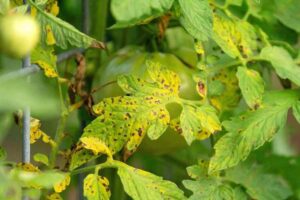
Victoria plum trees can suffer from aphids, caterpillars, plum fruit moth and wasps. Diseases can include silverleaf disease and brown rot.
Aphids will cause the leaves of your tree to curl and become sticky. Birds will help to keep populations down and you could also try to remove the aphids by spraying with water or by hand. For larger infestations, try applying a biological control. These have to be applied at the right time of year to be effective.
Plum tree moth larvae tunnel into fruits – remove any damaged fruit to prevent the larvae going back into the soil. Pheromone traps can help prevent this problem by trapping male moths, but often only a small amount of fruit is affected and may not be a big problem.
Silverleaf disease – this can be avoided by pruning at the right time of year. It can be confused with mildew, which causes a similar silvery effect on leaves. With silverleaf disease you will notice die back on the main branches.
Brown rot – this is a fungal disease and it can spread out from a cut or puncture in the fruit made by birds or insects and infect a group of plums if they are all touching. Remove any affected fruit on the ground or hanging mummified in the tree.
Advice on buying Victoria plum tree
- Victoria plum tree is sold on a variety of rootstocks. For a small tree that you can grow in a container or in a small garden, choose a Victoria plum on a pixy rootstock. St Julian is a semi-vigorous rootstock – trees will grow to around 4m tall.
- If you’re short on space, try a fan-trained plum, which can be grown against a wall
- Always check plants for signs of damage or disease before planting.
Where to buy Victoria plum tree