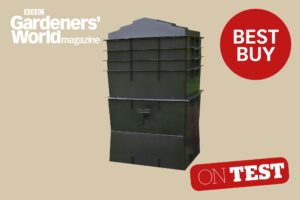
A wormery is a great way of recycling kitchen and small amounts of garden waste, using worms to turn this material into nutrient-rich natural compost. A sump within the wormery also holds any excess liquid produced during this process, and this can be used to feed your plants, too. Simply drain it with the tap, every few days, dilute it to a 1:10 ratio of water, and you have a nitrogen-heavy liquid feed ready to use.
Wormery composting worms are different species from the earthworms you see in your garden, which aren’t suitable, and are known as brandlings, red, manure or tiger worms. They live inside the waste in the wormery bin and, thanks to big appetites and a fast metabolism, quickly break down food waste like egg shells, vegetable peelings and tea bags and turn them into compost for your garden. For help getting started, our helpful step-by-step guide explains how to set up a wormery.
Best wormeries at a glance
- Best wormery for high capacity and ease of use: WormCity
- Best wormery for longest warranty and best design: WormBox
- Best wormery for worm composting and self-draining: Hungry Bin Worm Composter
Jump to:
- The best wormeries
- The best of the rest
- How to choose a wormery
- How we tested the wormeries
- Troubleshooting tips for your wormery
Our expertise Getting the right wormery for you means making sure it’s the correct size, has an adequate number of trays and is simple to use. We’ve tested a range of different wormeries and each one has a detailed list of pros and cons for clarity and has been rated according to set up, value for money, ease of use and storage. From 2026, you’ll only see newly awarded Best Buy badges on wormeries that score 4.5 out of 5 or higher. Anything rated 3.5 or above will still feature in our ‘Best of the rest’ list. Every wormery in our round up below has scored a minimum of 3.5 out of 5 stars, so you can buy with confidence.
In every review, we award outstanding products our coveted Best Buy award. To see these and the others we recommend, browse our pick of the best wormeries, below.
The best wormeries
WormCity
RRP: £87-£110 (75-125 litres)
Our rating: 4.8 out of 5
Available from: Amazon

Reasons to buy:
- Largest capacity and well-designed
- Easy and efficient to use
- Stable square base
- 100 per cent recycled, good warranty
- Well priced for size
Reasons to avoid:
- More accessible to slugs than most
This wormery by WormCity has a large tray capacity of 75 litres, which is impressive considering its size on the ground (75cm x 43cm x 43cm). Our testers found that the deep trays produced a high amount of good-quality compost. We were also impressed by the well-planned design, which features a V-shaped sump and stepped interior. It’s made in the UK from 100 per cent recycled materials, and 500g of worms are included along with food and bedding. We judged this a BBC Gardeners’ World Magazine Best Buy as the best stacking wormery.
Read the full WormCity Wormery review
- Buy the WormCity Wormery from Amazon
WormBox
RRP: £92.50
Our rating: 4.8 out of 5
Available from: Amazon

Reasons to buy:
- Smart, versatile design in many colours
- Suits indoors or outside – fully rainproof
- Mostly recycled plastic
- Longest warranty
Reasons to avoid:
- Tap close to the ground, so not easy to drain
Unlike most stacking wormeries, the WormBox model (38cm x 50cm x 50cm) is rainproof. We found it to be sturdy and were impressed with the versatile design, which includes castors for easy moving. Each tray has a capacity of 16 litres, which produces a moderate amount of compost, and the sump works well. Worms and a coir mat are included with the starter model, and there is the option to add a planting tray to the top or use it as a seat, with a load of up to 100kg. A generous 15-year warranty is included, and we awarded this a BBC Gardeners’ World Magazine Best Buy for the most versatile design.
Read the full WormBox wormery review
- Buy the WormBox from Amazon
Hungry Bin Worm Composter
RRP: £275.00
Our rating: 4.3 out of 5
Available from: Amazon

Reasons to buy:
- Substantial capacity to process waste
- Drains itself
- Easy to harvest finished compost
- Rainproof with a hinged lid
Reasons to avoid:
- The open drain tray attracts flies
- Largest footprint
- Expensive
This conical-shaped wormery (60cm x 65cm x 95cm) sits on a metal frame, which is on wheels to make it easier to manoeuvre. It has a total capacity of 80 litres, but the large surface area means worms can process up to 2kg of waste per day. You can access finished compost by unclipping the base, which our testers found to be a simple process. It’s guaranteed for two years and is made from between 15 and 20 per cent recycled plastic. We awarded this a BBC Gardeners’ World Magazine Best Buy for the best low-maintenance choice.
Read the full review: Hungry Bin worm composter review
- Buy the Hungry Bin Worm Composter from Amazon
The best of the rest
Although some models didn’t quite achieve a BBC Gardeners’ World Magazine Best Buy award, they still have features that make them worth recommending. Browse our pick of the best of the rest on test.
Maze Worm Farm
RRP: £79.99
Our rating: 4 out of 5
Available from: Amazon and The Range

Reasons to buy:
- Lightweight, compact and portable
- Pull-out tray and hook for hanging lid
- Mostly recycled plastic
Reasons to avoid:
- Lowest capacity per tray
- Slowest to process waste
This compact wormery (28cm x 38cm x 38cm) features 12 litre trays and a central drain. This model had the smallest capacity of those we tested and took the longest to compost overall, although we found the quality of what was produced to be good. A pull-out central tray harvests small amounts of castings, and it can be customised with a range of accessories. It’s guaranteed for one year.
Tumbleweed Cube Indoor Wormery
RRP: £79.99
Our rating: 3.5 out of 5
Available from: Mano Mano and On Buy

Reasons to buy:
- Neat and compact
- Good-sized trays with handles for easy, clean handling
- Removable and visible collector for liquid
- Clearly written and illustrated printed instructions
- Made from recycled plastic
Reasons to avoid:
- The liquid collector is small and needs frequent emptying
- The lid warps slightly and doesn’t fit snugly
- Worm blanket mentioned in instructions, but not included
This wormery has a neat, square design and is primarily designed for indoor use. It has a smart appearance, although the bright green lid does stand out and may not be to everyone’s taste. It’s quick and easy to assemble and has clearly written, printed instructions. It also has many well-thought-out design features, including two good-sized trays, each with 13 13-litre capacity and lift-up handles, a lid with internal hooks that sits vertically on the edge of the wormery unit whilst filling, and a clear plastic collector that slots beneath the lowest tray to fill with worm liquid. It’s also easy to see the level inside, and it’s simple to remove.
However, this collector is small and fills up quickly, so if you’re using it indoors, it can easily overflow and make a mess. This is a particular drawback if you’re away for any length of time, and you’d need to plan ahead and replace it with something larger. Hooking the lid on the side works fine unless there’s condensation inside, which then drips onto the ground. Of course, both these issues wouldn’t be much of a problem if you used the wormery outside, but unfortunately, outdoors, the lid warped very slightly, blew off easily and needed to be weighted down. Most of the worms moved upwards through the wormery into the upper tray containing fresh waste, and this model has good eco-credentials. It’s made from 100 per cent recycled plastic and has a 12-month warranty.
Urbalive Worm Farm
RRP: from £142.99
Our rating: 3.5 out of 5
Available from: Amazon

Reasons to buy:
- Attractive design
- Available in four colours
- Produced good quality/quantity of compost
Reasons to avoid:
- Worms drowned in the sump
- Needs a sheltered site
- Made from new plastic
The Urbalive Worm Farm (60.5cm x 50.5cm x 38cm) has a large capacity of 21.7 litres per tray. Our testers liked the contemporary design and larger capacity and found it composted well. The wooden legs were tricky to fit, though, and needed a screwdriver, which is not supplied. We found the mesh “worm catcher” did not work, and if used outdoors, it must be under cover. A two-year warranty is included.
- Buy the Urbalive Worm Farm from Amazon
Original Wormery
RRP: £124.99
Our rating: 4 out of 5
Available from: Amazon

Reasons to buy:
- Large capacity for small footprint
- Well priced for its size
- Rainproof with a hinged lid
Reasons to avoid:
- Hard to harvest compost
- Drain tap close to the ground, so hard to drain
- Made from new plastic
This single-chamber wormery (73cm x 53cm x 43cm) has an overall capacity of 100 litres. It’s styled in a wheelie bin design, including a hinged lid, and is rainproof. The compost is harvested by emptying the bin completely, which means separating it from the worms and unprocessed waste. It’s guaranteed for one year.
- Buy the Original Wormery from Amazon
If you’re interested in other types of composting, see our review of the best garden compost bins and if you’re planning on keeping your wormery sheltered or somewhere enclosed, our guides to garden storage ideas and the best garden sheds may also be helpful.
How to choose a wormery
When you’re choosing a wormery, there are a few details to consider:
What types of wormeries are there?
- Stacking wormeries: These have multiple trays with mesh bases stacked on top of each other and making up to three or four layers in total. Waste and worms are added to the first tray until it’s full, and then the second tray is added on top. The worms work their way up through the mesh base of each layer as they fill up, and another tray is added. Finished compost is removed from the bottom tray, and once emptied, this is placed back on top of the other trays to repeat the process. Trays range in capacity from 12 and 25 litres
- Single-chamber wormeries: These consist of one large, single chamber where the waste is processed all together. Waste material is placed on the top and harvested from below once the worms have worked their magic. You need to empty it all to access the finished compost
Where should I place my wormery?
The optimum temperature for a wormery is between 15 and 25°C; anything above 35°C and your worms won’t be able to survive. You should therefore place your wormery in a sheltered, shaded spot, somewhere you can access it easily to fill it up and drain the liquid a couple of times a week. An outbuilding or porch is a good place, and some models can even be kept in the kitchen. Be aware, though, that they can start to smell if they’re left for too long.
What should I put in my wormery?
Kitchen waste is best for a wormery, although small amounts of garden waste can also be added. Raw or cooked vegetables, fruit, coffee grounds, teabags and eggshells are all ideal food for worms. Avoid meat and fish, dairy products and tough woody plant material.
How we tested wormeries
The wormeries were set up in the summer and tested throughout the year. A regular mix of cooked and raw kitchen waste with paper and brown cardboard was added, and their performance was assessed according to the following criteria, each with equal weight:
- Design and setup: Assessed clarity and ease of instructions, siting conditions and any extra features
- Ease of use: Looked at how straightforward it is to add waste and harvest liquid, any design flaws and features or accessories which affected use
- Compost quality and harvesting: Focused on the quantity and quality of the compost and liquid produced and whether the worms were thriving
- Value for money: Considered the quality and durability of the model as well as the RRP, warranty and eco-credentials
For more information on our testing process, see How we review
Troubleshooting tips for your wormery
Soggy and smelly?
Drain liquid from the new waste before adding, and drain off liquid regularly to reduce condensation. If the model lets in rain, cover loosely.
Lots of tiny flies
These fruit flies, although harmless, can be annoying. Bury fresh waste or cover with damp newspaper or brown card.
Mouldy contents
Damp conditions are essential for worms as they breathe through their skin, so they actually like mouldy food. However, lots of uneaten waste may be a sign that you’re adding too much at one go – little and often is best. Chopping up waste first helps.
What to do in winter
If possible, move your wormery into an outhouse or porch. But outside is fine with care; cover with insulating material, put thick layers of card and paper inside the top, and drain often.
Meet our testing panel
Oliver Parsons, Strategic Projects Editor
Oliver is a gardener and magazine journalist of 20 years’ experience. He trained as a professional horticulturalist at RHS Garden Hyde Hall in Chelmsford and has also worked for Gardening Which?, as a freelance gardener and with the gardening team at Down House in Kent. He is now Strategic Projects Editor at BBC Gardeners’ World Magazine and GardenersWorld.com, heading up our reviews desk, Apple News output and weekly newsletter.
Kay Maguire, Magazines Editor
Kay trained at the Royal Botanic Gardens, Kew and has been writing and making films about gardening ever since. She has written for websites and magazines, including The Garden and Amateur Gardening, was Horticultural Editor on BBC Gardeners’ World Magazine for five years, and has also written several books on a range of gardening topics from growing house plants to making the most of a small space. After several years as Reviews Editor, building up our reviews section into a leading resource for UK gardeners, she has now become Magazines Editor for BBC Gardeners’ World Magazine , responsible for all print output.
Harry Duncton, freelance powered tools tester
Harry has a wealth of experience, from being a language teacher to a tree surgeon, and has built this into a career writing about all things DIY and gardening. A passionate believer in self-reliance, his aim is to inspire others to give it a go themselves and not worry about making a few mistakes along the way. A regular contributor to popular DIY blogs and a recent addition to the BBC Gardeners’ World Magazine team, he loves tracking down the best new tools and writing about them.
Sue Fisher, freelance garden writer
Sue’s extensive horticultural career spans over 40 years, starting with a decade in the garden centre and nursery industry before developing into an accomplished gardening writer, designer and speaker. Sue writes regularly for BBC Gardeners’ World Magazine, GardenersWorld.com, and Garden Answers magazine. She has written 10 books on subjects including container gardening, plants for small gardens and designing with colour, and she has co-authored other books with some of the biggest names in gardening.
Emma Crawforth, Horticulture Editor
Emma holds the Kew Diploma in Horticulture and has been working in horticulture for 18 years, including roles in public gardens, a plant nursery supplying plants for the RHS Chelsea Flower Show and a training college for young horticulturists. She looks after an ornamental, fruit and veg garden at home and regularly undertakes trips to see plants growing in their natural habitats. She is the author of the Kew Publications book, Things to Do with Plants.
These wormeries were reviewed in February 2026. We apologise if anything has changed in price or availability.