
By Jennifer Poindexter
Virginia creeper can be a popular vine for people to grow around their property. However, it can also be a handful if not carefully maintained.
Since Virginia creeper is native to North America, it isn’t labeled as invasive. Yet, it is a plant that can grow aggressively around your property.
I know this first hand because our family bought a farm almost six years ago. This plant kept popping up all over our berry patches.
We battled it for years, until we finally found a few ways to remove unwanted plants. Here are a few tricks you can use if Virginia creeper is sprawling around your property as well:
What You’ll Learn:
- The unique challenges presented by Virginia creeper and its aggressive growth patterns.
- The importance of addressing Virginia creeper while it’s young to prevent it from establishing a sturdy root system.
- Various methods to control and remove Virginia creeper, from manual removal to using different herbicides.
- Homemade solutions for controlling Virginia creeper and the necessary precautions to avoid harming other plants.
- How to grow Virginia creeper in a controlled environment, such as in a container, to enjoy its beauty without it becoming a problem.
- Ways to utilize Virginia creeper safely, such as feeding wild birds, while being mindful of its potential toxicity.
- The use of unconventional methods like rock salt and boiling water in controlling Virginia creeper and the associated considerations.

How to Control Virginia Creeper
Virginia creeper is a vining plant that can grow along homes, fences, or other plants. Some people plant it for its beautiful green foliage during the summer and rich red coloring during spring and fall.
Yet, this plant can become aggressive quickly. Here are the things you should do when you notice your Virginia creeper is starting to take over:
1. Tackle Virginia Creeper While It’s Young
Once the Virginia creeper becomes established, it can be difficult to remove it. The root system of this plant is quite sturdy.
This makes it excellent for storing energy. If you remove most of the root system of an established plant, there’s enough energy left behind to sprout a new plant.
Keep this in mind as you notice Virginia creeper spreading. It’s best to tackle this plant before the roots have much of a chance to become established to lessen the chance of battling Virginia creeper in the future.
2. Remove Virginia Creeper from Host Plants
If you see Virginia creeper growing on the ground, it’s wise to remove it. Yet, you can’t forget the creeper that’s growing on other plants.
We ran into this in our blackberry bushes. Virginia creeper would grow amongst and attach to the berry plants. Tackling Virginia creeper was new to us, so we didn’t learn how to completely remove the plant until after it choked out an entire row of blackberries.
If you see this plant climbing on another plant, gently remove it to ensure it doesn’t have an opportunity to continue growing or to suffocate the plant it’s growing on.
3. Remove Virginia Creeper at the Root
This probably goes without saying, but if you cut Virginia creeper back, it’s considered a good pruning. The act of cutting will encourage better regrowth.
This is why it’s important to remove Virginia creeper at the root. Be prepared to break a sweat because if the plant is well-established, it can prove difficult to dig up.
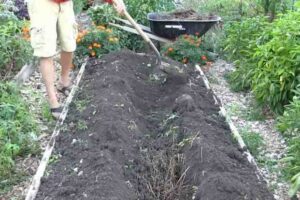
Ensure you use a sharp shovel to dig into the ground and get under the plant. From there, dig out the entire root system to ensure there’s no room for regrowth.
4. Use an Herbicide to Get Rid of Virginia Creeper
After you dig the root of the plant out of the ground, be sure to spray the area with an herbicide. This should discourage the plant from returning.
Another trick is to sprinkle Borax in the area where the plant was growing. You must apply it heavily to discourage regrowth.
Be mindful when applying any type of herbicide or treatment to the Virginia creeper if it’s growing in close proximity to other plants. If you get heavy handed with the application, you could end up killing healthy plants nearby.
5. Make a Homemade Herbicide to Get Rid of Virginia Creeper
What if you’d like to get rid of Virginia creeper, but you don’t have any herbicide on-hand? Don’t fret because you can make your own, and you probably have the ingredients around your home.
If you mix dish soap with vinegar, then place it in a spray bottle and spray the plant, it should prove successful at keeping this plant from regrowing.
Plus, you know what’s in the mixture which tends to make me feel better about what I’m utilizing around my home and garden areas.
6. Use Glyphosate to Rid Your Landscape of Virginia Creeper
Glyphosate is an herbicide that’s known for stopping the plant from completing the process of photosynthesis.
In turn, it stops Virginia creeper from regrowing because the plant can’t make the proteins it needs to thrive.
The best way to apply this herbicide is by using a sponge brush to apply it on unwanted plants. Be mindful of your application technique to avoid accidentally harming any neighboring plants.
7. Use Different Gardening Methods to Grow Virginia Creeper
Virginia creeper is hard to control due to its root system. It also prefers well-draining soil and full to partial sunlight.
Otherwise, this plant can thrive in most soil types and does well in planting zones three through ten. It’s very adaptable.
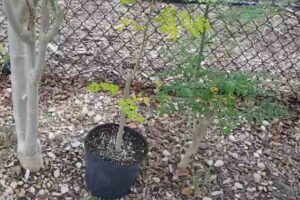
If you wish to grow Virginia creeper, it may be best to grow it in a container to better control the spread. This is a great way to enjoy the plant’s beauty without battling it over the years.
8. Utilize Your Virginia Creeper
Another thing you can do with Virginia creeper is embrace it. We had to do this for a few years as we continued to chip away at the problem.
However, Virginia creeper is useful for feeding wild birds. It produces berries that can be enjoyed by birds during the cooler months.
Be mindful not to eat Virginia creeper or feed too much of it to livestock as it can prove toxic. The berries are also poisonous to humans and dogs.
It’s important to be mindful when handling Virginia creeper because the plant produces sap. This can cause skin irritation, so when working with this plant wear long sleeves and gloves.
If you’re a bird watcher and want to safely utilize this plant, consider allowing it to grow in certain areas to invite more birds to your yard.
9. Utilize Rock Salt to Kill Virginia Creeper
This next option for stopping Virginia creeper from taking over is to utilize rock salt. Place one cup of rock salt in a gallon of water.
Dissolve it and pour it over the Virginia creeper. This method should kill the plant but should be used with caution.
Rock salt is absorbed into the soil and will stop other plants from growing in the area for a period of time.
If you decide this is the correct method for you to rid the area of Virginia creeper, apply it, wait a few days, and remove the dead leaves.
Continue applying the rock salt mixture until the entire vine is dead.
10. Kill Virginia Creeper with Boiling Water
Our final method of controlling Virginia creeper is by using boiling water. Cut the vine down to a manageable size.
From there, fill a tea kettle with water. Bring it to a boil and then pour the hot liquid over the plant.
This should burn the plant to the roots, so it won’t return. Using boiling water is a natural and inexpensive way to keep this vining plant under control.
You now have ten different ways to control Virginia creeper. When grown in a controlled environment and maintained, this plant can be a great addition to your landscape.
However, it’s important to understand that Virginia creeper is an aggressive grower that can quickly turn into a problem. Therefore, it’s wise to understand how to control this plant when it begins to grow out of bounds.
Key Takeaways:
- Virginia creeper, despite being a native plant, can grow aggressively and require effective management strategies.
- Controlling Virginia creeper early, before it establishes a strong root system, can significantly ease the removal process.
- Several methods exist to control Virginia creeper, including manual removal at the roots, use of traditional and homemade herbicides, and novel approaches like rock salt and boiling water.
- When using any treatment, caution is necessary to prevent damage to neighboring plants.
- Virginia creeper can be grown in a controlled environment, like a container, to limit its spread while enjoying its aesthetic appeal.
- The plant can serve a beneficial role, such as providing food for wild birds, but awareness of its potential toxicity is crucial.
- Unconventional methods like rock salt and boiling water can effectively manage Virginia creeper, but understanding their potential impact on other plants and the soil is vital.
Virginia Creeper Quick Reference Guide
| Aspect | Virginia Creeper Characteristics |
|---|---|
| Origin and Appearance | Native, five-fingered leaves, adhesive tendrils |
| Growth and Habitat | Throughout North America, woodlands, up to 50 feet |
| Seasonal Changes | Leaves turn red/purple in fall, green-to-blue-black berries |
| Garden Use | Covers walls/fences, disguises tree stumps, not suited for small gardens |
| Conditions and Care | Tolerates full sun to heavy shade, drought tolerant, prune as needed |
| Propagation and Cultivars | Propagated from seed or cuttings, several cultivars available |
| Misidentification | Can be mistaken for poison ivy, has five leaflets |
More About Virginia Creeper
https://plants.ces.ncsu.edu/plants/parthenocissus-quinquefolia/
https://hort.extension.wisc.edu/articles/virginia-creeper-parthenocissus-quinquefolia/
https://crops.extension.iastate.edu/encyclopedia/virginia-creeper
The post How to Control Virginia Creeper: Experiences at My Homestead appeared first on Gardening Channel.